Why Your Wireless Earbuds Die at Hour Six: The Physics Behind 120-Hour Battery Claims

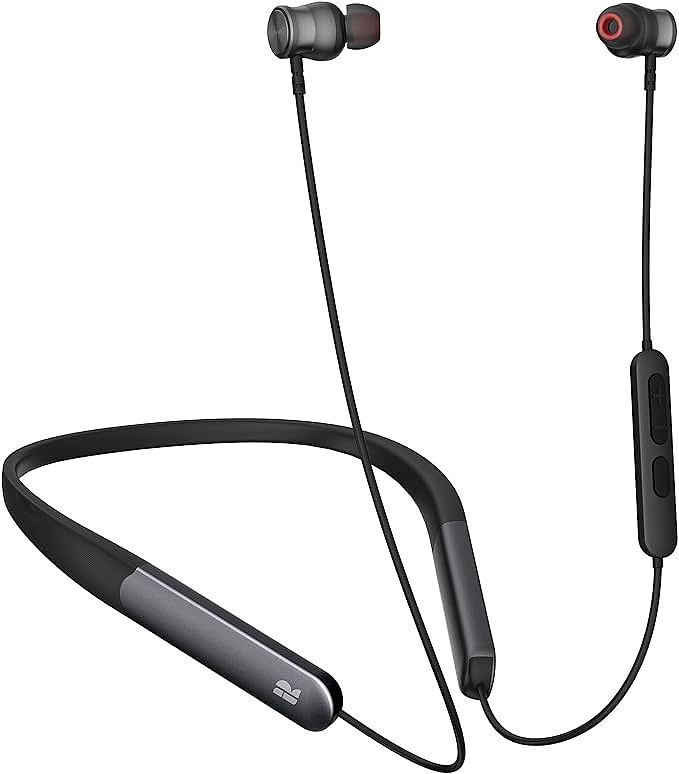
Muitune i35-JPO Wireless Earbuds
You plug them in before bed. The little LED glows green by morning. You snap the case shut, head to work, and by noon -- dead. Again. This is not user error. The average true wireless earbud lasts between five and eight hours on a single charge. Top-selling models from major brands top out at around six to eight hours, with their cases providing an additional twenty to twenty-four hours of backup. For most people, this means a daily charging ritual that feels less like convenience and more like dependency. The charger becomes a leash.
The question is not why your earbuds die. The question is why they cannot last longer -- and what it would take, in engineering terms, to push a wireless headphone from six hours to something like one hundred and twenty. That number is not theoretical. One neckband wireless earbud on the market claims exactly that: 120 hours of total playback. At under twenty dollars, the claim borders on absurd. But the math behind it is surprisingly grounded.
The Energy Problem: How Much Battery Can You Actually Carry?
Battery life in wireless audio is fundamentally a story of capacity and consumption. A lithium-polymer cell stores energy at a density of approximately 200 to 250 watt-hours per kilogram. That figure has improved only modestly over the past decade -- battery chemistry moves slowly, constrained by the periodic table itself. You cannot simply pack more energy into a given volume without increasing weight or risking thermal instability.
Consider the charging cases that dominate the market. A typical premium true wireless case holds around 500 to 520 mAh, with each earbud carrying roughly 40 mAh. The industry average for neckband-style wireless earbuds sits between 300 and 500 mAh for the main battery unit. These numbers reflect a design compromise: manufacturers balance battery capacity against weight, size, and cost.
Now consider a 1000 mAh battery in a neckband form factor. That is roughly double the capacity of a typical premium charging case and roughly triple the industry average for neckband headphones. Lithium-polymer cells at this capacity weigh approximately 20 to 25 grams and occupy a volume comparable to a large vitamin capsule. In a neckband design, where the battery sits in the rigid collar behind the neck rather than inside a tiny earpiece, this capacity becomes physically achievable without uncomfortable bulk.
The math follows directly. If each earbud holds an estimated 50 mAh battery and lasts five to six hours per charge, the 1000 mAh neckband battery can recharge each earbud roughly twenty times. Twenty charges multiplied by five and a half hours yields 110 hours. Using the upper estimate of six hours per charge, you reach the stated 120 hours. The claim is not marketing fiction. It is arithmetic.
Bluetooth 5.3: Where the Watts Go to Hide
Battery capacity is only half the equation. The other half is consumption, and this is where Bluetooth version matters more than most people realize.
The Bluetooth 5.0 specification, released in 2016, reduced power consumption by roughly 30 percent relative to Bluetooth 4.2. It did this primarily through faster data rates -- specifically the 2M PHY mode, which transmits data at 2 megabits per second. When the radio can send data faster, it spends less time with the transmitter active. Less transmit time means less energy drawn from the battery.
Bluetooth 5.3 pushes this further. In relation to 5.0, the 5.3 specification reduces power consumption by an additional 50 percent in typical audio streaming scenarios. Part of this comes from enhanced power control, which allows the earbud to automatically adjust its transmit power based on distance to the source device. If your phone is in your pocket, the earbud does not need to broadcast at maximum power. It dials back on its own.
The LC3 codec plays a supporting role. Short for Low Complexity Communications Codec, LC3 delivers audio quality comparable to the older SBC codec at half the bit rate. Lower bit rate means less data to transmit, which means less radio-on time, which means less battery drain. When IEEE published the original LC3 specification under the Bluetooth SIG, the stated goal was exactly this: maintain perceptual audio quality while reducing the energy cost of wireless audio transmission.
There is also the matter of idle behavior. Bluetooth 5.3 introduces refined sleep state management. When audio is not actively playing, the earbud can drop into a deeper sleep state more quickly and wake from it more efficiently. For neckband earbuds that a user might wear all day -- taking them on and off between tasks -- these micro-savings accumulate. Over twenty charge cycles, they matter.
Two Drivers, One Goal: The Hybrid Architecture
Battery life tells you how long the earbuds can play. Driver architecture tells you what they can play. This is where the engineering gets genuinely interesting.
Most earbuds at the twenty-dollar price point use a single moving-coil driver per ear -- a tiny speaker cone driven by a coil and magnet. Moving-coil drivers are mature, reliable, and inexpensive to manufacture. They handle the full frequency range from roughly 20 Hz to 20,000 Hz, but they face a physical limitation: a single cone cannot simultaneously optimize for deep bass extension and high-frequency detail. Bass requires a larger cone with more excursion. Treble requires a smaller, lighter diaphragm with faster response. Engineering a single cone to do both well is possible but expensive.
The alternative is a hybrid driver system, typically found in professional in-ear monitors costing $150 to $500. A hybrid system uses two distinct driver types, each optimized for a specific frequency range. A moving-coil driver handles the low frequencies from 20 Hz to approximately 2,000 Hz. A balanced armature driver handles the high frequencies from 2,000 Hz to 20,000 Hz. An active crossover circuit splits the audio signal and routes each band to the appropriate driver.
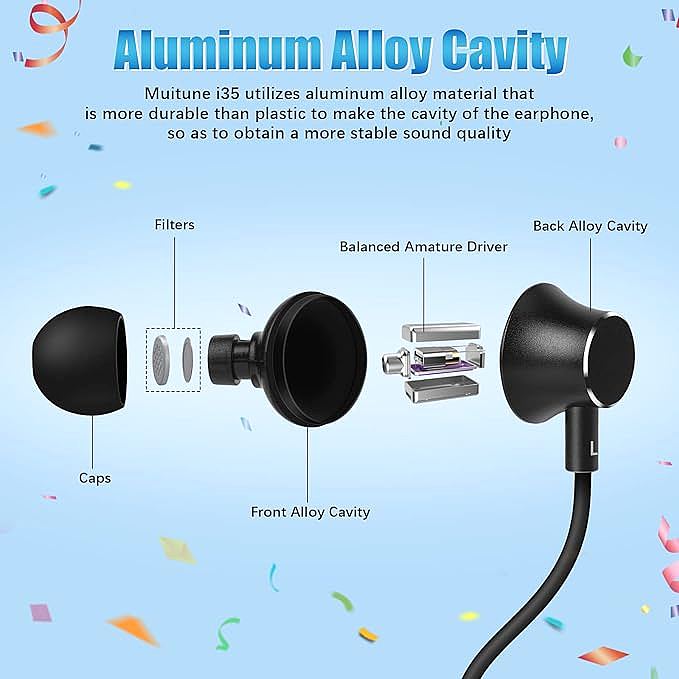
Balanced armature drivers work on a different principle than moving-coil drivers. Inside a balanced armature, a tiny reed is suspended between two magnets. When the audio signal passes through a coil wrapped around the reed, it vibrates, and that vibration is transferred to a diaphragm via a coupling rod. The entire assembly is sealed in a metal housing roughly the size of a grain of rice. Balanced armatures are efficient -- they require very little power to produce high sound pressure levels in the upper frequencies. They are also physically small, which makes them easier to fit alongside a moving-coil driver in a single earpiece.
This efficiency matters for battery life. A balanced armature driver drawing less current at high frequencies reduces the overall power consumption of the earbud during playback. The moving-coil driver handles the bass, where its larger cone moves air more effectively. The balanced armature handles the treble, where its precision and low power draw are advantageous. Together, they cover the full audible spectrum with less total energy expenditure than a single moving-coil driver straining to reproduce frequencies it was not optimized for.
Aluminum, Resonance, and the Sound of Metal
The material surrounding a driver affects the sound as much as the driver itself. Plastic earbud housings are common because plastic is cheap, lightweight, and easy to mold. But plastic has a structural weakness in audio applications: it resonates.
When a speaker cone pushes air, it also pushes against its own housing. If the housing is not sufficiently rigid, it vibrates in sympathy. These sympathetic vibrations add unwanted coloration to the sound -- a muddy, resonant smear that clouds the original signal. In audio engineering, this is called cabinet resonance, and it has been a known problem since the earliest days of loudspeaker design.
Aluminum alloy addresses this. Its Young's modulus -- a measure of stiffness -- is roughly ten times that of typical earbud plastics. A stiffer housing resists sympathetic vibration. Sound waves hit the inner wall and reflect cleanly rather than setting the wall itself into motion. Aluminum also has a higher damping coefficient than plastic. When vibrations do occur, they dissipate faster rather than ringing on. The result is a cleaner transient response: notes begin and end with precision rather than trailing off in a smeared decay.
There is a thermal benefit as well. The voice coil inside a driver generates heat during operation. Over time, excessive heat degrades the adhesive bonds that hold the coil together and can permanently damage the driver. Aluminum's thermal conductivity is significantly higher than plastic, allowing heat to dissipate away from the driver more effectively. For an earbud designed to operate for six continuous hours per charge cycle, thermal management is not a luxury. It is a longevity requirement.
The Crossover: Where Signals Split
A hybrid driver system needs a crossover to function. The crossover is an electronic circuit that divides the incoming audio signal into frequency bands and routes each band to the appropriate driver. In passive crossovers, this is done with capacitors and inductors that naturally block certain frequencies. In active crossovers, the signal is split before amplification, allowing more precise control over the crossover point and slope.
The crossover point -- the frequency where bass responsibility transfers from the moving-coil driver to the balanced armature -- is a critical design decision. Set it too low, and the balanced armature must handle frequencies it cannot reproduce with authority. Set it too high, and the moving-coil driver must reproduce upper mids where its larger cone introduces distortion. Most hybrid designs place this crossover between 1,500 Hz and 3,000 Hz, a region where both driver types perform adequately and where human hearing is less sensitive to crossover artifacts.
The slope of the crossover matters too. A gentle slope means both drivers overlap in a wide frequency band, which can cause phase interference -- the same frequency reproduced by two drivers arriving at the ear at slightly different times. A steep slope minimizes overlap but requires more complex circuitry. The engineering tradeoff is between filter complexity and acoustic purity. At lower price points, the crossover implementation likely leans toward simplicity, but the principle remains sound: two specialized drivers, each doing what it does best, combined through a carefully chosen frequency split.
IPX5: What the Rating Actually Means
Wireless earbuds marketed for exercise and outdoor use carry IP ratings. The "IP" stands for Ingress Protection. A rating of IPX5 means the device can withstand water jets from a 6.3 mm nozzle at a flow rate of 12.5 liters per minute from a distance of three meters. The "X" means the device was not formally tested for dust ingress.
In practical terms, IPX5 means the earbuds can handle sweat during intense exercise, rain during a run, and rinsing under a tap for cleaning. They are not designed for submersion. Swimming with IPX5 earbuds is not advisable -- water pressure increases rapidly with depth, and the jet test does not simulate sustained immersion. For hiking, running, and gym use, the rating is sufficient.
There is a subtlety worth noting: the IP rating applies to the earbuds, not necessarily the charging case or neckband battery unit. In neckband designs, the battery and electronics are often housed in the collar, which may have a different level of environmental protection. Users who plan to exercise heavily with neckband earbuds should understand this distinction.
Doing the Arithmetic: Why 120 Hours Is Attainable
Let us walk through the numbers one more time, this time with a clear view of all the variables.
A single earbud with a 50 mAh lithium-polymer cell, playing audio over Bluetooth 5.3 using the LC3 codec, with a hybrid driver system where the balanced armature handles high frequencies at low current draw, can reasonably achieve five to six hours of continuous playback. The Bluetooth 5.3 radio uses approximately half the power of a Bluetooth 5.0 radio for the same audio stream. The LC3 codec halves the bit rate relative to SBC at equivalent perceived quality. The balanced armature draws less current than a moving-coil driver at frequencies above 2 kHz. These savings compound.
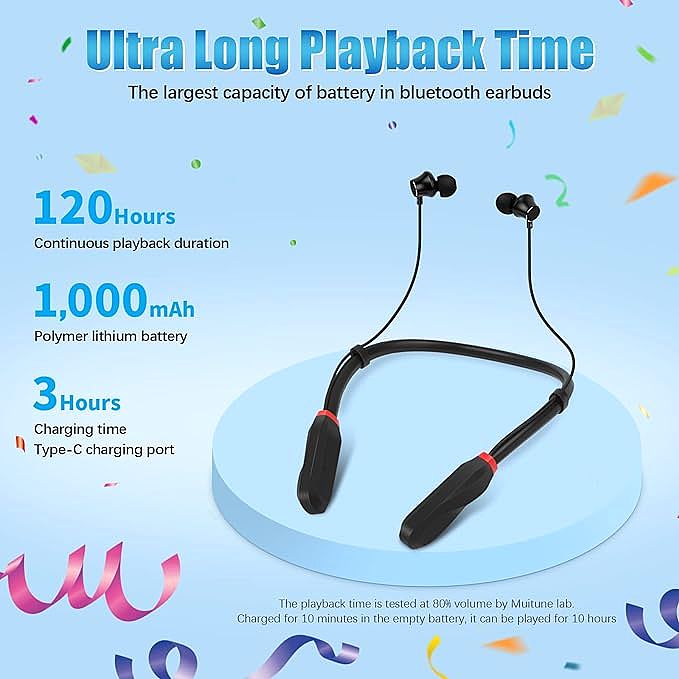
The neckband houses a 1000 mAh lithium-polymer battery. Divided by the 50 mAh capacity of each earbud, this provides approximately twenty full recharges. At five hours per charge, that is 100 hours. At six hours, 120 hours. The claimed number sits at the optimistic end of the range but remains within the bounds of engineering plausibility.
A neckband design avoids some of the power drains found in premium true wireless models. Without active noise cancellation and without the need for in-ear detection sensors or spatial audio accelerometers, the power budget shifts toward pure audio playback. The result is longer run time per charge and more total hours from a given battery capacity.
The Deeper Constraint: Chemistry Moves Slowly
All of the engineering above works within the boundaries set by lithium-ion chemistry. The energy density of lithium-polymer cells has increased by roughly 5 percent per year over the past decade. That is a compound annual growth rate that would make a stock investor yawn. The periodic table does not negotiate. Lithium sits in group one, with a specific electrochemical potential that determines how much energy a lithium-ion cell can store per unit mass. Better anode and cathode materials squeeze incremental improvements, but the fundamental ceiling is set by physics.
This is why the 120-hour claim rests not on a battery miracl but on a systems-level design philosophy: carry a larger battery in a form factor that permits it, pair it with a radio standard that wastes less energy, and use drivers that draw less current for the frequencies they reproduce. No single element is extraordinary. The result is the sum of incremental optimizations.
There is an analogy here to the early days of electric cars. The first modern electric vehicles did not invent lithium-ion batteries. They packed more of them into a chassis and managed their discharge with software that extracted every usable watt-hour. The battery chemistry did not change. The system around it did. Neckband headphones with 1000 mAh batteries follow the same logic: the chemistry is standard, but the packaging and power management push the total run time well beyond what earbuds with smaller batteries can achieve.
What This Means for the Next Generation
The current generation of Bluetooth audio stands at an inflection point. Bluetooth 5.3 is widely available. LC3 support is growing. Hybrid driver systems, once reserved for professional monitors, are appearing in devices at price points that would have seemed impossible five years ago. These trends suggest that 120-hour battery life will not remain an outlier for long.
The limiting factor is no longer the radio or the driver. It is form factor. True wireless earbuds -- the kind without any cable or neckband -- will always face a capacity ceiling because the battery must fit inside an earpiece small enough to sit in a human ear canal. Neckband designs circumvent this by moving the battery to the collar. Over-ear headphones circumvent it with even larger ear cups. The physics is the same. The packaging differs.
For anyone frustrated by daily charging rituals, the engineering lesson is straightforward: battery life is not a mystery. It is a function of capacity divided by consumption, constrained by volume and weight. When a manufacturer finds a way to increase the numerator without proportionally increasing the denominator, long run times follow. The math is public. The chemistry is known. The only variable left is how creatively a product designer applies them.
Muitune i35-JPO Wireless Earbuds
Related Essays
The Anatomy of Endurance: Deconstructing Large-Driver Acoustics and Battery Efficiency in Modern Audio

Battery Volume vs. Miniaturization: The Physics Behind Wireless Headphone Runtime

Passive Noise Isolation and 38-Hour Battery Life: How Physical Sealing Outperforms Active Circuitry
The Physics of Stamina: Decoding the 150-Hour Battery and Neckband Architecture of the Rythflo WH03

The Physics Personal Audio Cannot Escape: Why Size Still Rules Sound

The Invisible Symphony: Deconstructing Wireless Audio Fidelity

The Physics of Immersion: Deconstructing the Modern Wireless Earbud

The End of the Black Box: Why Bluetooth 5.3 and LED Displays Define Modern Budget Audio

Minimalism in Silicon: Deconstructing the Urbanista Austin's Bluetooth 5.3 Architecture
