Muitune B7 Open Ear Headphones: 55g Comfort for Workouts


Muitune B7 Over Ear Bluetooth Headphones

Most wireless headphones are built to shut the world out. The Muitune B7 Over Ear Bluetooth Headphones take the opposite approach. This open-ear, on-ear headphone weighs just 55 grams, uses 14mm air-conduction drivers, and is priced under twenty dollars. Instead of sealing your ear canal, it rests over the ear and aims sound toward the canal while leaving it open, so you keep hearing traffic, colleagues, and the world around you.
This guide breaks down exactly how these Muitune B7 open ear headphones are engineered, what each spec means in daily use, and who they suit best. The goal is simple: audio that integrates with your life rather than cutting you off from it.
A Featherlight 55g Build Made for Long Wear
The single most important number on the spec sheet is its weight: 55 grams, or about 1.94 ounces. To put that in perspective, that is lighter than a typical smartphone and a fraction of the mass of most over-ear headphones. Low mass matters because the head and ears are sensitive to sustained pressure. Heavier headphones concentrate force on the top of the head and the ears, which leads to the familiar "headphone fatigue" after an hour or two of wear, and can even contribute to neck strain during long sessions.
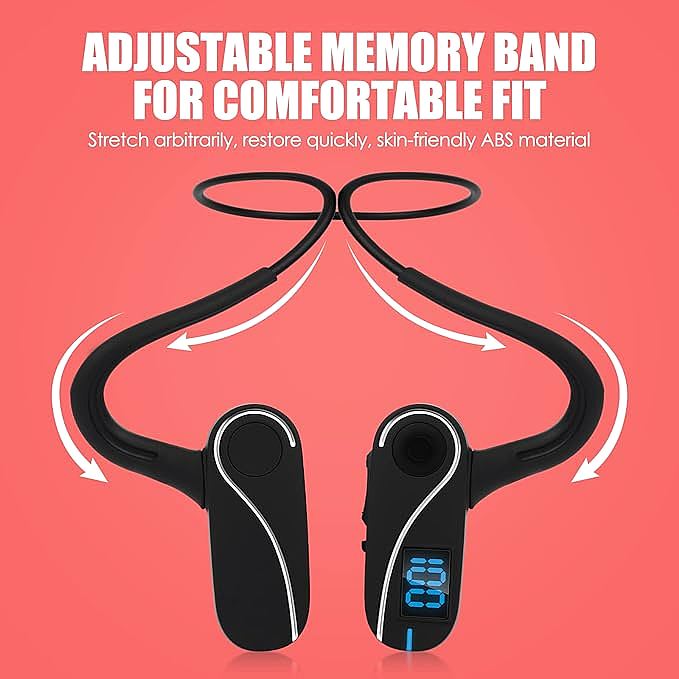
By keeping the frame light, the design reduces the clamping force needed to stay in place, which sits at the heart of its comfort story. The light frame pairs with 3D flexible earhooks that conform to different ear sizes and shapes, plus three sizes of skin-friendly rubber ear caps. The result is a secure fit that does not rely on squeezing your head. For runners, gym-goers, and anyone who wears headphones through a full workday, that low-pressure fit is the difference between forgetting you are wearing them and wanting to take them off. It also plays well with eyeglasses, since there is no heavy cup pressing the frames into the side of your head.
Open-Ear Air Conduction: Awareness Without Isolation
The set is not an in-ear bud and it is not a sealed over-ear cup. It is an open-ear, on-ear design. The earpiece rests over the ear and directs sound toward the canal while leaving the canal itself largely unobstructed. Muitune describes it plainly: it is not in-ear, it is over your ears, which means you can hear sound around you.
This is air conduction, the same way we normally hear. Sound travels through the air from the driver into the ear canal. That differs from bone conduction, which rests on the cheekbones and vibrates sound through the skull to bypass the eardrum entirely. The distinction matters for sound quality. Because a real speaker aims at the canal, the open-ear set delivers fuller bass and clearer vocals than most bone-conduction headphones, which tend to sound thin and lack low-end punch. The trade-off is that open-ear designs do not passively block outside noise the way sealed earbuds or noise-cancelling over-ears do. You get awareness instead of isolation, which is exactly the point for anyone moving through traffic, cycling, or working around other people. Your brain is naturally good at picking out the sounds that matter, and an open design lets that ability keep working.
14mm Drivers Tuned for Spoken Word and Everyday Sound
The 14mm speaker drivers are a sensible size for compact open-ear and sports headphones. Driver size is a rough indicator of how much air a unit can move and how much bass it can produce. In an open design, the driver cannot rely on the acoustic reinforcement of a sealed ear cup, so tuning matters even more. The goal is clear, present audio with reasonable presence rather than deep, rumbling bass.
In practice, that tuning suits the intended use. Podcasts, audiobooks, calls, and casual music all sound clear and easy to follow. Listeners who come from sealed in-ear buds will notice less bass and less of that "inside your head" feeling, but they gain the ability to hear their surroundings at the same time. For spoken content especially, the open-ear presentation is comfortable and natural, and it avoids the pressure buildup that some people feel after long periods with in-ear tips seated deep in the canal.

Bluetooth 5.3 with Multipoint: Two Devices at Once
The B7 uses Bluetooth 5.3, a recent version of the wireless standard. Compared with older versions such as Bluetooth 4.x or 5.0, Bluetooth 5.3 brings lower latency, which matters for video and calls, along with better connection stability, improved range, and better power efficiency that helps battery life. The set does not advertise a specific high-end audio codec, so it relies on the standard wireless audio that most devices support.
The more useful everyday feature is multipoint connectivity. Multipoint lets the headphones stay connected to two Bluetooth devices at the same time. Picture listening to a podcast on a laptop while a phone call comes in. With multipoint, they can switch to the phone for the call and then switch back to the laptop automatically, with no manual disconnecting and reconnecting. For anyone who juggles a phone and a computer through the day, that small feature removes a surprising amount of daily friction and makes the set a more versatile companion.
15 Hours of Playtime and USB-C Fast Charging
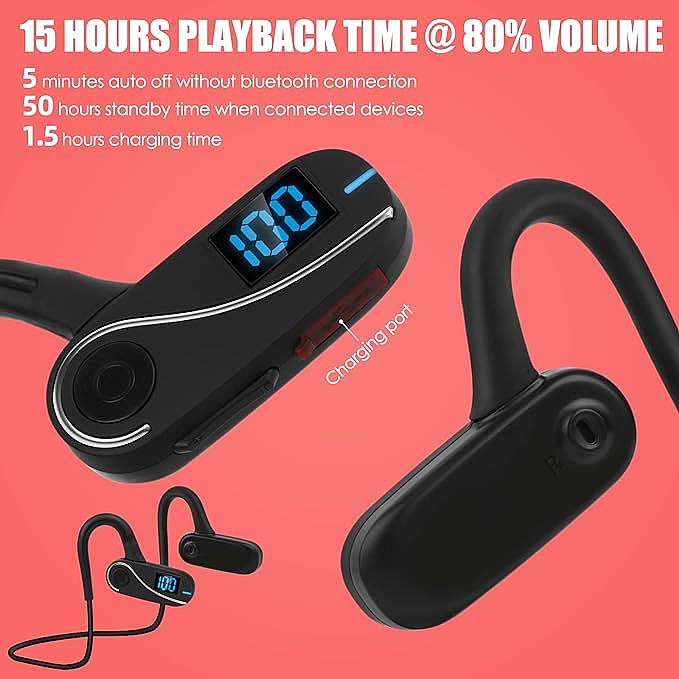
Battery life is where the headphones aim to remove another worry. They are rated for up to 15 hours of playtime on a single charge, powered by a lightweight lithium-polymer cell. Fifteen hours comfortably covers a full workday, a long commute, and an evening workout, or several shorter sessions across a week. Real-world results line up well with that claim; one owner reported getting through a full workday of listening at moderate volume and still having charge left over when they got home.
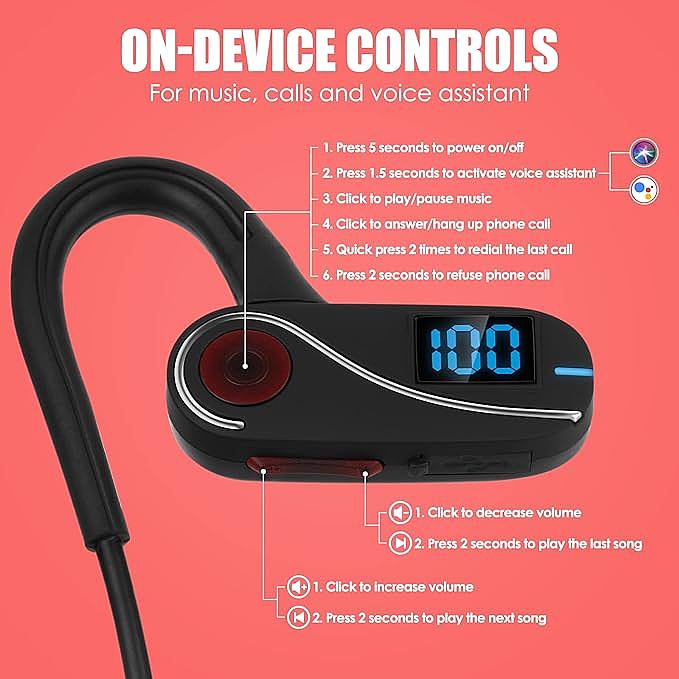
When the battery does run low, the set charges over USB-C, and a full charge takes about 1.5 hours. USB-C is the modern standard, so you can share a cable with most current phones and laptops. The headphones also include a digital power display that shows remaining battery as a clear number, which is far more useful than a vague blinking LED for planning when to charge and avoiding a dead battery partway through the day.
IP65 Dust and Sweat Resistance for Workouts
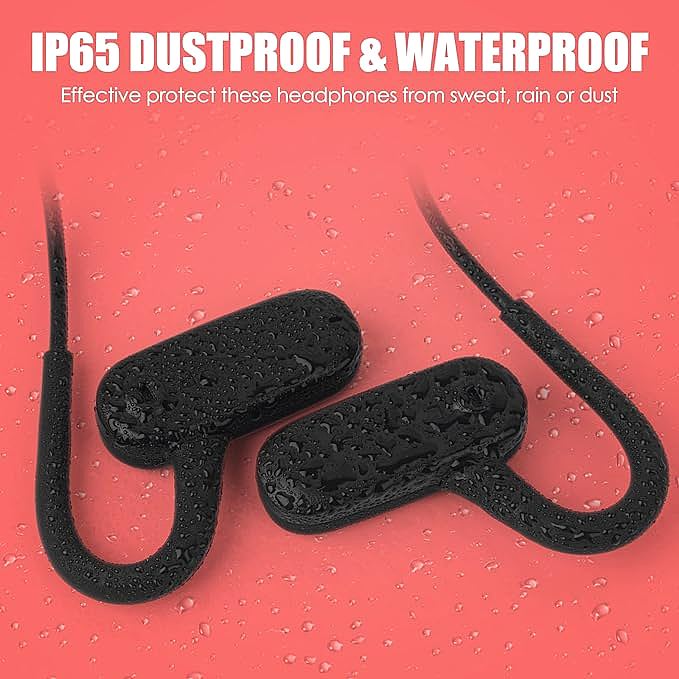
For headphones built with exercise in mind, durability against the elements matters. The set carries an IP65 rating. IP stands for Ingress Protection, and the two digits have specific meanings under the IEC 60529 standard. The first digit, 6, means the headphones are dust-tight, with complete protection against dust ingress. The second digit, 5, means protection against water jets projected from a nozzle from any direction.
In daily terms, IP65 translates to strong resistance against sweat during hard workouts and the ability to handle light to moderate rain. You can wear them on a drizzly run or through a sweaty gym session with confidence. The limit is important to understand: IP65 does not mean the headphones are waterproof enough for submersion. They are not designed for swimming or sustained, powerful water pressure. For the typical rigors of an active lifestyle, though, IP65 provides a reassuring level of protection that keeps the set working where a lesser-rated model would eventually fail.
Calls with ENC and CVC 8.0 Microphone Processing
Clear phone calls are a common expectation, and the headphones include two technologies to help: ENC (Environmental Noise Cancellation) and CVC 8.0 (Clear Voice Capture). They work at different stages. ENC acts before your voice is mixed into the transmitted signal, identifying and reducing persistent low and mid-frequency background noise. CVC 8.0 is a set of algorithms applied to the voice signal during transmission, suppressing echo and noise that has already been picked up so your voice comes through clearer on the other end.
Call quality on open-ear headphones is inherently a compromise. Because the microphones are exposed to the surrounding environment, they pick up more ambient noise than a sealed design or a boom mic positioned near the mouth. In quiet settings the headphones perform adequately, but in noisy environments call quality will be mixed. If calls in loud places are a priority, this is the trade-off to be aware of.
Who Should Consider the Muitune B7
At $19.99, the Muitune B7 Over Ear Bluetooth Headphones pack a focused set of strengths: a featherlight 55g open-ear design, Bluetooth 5.3 with multipoint, a 15-hour battery with fast USB-C charging, IP65 sweat and dust resistance, and dual noise-canceling microphone technologies. User feedback scores the pair well on comfort and sound quality for an open-ear design, and on battery life.
The set is a strong fit for the person who prioritizes situational awareness and long-wearing comfort above all else, especially during exercise or in environments where hearing your surroundings matters. It is a weaker fit for anyone who wants deep bass, passive noise isolation, or reliable calls in loud places. For the runner, the commuter, the gym-goer, or the desk worker who wants audio that coexists with life rather than blocking it out, this open-ear pair is a compelling, well-grounded option that does not break the bank.
Muitune B7 Over Ear Bluetooth Headphones
Related Essays

How the ASIILOVI VG332 Open Ear Headphones Use Air Conduction

Meseto F960 Open Ear Headphones: The Science of Situational Audio for Active North American Lifestyles

Baixhur BH-OEH-05 Open Ear Bluetooth Headphones: Great Budget Pick for Sports

ALLWAY PL10 pro Open Ear Headphones - Wireless Bluetooth 5.3 Headset for Sports and Workouts

DOVIICO ONE Lite-Q1 Open Ear Bluetooth Headphones : A Budget-Friendly Open-Ear Bluetooth Experience

MALIHOO GRESTU YYK-Q730: Open-Ear Headphones for Comfortable & Safe Listening

BONSORION Open Ear Headphones: Enjoy Sound, Stay Aware

BANIGIPA G5 Open Ear Headphones: Enjoy Sound, Stay Aware

Baixhur BH-OEH-05 Open Ear Headphones: A Budget-Friendly Wireless Option for Active Lifestyles

