Passive Noise Isolation and 38-Hour Battery Life: How Physical Sealing Outperforms Active Circuitry

Tecno Bravo B1 Wireless Earbuds
Passive Noise Isolation and 38-Hour Battery Life: How Physical Sealing Outperforms Active Circuitry
Your earbuds die at 4:47 PM. Again. The morning commute drained half the battery. A lunchtime walk took the rest. Now you are reaching for a charging case that, predictably, is also empty. This is the central problem of true wireless earbuds: their batteries are too small to outlast a single demanding day, and their charging cases are too small to recharge them more than twice. The Tecno Bravo B1 takes a different engineering path. By moving the battery off the ear and onto a neckband, it carries a 300 mAh lithium-polymer cell roughly five to seven times larger than what fits inside each true wireless bud. The result is a stated 38 hours of playback at 60% volume. But the more interesting story is not the number itself. It is the cascade of engineering decisions that make that number possible, and the accumulated effect of each choice compounds into the final performance profile, and what those decisions reveal about the tradeoffs built into personal audio. 
Why True Wireless Earbuds Will Always Run Out
A typical true wireless earbud houses a battery between 40 and 60 mAh. This is not laziness on the part of engineers. It is geometry. The human ear canal accepts a cylinder roughly 8 mm in diameter and 20 mm in depth. After subtracting space for the driver, the Bluetooth radio, the antenna, the microphone, and the charging contacts, what remains for the battery is a volume smaller than a pencil eraser. Lithium-polymer cells store energy at roughly 250-270 Wh per liter. A 50 mAh cell at 3.7 volts occupies about 0.7 cubic centimeters. That is the hard ceiling. You cannot cheat electrochemistry. Even with solid-state batteries on the horizon, energy density improvements arrive at roughly 5-8% per year. A true wireless earbud in 2026 is not meaningfully better at storing energy than one from 2020. The neckband form factor sidesteps this constraint entirely. A 300 mAh cell fits comfortably along a flexible band that rests on the collarbones. This design approach is exactly what the Tecno Bravo B1 uses, and the rationale behind it reflects a deliberate prioritization of endurance over compactness, and the capacity difference translates directly into runtime. Where a true wireless bud delivers 4-6 hours per charge, this neckband delivers 38. The math is straightforward: six times the capacity, roughly six times the playback. ## The Silent Tradeoff Inside Active Noise Cancellation
Active noise cancellation has become a checkbox feature. Marketing materials treat it as unambiguously desirable. The physics tells a more complicated story. ANC works by sampling ambient sound through microphones, inverting the waveform digitally, and projecting the opposing signal through the speaker driver to cancel external noise, and playing the inverted signal through the speaker. When the original sound and the inverted signal meet at the eardrum, the acoustic energy of both waves cancels through destructive interference, reducing perceived noise, destructive interference cancels the perceived noise. This requires a digital signal processor running continuously, microphone arrays sampling at kilohertz rates, and amplification circuits producing anti-noise in parallel with music playback, microphones sampling at kilohertz rates, and a speaker producing the anti-noise signal alongside your music. All of that processing consumes power. In a true wireless earbud with ANC enabled, battery life typically drops from 5-6 hours to 3-4 hours. In a neckband design with a much larger battery, the percentage hit is smaller in absolute terms but still significant. A neckband earbud that might last 20 hours without ANC can drop to 8-12 hours with it enabled, because the continuous processing demands of noise cancellation draw significant power from the battery. This neckband ships without ANC. This is not an omission. It is an engineering choice that preserves the battery advantage. Instead of active circuitry, it relies on passive noise isolation, which achieves sound reduction through the physical barrier of a well-fitted silicone tip without requiring any electronic processing, the physical sealing of the ear canal with silicone ear tips. Passive isolation works differently. It does not cancel sound. It blocks it. A well-fitted silicone tip creates an acoustic seal that attenuates incoming sound across all frequencies simultaneously. No DSP. No microphone latency. No battery cost. The seal quality depends on the fit between the tip and the ear canal, which is why the package includes two pairs of ear tips and three pairs of ear hooks. The combination allows the user to find a seal that blocks ambient sound mechanically rather than electronically. The frequency response of passive isolation differs from ANC in important ways. ANC is most effective against low-frequency, periodic sounds: airplane engine drone, HVAC hum, refrigerator compressor cycling. These sounds are predictable enough that the DSP can generate an accurate anti-signal. Passive isolation, by contrast, attenuates broadband noise. It does not care whether the sound is periodic or sudden. A car horn, a shattering glass, a shouted voice, all are reduced by the same mechanical barrier. ANC, with its processing latency of 2-10 milliseconds, struggles with these transient events because the anti-signal arrives after the sound wave has already passed the eardrum because the anti-signal arrives too late. ## Diaphragm Area and the Physics of Bass
This neckband uses a 13.6 mm 13.6mm driver. This number is easy to gloss over, but it encodes a specific relationship between driver geometry and low-frequency output. A 13.6mm driver is essentially a piston. A voice coil sits in a magnetic field, alternating current from the amplifier drives the coil, and the attached diaphragm pushes air. The force the diaphragm can exert on the air is proportional to its surface area. A 13.6 mm driver has approximately 145 square millimeters of radiating area. An 8 mm driver has roughly 50 square millimeters. That is a factor of nearly three. For bass reproduction, this area advantage matters. Low frequencies require moving large volumes of air. A small diaphragm must travel farther to move the same volume, which increases distortion and reduces efficiency. A larger diaphragm moves less distance to achieve the same output, staying within its linear operating range. The practical result is that a 13.6 mm driver produces audibly stronger and cleaner bass than an 8 mm driver at the same power level. This is not a subtle effect. User feedback on this neckband consistently notes that bass response exceeds expectations for the price category. That perception is not subjective preference. It is the direct consequence of radiating area. The driver is large enough to move sufficient air at low frequencies without requiring excessive excursion or equalization boost. 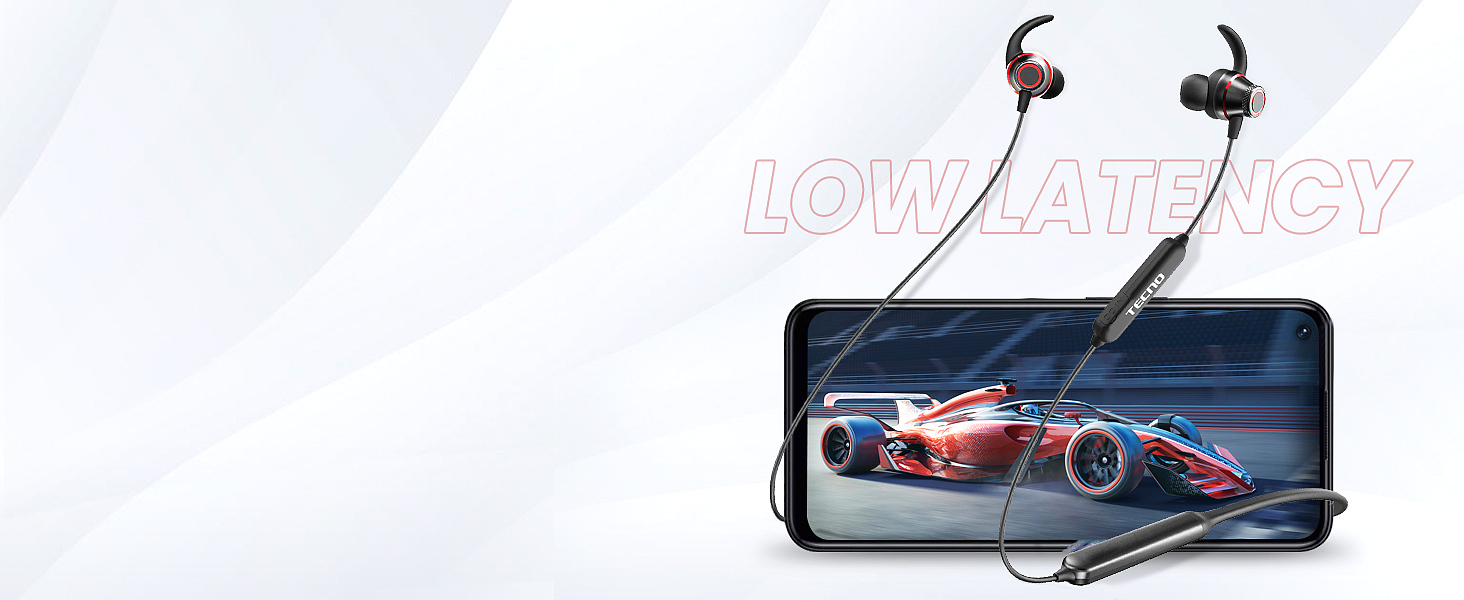
Bluetooth 5.0 and the 2 Mbps Physical Layer
Bluetooth 5.0 doubled the physical layer data rate from 1 Mbps to 2 Mbps compared to Bluetooth 4.x. For audio, this matters in ways that are not immediately obvious. The SBC codec, mandatory in all Bluetooth audio devices, operates at bitrates up to 328 kbps. Even at maximum quality, SBC uses less than one-third of the available Bluetooth 4.x bandwidth. So why does the doubled rate of Bluetooth 5.0 matter? The answer is interference resilience. Bluetooth operates in the 2.4 GHz ISM band, shared with Wi-Fi, microwaves, and countless other wireless devices that can create interference in the same frequency range, and countless other devices. When interference corrupts a packet, the receiver must request a retransmission. With a 2 Mbps physical layer, retransmissions complete in half the time, leaving more bandwidth for the primary audio stream. The practical effect is fewer dropouts and more stable connections in crowded RF environments like apartment buildings and gyms. Users have reported that the neckband maintains a stable connection across a 3,300 square foot house, including between floors. This is consistent with Bluetooth 5.0's improved range and the neckband's ability to position the antenna higher on the body, away from the signal-absorbing mass of the torso that true wireless buds must contend with. ## The 600 Microamp Standby and Aggressive Power Gating
A 300 mAh battery delivering 500 hours of standby implies a static current draw of roughly 0.6 mA. Achieving this requires what engineers call aggressive power gating: shutting down subsystems that are not actively needed. In standby, the Bluetooth radio does not need to maintain an active data link. It enters a low-duty-cycle sniff mode, waking briefly at negotiated intervals to check for incoming connections. The DSP is idle. The DAC is idle. The amplifier is idle. Each of these subsystems, when fully powered, draws milliamps. When gated off, they draw microamps or less. The difference between 5 mA and 0.6 mA standby current is the difference between 60 hours and 500 hours of standby. That factor of eight comes entirely from disciplined power management at the silicon level. It is unglamorous engineering, but it is what makes the 500-hour standby claim plausible rather than aspirational. Users have reported real-world results that align with the specification. One account describes a 66-hour international trip on a single charge, with battery remaining at arrival. Another describes going two to three weeks between charges during typical daily use. These reports are consistent with the 38-hour playback specification and the 500-hour standby specification. ## IPX5: What the Standard Actually Requires
The IPX5 rating means this neckband can withstand water jets from a 6.3 mm nozzle delivering 12.5 liters per minute at 30 kPa pressure applied for three minutes from any direction without damage to internal components, applied from any direction for three minutes. This is roughly equivalent to heavy rain or sustained heavy sweating during exercise. Achieving IPX5 requires more than external seals. The internal circuit board is typically protected by a fluoropolymer nanocoating applied through plasma vapor deposition. This process deposits a molecular-thin layer of fluorocarbon polymer onto the PCB and components. The coating is hydrophobic, causing water to bead and roll off rather than spreading and creating conductive paths between adjacent pins. The coating has limitations. It degrades with abrasion and UV exposure over time. It does not protect against immersion; IPX5 explicitly excludes submersion scenarios. Swimming with IPX5-rated earbuds will damage them. The rating addresses rain, sweat, and splashing, not underwater use. 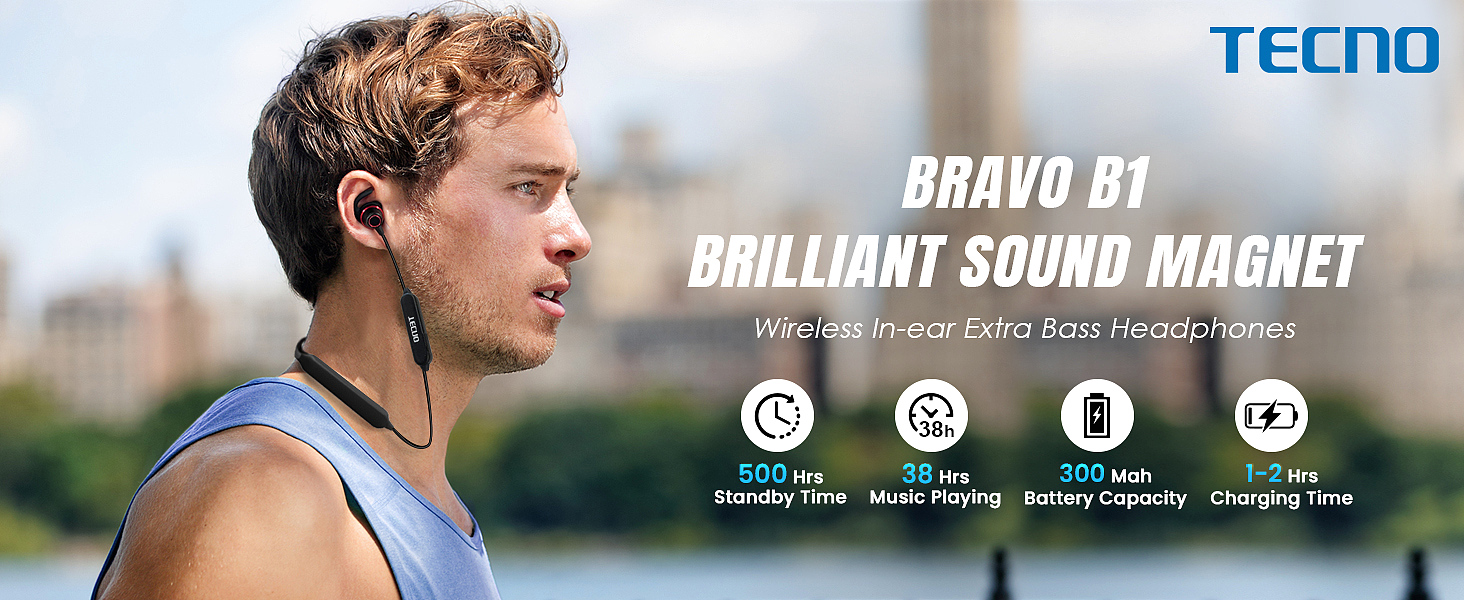
Ear Hook Biomechanics and Silicone Fatigue
The ear hooks on this design distribute retention force across two anatomical structures: the antihelix, the raised rim surrounding the ear canal, and the cymba conchae, the hollow above the ear canal entrance. True wireless earbuds rely almost entirely on friction within the ear canal itself, which is why they dislodge during vigorous movement. By anchoring the earbud at two points rather than one, the hook converts pulling forces from the cable into compression against the antihelix, which is structurally suited to bearing sustained mechanical load, the hook converts pulling forces from the cable into compression against the antihelix, a structure well-suited to bearing load. Users report that the earbuds stay in place during running, dancing, bending, and even sleeping. The silicone ear tips, however, are subject to material fatigue. Silicone is an elastomer, and like all elastomers, it undergoes gradual chain scission under repeated mechanical stress and environmental exposure. After 12-18 months of daily use, the tips may loosen, crack, or detach from the earbud nozzle. This is not a manufacturing defect. It is the predictable behavior of the material under repeated mechanical stress and environmental exposure that affects all silicone elastomers over time. Replacing the tips restores the seal and the isolation quality. ## Lithium-Ion Degradation: The Calendar Clock
All lithium-ion cells degrade over time, whether used or not. The primary mechanism is the growth of the solid-electrolyte interphase, a passivation layer that forms on the anode surface during the first charge cycle and continues to grow slowly throughout the cell's life. As the SEI layer thickens, internal resistance increases, and effective capacity decreases. Users have reported that after 12-18 months, battery life decreases from weeks between charges to one or two weeks. This timeline is consistent with the degradation curve of a 300 mAh lithium-polymer cell under typical cycling conditions. The cell does not fail suddenly. It fades. This is worth understanding because it reframes the battery life specification. The 38-hour figure describes a new cell. After a year, it may describe a 28-30 hour cell. After two years, perhaps 20-22 hours. These are estimates based on typical degradation rates, not measurements of this specific product. But the principle is general: lithium-ion batteries are consumable components, and their performance declines with calendar age and cycle count. ## The Subtraction Principle
This neckband's engineering philosophy can be described as subtraction. It subtracts the charging case by using a neckband. It subtracts ANC by relying on passive isolation. It subtracts the small-driver compromise by using a 13.6 mm diaphragm. Each subtraction preserves something: battery life, simplicity, bass response. This is not a universally superior approach. Users who need active noise cancellation for airplane travel or open-office environments will find passive isolation insufficient. The lack of ANC is a real limitation, not a hidden virtue. But for users whose primary demands are long battery life, stable connection, and physical durability during movement, the subtractions produce a device that aligns closely with those priorities. Engineering is rarely about adding capability. More often, it is about deciding what to leave out. Every feature added consumes power, adds complexity, and introduces failure modes. A 38-hour battery life is not the result of a innovation in energy storage. It is the result of choosing not to spend that energy on features that would conflict with the primary goal. In a market that reflexively adds features, that restraint is the more interesting design decision.
Tecno Bravo B1 Wireless Earbuds
Related Essays

Battery Volume vs. Miniaturization: The Physics Behind...

IPX4 Waterproof Rating: What Splash Protection Really Means

How Tiny Drivers Produce Big Sound: The Physics Behind Wireless Earbuds
How Tiny Drivers Produce Big Sound: The Physics Behind Wireless Earbuds
How Tiny Drivers Produce Big Sound: The Physics Behind Wireless Earbuds
How Tiny Drivers Produce Big Sound: The Physics Behind Wireless Earbuds

Mosonnytee Sleep Headphones – Comfortable and Long-lasting Sleep Earbuds

Mosonnytee Sleep Headphones – Comfortable and Long-lasting Sleep Earbuds

MOYAGOA MFi Certified AirPods Pro Wireless Earbuds – Top-notch Features and Performance
