Sport Earbuds Technology Explained: The Physics of Fit, Waterproofing, and Sound

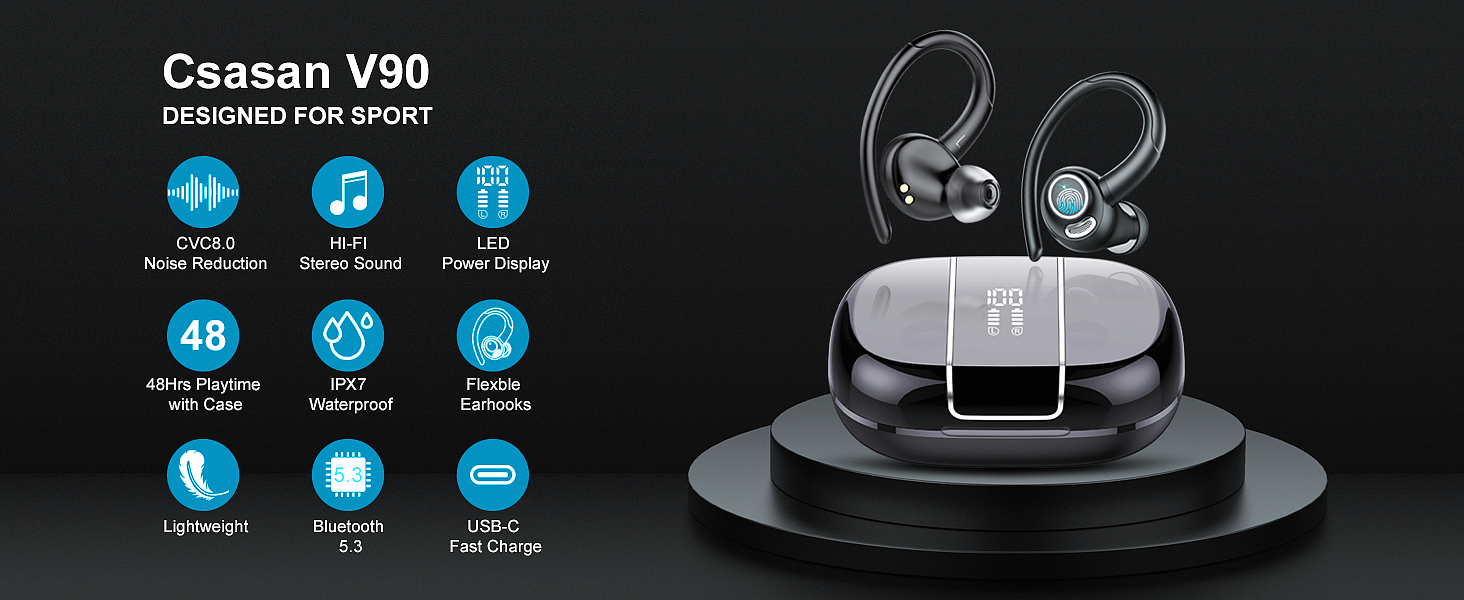
Csasan V90 Wireless Earbuds
Your wireless earbuds slide out mid-sprint. Sweat triggers a connection drop. Bass distorts with every stride. These are not isolated inconveniences; they are symptoms of a deeper engineering gap between consumer earbuds and the demands of athletic activity.
Sport earbuds occupy a narrow intersection of biomechanics, materials science, and digital audio engineering. A model like the Csasan V90, with its over-ear hook design, IPX7 waterproofing, and Bluetooth 5.3 connectivity, attempts to bridge that gap. But to evaluate whether any sport earbud truly works, you must understand the physics and engineering principles that determine success or failure.
 .
.
The Physics of Staying Put
Running generates vertical accelerations of three to four times Earth's gravity with every foot strike. Lateral forces emerge during direction changes, creating centrifugal loads that push earbuds outward. Sweat acts as a lubricant, reducing the coefficient of friction between silicone tips and skin to near zero. Three independent forces converge on a two-centimeter device, and gravity is not even the primary culprit.
Earhook designs solve this problem by converting the ear from a passive receptacle into an active anchor point. The hook wraps around the antihelix and concha bowl, regions of cartilage that provide natural undercuts. Multiple contact points distribute clamping force across a larger surface area, reducing pressure at any single point. Medical-grade silicone maintains sufficient friction even when wet, while memory titanium wire cores allow the hook to conform to individual ear anatomy after several wears.
Earfin designs take a different approach. A thin fin extends from the earbud body and slides into the cymba conchae or behind the tragus, creating a mechanical lock that resists outward pull. Multiple fin sizes allow customization. The fin does not bear the primary load; it prevents rotational movement that would break the seal between driver housing and ear canal.
The angled driver housing adds a third stabilizing mechanism. The human ear canal tilts at approximately thirty to forty-five degrees from the horizontal plane. When the driver housing follows this natural angle, mouth opening and jaw movement produce a self-sealing effect rather than a dislodging force. The harder you speak or chew, the more tightly the housing seats itself.
These principles are standardized through ISO 5293, the audio equipment fit testing protocol. Comfort scoring under this standard requires forty-eight hours of continuous wear simulation. Movement simulation tests include head shaking at frequencies matching real running cadence, typically between 160 and 180 beats per minute.
Waterproof Ratings Decoded
The IPX rating system comes from IEC 60529, the international standard for ingress protection. It measures resistance to solid objects and liquids, with the second digit indicating water resistance. Sport earbuds use the IPX scale, which omits solid particle protection since earbuds are too small to meaningfully block dust.
IPX4 represents splash resistance. Water droplets from any direction must not cause malfunction. This covers sweat during indoor workouts and light rain during outdoor runs. IPX5 adds water jet resistance, sufficient for heavy perspiration and high-intensity interval training where sweat generation spikes dramatically. IPX6 handles powerful water jets, an over-specification for most athletic use but relevant for athletes training in monsoon conditions.
IPX7 means immersion in one meter of water for thirty minutes without water ingress. This rating exceeds typical athletic requirements but provides a safety margin for unexpected submersion. IPX8 extends immersion depth and duration beyond one meter, used in swimming-specific earbuds that must withstand water pressure at depth.
The engineering behind IPX7 waterproofing involves multiple parallel strategies. Expanded polytetrafluoroethylene membranes, commonly known by the trade name ePTFE, allow air pressure equalization while blocking liquid water. These membranes have micro pores between zero point one and ten micrometers in diameter, small enough that surface tension prevents water molecules from passing through under moderate pressure. Silicone gaskets around the driver housing create a primary seal. Ultrasonic welding fuses the outer shell to the internal frame at the molecular level, eliminating seams where water could penetrate.
Sweat presents a unique challenge that pure water resistance testing does not capture. Human sweat has a pH range between four point five and seven, making it weakly acidic to neutral. Over five hundred hours of sweat exposure, different pH levels accelerate degradation of silicone materials and corrode metal charging contacts. Quality sport earbuds undergo accelerated aging tests using synthetic sweat solutions at multiple pH levels to verify long-term durability.
 .
.
The Bluetooth Connection Under Load
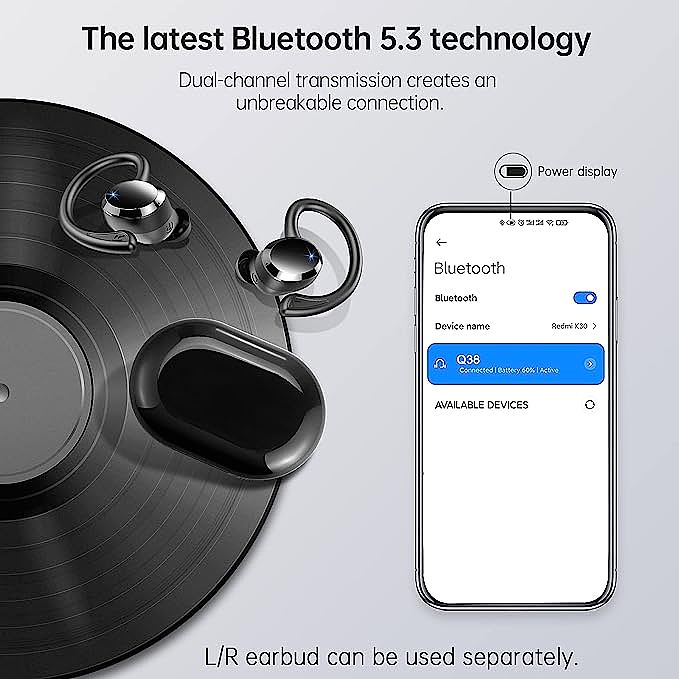
Bluetooth 5.3 represents the fifth major revision of the wireless standard maintained by the Bluetooth Special Interest Group. For sport earbuds, version numbers translate to three practical improvements: reduced latency, improved connection stability, and lower power consumption.
Audio codecs determine how digital audio data compresses for wireless transmission. SBC, the Subband Codec, is the Bluetooth baseline. It operates at approximately 345 kilobits per second with latency between one hundred fifty and two hundred fifty milliseconds. Its universal compatibility is its greatest strength. Every Bluetooth device supports SBC, making it the fail-safe codec when connection stability takes priority over sound quality.
AAC, the Advanced Audio Codec, operates at around 250 kilobits per second but delivers higher perceived audio quality at that bit rate through more efficient compression algorithms. Latency ranges from one hundred to two hundred milliseconds. AAC is optimized for Apple devices but works across platforms. For athletes who prioritize battery life and connection reliability over audiophile-grade sound, SBC and AAC represent the rational choice.
aptX variants serve different use cases. The original aptX provides four-to-one compression without significant quality loss. aptX HD pushes to 576 kilobits per second for high-resolution audio. aptX Low Latency achieves forty to sixty milliseconds, critical for video synchronization during workout streaming. aptX Adaptive varies bit rate between 276 and 420 kilobits per second based on connection quality, optimizing for either audio fidelity or stability.
The LDAC codec, developed by Sony, supports up to 990 kilobits per second and is natively supported on Android 8.0 and above. For competitive athletes watching training videos or race broadcasts on their phones, LDAC eliminates the lip-sync delay that frustrates casual listeners.
Gym environments present significant Bluetooth interference challenges. Multiple devices transmit on the same 2.4 gigahertz frequency simultaneously. Wi-Fi routers, microwave ovens, and Bluetooth headphones all compete for channel bandwidth. Bluetooth 5.3 introduces LE Audio and the Auracast broadcast standard, which include improved frequency hopping algorithms that switch channels more rapidly when interference is detected.
Driver Size and Sound Quality
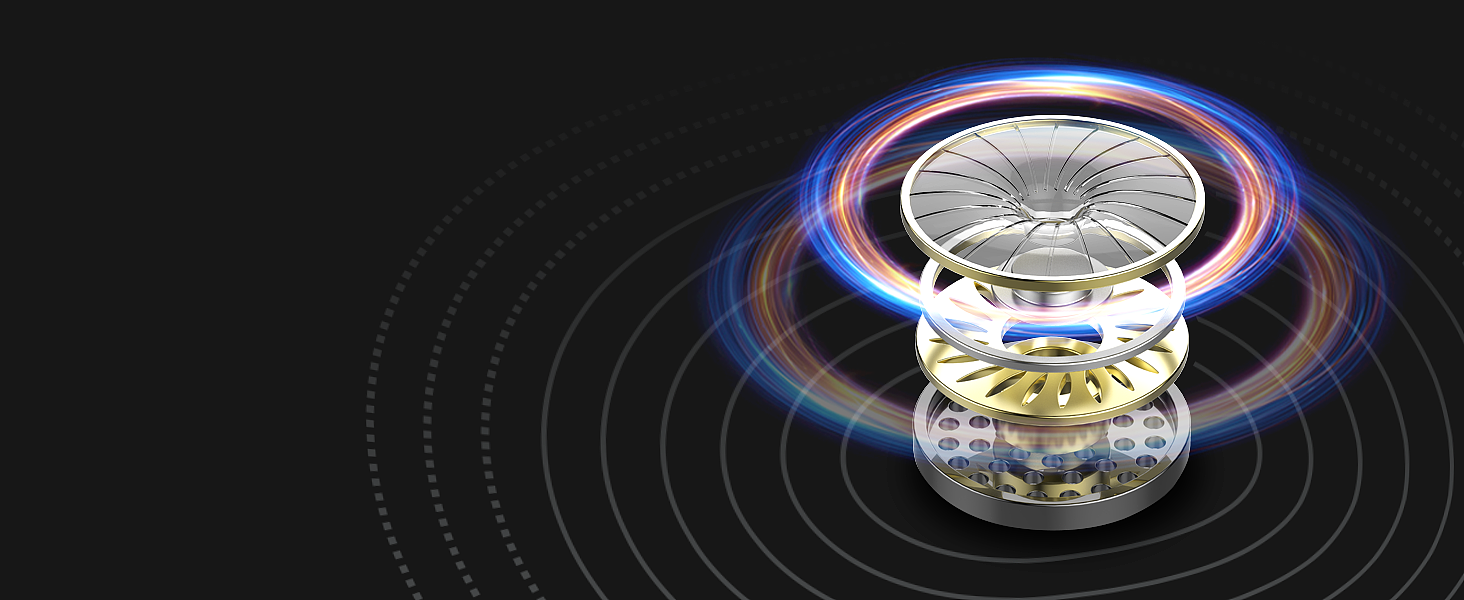
The driver is the component that converts electrical signals into sound waves. A moving coil consists of a voice coil attached to a diaphragm. When audio current passes through the coil, it interacts with a permanent magnet, causing the diaphragm to vibrate and produce sound.
Driver size correlates directly with bass response. Six millimeter drivers produce bright, articulate sound with weaker low-frequency extension. Eight millimeter drivers offer a balanced compromise between clarity and bass depth. Ten millimeter and larger drivers deliver fuller, more impactful bass but require larger housing, which can compromise the internal seal that determines overall sound quality.
The Csasan V90 uses a 13 millimeter moving coil driver, which sits at the larger end of the earbud spectrum. Larger drivers move more air, producing deeper bass frequencies that are perceptually important during high-intensity exercise where rhythmic low frequencies help maintain cadence. The frequency response range of 20 Hz to 20 kHz covers the full spectrum of human hearing, though most people cannot reliably perceive frequencies above 16 kHz after age thirty.
Moving coil drivers dominate the earbud market because they deliver the best bass-to-size ratio. Balanced armature drivers, commonly used in in-ear monitors for musicians, offer clearer mids and highs but weaker bass extension. Hybrid drivers combine both types, using a balanced armature for high frequencies and a moving coil driver for bass, but the crossover network that splits frequencies between drivers adds complexity and cost.
Chamber volume inside the driver housing significantly influences low-frequency response. Larger enclosed volumes allow bass frequencies to develop fully. Port location and pressure equalization holes fine-tune the acoustic signature. Some manufacturers use 3D-printed chambers for custom optimization, though this is more common in custom in-ear monitors than mass-market sport earbuds.
 .
.
Battery Engineering for Athletic Sessions
Each earbud contains a lithium polymer battery between forty and eighty milliamp-hours in capacity. Real-world playback time ranges from four to eight hours depending on volume level, codec complexity, and active noise cancellation. The charging case typically holds between four hundred and eight hundred milliamp-hours, providing two to four full recharges.
Fast charging standards have converged on a predictable pattern. Ten minutes of charging delivers one to two hours of playback. Fifteen minutes yields two to three hours. Thirty minutes provides four to six hours. This matters for athletes who forget to charge earbuds before morning training. A quick charge during a shower is often sufficient for a full workout session.
USB-C charging at five volts and zero point five amps represents the baseline. Nine volts at two amps delivers faster charging for the case. Wireless Qi charging, operating at five to ten watts, adds convenience at the cost of charging speed and additional weight.
Call Quality in Noisy Environments
Gym environments generate seventy to eighty-five decibels of ambient noise. Outdoor running introduces wind noise, traffic rumble, and environmental variability. Call quality depends on beamforming microphone arrays and digital signal processing.
Each earbud contains multiple microphones. Beamforming uses the time delay between microphone inputs to isolate sound coming from the wearer's mouth while suppressing noise from other directions. This technique improves the signal-to-noise ratio by four to six decibels, a meaningful improvement in challenging acoustic environments.
Qualcomm's Clear Voice Capture technology combines echo cancellation, noise suppression, and automatic volume adjustment. The system adapts in real time to changing acoustic conditions. During a phone call at a loud gym, it identifies and filters out the rhythmic thump of bass-heavy workout music and the clatter of weight machines.
What Determines True Performance
The technology behind sport earbuds is not mysterious. Each component, from the earhook's cartilage anchor to the ePTFE waterproof membrane to the Bluetooth frequency hopping algorithm, relies on well-established engineering principles. What separates effective sport earbuds from mediocre ones is how these components work together as a system.
A stable fit means nothing if sweat degrades the seal within weeks. Waterproofing is irrelevant if Bluetooth dropout interrupts your session during the final set. Premium codecs waste energy on batteries that die mid-workout. The athlete who understands these trade-offs can evaluate any sport earbud against real performance criteria rather than marketing claims.
The Csasan V90 represents one configuration in this space, combining over-ear stability, IPX7 protection, and Bluetooth 5.3 connectivity. Its 13 millimeter driver and SBC/AAC codec support reflect engineering choices optimized for stability and battery efficiency rather than audiophile precision. Whether that configuration serves you depends entirely on how you move, where you move, and what you expect from the music that accompanies the effort.
Technology only works when it stays out of your way. The best sport earbud is the one you forget you are wearing until the last note fades.
Csasan V90 Wireless Earbuds
Related Essays

Silencing the Copper Wire: The Invisible Architecture of Modern Audio
The Four Pillars of Unbreakable Sport Audio

How True Wireless Stereo Technology Rewired the Way We...

The Science Behind Wireless Audio: From Bluetooth Origins...

Why Your Wireless Earbuds Last 48 Hours: The Physics Behind Battery and Sound

Beyond the Driver: The Hidden Physics of Modern Wireless Audio

Anypub A11 Wireless Earbuds: Your Ultimate Audio Companion for Crystal-Clear Calls and Immersive Music

Senso PODS Plus Wireless Earbuds - True Wireless Earbuds for Everyday Use

LIUHE HX 801 Neckband Bluetooth Headphones: A Budget-Friendly Wireless Choice
