IPX4 Waterproof Rating: What Splash Protection Really Means

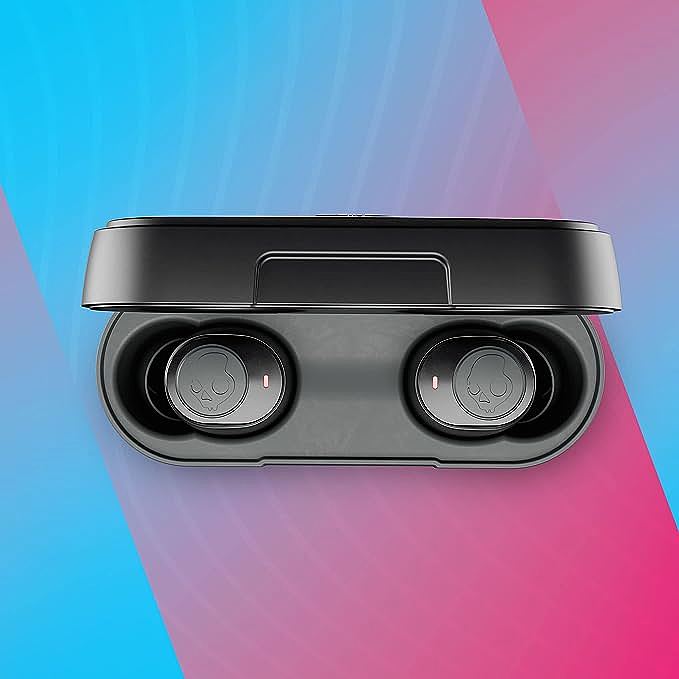
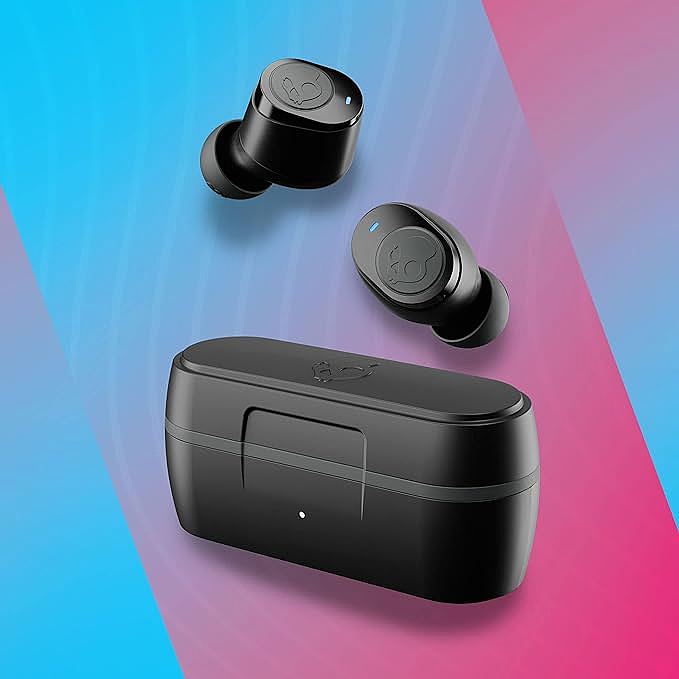
Skullcandy Jib True 2 In-Ear Wireless Earbuds
Your earbuds die after a gym session. Not from a bad connection or a dead battery, but from sweat creeping past a seal that was never designed to stop it. You checked the box, saw "IPX4," and assumed that meant waterproof. It does not. That two-letter code carries a precise engineering definition, and misunderstanding it is the fastest path to ruined electronics.
The Skullcandy Jib True 2 carries an IPX4 rating, and that single specification tells a more nuanced story than most consumers realize. Understanding what those characters mean, and what they do not, requires looking at the international testing standards behind them.
Decoding the IP Code
The IP rating system comes from IEC 60529, an international standard maintained by the International Electrotechnical Commission. The format is always two characters: the first digit represents solid particle protection (dust), and the second represents liquid ingress protection. When you see an "X" in the first position, it does not mean zero protection. It means the device was not formally tested for dust resistance. The "4" in the second position means protection against water splashing from any direction.
That distinction matters. An IPX4 device has been verified to survive a specific, controlled water exposure test. It has not been verified to survive dust, submersion, or high-pressure jets. The rating is a floor, not a ceiling, and it applies only to the exact test conditions defined by the standard.
The 10-Minute Splash Test
Under the updated GB/T4706.1-2024 standard, which aligns with IEC 60529, the IPX4 test is remarkably specific. A 6.3mm standard conical nozzle sprays water at 12 liters per minute with a pressure of 0.05 MPa. The spray rotates 360 degrees around the device, pausing at every 15-degree increment for 10 seconds. The entire test lasts 10 minutes.
The older version of the standard was vaguer, specifying only a flow rate of "10-15 L/min" and a distance of "30-50 cm." That ambiguity meant different testing labs could produce different results for the same device. The 2024 revision tightened every parameter: flow rate, water pressure, spray distance, and rotation timing. Repeatability is the foundation of any meaningful standard.
After those 10 minutes, the device passes if water has not entered in quantities that would impair normal operation. Notice the language: "impair normal operation." A few drops inside the housing may be acceptable under the standard. The test is about functional survival, not absolute dryness.
Where IPX4 Works and Where It Fails
IPX4 covers the scenarios most people actually encounter. Gym workouts produce sweat that runs down the side of your face and onto your earbuds. A light drizzle during a morning jog deposits water droplets between 0.5 and 5mm in diameter. Washing your hands sends a few milliliters of water splashing upward. All of these fall well within the IPX4 envelope.
The problems start when expectations exceed the specification. Showering introduces steam, and water vapor molecules are small enough to penetrate seals that block liquid water. Swimming creates sustained submersion pressure that IPX4 was never designed to resist. A high-pressure garden hose delivers force far beyond the 0.05 MPa test threshold. Even a hot bath combines two IPX4 weaknesses: elevated temperature softens adhesive seals, and steam infiltrates where liquid cannot.
There is also a time dimension. The test runs for 10 minutes. Prolonged exposure, even at low intensity, allows water to find microscopic pathways through seals. Sweat is particularly insidious because it contains salt, which is more corrosive to metal contacts than fresh water. Pool water adds chlorine, which accelerates the aging of rubber and silicone seals.
The Chemistry of Battery Decline
Lithium polymer batteries power nearly every true wireless earbud on the market, and their behavior follows predictable chemical laws. Inside each cell, lithium ions shuttle between a graphite anode and a lithium-cobalt-oxide cathode during charge and discharge cycles. This ion migration is what stores and releases energy.
Lithium polymer cells offer several advantages for earbuds: they can be shaped to fit tight spaces, they weigh less than cylindrical lithium-ion cells, and they have no memory effect, meaning you can top them off without waiting for a full drain. Their self-discharge rate sits at approximately 2-5% per month, far below the 20% monthly loss of older nickel-metal hydride chemistry.
But the chemistry has limits. After 300 to 500 complete charge-discharge cycles, a lithium polymer cell typically retains only about 80% of its original capacity. For a device rated at 33 hours of combined battery life (9 hours from the earbuds plus 24 hours from the charging case), that 80% threshold translates to roughly 26.4 hours. The decline is gradual, not sudden, and it is driven by two parallel processes: cycle aging from repeated charging and calendar aging from the passage of time itself.
Temperature accelerates both processes. Above 35 degrees Celsius, the electrolyte inside the cell decomposes faster, forming compounds that increase internal resistance. Below 0 degrees, lithium ions can plate onto the anode surface instead of intercalating into the graphite structure, creating dendrites that may eventually short-circuit the cell. The ideal operating range, 20-25 degrees Celsius, is also the range most people find comfortable, which is a convenient coincidence for consumer electronics.
Why Your Charging Case Is a Tiny Power Bank
The 33-hour figure that appears on packaging is not a single battery measurement. It is the sum of two separate energy stores. The earbuds themselves hold enough charge for approximately 9 hours of playback. The charging case holds enough additional energy to recharge the earbuds roughly 2.7 more times, adding about 24 hours. Together, they reach 33.
This architecture mirrors the power bank concept used for phones, just miniaturized. The case charges the earbuds through pogo-pin contacts, transferring energy from its larger cell to the smaller cells in each earbud. When you place depleted earbuds back in the case, energy flows from the case battery into the earbud batteries. Only when the case itself is depleted do you need to plug it into a USB-C charger.
Bluetooth 5.0 plays a supporting role in this endurance equation. Compared to Bluetooth 4.2, version 5.0 reduces power consumption by approximately 40% while doubling transmission speed to 24 Mbps. For earbuds, which transmit audio in intermittent bursts rather than continuous streams, this low-energy profile is well suited. The protocol's BLE (Bluetooth Low Energy) mode handles the small data packets of audio playback with minimal overhead, leaving more battery capacity for actual sound reproduction.
Finding Lost Earbuds Through Crowdsourced Bluetooth
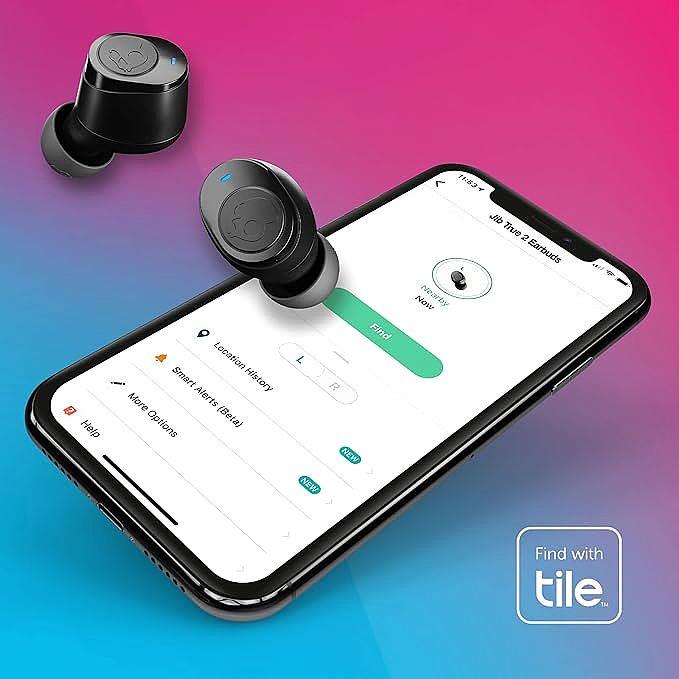
True wireless earbuds solve one problem and create another: they are small enough to disappear into couch cushions, jacket pockets, and the gaps between car seats. Tile tracking technology addresses this by embedding a Bluetooth Low Energy beacon inside each earbud.
The system operates in three tiers. Proximity Finding works within 100 to 150 feet: the Tile app triggers an audible chirp from the earbud, helping you locate it when it is nearby but out of sight. Last Known Location records the GPS coordinates of your phone at the moment the Bluetooth connection drops, giving you a map pin for where you last had the earbuds. Tile Network extends the search range indefinitely: any phone running the Tile app that passes within Bluetooth range of your lost earbud will anonymously relay its location to Tile's servers, which then notify you.
The privacy architecture is worth understanding. The passing phone does not know it detected your earbud. The phone's owner receives no notification. The location data is encrypted and visible only to your account. This crowdsourced model works best in dense environments like college campuses and shopping centers, where many Tile users pass through daily. In rural areas with few Tile users, the network effect diminishes.
Practical Care for Longevity
Battery and water resistance share a common enemy: time. Seals degrade. Cells lose capacity. But the rate of degradation is something you can influence.
For the battery, the most impactful habit is avoiding deep discharge. Letting lithium polymer cells drop below 20% regularly accelerates the structural collapse of the graphite anode. Charging when the battery is between 30% and 80% puts the least stress on the chemistry. If you will not use the earbuds for an extended period, store them at approximately 50% charge in a cool, dry place. Full charge during storage keeps the cell at high voltage, which drives parasitic reactions that consume active lithium.
For water resistance, the key is recognizing that IPX4 is a snapshot in time. The seals that passed the 10-minute splash test on day one will not perform identically after two years of thermal cycling, mechanical stress, and chemical exposure. After a workout, wipe the earbuds with a dry cloth before returning them to the charging case. Moisture on the charging contacts can cause corrosion or short circuits. Never charge the earbuds while they are wet. The charging port is one of the weakest points in the water resistance chain.
Solo Mode, which lets you use either earbud independently, has a practical battery benefit. When one earbud runs low, you can switch to the other while the first recharges in the case. This alternation extends total listening time beyond what a single continuous session would allow. The trade-off is a 2-3 second pause during the switch, as the Bluetooth connection reconfigures from stereo to mono.
The Engineering Philosophy of Enough
Every specification is a negotiation between capability and cost. IPX4 does not protect against submersion because adding that protection would require thicker seals, more expensive adhesives, and tighter manufacturing tolerances, all of which increase price. A 33-hour battery life does not match the 40+ hours of some competitors, but the gap reflects a choice about cell size versus case portability. Tile tracking is included not because it is cheap, but because the cost of losing a pair of earbuds, measured in frustration and replacement expense, often exceeds the cost of the tracking hardware itself.
The IP rating system, at its best, forces honesty into this negotiation. It gives consumers a standardized language for comparing protection levels across products and brands. When you read "IPX4," you now know exactly what was tested, how it was tested, and what the test does not cover. That knowledge is more useful than any marketing claim about water resistance, because it lets you map the specification onto your own life: your gym, your commute, your climate, your habits.
Engineering is not about building something that survives everything. It is about building something that survives the right things, at the right cost, for the right duration. The next time you see an IP code on a product, read it as a contract, not a promise.
Skullcandy Jib True 2 In-Ear Wireless Earbuds
Related Essays

Passive Noise Isolation and 38-Hour Battery Life: How Physical Sealing Outperforms Active Circuitry
FOYCOY A11 68 Hour Battery: How It Works | 2026

How to Use anker noise cancelling earbuds properly

How to Use wireless earbuds bluetooth noise cancelling

How Component Commoditization Ended the Audio Price-Quality...

Battery Volume vs. Miniaturization: The Physics Behind...

How RIZIZI Built 40-Hour Wireless Earbuds for Under 20 Dollars

The Physics Behind Why Your $25 Earbuds Die in Six Months

Wireless Earbuds Battery Life: What Those Big Numbers Actually Deliver
