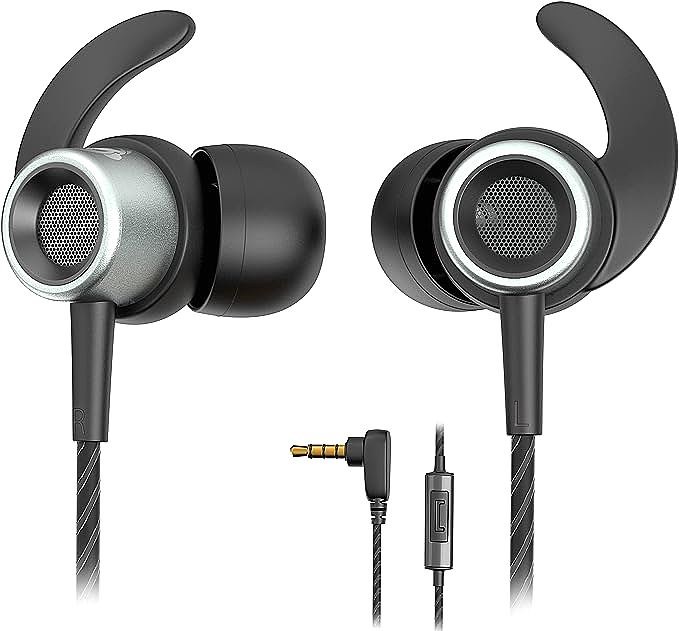
Noise Isolation Earphones: Why Your Seal Matters More Than Your Specs

Betron AX1 Earphones
You put in your earphones on a crowded train, press play, and... the conversation next to you cuts right through the bass line. The engine rumble bleeds into your podcast. You turn up the volume, but that just makes the noise louder alongside the music. The problem is not your earphones. The problem is the gap between your ear tip and your ear canal.
That gap, even a fraction of a millimeter, is all it takes to undermine the entire acoustic system sitting inside your ear. Most people blame the product. They read spec sheets, compare driver sizes, check impedance ratings. But the single largest variable in noise isolation performance has nothing to do with the hardware itself. It has everything to do with how well that hardware mates with your anatomy. A Betron AX1 with a perfect seal will out-isolate a premium pair with a sloppy fit. The physics are unforgiving.
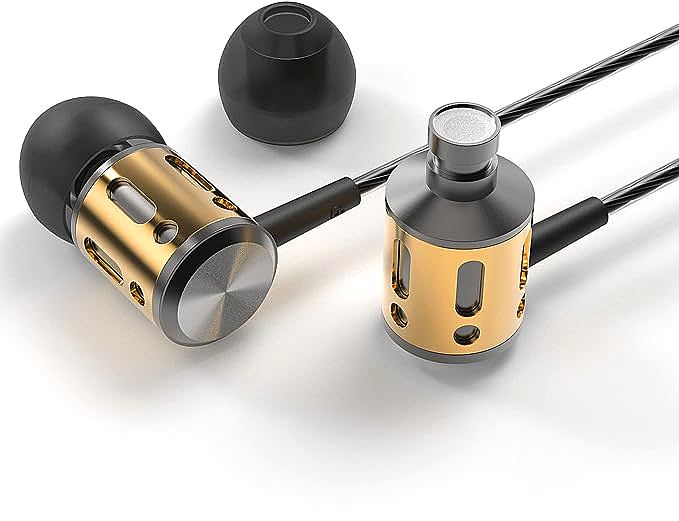
The Physics of the Gap: How Sound Leaks In
Sound travels as pressure waves through air. When an ear tip creates a complete seal in your ear canal, those pressure waves hit a dead end. They cannot propagate past a solid barrier. This is passive noise isolation in its purest form: a physical wall between your eardrum and the outside world.
The effectiveness of that wall depends on frequency. High-frequency sound waves have short wavelengths, typically centimeters long. A silicone barrier that fills the ear canal opening blocks them efficiently. Research on earplug performance shows that properly fitted passive barriers can attenuate high-frequency noise by 20 to 30 decibels. That is roughly the difference between a busy restaurant and a quiet library.
Low-frequency noise is harder to stop. A subway rumble at 60Hz has a wavelength of approximately 5.7 meters. Blocking a wave that long requires either mass or a seal so complete that no air pathway exists for the pressure to travel through. This is why bass bleed is the most common complaint among in-ear earphone users. The seal that stops a conversation cold might still let the engine through.
The hierarchy of isolation variables is counterintuitive to most people. Ear tip diameter, which determines how well the tip matches your ear canal width, matters more than the material the tip is made from. Material matters more than insertion depth. A medium silicone tip that perfectly fills your canal opening will isolate better than a memory foam tip that is one size too small, even though memory foam is the more advanced material. The geometry comes first.
A Problem Born on Stage
The modern in-ear monitor traces its origin to a very specific problem. In 1995, Alex Van Halen, drummer for Van Halen, could not hear his bandmates over the wall of stage monitors. The conventional solution was to turn the monitors up louder. But louder monitors meant more stage volume, which bled into the microphones, which fed back through the speakers. It was an arms race that nobody won.
Audio engineer Jerry Harvey proposed a different approach. Instead of trying to out-volume the noise, he built custom-molded earpieces that sealed the ear canal completely and delivered the monitor mix directly through tiny drivers. The concept was radical in its simplicity: block the noise, then deliver only the sound you want. Every in-ear earphone on the market today, from stage monitors to budget commuters, descends from that idea.
The Betron AX1, with its passive isolation design and multiple silicone tip sizes, is a consumer-grade expression of the same principle. The hardware provides the potential for a seal. Whether that potential is realized depends entirely on the user.
Your Ear Canal Is Not Round
Here is a fact that most earphone manufacturers do not print on their boxes: the human ear canal is not a cylinder. It is an irregular, slightly curved tube with an average diameter of 6 to 8 millimeters and a length of approximately 2.5 centimeters. The outer portion, called the cartilaginous segment, is flexible and is where ear tips sit. The inner portion, the bony segment, is rigid and more sensitive to pressure.
This anatomy matters because ear tips are manufactured in standard shapes, usually conical or umbrella-like, while ear canals vary significantly between individuals. Even your left and right ear canals are likely different sizes. A survey of earphone users found that only 32 percent selected the correct tip size on their first attempt. The remaining 68 percent found the right fit only through trial and error, and many never found it at all.
The S/M/L sizing system that comes with most in-ear earphones is a rough approximation, not a prescription. A simple self-test can narrow the options: press a fingertip gently against your ear canal opening. If it feels tight, you likely need the small size. If there is comfortable contact with room to spare, medium is the starting point. If your finger sits loosely, try the large tips. This is not precise, but it beats guessing.
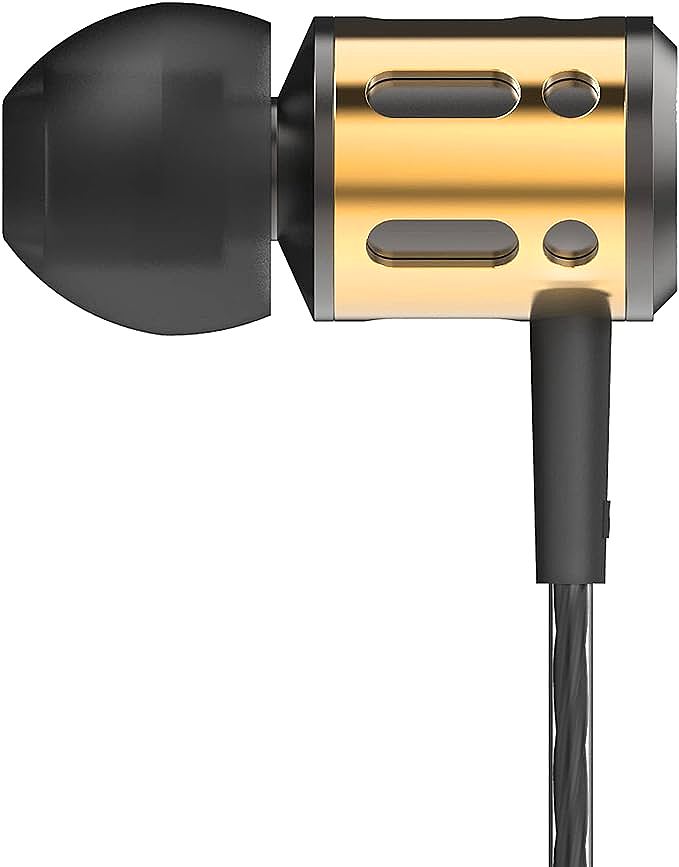
The Angle of Entry: A Thirty-Degree Difference
Even with the correct tip size, most people insert earphones incorrectly. The instinct is to push the tip straight in, perpendicular to the head. This is the worst possible angle. The ear canal does not run horizontally; it angles slightly downward and forward. Inserting a tip at 90 degrees fights the natural geometry, leaving gaps at the edges where the tip meets the canal wall.
The correct approach is to insert the tip at a 30 to 45 degree angle, aiming slightly downward and forward, then rotate it gently as it seats. This rotation helps the tip conform to the canal shape and eliminates the micro-gaps that let sound leak in. A small adjustment in angle can produce a noticeable improvement in bass response, because low frequencies are the first to escape through an imperfect seal.
There is also the matter of depth. The tip needs to sit in the cartilaginous portion of the canal, where the soft tissue can conform around it. Pushing too deep into the bony segment causes discomfort and does not improve isolation, because the rigid walls there cannot compress around the tip to form a seal. The sweet spot is deep enough that the tip feels secure and the outside world goes quiet, but not so deep that you feel pressure against the canal walls.
The Three-Second Seal Check
How do you know if your seal is correct? You do not need measurement equipment. Three quick tests, performed in sequence, will tell you.
First, play music with a prominent bass line. Cup your hands over your ears, pressing gently to push the earphones slightly deeper. If the bass suddenly becomes fuller and more present, your current seal is incomplete. The hand pressure is compensating for the gap.
Second, speak aloud. If your own voice sounds muffled and resonant, as if speaking inside a small room, the seal is good. This effect occurs because a sealed ear canal traps the internal sound of your voice, which normally escapes through the open canal. If your voice sounds normal, the canal is not sealed.
Third, remove one earphone slowly. You should feel a slight suction, sometimes accompanied by a soft pop. That suction is the negative pressure created by a sealed canal. No suction means no seal.
These three tests take about ten seconds total. Running them every time you put in your earphones, especially after physical activity or when switching between tip sizes, will tell you more about your isolation quality than any specification sheet ever could.
Silicone, Foam, and the Trade-Offs Between Them
The material of your ear tip changes the character of the seal. Silicone tips, which ship with most in-ear earphones, are durable and easy to clean. They maintain their shape over months of use and can be wiped down with an alcohol swab. Their limitation is that they rely on a mechanical fit. The silicone does not adapt to the canal; the canal must adapt to the silicone. If the size match is close but not exact, silicone will leave small gaps.
Memory foam tips work differently. Compressed before insertion, they expand slowly to fill the canal, conforming to its irregular shape. This expansion creates a more complete seal, particularly for users whose canals fall between standard sizes. The trade-off is lifespan. Foam tips compress permanently over weeks of daily use and need replacement every one to two months, compared to three to six months for silicone. They also require a few seconds to expand after insertion, so the seal improves over the first minute of wear.
Dual-flange tips, which have two concentric sealing rings, offer another approach. The two rings create redundant barriers, which can help with canals that have an unusual taper. But the added bulk makes them uncomfortable for users with smaller canals, and they can create a feeling of deep insertion that some people find unpleasant.
There is no universally superior material. The right choice depends on your canal shape, your sensitivity to pressure, and how much maintenance you are willing to perform. Silicone for convenience and longevity. Foam for maximum isolation. Dual-flange for unusual canal geometry.
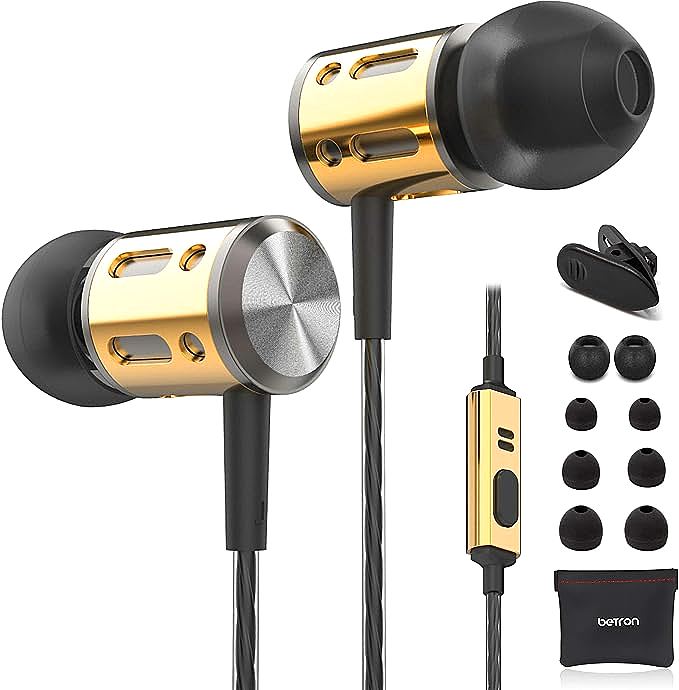
When Good Seals Go Bad
Even a perfect seal degrades over time. Silicone loses elasticity, developing microscopic cracks that create air pathways. Foam compresses and no longer rebounds to fill the canal. Earwax accumulates on the tip surface, breaking the smooth contact between silicone and skin. If your isolation was good last month but has since declined, the most likely cause is tip wear, not hardware failure.
Cleaning extends tip life. A weekly wipe with an alcohol-dampened cotton swab removes earwax and skin oils from silicone tips. Foam tips should be wiped dry, never soaked, because water degrades the foam structure. When tips show visible signs of aging, such as a tacky surface, discoloration, or reduced elasticity, replacement is the only option.
Storage matters too. Tossing earphones into a pocket without a case exposes the tips to lint, pressure, and temperature changes that accelerate wear. The carry case that comes with most in-ear earphones is not a luxury accessory. It is a maintenance tool.
The Fletcher-Munson Problem: Why Volume Changes Quality
There is a second reason why seal quality affects perceived sound quality, and it has nothing to do with noise leaking in. It has to do with how your ears work at different volumes.
In 1933, researchers Harvey Fletcher and Wilden Munson demonstrated that human hearing sensitivity varies with frequency and loudness. At high volumes, the ear perceives low, mid, and high frequencies with roughly equal sensitivity. At low volumes, sensitivity to low and high frequencies drops significantly. The midrange, where human speech lives, remains relatively prominent.
This means that when your earphones have a poor seal and outside noise competes with your music, you naturally turn up the volume to compensate. At that higher volume, the frequency balance sounds different. Bass and treble become more prominent relative to the midrange. The music sounds louder but not necessarily better. Conversely, with a good seal, you can listen at lower volumes where the frequency balance is different, and the music sounds natural without the need to push the levels.
A well-sealed earphone lets you listen at a volume that preserves the intended frequency balance of the recording. A poorly sealed earphone forces you into a volume range where that balance is distorted. The seal does not just block noise. It changes the entire relationship between your ears and the music.
The Unspoken Variable: Left and Right Are Not the Same
One detail that almost no earphone guide addresses: your left and right ear canals are probably different sizes. Anatomical asymmetry is normal. If your left earphone feels secure but the right one keeps loosening, the issue is not the product. The issue is that you are using the same tip size for two different canals.
Mixing tip sizes is perfectly acceptable. A medium tip on the left and a large tip on the right might look odd, but if it produces a seal on both sides, it is the correct configuration. The goal is isolation, not symmetry.
This asymmetry also explains why some users report inconsistent noise isolation between ears. They assume the driver is defective when the real problem is a one-size-fits-all approach to a two-size problem.
What the Spec Sheet Cannot Tell You
Driver size, impedance, sensitivity, frequency response. These numbers fill product pages and comparison charts. They are real and measurable. But none of them account for the variable that dominates the in-ear listening experience: the quality of the acoustic seal between the ear tip and the ear canal.
An 8mm dynamic driver with 16 ohm impedance and 98dB sensitivity is well-suited for portable use. The low impedance means a phone can drive it without an amplifier. The high sensitivity means adequate volume at low power. The frequency range covers the full spectrum of human hearing. These are necessary conditions for good sound. They are not sufficient conditions.
The sufficient condition is a seal. Without it, the driver moves air, but that air mixes with the outside world before it reaches your eardrum. The bass escapes through the gaps. The outside noise enters through the same gaps. The carefully tuned frequency response of the driver becomes irrelevant because the acoustic system is open, not closed.
In the end, the most important component of any in-ear earphone is the one that is not built into the product. It is the interface between the tip and your ear. Master that interface, and the hardware delivers what its specifications promise. Neglect it, and no amount of driver technology can compensate for the physics of an open gap.
Betron AX1 Earphones
Related Essays

How Tiny Drivers Produce Big Sound: The Physics Behind Wireless Earbuds
How Tiny Drivers Produce Big Sound: The Physics Behind Wireless Earbuds
How Tiny Drivers Produce Big Sound: The Physics Behind Wireless Earbuds
How Tiny Drivers Produce Big Sound: The Physics Behind Wireless Earbuds

Final A3000 In-Ear Wired Earphones – A Relaxing and Natural Sound Experience

Balanced Armature Drivers Explained: How Quad-Driver IEMs Separate Frequencies
From Telegraphs to Triumphs: The Hidden Science of Gaming Headsets

Sudio E2 True Wireless ANC Earbuds: A Superb Blend of Audio Excellence and Wearing Comfort

canpur U1-Joyfull-1 JF1 1DD In Ear Monitor Earphones: Customized Listening for Drummers