The Physics of Stamina: Decoding the 150-Hour Battery and Neckband Architecture of the Rythflo WH03
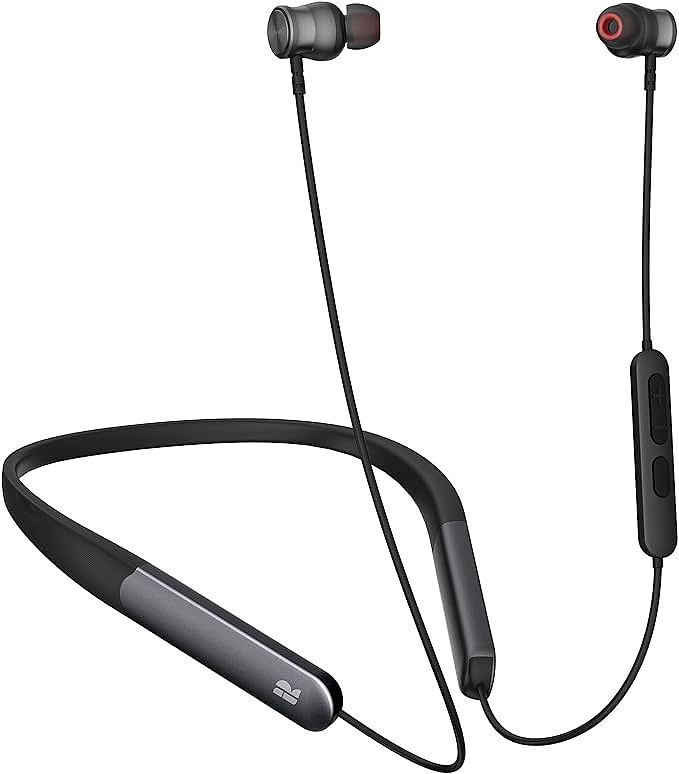
Rythflo WH03 Wireless Headphones
Your wireless earbuds die at 2 PM. Not occasionally. Every single day. You charge them overnight, plug in the case during lunch, and still end the afternoon listening to nothing. This is not a defect. It is physics.
When Apple shipped the first AirPods in 2016, they ignited a design orthodoxy that has governed personal audio ever since: smaller is better. The True Wireless Stereo (TWS) earbud became the industry's gravitational center, pulling every manufacturer toward the same goal -- make it disappear inside the ear canal. Battery life, acoustic chamber volume, driver diameter, even the radio antenna design -- all of them were subordinated to one imperative. Miniaturization.
The cost of that imperative is a daily ritual of charging anxiety. A typical TWS earbud carries a 40-50mAh coin cell. That is enough for roughly five hours of playback before the bud itself needs to return to its charging cradle, which carries maybe four additional cycles. The physics are unforgiving: energy storage is proportional to volume, and the human ear canal places a hard ceiling on that volume.
But there is a form factor that never accepted that ceiling. The neckband -- a design that predates TWS by nearly a decade -- sidesteps the volumetric constraint entirely by relocating the battery off the ear and onto the shoulders. One current example of this architecture, the Rythflo WH03, achieves a claimed 150 hours of continuous playback from a single charge. Whether you find that number plausible or not, the engineering principle behind it is worth understanding, because it reveals a broader truth: form factor is the first engineering decision, and every other specification follows.

Why Your Earbuds Die at 2 PM: A Volume Problem
Lithium-polymer (Li-Po) batteries store energy roughly proportionally to their physical volume. The metric that matters is volumetric energy density -- typically around 300-700 Wh/L for commercial Li-Po cells, depending on chemistry and discharge rate. A TWS earbud has perhaps one cubic centimeter of internal volume to allocate between the battery, the driver, the Bluetooth radio, the microphone, and the charging contacts. The battery gets whatever is left. Usually that works out to a cell in the neighborhood of 40-50mAh.
Fifty milliamp-hours. At a typical playback current draw of 10-15mA per earbud, that cell empties in roughly four to five hours. The charging case extends the total system runtime, but each individual session still ends the same way -- silence, followed by a search for a USB-C port.
The neckband architecture changes the arithmetic completely. The silicone band that drapes across the back of the neck has orders of magnitude more internal volume than an earbud housing. A neckband can accommodate a prismatic Li-Po cell in the estimated range of 1000mAh or more -- roughly twenty times the capacity of a TWS coin cell. That is the difference between charging daily and charging weekly.
There is a secondary benefit. Larger cells can absorb higher charging currents without generating dangerous internal temperatures. A 40mAh coin cell charged at 1C (its capacity rating per hour) accepts 40mA. A 1000mAh cell charged at the same rate accepts a full amp. The neckband's surface area also serves as a passive thermal radiator during fast charging. The Rythflo WH03's claim that a 10-minute charge yields 15 hours of playback is consistent with these thermodynamic realities -- the larger cell and the neckband's dissipation surface work together to make rapid energy transfer safe.
The Diaphragm and the Air: Why Size Governs Bass
Battery life is the most visible specification. Sound quality is the one people actually notice first. And here, too, the form factor dictates the outcome.
A dynamic driver produces sound by moving air. A cone-shaped diaphragm pushes forward and pulls back, creating pressure waves that the ear interprets as pitch and timbre. The amount of air a driver can move -- its volume displacement -- is the product of its surface area and its linear excursion (how far it travels forward and back).
This is simple geometry. The area of a circular diaphragm scales with the square of its radius. A 10mm driver has an area of approximately 78.5 square millimeters. A 13mm driver has approximately 133 square millimeters. That is a 69% increase in surface area. Since bass frequencies require the displacement of large volumes of air, the larger diaphragm can produce deeper low-frequency response with less excursion -- which also means less distortion at the extremes of cone travel.
In a TWS earbud, the driver is competing for space with the battery, the Bluetooth antenna, the touch sensor, and the circuit board. Engineers are forced to choose smaller drivers to accommodate everything else. The neckband design removes this competition entirely. The battery lives in the band. The antenna lives in the band. The circuit board lives in the band. The earbud housing is freed to serve one master: acoustics.
This yields what audio engineers call a "clean back volume" -- the sealed air cavity behind the diaphragm that acts as a spring, controlling the driver's resonant behavior. When that cavity is uncluttered by electronics, its geometry can be precisely tuned. The result is not just more bass but a more coherent midrange, because the driver is not fighting internal reflections from oddly shaped component cavities.

The Wired Left and the Wireless Right
Battery and acoustics are the two domains where the neckband's physical advantages are most obvious. But there is a third, less visible advantage in the radio architecture.
TWS earbuds face a connectivity problem that has no elegant solution. The phone connects to the primary bud via Bluetooth. The primary bud then must relay the signal to the secondary bud. This relay can happen in two ways. In the "forwarding" model, the primary bud re-transmits the full audio stream to the secondary bud over a second Bluetooth link. In the "sniffing" model, both buds listen to the same transmission from the phone, but the secondary bud still needs to maintain timing synchronization with the primary. Either approach requires a continuous radio link between the two earbuds -- and that link consumes processing cycles and battery capacity on both sides.
The Bluetooth 5.3 specification introduced improvements in encoding efficiency and power management, particularly through its Low Energy (LE) Audio protocols. But no amount of protocol optimization eliminates the fundamental overhead of maintaining two wireless links instead of one.
A neckband earphone uses a physical wire between the left and right earpieces. There is no inter-bud radio link. There is no forwarding protocol. There is no synchronization timing to maintain. The Bluetooth chipset maintains a single connection to the source device, and audio reaches both ears through a copper conductor with zero re-transmission latency. This is not just simpler. It is more electrically efficient, because the radio transceiver -- one of the highest current-draw components in any wireless device -- only has to power one link instead of managing two.
The practical consequence is measurable. Users of neckband designs consistently report reliable connections at distances of approximately 15 meters through walls, because the single-link topology allows the radio to dedicate its full transmission budget to the phone connection rather than splitting duty between the phone and the partner bud.
Waterproofing as a Mechanical Constraint
The IPX7 rating -- protection against submersion in one meter of still freshwater for 30 minutes -- is a standard the neckband form factor can achieve more readily than TWS. The reason is mechanical: hermetic sealing requires both space and structural rigidity.
An earbud that must fit inside the ear canal has almost no margin for gasket material, conformal coating on circuit boards, or redundant seal layers. Every fraction of a millimeter spent on waterproofing is stolen from the battery or the driver. A neckband's control pods -- the rigid sections housing buttons and circuitry -- have enough surface area to accommodate proper gasket channels, potting compound around connectors, and sealed membrane switches. The flexible silicone band itself is naturally water-resistant.
IPX7 also implies a specific pressure test: one meter of water exerts approximately 9.8 kilopascals of hydrostatic pressure. The enclosure must resist water ingress at that pressure for a sustained period. This is a more demanding standard than IPX4 (splash resistance) and requires engineering intent, not just a hydrophobic coating on the circuit board.
What the Trapezius Knows That the Ear Canal Does Not
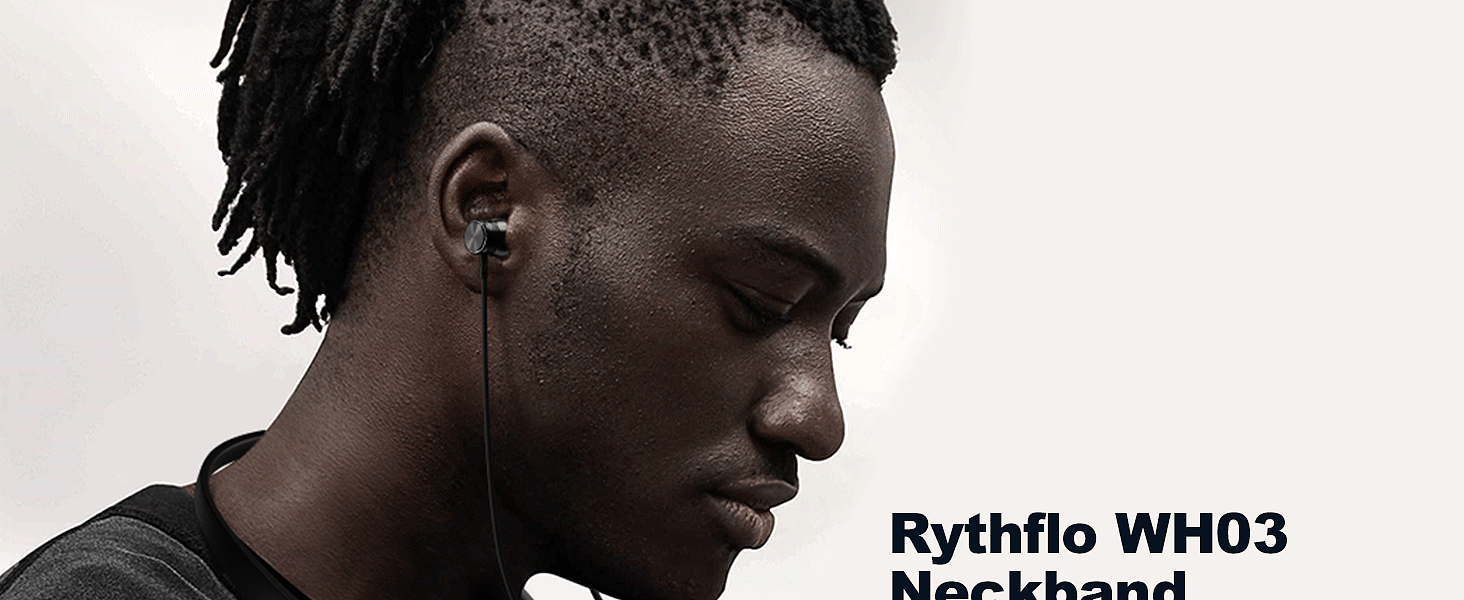
There is a biomechanical dimension to this discussion that rarely gets attention. The human ear canal is sensitive to weight. A typical TWS bud weighs 5-7 grams per side. That sounds trivial, but the ear canal is a narrow, cartilaginous tube with limited load-bearing capacity. Add the weight of a battery, a driver, and a circuit board, and you approach the threshold where comfort degrades over hours.
The neckband shifts the weight equation to the trapezius muscles -- the broad, flat muscles of the upper back and neck. These muscles support the weight of the head (approximately 4.5-5 kilograms) in daily life. A 132-gram neckband is negligible in comparison. The earpieces themselves, freed from battery and electronics, carry only the driver and a short cable. The physical load on the ear canal drops to almost zero.
This is why neckband users report wearing their devices for eight-hour conference calls and full-day commutes without discomfort. It is not a matter of superior cushioning or ergonomic design. It is a matter of load distribution -- the same principle that makes a backpack more comfortable than carrying objects in your hands.
The Trade-Off That Fashion Forgot
If the neckband has such clear advantages in battery capacity, driver size, acoustic purity, connectivity efficiency, and thermal management, why did the market abandon it?
The answer has nothing to do with engineering. The TWS revolution was driven by aesthetics. Apple's AirPods succeeded because they were visible -- a white plastic signal that the wearer could afford a premium device. The neckband, by contrast, is a subtle thing. It hides under a collar. It does not photograph well. It signals utility rather than status.
The audio industry followed the signal. Between 2016 and the present, research and development budgets tilted heavily toward TWS, and the neckband was treated as a legacy category -- something for budget-conscious consumers and holdouts. The engineering trade-offs were rarely discussed, because the market had already decided that invisible was more appealing than functional.
But physics does not follow fashion trends. The volumetric relationship between battery capacity and device size is immutable. The acoustic advantage of a larger diaphragm in a cleaner enclosure is a matter of wave mechanics, not opinion. And the efficiency of a single wireless link versus a dual-link relay topology is a consequence of information theory.
The device that refuses to shrink is the one that lasts the longest. It is also the one that sounds the best, connects the most reliably, and costs the least to charge. The next time you plug in your earbuds for the second time today, the question worth asking is not "which brand should I try next?" but rather: what did the designer sacrifice to make them small?
Rythflo WH03 Wireless Headphones
Related Essays

Why Your Wireless Earbuds Keep Dying at 4PM: The Battery Physics TWS Cannot Solve

Why Your Wireless Earbuds Die at Hour Six: The Physics Behind 120-Hour Battery Claims

The Invisible Symphony: Deconstructing Wireless Audio Fidelity

The Physics of Immersion: Deconstructing the Modern Wireless Earbud

The End of the Black Box: Why Bluetooth 5.3 and LED Displays Define Modern Budget Audio

Minimalism in Silicon: Deconstructing the Urbanista Austin's Bluetooth 5.3 Architecture

Decoding Budget Audio: The Real Difference Between ENC, ANC, and Bluetooth 5.3
The Anatomy of Endurance: Deconstructing Large-Driver Acoustics and Battery Efficiency in Modern Audio

The Physics of Upgrades: Decoding Bluetooth 5.3 Efficiency and 14mm Drivers in the Smoonigh A50 PRO
