Why Your Coffee Tastes Bitter and Sour at the Same Time: The Channeling Problem Nobody Talks About


NANAMI A8 Bluetooth Headset
You brew a pot of coffee, pour it into your mug, take that first expectant sip, and your tongue registers something confusing. The liquid is bitter, like oversteeped tea left out too long. But underneath that sharp edge, there is a sourness too, an acidity that makes your mouth pucker. How can one cup of coffee be simultaneously bitter and sour?
This is not a problem of preference or bean quality. It is a physics problem, and it happens in millions of kitchens every morning. The culprit is a phenomenon called channeling, and understanding it changes how you think about every cup you brew.
Water Is Lazy: The Single Principle That Explains Bad Coffee
Coffee researcher Jonathan Gagné, in his work on percolation dynamics, distilled the entire problem into a single observation: water is lazy. When hot water meets a bed of coffee grounds, it does not distribute itself evenly. It seeks the path of least resistance, finding cracks, gaps, and channels of lower density. Once water finds an easier route, it concentrates its flow there, carving deeper channels while leaving other regions of the coffee bed nearly dry.
This matters because coffee extraction is not a single event. It is a sequence. The Specialty Coffee Association's Golden Cup Standard, one of the most widely referenced benchmarks in the industry, specifies an ideal extraction yield of 18 to 22 percent of the coffee's soluble mass, at water temperatures between 90 and 96 degrees Celsius (195 to 205 degrees Fahrenheit). Below 18 percent, you get under-extracted coffee: sour, thin, lacking sweetness. Above 22 percent, you get over-extracted coffee: bitter, astringent, hollow.
Channeling creates both conditions inside the same pot.
Consider what happens inside the filter basket. In the zones where water concentrates through a channel, it over-extracts the grounds, pulling out bitter tannins and astringent compounds. In the regions that water bypasses entirely, the grounds remain under-extracted, contributing sour, acidic flavors. And in a thin ring around each channel, where the water flow happens to be just right, a small percentage of grounds are properly extracted, contributing the balanced sweetness and body you actually want.
As ITA Coffee documented in their 2026 analysis of coffee channeling, this simultaneous over- and under-extraction is what produces the bitter-and-sour paradox. Your cup is not uniformly bad. It is a mixture of three different extraction outcomes, blended together into a single confusing taste.
The Vicious Cycle: How Channeling Feeds Itself
Channeling is not a static problem. It worsens over the course of a brew cycle, and understanding why requires looking at coffee grounds as a porous medium, a term borrowed from petroleum engineering and hydrology.
When you pack coffee grounds into a filter, you create a bed with variable density. Some regions are tighter, some looser. This variability comes from several sources: the grind itself contains a distribution of particle sizes (boulders and fines), the way grounds settle when poured, and the channels created by escaping carbon dioxide gas trapped during roasting. JayArr Coffee's 2026 investigation identified fines migration, where small coffee particles wash downstream and clog pore spaces, as a key accelerant of channeling. As fines accumulate, they block certain flow paths, forcing even more water into the remaining open channels.
The result is a vicious cycle. Papel Espresso's 2026 physics analysis described it clearly: once a channel forms, the increased water flow through that channel erodes its walls, widening it further. Meanwhile, the grounds adjacent to the channel get compacted by the diverted flow, becoming even less permeable. The channel deepens. The dry zones expand. The extraction becomes more uneven with every second of the brew.
Caffeinated Science's research on espresso extraction evenness, published in 2022, noted that these viscous flow instabilities are not unique to coffee. They appear in any system where fluid moves through an uneven porous medium, from oil reservoirs to water filtration. But in coffee, the stakes are sensory. You taste the physics.

Why Your Drip Machine Makes It Worse
The percolator era of coffee, dominant through the mid-20th century, had a different problem: it boiled coffee repeatedly, scorching volatile aromatic compounds. The transition to automatic drip machines in the 1970s solved that particular issue by heating water once and passing it through the grounds a single time, a fundamentally gentler approach.
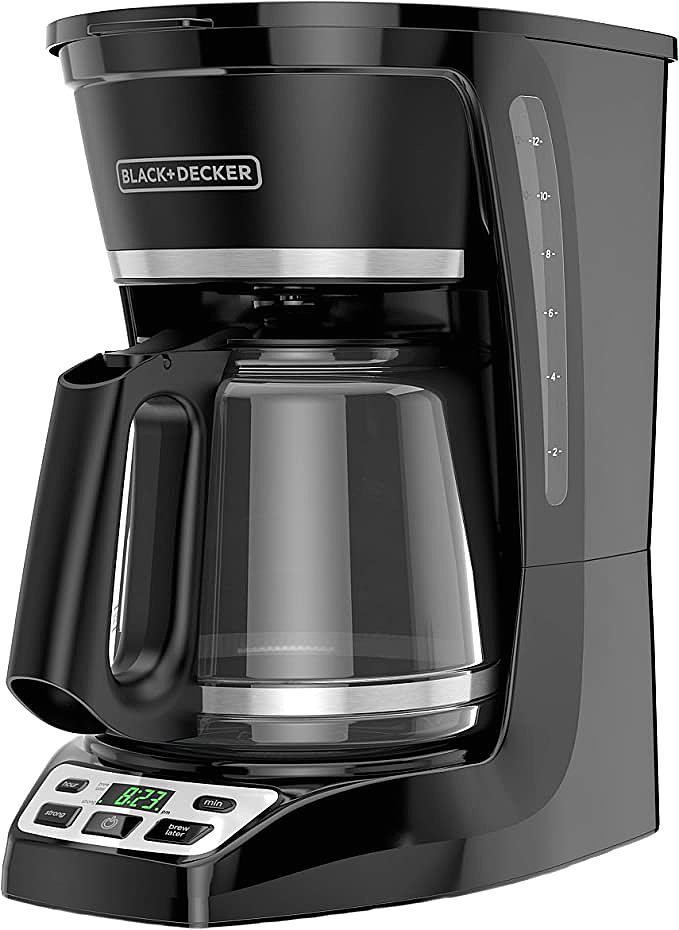
But drip machines introduced their own channeling risks, and for a surprisingly simple reason: the showerhead.
Most entry-level drip coffee makers use a single-stream water delivery system. One narrow pipe directs a concentrated jet of water onto the center of the coffee bed. This single point of impact creates a crater, driving water vertically through the center while the outer edges of the filter basket receive little to no saturation. Kitchen Calculator Pro's 2026 analysis of pour-over and drip brewing dynamics showed that this concentrated delivery pattern is the primary mechanical cause of channeling in home coffee machines.
The problem compounds with the machine's thermal performance. TechGearLab's 2024 testing of budget drip coffee makers measured brewing temperatures as low as 83.2 degrees Celsius in some models, well below the SCA's recommended range. At lower temperatures, extraction proceeds more slowly and unevenly. Compounds that dissolve readily at 93 degrees remain locked in the grounds at 83 degrees, while the over-extracted zones around channels continue to release bitter compounds regardless.
The history of coffee innovation is, in many ways, a history of trying to solve this distribution problem. Melitta Bentz's 1908 invention of the paper filter was not just about removing grounds from the cup. By creating a flat, even bed for water to pass through, it was an early attempt to manage extraction uniformity. But the filter only controls the bottom boundary. The top boundary, where water enters, remained unaddressed for nearly a century.

Fluid Dynamics in a Filter Basket: The Showerhead Solution
The engineering solution to channeling lives at the intersection of fluid dynamics and simple mechanical design. If the problem is that water concentrates in a single stream, the solution is to distribute that stream across multiple points.
Multi-opening showerhead designs do exactly this. Instead of a single jet, water exits through an array of small openings arranged in a pattern that covers the full diameter of the filter basket. The water falls in a gentle rain rather than a concentrated torrent, saturating the coffee bed more uniformly.
This is not a trivial change from a physics perspective. Shiren Coffee's 2023 analysis of percolation compared with immersion brewing noted that channeling is exclusively a percolation problem, meaning it only occurs when water flows through a bed of grounds under gravity or pressure. In immersion brewing, where grounds steep in standing water, there is no directional flow to create channels. But percolation is the dominant method in automatic drip machines because it is faster, more controllable, and produces a cleaner cup.
The showerhead approach does not eliminate channeling entirely. No percolation system can achieve perfectly uniform flow through a heterogeneous bed of randomly packed particles. But it shifts the statistical distribution of extraction outcomes. Instead of a coffee bed that is roughly one-third over-extracted, one-third under-extracted, and one-third properly extracted, a well-designed showerhead can move those ratios toward something like 10 percent over-extracted, 10 percent under-extracted, and 80 percent in the target zone. The sensory difference is substantial.
Some showerhead designs incorporate a slight swirling motion, sometimes called vortex technology, which adds a tangential component to the water's descent. From a fluid mechanics standpoint, this swirl creates mild lateral movement across the surface of the coffee bed, reducing the tendency for water to carve vertical channels. It is a small perturbation, but in a system where the difference between good and bad coffee comes down to millimeters of water distribution, small perturbations accumulate.
The Chemistry of Brew Strength: Why Slower Is Not Always Better
Beyond water distribution, another common source of confusion is the brew strength selector found on many programmable machines. The intuition is straightforward: stronger coffee means more coffee flavor, so a strong setting must add more coffee grounds. But most machines do not add more coffee. They slow the water down.
The chemistry behind this is simple but often misunderstood. Coffee extraction is a function of three variables: temperature, grind size, and contact time. At a fixed temperature and grind, increasing contact time between water and grounds increases the total dissolved solids (TDS) in the cup. More dissolved solids means a higher concentration of flavor compounds, which registers as stronger, heavier, more intense coffee.
The risk is that longer contact time also pushes extraction past the 22 percent upper bound of the SCA's ideal range. If the machine's thermal system is already running cool, a longer brew time might pull the extraction closer to the target. But if the water is properly heated, extending the contact time can tip the extraction into over-extraction territory, reintroducing the very bitterness the machine's showerhead was designed to prevent.
This tension between strength and extraction quality is one of the least understood aspects of home coffee brewing. A strong cup is not necessarily an over-extracted cup, and a weak cup is not necessarily under-extracted. Strength measures concentration. Extraction quality measures completeness. They are independent variables, and both must be managed independently.

What the Coffee Bed Knows That You Do Not
There is a quiet elegance in the way coffee extraction reveals physical principles that operate everywhere, usually invisibly. The path of least resistance that water follows through a filter basket is the same principle that shapes river deltas, determines blood flow through capillary networks, and governs how contaminants spread through groundwater aquifers. The porous medium physics that Papel Espresso described in their channeling analysis is the same framework that petroleum engineers use to model oil recovery and environmental scientists use to predict pollutant migration.
When Melitta Bentz punched holes in a brass pot and lined it with blotting paper in 1908, she was not thinking about porous media or extraction yield curves. She was a German housewife who wanted coffee that did not taste like it had been strained through a sock. But her invention inadvertently defined the boundary conditions for a century of coffee engineering. The paper filter created a controlled porous medium through which hot water percolated, extracting soluble compounds in a predictable, repeatable way. Every subsequent innovation in drip coffee, from showerhead design to programmable brew cycles, has been an attempt to better manage the interaction between water and that porous medium.
The Specialty Coffee Association's Golden Cup Standard represents the distillation of this century of engineering into a set of numbers: 18 to 22 percent extraction yield, 90 to 96 degrees Celsius, 1.15 to 1.35 percent total dissolved solids for a standard cup. These numbers are not arbitrary. They correspond to the sensory range where the balance of sweet, bitter, acidic, and aromatic compounds in roasted coffee reaches its most pleasing expression. Below 18 percent, sour organic acids dominate. Above 22 percent, bitter tannins and astringent phenolics take over.
The next time you encounter a cup of coffee that tastes both bitter and sour, consider what that contradiction tells you. It means two contradictory things are happening simultaneously in your filter basket. Water is both over-extracting and under-extracting, separated by millimeters. The solution is not better beans or a finer grind. It is better distribution of water across the coffee bed, a problem that belongs as much to civil engineering and hydrology as it does to the kitchen counter.
NANAMI A8 Bluetooth Headset
Related Essays

Escaping the Bandwidth Bottleneck: How Adaptive Algorithms Reshaped Portable Acoustics

The Review Paradox: Why One Headset Gets Both 5-Star Raves and 1-Star Rants
LG Tone Style HBS-SL5: Experience Crystal-Clear Sound with Meridian Audio Technology

Soundcore Life A3i Noise Cancelling Wireless Earbuds: Powerful Noise Cancellation and Amazing Sound in Budget Wireless Earbuds

Pamu T10 Quiet Wireless Earbuds - True Wireless Earbuds That Keep You Focused

Azicyn Wireless Earbuds: Compact Bluetooth Earbuds for an Immersive Listening Experience

Tribit CallElite 81 Bluetooth Headset: Crystal-Clear Calls with AI Noise Canceling

JLab JBuds Work Wireless Headset: Crystal-Clear Calls & 60+ Hours Playtime

NVAHVA J18 Single Wireless Headphone: Enjoy Sound Safely and Comfortably

