Why Your ANC Earbuds Still Fail on Calls: The Science of cVc 8.0 Uplink Processing


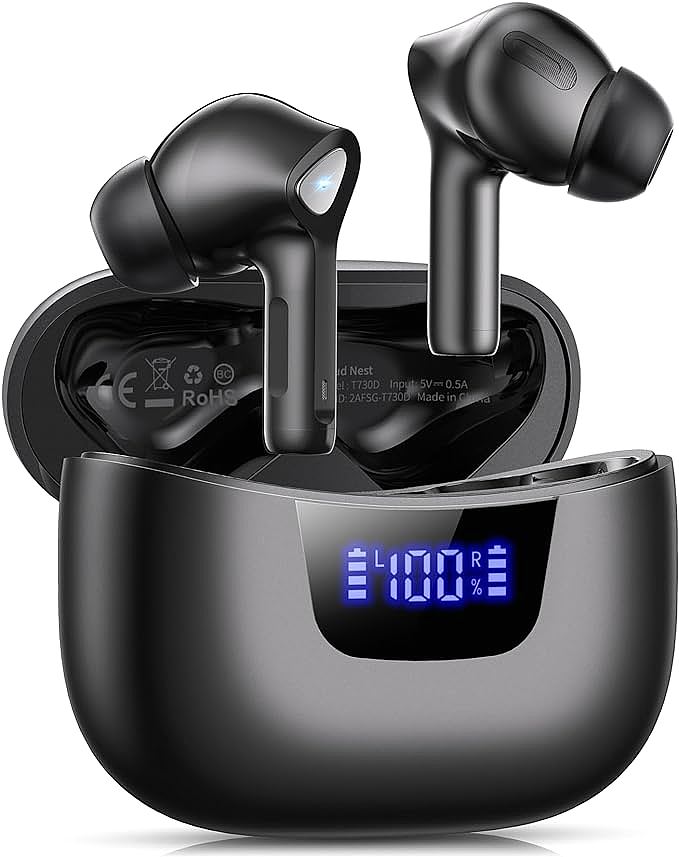
Tecno BDE01 True Wireless Earbuds
Your caller just said, "Can you repeat that? You're breaking up." You are standing in the middle of a subway platform. The train is arriving. The announcement is echoing off the tile walls. You cup your hand over your earbuds, but it does not help. Your caller cannot hear you, no matter what you do.
This is not a hardware failure. Your earbuds are functioning exactly as designed. The problem is that you have been looking for the solution in the wrong place.

The Asymmetry Between Hearing and Being Heard
When manufacturers advertise noise cancellation in earbuds, most consumers assume they are buying technology that benefits both sides of a phone call. They assume the earbuds will silence the world so that both the listener and the speaker can communicate clearly. This assumption is understandable, but it is technically incomplete.
Active Noise Cancellation, as implemented in most consumer earbuds, operates on the output side of the audio signal chain. The speakers inside your earbuds produce anti-phase sound waves that cancel environmental noise before it reaches your eardrum. This makes your music quieter and your podcast easier to hear. It helps you hear.
Being heard is an entirely different problem. When you speak into your earbuds, your voice travels from your mouth to the microphone membranes mounted somewhere on the housing. The microphones pick up everything in the environment along with your voice. Train announcements. Wind. The person next to you arguing into their own phone. The digital signal processor then faces the challenge of separating your voice from this acoustic chaos. The technology that handles this challenge is called uplink processing.
This is where most consumer earbuds fall short for call quality. They invest heavily in making the output side pleasant for the listener. They spend comparatively little on optimizing the input side for clarity.
Understanding cVc: What the Acronym Actually Means
cVc stands for Crystal Voice Communication. It is a suite of audio signal processing technologies developed by Qualcomm specifically for the uplink path in voice communication scenarios. The version number indicates the generation of the algorithm, with version 8.0 representing the current implementation in their mid-range Bluetooth audio system-on-chip products.
The Qualcomm QCC3020, found in devices like the Tecno BDE01, integrates cVc 8.0 as a hardware-level feature. This means the noise reduction happens inside the chip before the audio data is even packaged for Bluetooth transmission. Processing at this stage, rather than in software after transmission, reduces latency and preserves processing resources for other tasks.
The cVc algorithm operates on several simultaneous fronts. It uses adaptive filtering to estimate and subtract steady-state noise components. It applies spectral processing to suppress impulsive sounds like keyboard clicks or door slams. It performs acoustic echo cancellation to prevent feedback when users have music playing in the background. It also includes automatic gain control to normalize voice levels when the speaker moves closer or farther from the microphone.
These are not marketing features. These are specific DSP operations with measurable parameters. The algorithm continuously analyzes the incoming audio stream, building a model of the environmental noise floor, and subtracting estimates of that noise from the voice signal.

The Fundamental Difference: Uplink Versus Downlink
To understand why cVc and ANC serve different purposes, consider the signal path in a Bluetooth earbud conversation.
The downlink path carries audio FROM the remote caller TO your earbuds. Your earbuds receive a digital audio stream over Bluetooth, decode it, and convert it to analog signals that drive the speakers in your ears. ANC operates on this path. The goal is to make the incoming audio more pleasant to listen to by reducing what you hear from the outside world.
The uplink path carries audio FROM your earbuds TO the remote caller. Your microphones capture acoustic energy, convert it to electrical signals, which are then digitized and processed by the DSP before being encoded and transmitted over Bluetooth to the caller. cVc operates exclusively on this path. The goal is to ensure that the person on the other end hears your voice clearly, with reduced background noise.
These two paths are largely independent. Improving one does not automatically improve the other. A set of earbuds with excellent ANC can still produce calls where the caller complains about background noise. This is not a design flaw. It is a consequence of the technology being optimized for different signal directions.
The distinction matters when evaluating earbuds for phone call use. The specification sheet may prominently feature "Active Noise Cancellation." This tells you about the downlink experience, not the uplink experience. For phone calls in noisy environments, you need to look for evidence of uplink processing optimization.
Historical Context: From Aerospace to Consumer Audio
The principles underlying cVc have roots in aerospace research from the 1960s and 1970s. Crew communication in aircraft with high engine noise drove early development of adaptive noise cancellation for voice communication. The Jet Propulsion Laboratory and military research programs invested heavily in methods for extracting speech from high-noise environments.
The transition to consumer audio took several decades. Early digital signal processors were too expensive and too power-hungry for battery-powered devices. The turning point came with the commoditization of low-power DSP cores suitable for integration into mobile SoCs.
Qualcomm's entry into Bluetooth audio chipsets brought these capabilities to the consumer market. The company had been building DSP expertise through its modem and cellular processor business. Adapting that expertise for audio applications was a natural extension.
The current generation of chips like the QCC3020 represents a specific point in this evolution. The processing power available is sufficient for real-time multi-channel noise reduction at low latency. The power consumption is low enough to maintain reasonable battery life in true wireless earbuds. The algorithms are sophisticated enough to handle common environmental noise scenarios without introducing artifacts that make the processed voice sound unnatural.

The Role of Hardware Architecture
Algorithms do not operate in a vacuum. The effectiveness of cVc processing depends heavily on the microphone hardware feeding it data.
Microphone placement affects what the system has to work with. In true wireless earbuds, the small size and irregular surfaces create acoustic challenges. Microphones positioned on the stem of an earbud have a different acoustic environment than microphones on the face of the housing. The distance from the mouth varies as the user moves their head.
The quality of the microphone transducers themselves matters. Higher-quality MEMS microphones tend to have lower self-noise floors, meaning they add less hiss and thermal noise to the signal before DSP processing even begins. A better microphone gives the downstream algorithm more usable signal to work with.
The number of microphones also plays a role. Beamforming algorithms can use multiple microphone inputs to create directional sensitivity, emphasizing sounds coming from the direction of the user's mouth while attenuating sounds from other directions. Single-microphone systems cannot do this and must rely on spectral processing alone.
The acoustic design of the earbud housing affects how sound from the environment reaches the microphones. Vents, grilles, and the geometry of the shell all influence the frequency response of the microphone path. A well-designed acoustic path ensures that the microphones capture a representative sample of the acoustic environment without resonances or nulls that would make certain frequencies particularly difficult to process.
Practical Framework for Evaluation
Understanding these principles leads to a practical framework for evaluating earbuds for call quality.
First, examine the chipset specification. Qualcomm chips in the QCC30xx and QCC51xx series support cVc uplink processing. Other chipsets have their own implementations of similar technology. The specific generation matters because the algorithms have improved over time.
Second, consider the microphone configuration. Two-microphone or three-microphone setups generally provide better call quality than single-microphone setups, because beamforming can supplement spectral noise reduction. However, microphone count alone is not sufficient. The acoustic design and DSP implementation matter equally.
Third, recognize that ANC capability does not predict call clarity. An earbud with excellent ANC may have mediocre uplink processing. The marketing materials often emphasize what is most visually impressive, which tends to be noise cancellation for the listener, not noise cancellation for the caller.
Fourth, understand that environmental suitability varies by use case. cVc algorithms are generally effective against stationary noise like air conditioning hum, traffic rumble, and fan noise. They are less effective against intermittent sounds like conversations, laughter, or sudden loud noises. No algorithm can fully separate a voice from overlapping speech in the same frequency band.
The Paradox of Perceived Silence
There is an inherent paradox in how we evaluate audio devices for communication. When noise cancellation works well, the user may not notice. They simply hear their caller more clearly and do not think about why. But when uplink processing fails, the caller notices immediately. They hear the noise, and they attribute the problem to the caller rather than the technology.
This asymmetry means that good uplink processing is somewhat invisible. The benefits accrue to the person on the other end of the call, who may not even be using the same brand of device. The investment in call quality is, in a sense, a gift to the people you communicate with.
The next time you reach for your earbuds before heading into a noisy environment, consider the signal path. Ask whether the technology you are relying on is designed for the direction you need it most. The earbuds may offer the silence you crave for your music. Whether they offer the clarity your caller needs is a separate question, governed by different physics and different engineering decisions.
Understanding the distinction between being heard and hearing others is not just technical trivia. It is the difference between investing in a solution and investing in the appearance of a solution.
Tecno BDE01 True Wireless Earbuds
Related Essays
The Invisible Symphony: How Driver Size Shapes Your Audio Experience

How Audio Frequency Response Shapes Your Bluetooth...

Why Bluetooth Audio Sounds Worse Than Wired — And What...

Why Earbuds Sound Terrible on Calls: The Physics of ENC

Moving-Coil Driver Technology: How Modern Headphones Convert Electricity into Sound

Acoustic Endurance: The Engineering Behind the Jabra Elite 45h

TWS Technology: How Physical Separation Creates True Stereo Sound

How Digital Sound Becomes Wireless: The Physics Behind...