Bluetooth Codecs: Why Wireless Audio Sounds Different on Each Device

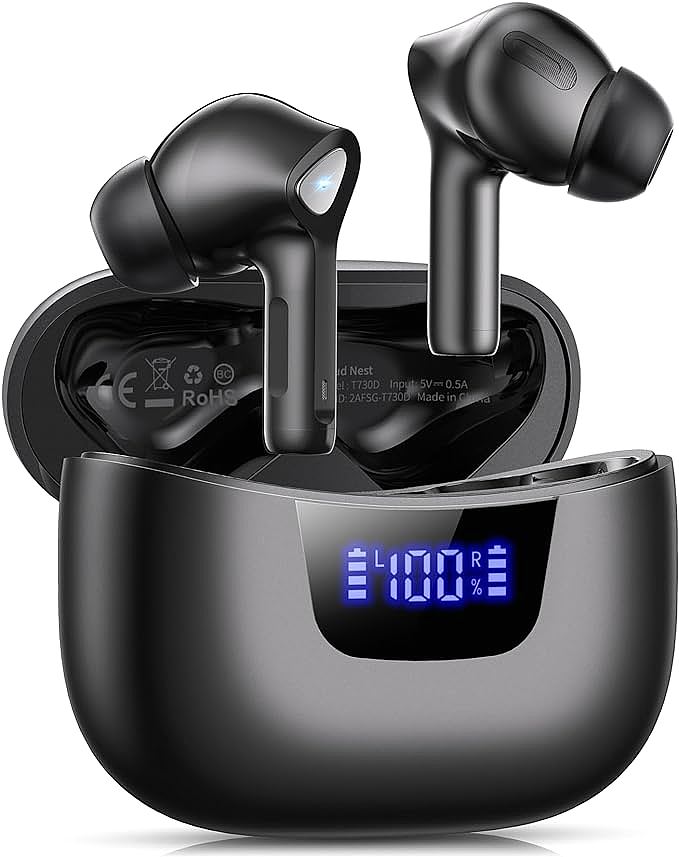
TRANYA T20 Wireless Earbuds
You press play. The video starts. The actor's lips move. Then, a beat later, the sound arrives. That fraction of a second gap between what you see and what you hear is not your imagination. It is a measurable, predictable consequence of how your phone and your earbuds negotiate the invisible bridge between them.
That bridge has a name: the Bluetooth audio codec. And the codec your device actually uses depends on a negotiation you never see, between hardware you probably never checked. The TRANYA T20, for instance, supports aptX, AAC, and SBC, but which one activates when you pair it to your phone is not your choice alone. It is the result of a silent handshake between two machines, each with its own list of supported protocols and its own priorities.
Understanding that handshake changes how you think about wireless audio. Not as a single technology, but as a chain of compromises where latency, fidelity, and battery life pull in opposite directions.

The 20-Millisecond Threshold: Where Perception Breaks
In 1979, researcher David Reisner established a figure that still governs broadcast engineering: the human brain tolerates approximately 20 milliseconds of audio-visual desynchronization before it notices. Beyond that threshold, the brain stops integrating sight and sound into a single perceptual event and begins treating them as two separate inputs.
This is not a subtle shift. Television broadcast standards worldwide are built on this 20ms figure. When a news anchor's voice arrives even slightly after their lips move, viewers perceive it as an error, not as a natural delay. The same principle applies to your earbuds. When the gunshot in a game reaches your ears 100 milliseconds after the flash on screen, your brain registers the disconnect.
The problem is that Bluetooth audio, by its very architecture, introduces delays far beyond 20ms. The question is not whether delay exists, but how much delay your specific codec introduces, and whether that delay crosses the threshold where your brain stops forgiving it.
Why Wireless Audio Needs Encoding at All
Sound, at its source, is a continuous analog waveform. Your phone stores it as digital data, typically in PCM format at 44.1kHz and 16-bit depth, which translates to roughly 1.4 megabits per second for stereo audio. Bluetooth's Advanced Audio Distribution Profile (A2DP), the protocol that governs wireless audio streaming, cannot transmit raw PCM at that rate. The radio link simply lacks the bandwidth.
This is where codecs enter. A codec (coder-decoder) compresses the digital audio stream into a format that fits within Bluetooth's transmission constraints, then decompresses it on the receiving end. The compression is lossy: information is permanently discarded. The art of codec design lies in deciding which information to discard and which to preserve, based on what the human ear can and cannot perceive.
The scientific foundation for this selective discarding is psychoacoustics, specifically the masking effect. When a loud sound occurs at a particular frequency, it renders quieter sounds at nearby frequencies inaudible to the human ear. A well-designed codec identifies these masked frequencies and allocates zero bits to encoding them, redirecting its limited bit budget toward frequencies where the ear is most sensitive.
The Bark scale formalizes this sensitivity. It divides the audible range (20Hz to 20kHz) into 24 critical bands, each representing a region where the ear processes frequencies as a single unit. Codec algorithms use the Bark scale to calculate masking thresholds and allocate bits through a process called bit pool allocation, dynamically assigning more encoding resources to bands with higher signal energy and perceptual importance.
SBC: The Universal Baseline With a Latency Problem
SBC (Subband Coding) is the mandatory codec in the A2DP specification. Every Bluetooth audio device, without exception, must support it. This universality is its strength and its curse.
SBC operates by splitting the audio signal into frequency subbands and encoding each independently. Its maximum bitrate reaches 345 kbps, which is adequate for casual listening but introduces audible artifacts in complex passages, particularly in the high frequencies where cymbals and sibilants reside.
The real cost of SBC is latency. Typical SBC configurations introduce 150 to 250 milliseconds of delay between the source and the ear. Part of this comes from the encoding process itself, which requires processing audio in blocks. Part comes from the Bluetooth radio's scheduling granularity, which operates in 6.25-millisecond intervals. And part comes from the buffer on the receiving end, which must hold enough data to prevent dropouts during transmission hiccups.
When you watch a video with SBC-encoded audio, that 150-250ms delay means the sound of a door closing arrives noticeably after you see it close. For music alone, latency is irrelevant; the song starts late, but you never notice because there is no visual reference. The moment you add a visual element, whether a YouTube video or a mobile game, SBC's latency becomes a perceptual problem.
AAC: Apple's Preferred Protocol
AAC (Advanced Audio Coding) is the codec Apple chose for its environment. iPhones and iPads support only two Bluetooth audio codecs: SBC and AAC. There is no aptX option on iOS, no LDAC, no alternative path. If you own an iPhone, AAC is the ceiling for your wireless audio quality.
AAC achieves a maximum bitrate of 320 kbps and typically introduces 80 to 150 milliseconds of latency. Its psychoacoustic model is more sophisticated than SBC's, which means it can produce better perceived audio quality at equivalent bitrates. The compression is more efficient at discarding truly inaudible information while preserving the frequencies the ear cares about most.
However, AAC carries a complication on Android devices. While Android devices have supported AAC since version 4.3, the quality of that implementation varies significantly across devices. Some Android devices use a high-quality AAC encoder that matches Apple's output. Others use a less capable encoder that introduces additional artifacts, meaning the same pair of earbuds can sound different depending on which phone is transmitting. This inconsistency is not a flaw in the codec itself, but in the uneven implementation across the Android hardware environment.
The patent situation also matters. AAC requires licensing, unlike SBC which is open source. This licensing cost is one reason some manufacturers prioritize SBC or opt for Qualcomm's aptX family instead.

The aptX Family: Qualcomm's Tiered Approach
Qualcomm's aptX is not a single codec but a family, each member optimized for a different point on the latency-fidelity spectrum.
Standard aptX operates at 352 kbps with approximately 120 milliseconds of latency. It uses a 4:1 compression ratio to transmit audio that approximates CD quality. Its primary advantage over SBC is lower latency and more consistent audio quality, but it requires both the source device and the earbuds to support it. If either side lacks aptX, the connection falls back to SBC.
aptX HD pushes bitrate to 576 kbps and supports 24-bit/48kHz audio, targeting listeners who want higher resolution. Its latency sits around 130 milliseconds, slightly higher than standard aptX because the additional data requires more processing and transmission time. It is available only on select Android devices; iOS does not support it.
aptX Low Latency (aptX LL) is the specialist. It targets below 40 milliseconds of end-to-end delay, achieved through a bidirectional feedback mechanism that dynamically adjusts the transmission rhythm. At under 40ms, aptX LL sits just above the 20ms perceptual threshold, making it the only currently mass-produced codec that approaches the latency required for real-time audio-visual synchronization. It is designed specifically for gaming and video applications where that synchronization matters. The trade-off: aptX LL requires both ends to support it, and device support remains limited.
aptX Adaptive occupies the middle ground. It dynamically adjusts its bitrate between 80 and 420 kbps based on the content being transmitted and the quality of the radio link. When the connection is strong and the content demands fidelity, it shifts toward higher bitrates. When latency becomes the priority, such as during gaming, it shifts toward lower bitrates with faster encoding. This adaptability makes it the most versatile member of the family, though it is also the newest and has the narrowest device support.
The Codec Negotiation You Never See
When you pair your earbuds to your phone, the two devices perform a codec negotiation. The phone presents a list of codecs it can encode. The earbuds present a list of codecs they can decode. The devices select the highest-quality codec that appears on both lists. If no common codec exists beyond SBC, they fall back to SBC.
This negotiation explains why the same earbuds can sound different on different phones. An iPhone will negotiate AAC with aptX-capable earbuds, because iOS cannot encode aptX. An Android device with a Qualcomm Snapdragon chip will negotiate aptX with the same earbuds. An Android device with a MediaTek or HiSilicon chip might negotiate SBC or AAC, depending on its specific codec licensing and implementation.
The practical implication is straightforward: your earbuds' capabilities are only half the equation. The codec that actually activates is determined by the weaker link in the chain, the device with the more limited codec support. Buying aptX-capable earbuds does not guarantee aptX audio if your phone cannot encode it.
The Latency-Quality-Battery Trilemma
Wireless audio faces a three-way tension between latency, audio quality, and battery life. You can optimize for any two, but not all three simultaneously.
Low latency requires fast encoding and minimal buffering, which means less time for sophisticated compression algorithms and less tolerance for retransmitting corrupted data. The result is either lower audio quality (fewer bits allocated to perceptual encoding) or higher bitrate (more radio bandwidth consumed, which drains the battery faster).
High audio quality requires more bits, which means more radio transmission time, which means more power consumption. It also requires more complex encoding, which adds processing latency.
Long battery life requires minimizing radio transmission and processing overhead, which means lower bitrates and simpler codecs, both of which tend to increase latency or reduce quality.
Gaming earbuds, which prioritize latency above all else, typically accept shorter battery life as the cost. The physics of lithium-ion batteries reinforces this: higher discharge rates reduce effective capacity, meaning that the power demands of low-latency encoding disproportionately drain small earbud batteries. The only engineering solution that avoids this trade-off is a larger battery, which conflicts with the form factor constraints of in-ear designs.

LDAC and the High-Fidelity Path
Sony's LDAC codec takes the opposite approach from aptX LL. Instead of minimizing latency, LDAC maximizes bitrate, reaching up to 990 kbps across three selectable tiers (330, 660, and 990 kbps). At its highest setting, LDAC approaches Hi-Res audio quality, transmitting more data than any other Bluetooth codec.
The cost is latency. LDAC typically introduces around 190 milliseconds of delay, placing it firmly in the territory where audio-visual synchronization is perceptibly off. It is also power-hungry, consuming more battery than aptX or AAC at equivalent listening volumes. And like aptX, it is not available on iOS; Sony reserves LDAC primarily for its own devices and select partners using Android devices.
LDAC illustrates the trilemma in practice. It chooses quality at the expense of latency and battery efficiency. For pure music listening, where latency is irrelevant, this is a reasonable trade-off. For any application involving video or gaming, it is not.
LC3 and LE Audio: The Next Generation
Bluetooth 5.2, released in 2020, introduced LE Audio and with it a new codec: LC3 (Low Complexity Communications Codec). LC3 represents a fundamental shift in how Bluetooth handles audio.
At the same perceived audio quality, LC3 requires approximately 50% less bitrate than SBC. This efficiency gain comes from a more modern psychoacoustic model and a more flexible frame structure. LC3 supports configurable frame lengths as short as 7.5 milliseconds, which means the encoding delay alone can be kept under 7.5 milliseconds. Combined with the lower-latency radio scheduling of LE Audio, total end-to-end latency can potentially drop below 30 milliseconds.
LC3 also introduces capabilities that A2DP never supported. It enables bidirectional audio streams, meaning a single connection can carry both playback and microphone audio simultaneously without the quality degradation that current HFP (Hands-Free Profile) connections impose. It also supports broadcast audio, where one source can transmit to multiple receivers simultaneously, a feature with obvious applications in public spaces and shared listening scenarios.
The transition to LC3 will be gradual. Existing devices using A2DP and SBC will continue to work. New devices supporting LE Audio will gain access to LC3, but both the source and the receiver must support the new protocol. The coexistence period will likely last several years, during which codec negotiation will become more complex rather than less.
What Your Phone Actually Supports
The codec environment fragments along platform lines in predictable ways.
iOS devices support SBC and AAC. Period. Apple has not added aptX, LDAC, or any other third-party codec to its Bluetooth stack. If you use an iPhone, AAC is the best codec available to you, regardless of what your earbuds claim to support.
Android devices vary by chipset. Phones with Qualcomm Snapdragon processors typically support aptX and often aptX HD or aptX Adaptive. Phones with MediaTek chipsets may support aptX on some models but not others. Phones with HiSilicon (Huawei) chipsets support LHDC, a proprietary high-fidelity codec, but may not support aptX. Sony devices add LDAC to the mix.
Game consoles have their own matrices. The Nintendo Switch supports SBC and, in some configurations, aptX LL through specific USB transmitters. The PlayStation 5 does not support Bluetooth audio directly for game audio, requiring either a USB dongle or its proprietary wireless protocol.
The practical takeaway: before purchasing earbuds for their codec support, check what your source device can actually encode. A pair of earbuds advertising aptX LL support will deliver SBC latency if connected to an iPhone, because the iPhone cannot encode aptX LL. The codec negotiation will silently fall back to the common denominator.
The Engineering Philosophy of Wireless Audio
Every Bluetooth codec is an exercise in what to throw away. The original PCM signal contains roughly 1,411 kilobits per second of data. SBC transmits 345. AAC transmits 320. aptX transmits 352. Even LDAC at its maximum transmits 990, still 30% less than the original. The codec's job is to decide which 70-75% of the data the ear will not miss.
That decision is never neutral. It reflects assumptions about what matters in audio: timing for gamers, frequency resolution for audiophiles, power efficiency for commuters. Each codec encodes a philosophy about listening into its compression algorithm.
The next time your earbuds sound different on a different phone, remember: you are hearing the result of a negotiation between two machines, each with its own constraints, settling on the lowest common denominator they can agree on. The sound that reaches your ears is not just the music. It is the music after a particular codec has decided what to keep and what to discard, based on a model of your hearing that was designed by engineers who had to choose between latency, quality, and battery life, and could not choose all three.
TRANYA T20 Wireless Earbuds
Related Essays
The Invisible Symphony: How Driver Size Shapes Your Audio Experience

Why Bluetooth Audio Sounds Worse Than Wired — And What...

Sennheiser HD1 AEBT Wireless Headphones: The Science of Sound, Silence, and Style

DETHONRAY BQEYZ Summer - Ultimate Audiophile Experience
Wired vs Wireless Earbuds: How to Choose Which is Right for You

YHT True Wireless Earbuds - Superior Sound and Versatile Features

KLIM Fusion Earbuds with Microphone - A Perfect Blend of Comfort and Quality
