The Physics Personal Audio Cannot Escape: Why Size Still Rules Sound

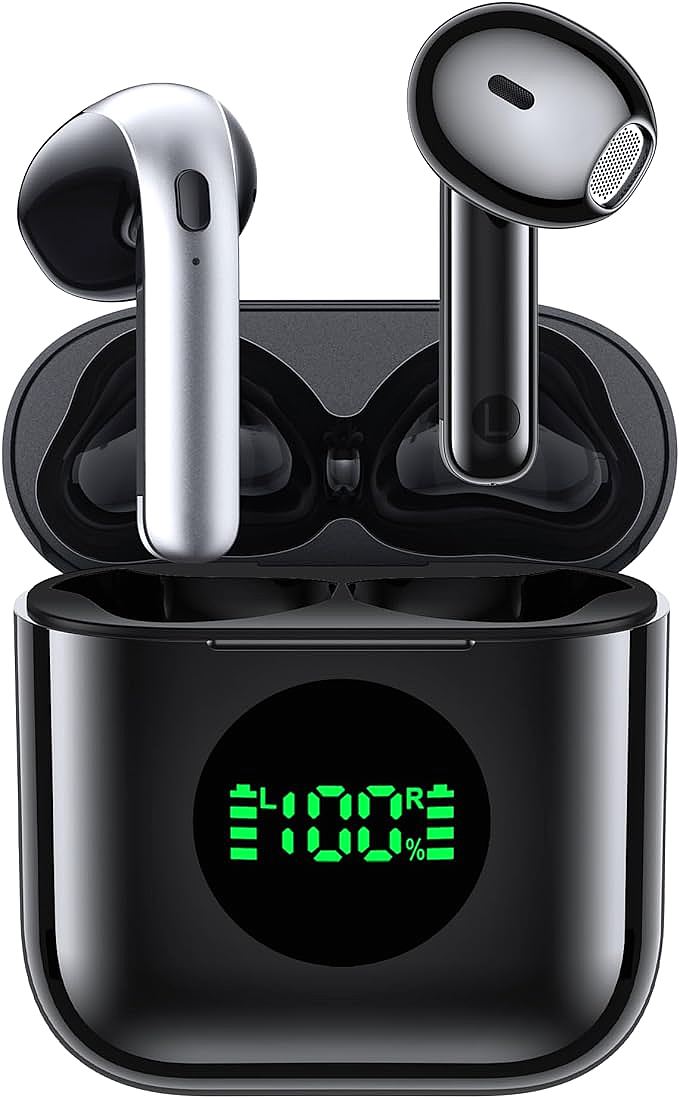
PSIER T16 Wireless Earbuds
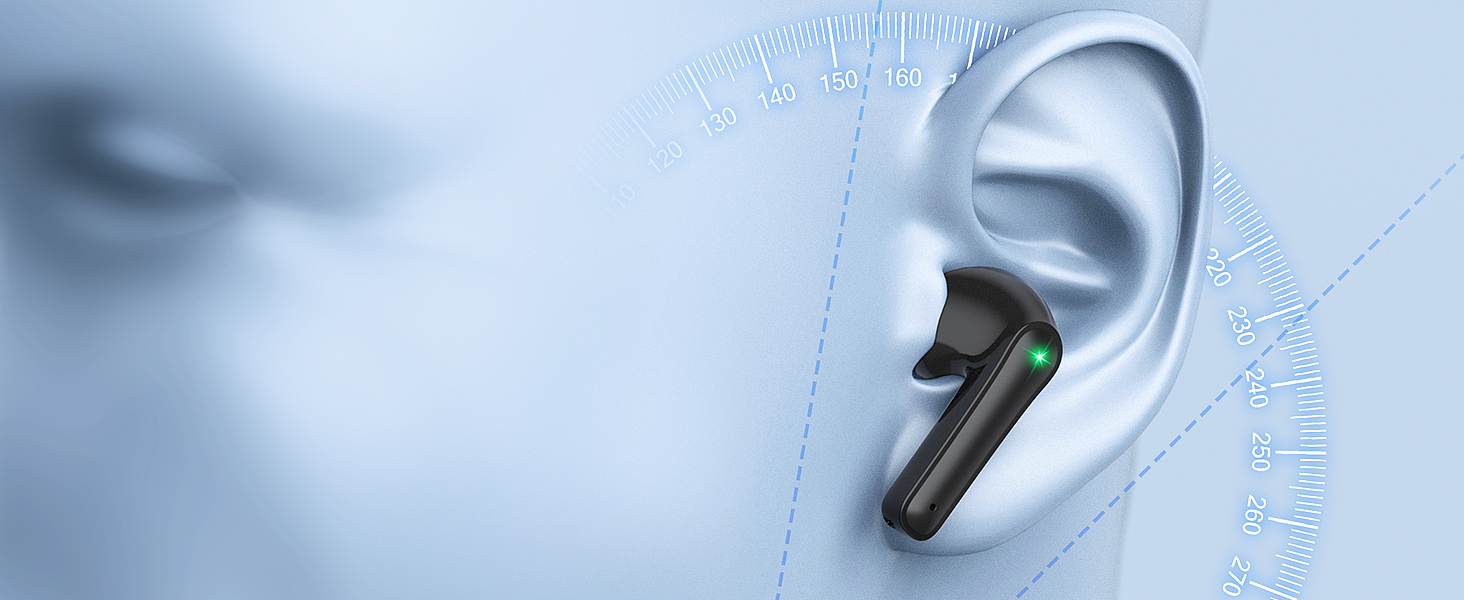
Nature does not negotiate on physical dimensions. A submarine sonar array needs meters of antenna length to detect low-frequency signals. A concert hall speaker moves liters of air per bass note. Even the device sitting in your ear right now — weighing roughly the same as a sheet of paper — obeys the same acoustic laws that govern a stadium PA system. The laws of physics are indifferent to price tags, brand prestige, or clever marketing. Air displacement requires surface area. Energy storage requires volume. These are not opinions. They are constraints. And yet the entire personal audio industry has spent a decade trying to convince you otherwise. "Huge sound from a tiny package" is the promise printed on nearly every product box in this category. The engineering reality is more honest: you can optimize within physics, but you cannot outrun it. A 13mm driver moves roughly 69% more air than a 10mm driver — not because of superior engineering, but because it is physically larger. Physics is remarkably democratic. This is the story of two numbers that matter more than any spec sheet can capture: surface area and energy density. Understanding why they matter will change how you evaluate every audio device you encounter. ## The Surface Area Paradox The contradiction at the heart of miniature audio is this: consumers want devices that disappear in the ear, yet physics demands devices with enough mass to push air convincingly. Every engineering discipline encounters this tension sooner or later. Aerospace engineers want lighter wings that still generate lift. Camera designers want thinner lenses that still gather light. Audio engineers want smaller drivers that still produce full-range sound. The difference is that aerospace has computational fluid dynamics and carbon fiber composites to push the boundary. Camera design has aspherical lens elements and computational photography. Miniature audio has πr² — a formula that has not changed since Archimedes derived it in the third century BC. There are no software patches for geometry. When you shrink a driver from 13mm to 6mm, you do not halve its surface area. You reduce it by 79%. The relationship is quadratic, not linear. This is why seemingly small differences in driver diameter produce dramatically audible differences in bass output. The industry knows this. The physics is settled. The question is not whether size matters — it is how much compromise consumers are willing to accept in exchange for comfort and portability. ## The Mathematics of Moving Air Every sound you have ever heard was created by something pushing air. A drumhead strikes, a vocal cord vibrates, a speaker cone pulses — and those physical displacements create pressure waves that travel to your eardrum. In personal audio devices, the "something" doing the pushing is a dynamic driver: a thin diaphragm attached to a voice coil, suspended in a magnetic field. When electrical current flows through the coil, it moves. The diaphragm follows. Air gets pushed. Sound happens. The math governing how much air gets moved is deceptively simple. Surface area follows the formula πr², where r is the radius of the circular diaphragm. This means driver diameter and surface area do not have a linear relationship — they have a squared relationship. Every additional millimeter of diameter delivers disproportionately more surface area. Consider the real numbers. A typical 6mm driver — common in ultra-compact in-ear devices — has a surface area of roughly 28.3 mm². Step up to a 10mm driver, found in most mainstream in-ear designs, and you get 78.5 mm². Now look at a 13mm driver: 132.7 mm². That is 69% more surface area than the 10mm benchmark, and nearly 4.7 times the area of the 6mm driver. Devices using that 13mm diameter gain a bass response with a physical authority that smaller drivers simply cannot replicate through software alone. 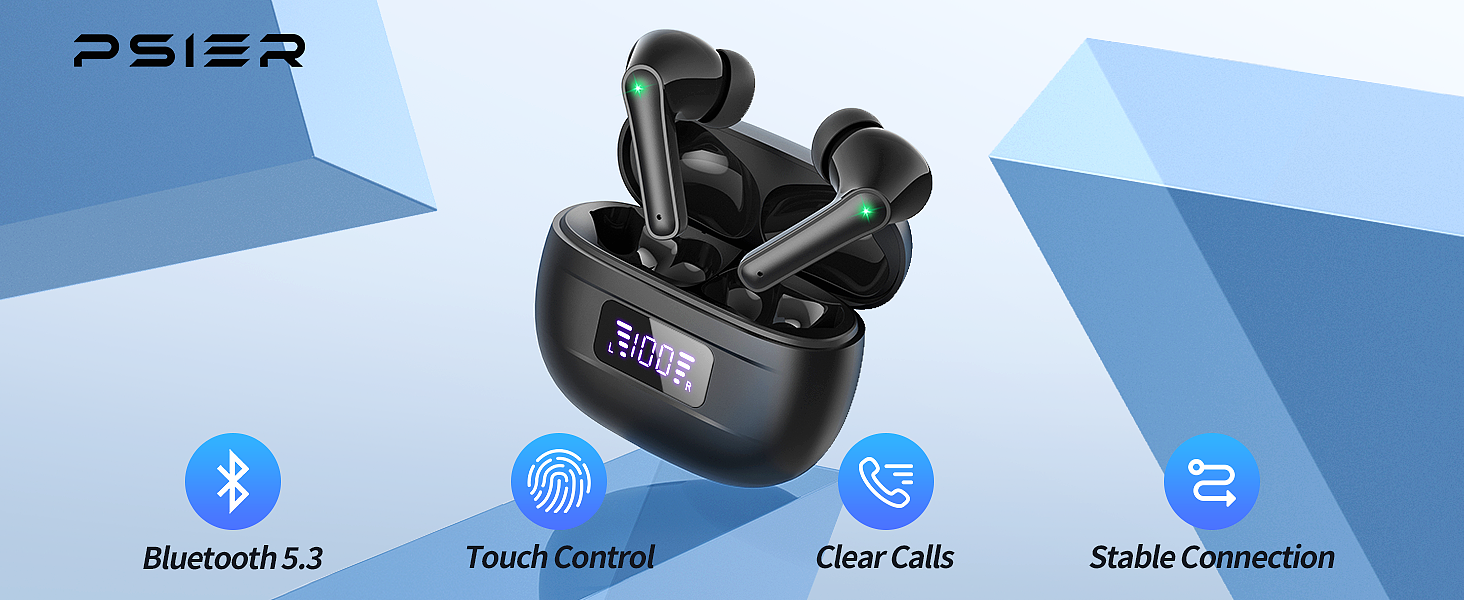 ### Why Bass Demands Size Low-frequency sound waves are physically longer than high-frequency ones. A 20 Hz bass note has a wavelength of about 17 meters. A 20,000 Hz treble note? Roughly 17 millimeters. Reproducing those long, slow bass oscillations requires moving a substantial volume of air per cycle — something a small diaphragm struggles to achieve without extreme excursion. Excursion is the distance a driver cone travels back and forth. Small drivers must travel further to move the same volume of air as larger ones. This creates three cascading problems. First, pushing a small driver to its excursion limits introduces harmonic distortion — the driver starts producing frequencies that were never in the original signal. Second, the motor assembly (voice coil and magnet) must work harder, generating more heat and drawing more current. Third, the non-linear behavior at the extremes of excursion means the bass you hear at high volumes sounds fundamentally different from the bass at moderate volumes. Larger drivers sidestep all three issues. They move less distance to displace the same air, staying within their linear operating range. They generate less distortion. They draw less current per unit of bass output. The Thiele-Small parameters — a set of electromechanical measurements developed in the 1960s by A. Neville Thiele and Richard Small — characterize these behaviors precisely. One key parameter, Fs (resonant frequency), tends to decrease as driver size increases. A lower Fs means the driver naturally wants to reproduce lower frequencies without being forced. This is why the relationship between driver size and bass quality is not marketing spin. It is mechanical physics.
  ## The Energy Density Ceiling If surface area governs how much sound a device can produce, then stored energy governs how long it can keep producing it. And here, the physics constraint is equally unforgiving: battery capacity is proportional to battery volume. There is no software update, no clever circuit design, no marketing
slogan that changes the fundamental chemistry of lithium-ion cells. A lithium-ion battery stores energy through the movement of lithium ions between a cathode and anode. The energy density of current lithium-ion technology — the amount of energy stored per unit volume — has improved only modestly over the past decade. We are talking about 3-5% annual improvements at the cell level, not the exponential leaps that characterize semiconductor progress. The reason is simple: energy storage involves chemistry, not lithography. You cannot shrink a lithium-ion cell the way you can shrink a transistor. Personal audio devices face a dual battery challenge. Each in-ear unit contains a tiny cell, typically 30-50 mAh, that must power a Bluetooth radio, a digital signal processor, a digital-to-analog converter, a driver amplifier, and — in some models — active noise cancellation microphones and processing. The charging case carries a larger cell, usually 300-600 mAh, designed to recharge the in-ear units multiple times throughout the week.  Consider what happens when a manufacturer claims 76 total hours of playback. That number typically breaks down into roughly 9 hours per in-ear charge and about 7.4 additional charges from the case. Achieving this means packing a large case battery — around 400-500 mAh — into a container that still needs to fit in your pocket. Devices reaching this figure do so primarily by maximizing the case battery volume rather than through innovative cell chemistry. Every cubic millimeter not occupied by the hinge, the LED display, or the charging contacts goes to battery. This is the energy density ceiling. Engineers can approach it from multiple angles — more efficient chipsets, smarter power management, better Bluetooth protocols — but they cannot raise it. The ceiling is set by chemistry. ### The Degradation Question There is an additional dimension to the battery physics that most consumers never consider. Lithium-ion cells degrade over charge cycles. A typical cell loses approximately 20% of its capacity after 500 full charge-discharge cycles. For personal audio devices used daily, that threshold arrives in about 18 months. The battery that once delivered 9 hours per charge gradually becomes a battery that delivers 7 hours, then 6. This degradation is not a defect. It is electrochemistry. Every time lithium ions shuttle between cathode and anode, some small fraction of them gets trapped in the electrode structure, reducing the total number of ions available for future cycles. Heat accelerates the process. Fast charging accelerates it further. There is no known lithium-ion chemistry that avoids this entirely — only variations in how quickly it occurs. For devices that depend on small batteries, the physics of degradation hits harder. A 50 mAh in-ear battery losing 20% capacity drops from 9 hours to 7.2 hours of playback. A 3000 mAh smartphone battery losing the same percentage drops from 12 hours of screen time to 9.6 hours. The proportional loss is identical, but the user of the smaller device notices it sooner because the margins were already thin.
  ## A Decade of Defying Physics To appreciate where we are, it helps to remember where we started. In 2014, a German startup called Bragi launched a Kickstarter campaign for the Dash — the world's first prominent true wireless stereo in-ear device. The campaign raised $3.4 million and promised a future free from tangled cables. The reality was humbling: 2 to 3 hours of battery life per charge, stuttering Bluetooth connectivity, and a price tag approaching $300. The Dash was a concept car in miniature form — thrilling, imperfect, and undeniably the start of something. The Onkyo W800BT technically beat Bragi to market, but it was Apple's AirPods launch in 2016 that mainstreamed the category. Apple removed the headphone jack from the iPhone 7 and presented AirPods as the elegant solution. The internet mocked them mercilessly — they looked like electric toothbrush heads, critics said — but consumers bought them by the tens of millions. Within two years, the silhouette of white stems hanging from ears became a cultural marker. The progression from 2016 to 2025 reads like a masterclass in incremental engineering against physical constraints: - 2014-2016 (Pioneer Era): 2-3 hours per charge, 6-10 hours total with case. Devices were expensive and fitness-focused. Bluetooth was unreliable. The Bragi Dash and Earin defined the frontier. - 2017-2019 (Growth Era): 3-5 hours per charge, 15-24 hours total. Apple AirPods Gen 1 and Jabra Elite models brought stability. Qualcomm introduced TrueWireless Mirroring, solving the desync problem between left and right in-ear units. Samsung Gear IconX and Sony WF-1000X entered the market. - 2019 (The ANC Inflection): AirPods Pro arrived and brought active noise cancellation to the mainstream. This changed consumer expectations permanently. ANC was no longer an over-ear exclusive feature. - 2020-2022 (Maturity Era): 5-8 hours per charge, 24-36 hours total. The technology stabilized. Sound quality improved through better DSP tuning and wider adoption of the Harman frequency response target. Bluetooth 5.2 laid the groundwork for LE Audio. - 2023-2025 (Extended Era): 6-10 hours per charge, 30-76+ hours total. Bluetooth 5.3 brought connection subrating efficiency. The industry shipped 331.6 million TWS units in 2024 alone — an 11.2% increase over the previous year. Each era pushed against the same two walls: how much air can a small driver move, and how long can a small battery keep it moving. The walls did not move. The engineers simply learned to work closer to them.
  ## When Software Hits the Wall If hardware sets the ceiling, software determines how close you can get to it. Digital signal processing — the art of manipulating audio in the digital domain before it reaches the speaker — has become the primary tool in modern personal audio. EQ curves shape frequency response. ANC algorithms generate anti-noise to cancel ambient sound.
Bass boost algorithms attempt to compensate for the physical limitations of small drivers. But there is a line software cannot cross. No amount of digital processing creates additional surface area. You can EQ a 6mm driver to emphasize bass frequencies, but you are asking the driver to produce output it was not physically designed to deliver efficiently. The result is often audible: boosted but muddy bass, compression artifacts at high volumes, and a general sense that the low end is being forced rather than produced naturally. Active noise cancellation illustrates this boundary perfectly. ANC works by using microphones to detect external noise, then generating an inverted sound wave to cancel it. This is elegant engineering — but it is computationally expensive. The DSP must process microphone input, calculate the anti-noise waveform, and output it in real time, all while simultaneously processing your music. This dual workload draws additional current from an already constrained battery. More importantly, ANC can only work within the acoustic limits of the driver producing the anti-noise. If the external noise contains low-frequency energy that the driver cannot physically reproduce at sufficient amplitude, the cancellation simply fails at those frequencies. The software hits the hardware wall. ### The ENC Alternative Environmental Noise Cancellation takes a different approach. Rather than trying to create silence for the listener, ENC focuses on making the caller's voice clearer during phone calls. Microphones analyze ambient noise — wind, traffic, background chatter — and algorithmically remove it from the voice signal before transmitting it. This requires far less processing power than ANC because it only activates during calls and does not need to produce anti-noise in real time. The distinction matters because it illustrates a fundamental engineering principle: you can choose where to spend your limited computational and energy resources. Devices that prioritize call clarity over listening silence make a deliberate trade-off. Neither choice is inherently superior — they serve different user scenarios. The commuter taking calls on a noisy train platform has different needs from the traveler seeking silence in a jet cabin. This trade-off thinking — choosing which physical constraints to optimize and which to accept — is the essence of engineering. Software extends the reach of hardware, but it does not abolish the limits. ## The Protocol Multiplier While software enhances what hardware can do, communication protocols determine how efficiently hardware uses its energy. Bluetooth 5.3, ratified in July 2021, introduced several features that directly extend personal audio battery life without requiring any changes to the physical battery or driver. Connection subrating is the most impactful. In traditional Bluetooth, a device alternates between high-frequency connection intervals (for low latency) and low-frequency intervals (for power saving). The transition between these states was clunky — users experienced noticeable lag when audio resumed after a pause. Connection subrating allows devices to dynamically adjust intervals within a single connection, maintaining responsiveness while conserving power during silent passages. For personal audio, where music is frequently paused and resumed, this translates to meaningful battery savings over the course of a day. The Enhanced Attribute Protocol (EATT) allows multiple simultaneous operations over a single Bluetooth connection. Before EATT, adjusting volume, checking battery status, and controlling playback could interfere with audio streaming. By parallelizing these operations, EATT reduces protocol overhead — the invisible background chatter between your phone and in-ear devices — which in turn reduces radio-on time and power consumption. ### LE Audio and the LC3 Codec The most significant protocol advancement is LE Audio, which operates over Bluetooth Low Energy rather than Bluetooth Classic. Its mandatory codec, LC3 (Low Complexity Communication Codec), delivers a remarkable efficiency gain. According to testing by the Fraunhofer Institute, the LC3 decoder draws approximately 0.8 mA at 3.3V, while the standard SBC decoder draws 1.9 mA and AAC draws roughly 2.1 mA. That difference — 1.1 milliamps — sounds negligible. Multiplied across thousands of minutes of playback, it determines whether your in-ear devices last 6 hours or 8. Real-world testing by Audio Science Review in 2024 showed that LC3 extended playback by an average of 22% over SBC via A2DP, and 16% over AAC. In one tested configuration, the switch from AAC to LC3 added 1 hour and 28 minutes of playback time. That is the difference between devices dying during your afternoon commute and lasting until you get home. Cadence's HiFi 1 DSP, designed specifically for audio processing in personal audio devices, is 18% more cycle-efficient than its predecessor for LC3 workloads and 14% more energy-efficient in combined workloads. The core itself is 16% smaller, which reduces static power leakage. These are semiconductor-level optimizations that extract minutes, then hours, from the same battery chemistry. LE Audio also solves the relay problem. In traditional true wireless stereo, the phone sends audio to one in-ear unit, which then relays it to the other. This relay consumes significant power in the primary unit. LE Audio enables independent, synchronized streams to each unit directly from the source — no relay needed. The power savings are distributed evenly across both sides, extending total battery life and eliminating the asymmetrical drain that plagued earlier designs. The protocol is not a replacement for hardware. It is a multiplier. Better protocols extract more playback from the same physical resources. But they cannot create resources that do not exist. ## Engineering at the Boundary The most sophisticated personal audio devices on the market often use smaller drivers than one might expect. Sony's WF-1000XM5 uses dual 8.4mm drivers. Sennheiser's Momentum True Wireless 4 uses 7mm TrueResponse drivers. How do devices with relatively small drivers achieve such high sound quality? The answer lies in compensating technologies that extract more from less. Balanced armature drivers — tiny, precision-engineered transducers that use a pivoting armature between magnets — offer extraordinary efficiency in a tiny package. Multi-driver configurations combine dedicated low, mid, and high-frequency drivers, each optimized for its specific range.
Advanced DSP tuning applies corrective
PSIER T16 Wireless Earbuds
Related Essays

Why More Drivers Don't Always Mean Better Sound — The TRN MT4 and Multi-Driver Physics

Why Your Wireless Earbuds Die at Hour Six: The Physics Behind 120-Hour Battery Claims

The Paradox of Open-Back Headphones: Why Transparency Requires Vulnerability

The Paradox of Open-Back Headphones: Why Transparency Requires Vulnerability
The Anatomy of Endurance: Deconstructing Large-Driver Acoustics and Battery Efficiency in Modern Audio

The Physics of Upgrades: Decoding Bluetooth 5.3 Efficiency and 14mm Drivers in the Smoonigh A50 PRO

The Algorithm of Silence: Deconstructing Hybrid ANC and Composite Acoustics in the Redmi Buds 3 Pro

The 6,000-Watt Lie: An Audio Engineer Deconstructs the Heart of Your Karaoke System

More Than Loud: The Hidden Science Inside a Modern Karaoke Mixing Amplifier
