Why 40 Hours of Battery Life Breaks the Headphone Anxiety Threshold
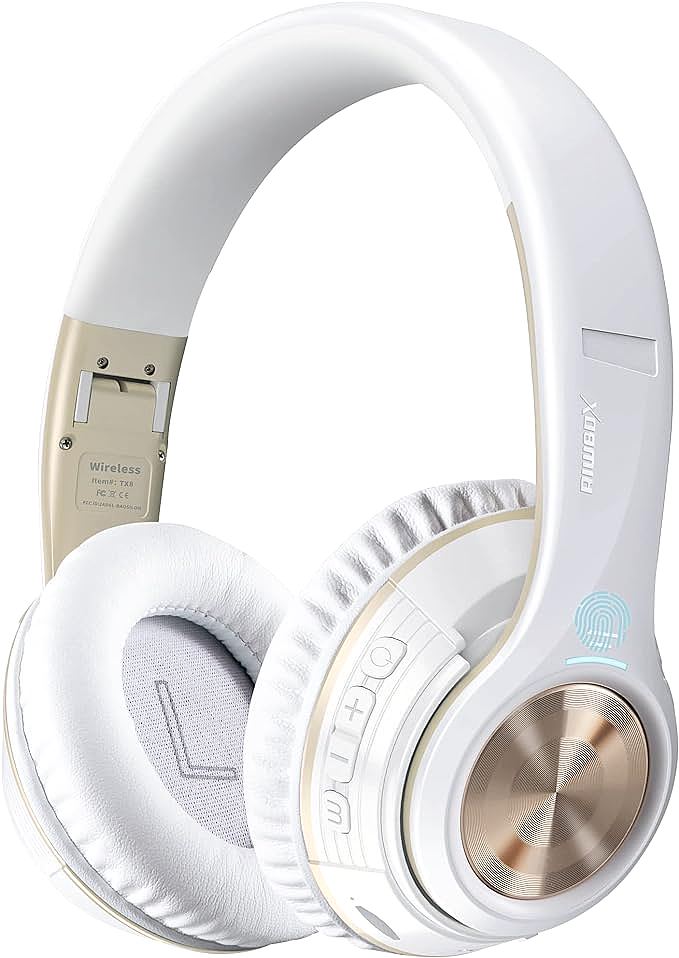
Riwbox TX8 Wireless Headphones
The Low-Battery Panic Is Real
Picture this: you are halfway through a cross-country flight, finally settled into your seat with a movie playing, when the dreaded battery warning flashes on your headphones. You scramble for a charging cable, only to realize the outlet at your seat does not work. For the next three hours, you sit in a cabin full of engine noise with nothing but your thoughts.
Or consider a more common scenario. You are about to join an important video call when your headphones beep twice, the universal signal for low battery. You grab the nearest charger, but it is too late. The call starts, and you are stuck using your laptop's tinny built-in microphone, apologizing for the audio quality.
These situations are not rare. They happen to millions of wireless headphone users every day. The constant mental checklist of "did I charge my headphones last night?" becomes background noise in itself. Battery anxiety, the persistent worry about whether your device will last through the day, is one of the most common frustrations reported by wireless headphone owners.
The core issue is not that headphones have short battery life in absolute terms. Most modern wireless headphones offer 15 to 30 hours on a single charge. The problem is that this range sits in an uncomfortable middle ground, long enough to feel adequate on a normal day, but short enough to fail you on the days that matter most. And that is exactly where the 40-hour threshold changes the equation.

Where Battery Anxiety Comes From
The Manufacturer Data Gap
Wireless headphone battery life claims are measured under conditions that barely resemble real-world use. The standard testing protocol involves 50 percent volume, SBC codec, no active noise cancellation, and a controlled laboratory environment free from interference. Under these ideal conditions, a headphone rated for 30 hours might indeed deliver 30 hours.
But real life is not a laboratory. Most users listen at 60 to 80 percent volume. Many enable ANC in noisy environments. Bluetooth interference from other devices forces the radio to work harder. The result? Actual battery life typically falls 40 to 60 percent short of the advertised number. A headphone claiming 30 hours might deliver 18 to 24 hours in practice.
This gap between marketing numbers and real-world performance erodes trust. Users learn to mentally discount manufacturer claims, but they never quite know how much to discount. That uncertainty is the root of battery anxiety. You cannot plan around a number you do not trust.
The "Charge When Dead" Trap
Many users adopt a simple strategy: charge the headphones only when they run out of battery. This approach feels efficient, but it creates a vulnerability window. If an unexpected need arises, a long call, an impromptu trip, a late-night study session, the headphones might not have enough charge to see you through.
The problem compounds with habits that silently drain battery life. High volume levels draw significantly more power from the amplifier. Active noise cancellation runs additional microphones and processing chips continuously. Premium Bluetooth codecs like aptX and AAC, while delivering better audio quality, require more computational overhead than the baseline SBC codec. Each of these factors individually might reduce battery life by 10 to 20 percent. Combined, they can cut a 30-hour claim down to 15 hours of actual use.
Connection distance matters too. Bluetooth radios adjust their transmission power based on signal quality. If you walk 10 meters away from your phone, or if walls and furniture obstruct the signal, the radio increases power output to maintain the connection. Over hours of use, this extra transmission effort adds up to a measurable reduction in battery life.
The 40-Hour Threshold: A Quantitative Argument
The Math Behind the Number
Let us break down what 40 hours of battery life actually means for different usage patterns.
For a light user who listens to music during a daily commute, roughly 2 hours per day, 40 hours translates to 20 days between charges. That is nearly three weeks without thinking about a charger. The charging frequency drops below once every two weeks, which means you stop tracking it entirely. Charging becomes something you do when you happen to notice the indicator, not something you schedule.
For a moderate user, someone who listens during commutes, at the gym, and while working, roughly 4 hours per day, 40 hours provides 10 days of use. Even with a 30 percent real-world penalty, that still means a full week between charges. You charge on Sunday evening and do not think about it again until the following weekend.
For a heavy user, 6 to 8 hours per day of continuous use, 40 hours still delivers 5 to 7 days. Compare that to a 20-hour headphone, which would need charging every 2 to 3 days under the same conditions. The difference between charging twice a week and charging once a week is not just a convenience improvement. It is a psychological shift.
The Psychology of Charging Frequency
There is a cognitive threshold at work here. Research on habit formation suggests that tasks performed less than once per week tend to fall out of active mental tracking. When you charge your headphones daily or every other day, charging occupies a slot in your mental to-do list. You check the battery level before leaving the house. You pack the charging cable just in case. The headphones demand attention.
When charging drops to once a week or less, the task migrates from active tracking to background routine. You stop checking battery levels because you know there will be enough charge. You stop carrying the cable because you will not need it away from home. The headphones become invisible infrastructure, like the battery in your smoke detector. You do not think about it until it needs replacing, and that is exactly how technology should work.
This is the real significance of the 40-hour threshold. It is not about the raw number of hours. It is about crossing the line from "device that needs managing" to "device that just works." Below this threshold, headphones are a responsibility. Above it, they become a tool you can rely on without thinking.
The Riwbox TX8, with its rated 40-hour battery life, sits right at this transition point. In real-world conditions with moderate volume and no ANC, users report getting 35 to 38 hours, which still comfortably exceeds the weekly charging threshold. At around $32, it demonstrates that the 40-hour standard is achievable without premium pricing.
The Technology Behind Long Battery Life
Bluetooth 5.0 and Power Efficiency
The single biggest factor enabling 40-hour battery life in modern headphones is Bluetooth 5.0. Compared to the previous Bluetooth 4.2 standard, version 5.0 reduces power consumption by approximately 30 percent during audio streaming. This improvement comes from several technical advances.
First, Bluetooth 5.0 increases the data transmission rate, which means the radio can send the same amount of audio data in shorter bursts. Less time transmitting means less time with the radio drawing power. Second, improved error correction reduces the number of retransmissions needed when packets are lost, saving energy that would otherwise be wasted on redundant data transfers. Third, the power control feature allows the headphone's radio to dynamically adjust its transmission strength based on the actual distance to the source device, rather than broadcasting at maximum power by default.
The upcoming LE Audio specification promises further gains. LE Audio introduces a new codec called LC3 that delivers comparable audio quality to SBC at roughly half the bitrate. Lower bitrate means less data to transmit, which directly translates to lower power consumption. Headphones adopting LE Audio could see battery life improvements of 20 to 40 percent over current Bluetooth 5.0 implementations.
Hidden Battery Drains
Understanding what consumes battery life helps you make informed choices about how you use your headphones.
Codec selection. The Bluetooth codec you use has a measurable impact on battery life. SBC, the mandatory baseline codec, is the most power-efficient because it requires the least processing. AAC, commonly used with Apple devices, demands more computational overhead for its psychoacoustic modeling. aptX, popular on Android devices, sits between SBC and AAC in terms of processing load. If battery life is your priority, forcing SBC codec in your phone's developer settings can add 10 to 15 percent more playtime.
Volume level. The relationship between volume and power consumption is not linear. Doubling the perceived loudness requires roughly ten times the amplifier power. Listening at 70 percent volume instead of 50 percent can reduce battery life by 20 to 30 percent. This is one of the most controllable factors, and simply moderating your listening volume can significantly extend your headphones' runtime.
Active noise cancellation. ANC systems run continuously, sampling ambient noise through external microphones, processing the signal through a DSP chip, and generating an anti-noise waveform through the drivers. This processing pipeline draws a constant current regardless of whether audio is playing. On headphones that offer 30 hours without ANC, enabling it typically reduces battery life to 20 to 24 hours. The Riwbox TX8 does not include ANC, which is one reason it achieves its 40-hour rating. For users who primarily listen in relatively quiet environments, this trade-off makes sense.
Connection distance and interference. Bluetooth radios adapt their transmission power in real time. In an open space with your phone in your pocket, the radio operates at minimal power. Walk 8 meters away, or introduce walls and microwave ovens between the headphone and the source, and the radio ramps up to maintain the connection. In environments with heavy 2.4 GHz interference, such as office buildings with dozens of Wi-Fi access points, battery life can drop by 10 to 20 percent compared to a clean home environment.
A Practical Buying Framework
Battery Life Tiers
Based on the analysis above, here is a practical framework for evaluating wireless headphone battery life.
Below 20 hours. Headphones in this range will need charging every 1 to 3 days depending on usage. Battery anxiety is likely, especially for users who travel or have unpredictable schedules. These headphones work fine for casual home use, but they require active battery management.
20 to 30 hours. This is the mainstream range. Most popular wireless headphones fall here. For light to moderate users, charging once or twice a week is manageable. For heavy users, you will still need to charge every 2 to 3 days. Adequate, but not worry-free.
30 to 40 hours. This range starts to feel different. Even heavy users get 4 to 5 days between charges. Light users can go two weeks. The mental burden of tracking battery life drops noticeably. This is where headphones transition from "good enough" to "reliable."
40 hours and above. At this tier, charging becomes a weekly or biweekly event rather than a daily concern. The headphones effectively disappear from your mental checklist. This is the zone of what we might call "effortless use," where battery life is no longer a factor in your decision to pick up your headphones.
Matching Battery Life to Your Needs
The right battery life depends on your usage intensity, not on finding the highest number on a spec sheet.
If you use headphones for less than 2 hours a day, mostly at home with easy access to a charger, a 20-hour headphone will serve you well. The extra capacity of a 40-hour model would be underutilized.
If you use headphones for 3 to 5 hours a day, including commutes, gym sessions, and work, aim for at least 30 hours. This gives you a comfortable buffer for days when you use them more than usual.
If you are a heavy user, 6 or more hours a day, or if you frequently travel, 40 hours should be your minimum target. The Riwbox TX8, with its 40-hour battery life at a price point under $35, represents a practical option in this category. It delivers the threshold-level battery life without the premium price tag that usually accompanies it. The trade-off is the absence of ANC, which may or may not matter depending on your typical listening environment.
The key insight is that battery life is not about having the most hours. It is about having enough hours that you stop worrying about hours. That threshold is different for everyone, but for most users, it falls somewhere around 40 hours of rated battery life.
The Takeaway
Battery anxiety in wireless headphones is not a minor inconvenience. It is a persistent cognitive cost that affects how you use and relate to your devices. The root causes are twofold: manufacturer testing conditions that inflate battery life claims, and user habits that silently drain more power than expected.
The 40-hour battery life threshold matters because it crosses a psychological boundary. Below this threshold, you manage your headphones. Above it, your headphones simply work. The difference is between checking battery levels before you leave the house and not thinking about it at all.
Solving battery anxiety requires action on two fronts. On the product side, choosing headphones with sufficient real-world battery life for your usage pattern eliminates the source of the problem. On the habit side, understanding how volume, codecs, ANC, and connection distance affect battery life lets you optimize what you already have.
Start by honestly assessing your daily headphone usage. How many hours do you actually listen? Do you frequently travel or have long days away from a charger? Based on your answers, use the tier framework above to identify the minimum battery life you need. Then apply a 30 percent discount to the manufacturer's claim to estimate real-world performance. If the discounted number still meets your threshold, you have found a headphone that will free you from battery anxiety.
The 40-hour standard is not a marketing gimmick. It is a practical threshold backed by the math of human usage patterns and the psychology of habit formation. Choose accordingly, and your headphones will serve you without demanding your attention.
Riwbox TX8 Wireless Headphones
Related Essays

Bmanl T16 Wireless Earbuds - Stylish and Affordable Bluetooth Earbuds for Sports

Why Your Wireless Earbuds Keep Dying at 4PM: The Battery Physics TWS Cannot Solve

LATAVY HOME EDITION F69 Wireless Earbuds – High-Quality Sound and Comfortable Design

DOQAUS Life 3 Wireless Headphones: The Science of Immersive Sound, All-Day Comfort, and Personalized Audio

The Tech Inside Your Earbuds: A Guide to Bluetooth, IP Ratings, and More

Uliptz WH203A User Manual: Pairing, EQ Modes and Battery Tips

Where the Energy Goes: A Thermodynamic Look at Wireless Audio Battery Life

Spmmmner Wireless Earbuds – A Seamless Listening Experience

MUDHEN in Ear Wireless Headphones - Powerful Sound and Waterproof Design
