Navigating the Intersection of Biomechanics and RF Propagation


noot products NP11 Wireless Earphones
The modern athlete operates within a highly curated sensory environment. The ability to maintain a continuous stream of digital audio while engaging in aggressive kinetic movements requires hardware that defies multiple physical constraints simultaneously. A wearable device must establish a resilient radio frequency (RF) link through an environment heavily saturated with interference, translate digital packets into acoustic pressure waves, and defend its internal microelectronics against highly corrosive biological fluids—a challenge that defines the engineering standard for bluetooth earbuds ipx7 waterproof sports audio.
To understand the sheer density of engineering required to achieve this, we can analyze the architectural decisions behind bluetooth earbuds ipx7 waterproof sports audio hardware, utilizing devices like the noot products NP11 bluetooth earbuds ipx7 waterproof model as a structural baseline. By examining its reliance on Bluetooth 4.1 with Enhanced Data Rate (EDR), mechanical earhook distribution, tactile switch arrays, and IPX7 ingress protection, we uncover a fascinating masterclass in applied physics, material science, and cognitive ergonomics.
Why Does Sweat Destroy Microelectronics Instantly?
Consider a runner midway through an intense interval session. The human thermoregulatory system is actively cooling the body by excreting perspiration. From an engineering perspective, this biological function is a relentless, highly destructive assault on nearby electronics.
Sweat is not pure water. It is a complex saline solution containing high concentrations of sodium chloride, potassium, magnesium, and trace amounts of urea and lactic acid. This composition transforms the fluid into a highly efficient electrolytic conductor. When a microscopic drop of sweat bridges the gap between two exposed electrical contacts—such as a charging pin or an unsealed printed circuit board (PCB) trace—it initiates a catastrophic chemical reaction known as galvanic corrosion.
Because the micro-components inside an IPX7 rated audio device operate under a constant direct current (DC) bias from the internal battery, the sweat acts as a catalyst. The less noble metal in the circuit becomes an anode and begins to dissolve rapidly into the electrolyte, while the more noble metal acts as a cathode, generating hydrogen gas. Within minutes, vital copper traces can be entirely eaten away, resulting in a permanently severed circuit and a "dead" device.
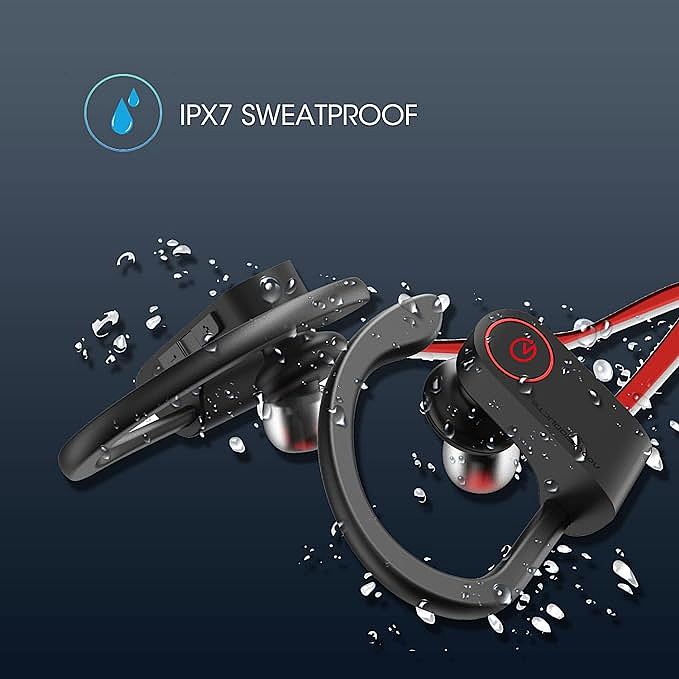
To neutralize this chemical threat, sports-oriented bluetooth earbuds ipx7 waterproof devices must adhere to rigorous structural standards, frequently targeting an IPX7 rating under the International Electrotechnical Commission (IEC) 60529 standard.
- The Ingress Barrier: Achieving IPX7 mandates that the device can withstand a hydrostatic pressure of approximately 9.8 kilopascals (kPa), equivalent to being submerged in one meter of fluid for 30 minutes.
- Mechanical Defense: Engineers cannot rely on snap-fit plastics to achieve this. The chassis halves are typically fused utilizing ultrasonic welding—using high-frequency acoustic vibrations to melt the thermoplastic edges together at a molecular level, eliminating seams entirely.
- Chemical Defense: Internal PCBs are often treated with specialized plasma-deposited fluoropolymer coatings. These ultra-thin conformal layers drastically reduce the surface energy of the circuitry. If fluid does manage to breach the primary housing, the hydrophobic coating forces the liquid to bead up rather than spread, preventing it from wetting the conductive metals and completing the galvanic circuit.
The Acoustic Fortress in a Chaotic Gymnasium
A commercial fitness center is an acoustically hostile environment. The ambient noise floor regularly hovers between 80 and 90 decibels (dB), generated by clashing iron plates, heavy footfalls on treadmills, and overhead loudspeaker systems. Attempting to deliver high-fidelity audio through rugged bluetooth earbuds ipx7 waterproof designs into the human ear canal under these conditions requires an aggressive manipulation of acoustic impedance. under these conditions requires an aggressive manipulation of acoustic impedance.
The Physics of Passive Isolation
While active noise cancellation (ANC) uses computational power to generate inverted waveforms, passive isolation relies strictly on fluid dynamics and material density. When a silicone ear tip is inserted into the external auditory meatus, it deforms against the cartilage, establishing an airtight, hermetic seal.
This seal creates a severe impedance mismatch for incoming external sound waves. As a sound wave traveling through the highly compressible air of the gym strikes the dense, viscoelastic silicone barrier, the vast majority of the acoustic kinetic energy is physically reflected away. Simultaneously, this seal traps the air mass between the speaker driver and the eardrum, turning the ear canal into a pressurized acoustic chamber. This is biologically necessary for the reproduction of low-frequency bass waves, which would otherwise suffer from dipole cancellation and bleed out into the open atmosphere.
Biomechanical Load Distribution
However, maintaining this acoustic seal during violent motion introduces a severe biomechanical challenge. A human head accelerating vertically and laterally during a sprint subjects an earbud to the forces of inertia. The center of mass of the earbud, sitting outside the ear canal, acts as a lever arm. With every footfall, gravity and momentum apply torque, threatening to break the silicone seal and dislodge the device.
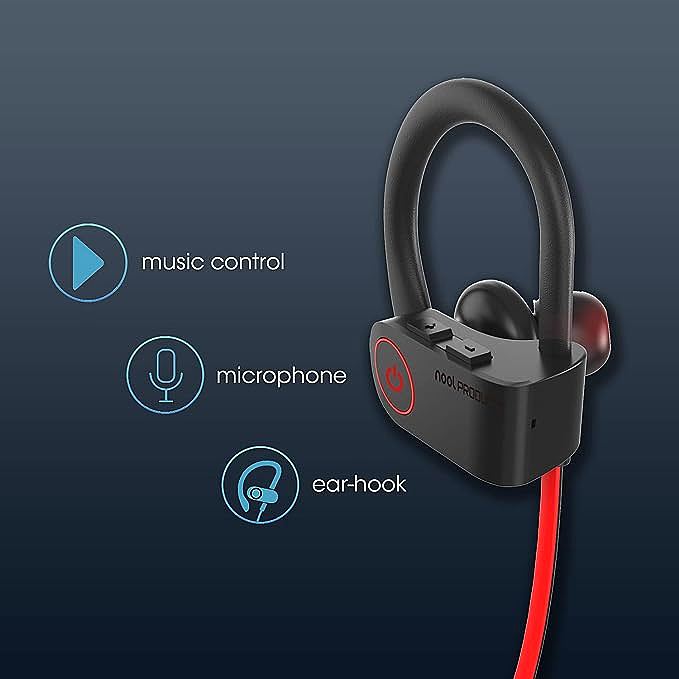
This kinetic vulnerability is why devices engineered for high-impact activities, such as the NP11, employ a rigid or semi-rigid over-ear hook. This architectural addition fundamentally alters the physics of the load path. Instead of relying solely on the static friction of the silicone tip inside the moist, lubricated ear canal, the earhook transfers the dynamic weight of the chassis directly to the pinna (the outer cartilage of the ear). The pinna acts as a load-bearing strut, anchoring the mass from above and neutralizing the rotational torque generated by the runner's stride.

Dominating the 2.4 GHz Battlefield
Transmitting continuous, high-bitrate audio data without wires requires dominating a highly congested slice of the electromagnetic spectrum. Bluetooth protocols operate within the 2.400 to 2.4835 GHz Industrial, Scientific, and Medical (ISM) radio band. This narrow corridor is a chaotic battlefield, densely populated by Wi-Fi transmissions, microwave oven leakage, and ambient radio noise.
To prevent the audio stream from shattering into digital artifacts, the system relies on Frequency-Hopping Spread Spectrum (FHSS) techniques. The 2.4 GHz band is sliced into 79 distinct 1 MHz channels. The transmitting device (the smartphone) and the receiving device (the earbuds) execute a synchronized, pseudo-random dance, shifting their carrier frequency up to 1,600 times per second. If a specific channel is jammed by a local Wi-Fi router, the system abandons it in microseconds, ensuring that only a mathematically insignificant fraction of the audio packet is lost.
Furthermore, the implementation of Enhanced Data Rate (EDR) in protocols like Bluetooth 4.1 marked a paradigm shift in RF modulation physics. Standard Basic Rate Bluetooth utilizes Gaussian Frequency Shift Keying (GFSK), modulating the frequency of the wave to represent 1s and 0s.
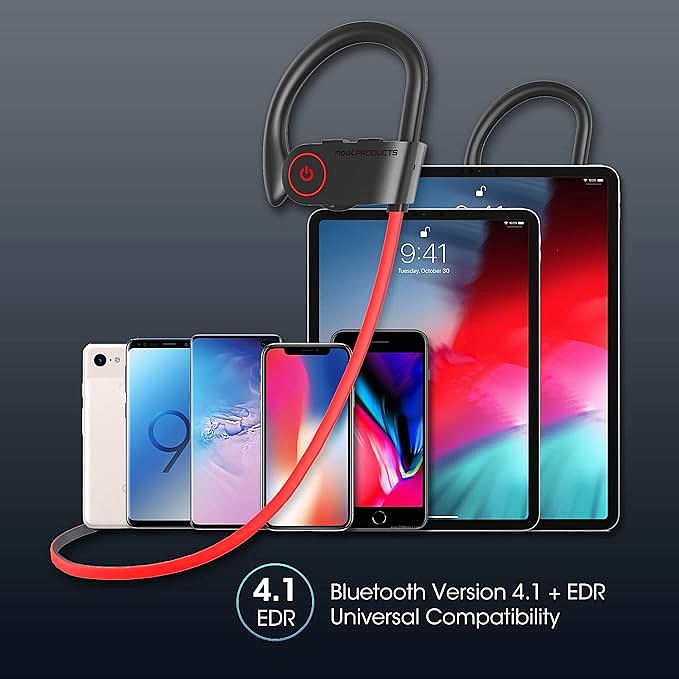
EDR upgrades the modulation scheme to Phase-Shift Keying (specifically $\pi/4$-DQPSK or 8DPSK). Instead of just changing the frequency, the transmitter rapidly alters the phase of the electromagnetic wave. By mapping multiple bits of data to specific phase angle shifts, EDR allows the system to cram two to three times more data into the exact same 1 MHz slice of bandwidth. This increased spectral efficiency allows the transmission of higher-quality audio codecs while simultaneously reducing the total time the radio transceiver must remain active, drastically cutting power consumption.
When the Battery Hits 10% at Mile Thirteen
The absolute limiting factor of any untethered wearable is electrochemistry. The thermodynamic potential of the device is physically restricted by the volume of its internal lithium-ion (Li-ion) cell.
A Li-ion battery stores energy by shuttling lithium ions from a graphite anode, through an electrolyte, to a metal-oxide cathode. The volumetric energy density (Watt-hours per liter) dictates exactly how many electrons can be mobilized before the voltage drops below the critical threshold required by the System-on-a-Chip (SoC).
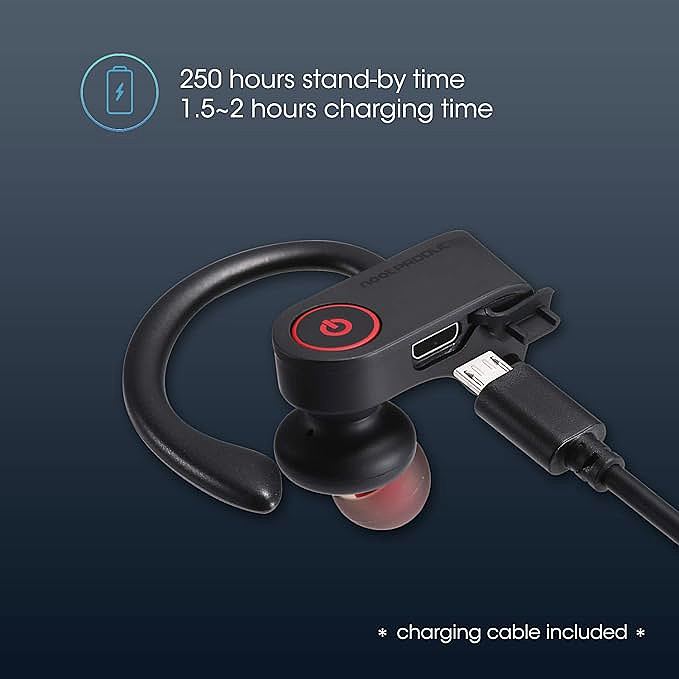
For a compact sweatproof earbuds device to claim 8 hours of active continuous playback alongside 250 hours of standby time, the firmware must execute ruthless thermodynamic rationing.
- Quiescent Current Optimization: In standby mode, the device is not truly "off." The microcontroller must maintain a microscopic draw of current (often measured in low microamps) to keep the internal clock ticking and the radio receiver passively listening for a "wake" command from the host device.
- Duty Cycling: During active playback, the SoC does not run at 100% capacity continuously. It receives a burst of audio data packets into a localized memory buffer, decodes them, and then instantly powers down the main CPU core into a micro-sleep state for a fraction of a millisecond while the digital-to-analog converter (DAC) drains the buffer. This rapid pulsing minimizes the $I^2R$ (resistance) heat generated by the silicon and radically extends the discharge curve of the chemical cell.
From Spark-Gap Transmitters to Digital Packets
To fully appreciate the precision of modern EDR Bluetooth architectures, one must trace the evolution of wireless transmission. Early 20th-century radio relied on analog amplitude modulation (AM) or frequency modulation (FM), where the physical shape of the audio wave was directly mirrored by the radio wave. This analog architecture was highly susceptible to attenuation and noise; static on the radio was literally the sound of atmospheric electromagnetic chaos corrupting the fragile analog wave.
The digital transition revolutionized this process. Modern wearable audio does not transmit sound waves; it transmits mathematical instructions on how to rebuild a sound wave. The host device uses a codec (Coder-Decoder) to sample the analog audio thousands of times a second, quantizing the amplitude into binary data.
When a standard like Bluetooth 4.1 with EDR is deployed, it also incorporates advanced coexistence algorithms. Before this generation, a smartphone transmitting Bluetooth audio would frequently cause its own internal 4G LTE cellular antennas to drop signal due to adjacent-band interference. The architecture of 4.1 introduced hardware-level coordination, allowing the LTE and Bluetooth radios within the host device to communicate and interleave their transmissions in microseconds, preventing the signals from colliding in the local airspace.
Adding Hardware Actually Reduces Cognitive Load
In the broader technology industry, there is a prevailing trend to replace all mechanical inputs with sleek, solid-state capacitive touch sensors. However, in the highly specific domain of sports-oriented wearables, capacitive touch is a severe engineering anti-pattern.
A capacitive sensor operates by projecting an invisible electrostatic field above the surface of the earbud. Because the human body contains electrolytes, a finger approaching the sensor alters the local capacitance, which the microcontroller registers as a "touch."
The fatal flaw of this system in active scenarios is fluid dynamics. Sweat and rain are highly conductive. A heavy drop of saline sweat rolling across a capacitive surface will violently disrupt the electrostatic field, causing the microprocessor to register a "ghost touch"—randomly pausing a track or hanging up a phone call mid-stride.
Furthermore, capacitive touch removes a critical psychological mechanism: proprioceptive feedback. When a human is engaged in high-intensity kinetic activity—such as navigating a rocky trail at a high sprint—their visual and cognitive bandwidth is entirely consumed by maintaining balance and trajectory. They cannot look at their earbud to find a touch zone.
This is why the retention of discrete, mechanical tactile switches on waterproof bluetooth models (such as the physical volume rocker and play/pause buttons on devices like the NP11) is ergonomically superior — a design philosophy that separates rugged wireless earbuds from fragile consumer alternatives. A mechanical switch utilizes a metal dome that collapses under pressure. When the user pushes the button, the dome snaps, completing the circuit and sending an immediate, physical "click" vibration back through the user's fingertip. This tactile feedback closes the neurological loop instantly, allowing the user to confirm the action without diverting cognitive resources away from their physical performance.
Data Bandwidth vs. Thermodynamic Constraints
The architecture of bluetooth earbuds ipx7 waterproof wireless wearables is ultimately defined by an unavoidable trade-off between information theory and thermodynamics. According to the Shannon-Hartley theorem, the maximum data rate of a communication channel is bounded by its bandwidth and signal-to-noise ratio.
A hardwired, analog copper connection possesses essentially infinite bandwidth and zero latency, capable of delivering perfectly uncompressed lossless audio. To sever that wire, engineers must push the data through the narrow, noisy 2.4 GHz bottleneck.
Increasing the data throughput (via EDR) allows for less aggressive audio compression, resulting in higher fidelity at the DAC. However, pushing more data requires the SoC's radio transceiver to remain in a high-power state for longer durations. This accelerated switching draws more current from the tiny lithium-ion cell, generating waste heat and drastically reducing the total playback time.
The design of a device tailored for extended physical activity must carefully throttle this equation. It must provide enough spectral bandwidth to ensure the music remains clear and the DSP-driven microphone algorithms (like CVC noise reduction) have enough data to strip away wind noise during a call. Simultaneously, it must strictly police the power draw to guarantee the internal chemistry can sustain the required voltage for an 8-hour shift.
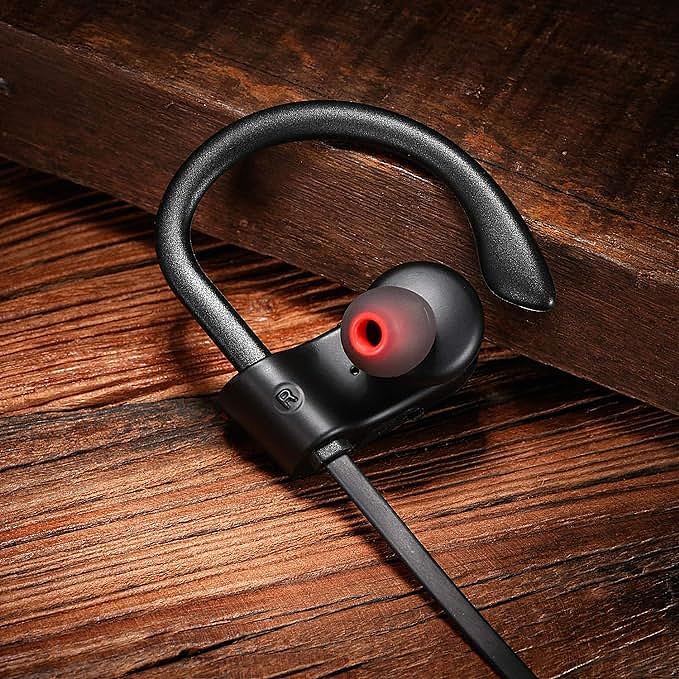
The survival and efficacy of active-lifestyle bluetooth earbuds ipx7 waterproof audio devices rely entirely on mastering these compromises. By understanding the invisible physics governing galvanic resistance, RF phase-shifting, and biomechanical load distribution, we can look past the superficial plastic shells of our electronics. We reveal the meticulous, multi-disciplinary science required to deliver an unbroken soundtrack to the chaos of human movement.
noot products NP11 Wireless Earphones
Related Essays

Democratizing Acoustic Fidelity: The Silicon Economics of Audio

Beyond the Driver: The Hidden Physics of Modern Wireless Audio

eleror T5-BH1505 True Wireless Earbuds: Superior Sound and Endless Playtime for Your Workouts

SoundPEATS Wings2 & The Science of Wireless Audio: Understanding Secure-Fit Earbuds for Active Lifestyles

Jzones Wireless Earbuds with Long Playtime and Wireless Charging

Keklle2 Wireless Earbuds – Crystal Clear Sound and Waterproof Design

HITY A4 Wireless Earbuds Bluetooth 5.3 Headphones Touch Control – Top Choice for Music Enthusiasts

Generic T63 True Wireless Headphones - Excellent Choice

Masterplug Pods Wireless Earbuds – Lightweight and High-Quality Bluetooth Headphones

