Bone Conduction Headphones for Swimming: 2026 Two Modes

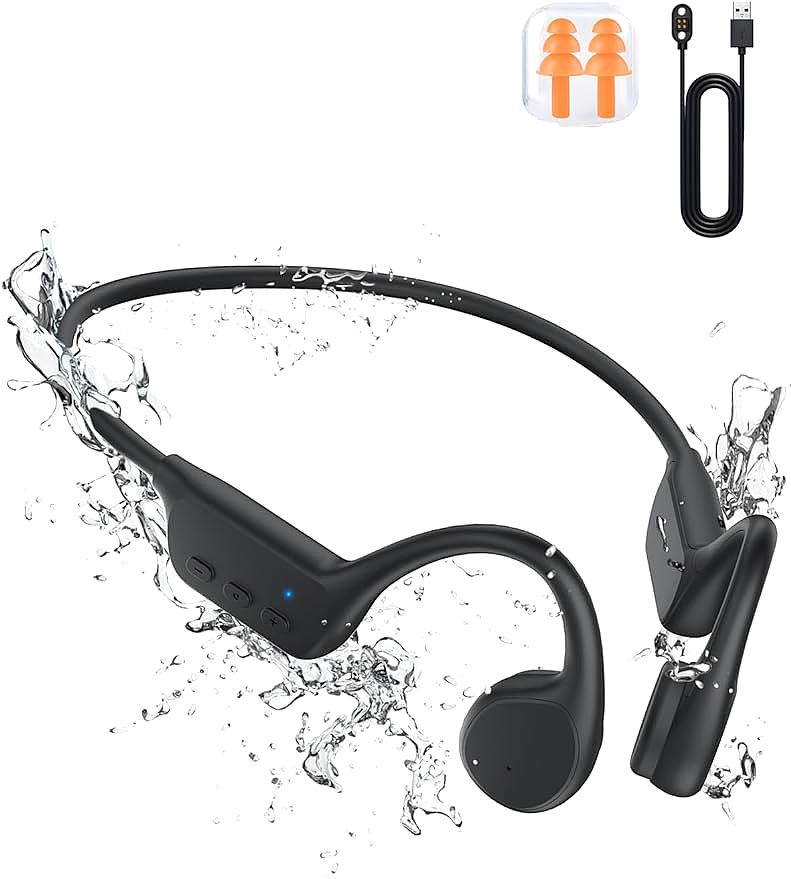
IFECCO X5 Bone Conduction Headphones
The Silent Pool: A Problem You Did Not Know Had a Physics Answer
You buy a pair of "waterproof Bluetooth" headphones for swimming. You clip them on, dive under, and reach for your phone to play music. Nothing. Not even a faint hum. The pool water has turned your headphones into expensive ear clips. If you've been searching for bone conduction headphones swimming, you are not alone - this is the exact moment most swimmers discover that Bluetooth simply does not work underwater.
This is not a defect. It is physics.
The 2.4 gigahertz radio frequency that carries Bluetooth signals cannot penetrate water beyond a few inches. Pool water absorbs and scatters those electromagnetic waves almost instantly. Even if you mount a Bluetooth transmitter on your arm, the signal must pass through wet swimsuit fabric, your body tissue (which is mostly water), and then the pool water itself before reaching your ears. Three layers of water absorption. The signal dies at the first one.
This misunderstanding creates a category error: "waterproof Bluetooth swimming headphones" is an oxymoron. Waterproofing an electronic device means protecting it from water damage. It does not mean the device's wireless radio will function while submerged. An IP68 rating guarantees the hardware survives submersion up to thirty meters. It does not guarantee Bluetooth connectivity underwater.
The solution requires a different architecture entirely. The correct approach combines two modes: Bluetooth for land-based activities where radio waves travel freely through air, and a self-contained music player for underwater sessions where local file storage replaces wireless transmission. This two-mode system is the foundation of bone conduction headphones swimming. The IFECCO X5 exemplifies this approach with its combination of a submersible waterproofing rating, 32GB of internal storage, and bone conduction transducers.
Why Does Bluetooth Die in the Pool?
Radio frequency propagation depends heavily on the medium through which waves travel. Air is nearly transparent to 2.4 GHz signals. Water is not.
The physics is straightforward. Water molecules absorb electromagnetic energy at microwave and radio frequencies, converting that energy into heat. This is the same principle that makes microwave ovens work, just at a different frequency band. At 2.4 GHz, the attenuation length in pool water is measured in inches, not feet. Signal strength drops to unusable levels before it crosses your body, let alone reaches your ears.
This is why armbands with Bluetooth transmitters do not solve the problem. The transmitter sits on your forearm. Your head sits on the opposite side of your torso. Between them lies wet fabric, body tissue, and pool water. The signal traverses approximately one meter of increasingly lossy material before it even reaches the surface near your ear. By that point, the signal is indistinguishable from noise.
Some manufacturers market products as "waterproof Bluetooth headphones for swimming." The waterproofing is genuine. The Bluetooth-underwater claim is not. Understanding this distinction prevents costly mistakes and sets realistic expectations.
The Solution: Two-Mode System Architecture
The working solution decouples wireless connectivity from underwater playback. Mode one handles land use through standard Bluetooth 5.3 pairing with phones, tablets, or laptops. Mode two handles underwater use by shifting the headphones into a standalone music player.
In storage playback mode, the headphones play audio files stored on internal memory. The device mounts as a USB storage unit when connected to a computer, making file transfer as simple as dragging and dropping music folders. No streaming services. No wireless protocols. Just local files playing through bone conduction transducers.
The default boot mode is Bluetooth. Users must switch to playback mode before entering the pool. This manual step, often overlooked by first-time buyers, is the difference between a silent swim and a musical one. The switching mechanism varies by model: on these open-ear headphones, it typically involves a double-click of the power button. Many swimmers who researched bone conduction headphones swimming before purchasing were surprised to learn that the device boots into Bluetooth mode by default. For swimmers seeking bone conduction headphones swimming, understanding this technology is essential.
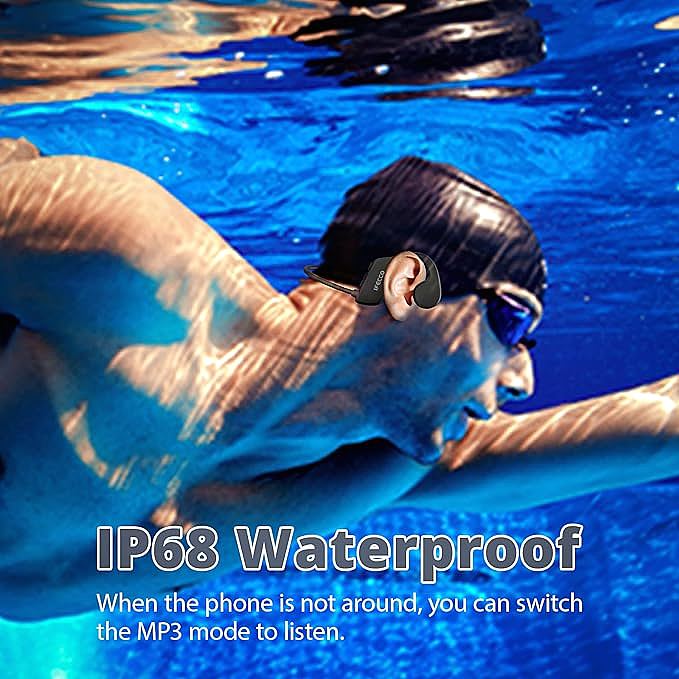
When using the headphones underwater, the Bluetooth radio should be turned off to conserve battery. Streaming services are not supported because they require continuous wireless data connections. The music must exist on the device before you arrive at the pool.
How Bone Conduction Changes the Audio Experience
Bone conduction headphones do not deliver sound through the ear canal. Instead, transducers rest against the cheekbones, converting electrical signals into mechanical vibrations that travel through the skull directly to the cochlea. The inner ear receives the signal without the eardrum or middle ear bones being involved.
This design has a significant advantage for swimming. Among the best bone conduction headphones swimming enthusiasts recommend, the open-ear architecture lets you hear your surroundings while enjoying music. Because the ear canals remain open, swimmers maintain situational awareness on land. Cyclists hear approaching vehicles. Runners hear verbal cues from training partners. The open-ear design also avoids the discomfort and hygiene issues associated with in-ear headphones, which trap sweat and moisture against the eardrum during extended use.
The underwater experience works differently. Water itself conducts sound more efficiently than air, but the noise of swimming, water rushing past the ears, breathing patterns, stroke sounds, creates a chaotic acoustic environment. This is where the included earplugs become essential.
The earplugs serve a counter-intuitive purpose. By blocking the air conduction path, they reduce competing noise and allow the bone-conducted vibrations to dominate perception. The result is clearer, richer, and louder music delivery directly to the cochlea. Every quality swimming headphone includes earplugs because manufacturers who understand actual usage know this improvement is not optional.
Verified buyer feedback consistently notes that earplugs noticeably improve underwater sound quality. Swimmers using backstroke and freestyle report particularly good results at shallow depths of about one foot, which covers typical lap swimming.

How Do You Load Music Without Wi-Fi?
Step 1: Load Your Music
Connect the headphones to your computer via the included magnetic USB cable. The device appears as a removable unit. Create folders for your playlists and copy MP3, WAV, or FLAC files onto the storage. The 32GB capacity accommodates extensive libraries. Format the device in a portable file system, such as exFAT, for maximum compatibility.
Audio format quality varies. FLAC files preserve full fidelity but consume more storage. MP3 files are compact and universally supported. WAV files offer uncompressed quality at the cost of space. For swimming, the difference between formats is less noticeable than on high-end stereo headphones, so convenience usually wins.
Step 2: Switch to Playback Mode
After loading music, disconnect from the computer and power on the headphones. They boot into Bluetooth mode by default. Double-click the power button to switch to playback mode. You will hear an audio confirmation. Verify playback by pressing the volume-up button once and confirming sound.
Before entering the pool, turn the Bluetooth radio off on your phone. This prevents the headphones from attempting wireless connections and wasting battery on an impossible task.
Step 3: Master the Button Controls
The three-button layout, Power, plus, minus, requires initial adjustment. The mapping is not immediately intuitive:
- Short press of plus: volume up
- Short press of minus: volume down
- Long press of plus (2 seconds): previous track
- Long press of minus (2 seconds): next track
The inversion of the plus and minus buttons for track skipping causes confusion. Plus goes backward. Minus goes forward. This is the single most reported pain point among users. Verified buyers describe the control scheme as counter-intuitive, and many take weeks to build reliable muscle memory. The fixed-band design means the buttons sit behind your ears, making tactile identification difficult without visual reference.
Once learned, the buttons handle all playback functions. The built-in microphone supports land-based phone calls but has no underwater utility.
What Real Swimmers Say: Insights from 365 Reviews
The device carries 365 reviews with a 3.8 out of 5 average score. The distribution tells a nuanced story: 47 percent five-star reviews, 22 percent four-star, 7 percent three-star, 7 percent two-star, and 17 percent one-star.
Positive feedback clusters around several themes. Underwater music playback works reliably according to multiple verified buyers. The earplugs consistently surprise users by improving sound quality beyond expectations. Comfort under swim caps and goggles is frequently mentioned. The 30-gram weight makes the headphones nearly forgettable during extended sessions.
One verified buyer who swam several miles underwater confirmed that the submersible rating held up and noted that backstroke and freestyle produced "quite good" sound quality. Another reviewer from Spain reported the sound was "even better underwater" with the included earplugs.
Negative feedback centers on durability and fit. Some units have failed after one week to two months of regular use. The fixed-size band does not accommodate smaller head circumferences, leading to loose fit on certain users. The button inversion remains a persistent complaint even among satisfied owners.
Bluetooth range limitations surface in reviews: signal loss at the pool edge and at distances beyond 50 centimeters from the paired device are commonly reported. Sound quality degrades at greater depths, with swimmers noting reduced clarity at three to four feet relative to one foot.
Battery life data is absent from the product specifications. This gap means potential buyers cannot determine whether the device sustains a full training session on a single charge. The absence of this specification is notable given its importance for swimming applications.

Which Swimming Headphones Actually Work Underwater?
Selecting swimming headphones requires verifying specific capabilities. Generic waterproof ratings are insufficient. Here is what to check:
IP68 rating: The device must withstand submersion. IP68 means complete dust protection and submersion beyond one meter. Manufacturer claims extend this to thirty meters.
Internal storage of at least 32GB: Without local storage, underwater playback is impossible. Local-file playback mode is non-negotiable for swimming audio. Verify each of these capabilities before purchasing.
Bone conduction transducers: Open-ear design enables situational awareness and avoids ear canal moisture accumulation. This is the defining feature that separates these devices from traditional waterproof earbuds.
Included earplugs: The noise-blocking improvement is essential for underwater sound quality.
USB file transfer: The device must mount as a removable unit for easy music loading.
Weight under 35 grams: Heavier devices create neck strain during extended swim sessions.
Fixed-band fit assessment: Since no size adjustment exists, try the headphones with your goggles and swim cap before committing to regular use. Secure placement ensures consistent transducer contact for optimal sound delivery.
The device at $47.83 positions itself in the mid-range value segment. This price point sits significantly below premium open-ear rivals, which commonly retail between $140 and $180. The comparable submersible rating and 32GB specifications at roughly one-third the price represent a compelling value proposition for budget-conscious swimmers seeking reliable bone conduction headphones swimming.
How the Technology Works in Your Ears
The gap between marketing claims and physical reality separates frustrated buyers from satisfied swimmers. Bluetooth does not work underwater. Period. The 2.4 GHz signal dies within inches of water penetration. Any product claiming otherwise is selling a misunderstanding.
The two-mode architecture, Bluetooth for land, built-in storage for water, is the only engineering solution that respects these physical constraints. Bone conduction delivers sound through skull vibration rather than ear canal obstruction. This principle underpins all effective bone conduction headphones swimming applications, enabling swimmers to enjoy music underwater without the frustration of dead Bluetooth signals. Earplugs amplify the effect by removing competing noise. Together, they create a coherent system for underwater audio.
Real-world performance data from hundreds of verified buyers confirms that the two-mode approach works with practical limitations at depth and fit variations across head sizes. The button layout requires patience to master. Durability remains a concern for some users, though the 18-month warranty provides recourse. Understanding these mechanics shifts swimming from a silent experience into a musical one, and the technology behind bone conduction headphones swimming continues to evolve as more manufacturers enter this niche.
The technology exists. The physics is clear. The remaining step is choosing a device that implements it correctly.
IFECCO X5 Bone Conduction Headphones
Related Essays
Acoustic Engineering for Amphibious Environments and Cranial Transmission

Bypassing the Tympanic Membrane: Acoustic Engineering for Amphibious Environments
Beyond Bluetooth: The Science of Why Swimming Headphones Need an MP3 Player

Hamuti X7 Bone Conduction Headphones: Experience Sound in a Whole New Way

Loluka Swimming Bone Conduction Headphones - Recommended for Active Lifestyles

Loluka Real Swimming Headphone - Recommended for Bone Conduction Technology

The Science of Sound Beneath the Waves

The Physics of the Pool: Decoding RF Attenuation and Hydrodynamic Acoustics in the Relxhome X7S

RR SPORTS BC888 Bone Conduction Headphones: Dive Deeper into Sound and Science
