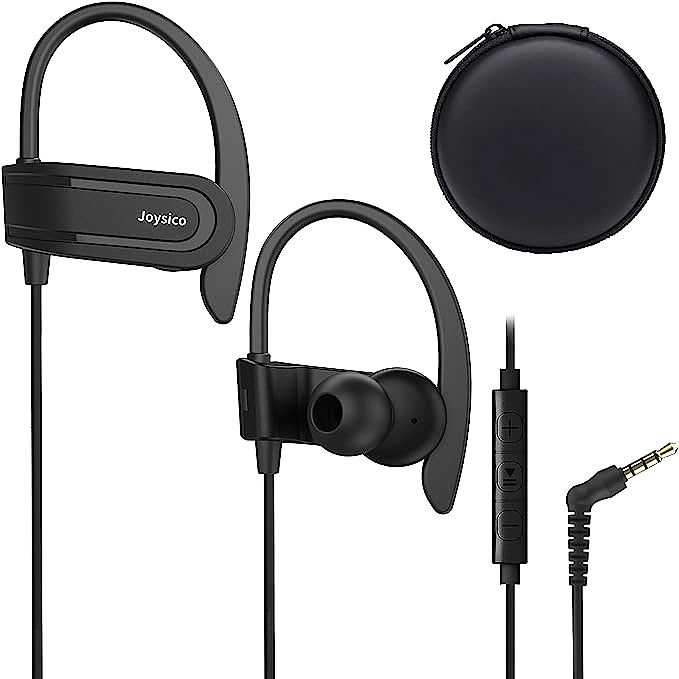
Moving-Coil Driver Technology: How Modern Headphones Convert Electricity into Sound

BERIBES 202A Bluetooth Headphones
Your headphones stop working. Not completely--just enough to notice. The bass that once thumped now sounds thin. The vocals that cut through the mix now feel distant. You check the connection, adjust the volume, but something fundamental has changed. The problem isn't your phone or your streaming service. It's the tiny motor inside each earcup that converts electrical signals into physical movement.
This motor--the moving-coil driver--is the unsung hero of modern audio. It operates on principles discovered in the 19th century, refined through decades of military research, and perfected in consumer electronics labs. Understanding how it works reveals why some headphones deliver immersive soundscapes while others produce little more than noise.
The Physics of Electromagnetic Sound Production
At the heart of every moving-coil driver lies a deceptively simple arrangement: a permanent magnet, a voice coil, and a diaphragm. When an electrical audio signal flows through the voice coil, it creates a temporary magnetic field. This field interacts with the permanent magnet's field, causing the coil to move back and forth. The diaphragm, attached to the coil, pushes air molecules, creating pressure waves that our ears interpret as sound.
The elegance of this system lies in its directness. Unlike other transducer technologies that require complex intermediate steps, the moving-coil driver converts electrical energy into acoustic energy in a single motion. The voice coil acts as both the receiver of the electrical signal and the generator of mechanical force. This simplicity translates to efficiency--moving-coil drivers can produce substantial volume from modest power inputs, which is why they dominate the headphone market.
The permanent magnet's strength determines the driver's efficiency and bass response. Neodymium magnets, developed in the 1980s, offered a significant advancement: they provided magnetic fields up to 18 times stronger than traditional ferrite magnets of the same size. This allowed engineers to shrink driver assemblies while maintaining performance, enabling the slim profile of modern over-ear headphones like the BERIBES 202A.

Frequency Response and the Challenge of Full-Range Reproduction
A single moving-coil driver must reproduce the entire audible spectrum--from the deepest bass at 20 Hz to the highest treble at 20,000 Hz. This presents a fundamental engineering challenge. Low frequencies require large diaphragm excursions to move sufficient air, while high frequencies demand lightweight, rigid diaphragms that can vibrate rapidly without distortion.
Driver size plays a crucial role. Larger drivers--typically 40mm to 50mm in over-ear headphones--excel at moving air for bass frequencies. Their greater surface area can displace more air with less excursion, reducing distortion. Smaller drivers, common in earbuds, struggle with bass extension but can achieve faster transient response for detailed high frequencies.
The diaphragm material itself becomes a critical variable. Paper and mylar offer light weight but limited rigidity. Metal-coated polymers add stiffness for clearer high frequencies but increase mass, potentially slowing response. Advanced composites and bio-cellulose materials attempt to balance these competing demands, each formulation representing a different engineering philosophy about what constitutes "accurate" sound reproduction.
The Bluetooth Bridge: Digital Audio's Journey Through Air
Wireless headphones face an additional challenge: the audio signal must travel through the air twice. We explored how this affects sound quality in our wireless earbuds DSP analysis. First, as a digital stream from your phone to the headphones via Bluetooth. Then, as acoustic waves from the drivers to your ears. This wireless link introduces latency, compression artifacts, and power consumption concerns that wired headphones never face.
Bluetooth audio relies on codecs--algorithms that compress audio data for transmission and decompress it for playback. The default SBC codec provides acceptable quality but discards audio data to fit within Bluetooth's bandwidth constraints. Advanced codecs like aptX and AAC use more sophisticated compression to preserve detail, though they require compatible hardware on both ends.
The codec choice affects more than sound quality. It determines latency--the delay between when audio leaves your phone and when you hear it. For music listening, 200 milliseconds of latency goes unnoticed. For video or gaming, that same delay creates a jarring disconnect between what you see and what you hear. Modern Bluetooth implementations have reduced this to under 40 milliseconds for compatible devices, making wireless viable for most applications.

Battery Chemistry and the Endurance Equation
The freedom of wireless comes at a cost: power. Every component in a wireless headphone--the Bluetooth radio, the digital signal processor, the amplifiers, the drivers themselves--draws current from a battery that must fit within the earcup's limited volume.
Lithium-polymer batteries have become the standard for this application. Unlike cylindrical lithium-ion cells, Li-Po batteries can be shaped into flat, flexible forms that conform to available space. They also offer higher energy density--more watt-hours per gram--which directly translates to longer playtime.
The 65-hour battery life claimed by models like the BERIBES 202A represents a convergence of multiple efficiency improvements. Low-power Bluetooth chips draw a fraction of the current their predecessors required. Class-D amplifiers convert battery power to speaker drive signals with over 90% efficiency, compared to 50% or less for traditional analog designs. Digital signal processors perform complex audio calculations while consuming milliwatts.
Battery management systems add another layer of sophistication. They monitor cell voltage, temperature, and current draw to prevent overcharging, deep discharge, and thermal runaway. They balance the cells in multi-cell packs and estimate remaining capacity based on usage patterns. This invisible engineering extends battery lifespan and ensures consistent performance across thousands of charge cycles.
Digital Signal Processing: The Studio in Your Earcup
Modern headphones do more than reproduce audio--they transform it. Digital signal processors (DSPs) perform real-time calculations on the audio stream, applying equalization, spatial effects, and noise reduction that would have required rack-mounted studio equipment just decades ago.
Equalization modes--the "6 EQ modes" found on many wireless headphones--represent the most visible DSP application. When you select "Bass Boost," the DSP applies a filter that amplifies frequencies below 200 Hz while leaving higher frequencies untouched. "Vocal" mode might boost the 1-4 kHz range where speech intelligibility resides. These aren't simple tone controls; they're precise frequency-shaping tools implemented in software.
The DSP also handles the digital-to-analog conversion that precedes amplification. High-quality DACs (digital-to-analog converters) can reproduce audio with 24-bit resolution and 96 kHz sampling rates, exceeding the capabilities of human hearing. The limiting factor becomes the driver and acoustic design, not the digital processing chain.
Active noise cancellation takes DSP further. Microphones sample ambient sound, and the DSP generates an inverse waveform to cancel it. The same microphone array also handles voice pickup during calls, which is why call quality varies significantly between models. Our earbuds buying guide covers what to look for in microphone performance. This requires precise timing--the anti-noise must arrive at the ear within microseconds of the external sound. The processing power needed for real-time noise cancellation once required dedicated hardware; now it runs on the same chip handling Bluetooth connectivity and audio decoding.
Passive Isolation: The Physics of Sealing Sound
Before DSP, there was physics. Passive noise isolation--the reduction of external sound through physical barriers--remains the foundation of headphone acoustics. Over-ear designs create a sealed chamber around the ear, using the earcup and cushion as acoustic barriers.
The effectiveness of passive isolation depends on the seal quality. Any gap between the cushion and the head becomes a pathway for external sound. Memory foam cushions conform to head contours, maintaining contact during movement. The cushion material itself absorbs sound energy, converting it to heat rather than reflecting it back toward the ear.
This physical isolation provides benefits beyond noise reduction. By blocking external sound, it allows lower listening volumes. The World Health Organization estimates that 1.1 billion young people risk hearing damage from prolonged exposure to loud sounds, often through headphones. Effective isolation lets listeners enjoy detailed audio at safe levels--a public health benefit disguised as a comfort feature.

The Historical Arc from Military Tool to Personal Audio
The technology packed into modern headphones carries a century of accumulated innovation. The first headphones emerged from military necessity--Nathaniel Baldwin's 1910 design allowed Navy radio operators to hear faint Morse code signals in noisy engine rooms. These early devices prioritized sensitivity over comfort, with heavy metal frames and crude drivers.
The transition from communication tool to music reproduction began in 1937 with Beyerdynamic's DT 48, the first moving-coil headphones. This introduced the driver architecture still used today. Stereo headphones arrived in 1958 with Koss's SP/3, creating the spatial soundstage that defines modern listening. Sony's 1979 Walkman made personal audio portable, though tethered by cables.
Bluetooth's 1994 specification laid the groundwork for wireless audio, but early implementations suffered from poor audio quality and battery life. It took two decades of incremental improvements--better codecs, more efficient radios, higher-density batteries--to make wireless headphones a viable replacement for wired models.
Engineering Trade-offs and the Pursuit of Balance
Every headphone design represents a constellation of compromises. Larger drivers improve bass but increase weight. Stronger magnets boost efficiency but raise costs. Better isolation enhances sound quality but creates a "closed" sensation some listeners find uncomfortable. Extended battery life requires larger cells that add bulk.
The BERIBES 202A and similar models navigate these trade-offs by targeting a specific use case: everyday listening where convenience, comfort, and endurance matter more than audiophile-grade accuracy. The 40mm moving-coil drivers deliver adequate bass without excessive weight. The over-ear design provides isolation without complete detachment from surroundings. The battery offers multi-day use without requiring nightly charging.
This balance reflects a mature understanding of how most people actually use headphones. They're not critical listening tools for most users--they're companions for commutes, work sessions, and workouts. The engineering challenge becomes delivering satisfying sound within constraints of size, weight, cost, and battery life, not achieving laboratory-perfect reproduction.
The Future of Personal Audio
The next evolution in headphone technology is already visible. Spatial audio processing creates three-dimensional soundscapes that respond to head movement, simulating the experience of speakers in a room. Health sensors integrated into earcups monitor heart rate, blood oxygen, and body temperature. Voice assistants provide hands-free control without reaching for a phone.
Materials science continues to advance. Graphene diaphragms promise the stiffness of metal with the weight of plastic. New magnet formulations could further shrink driver assemblies. Battery technologies beyond lithium-ion--solid-state cells, silicon anodes--may double energy density within the decade.
Yet the fundamental principle remains unchanged: a coil, a magnet, and a diaphragm, working together to convert electrical signals into the pressure waves we perceive as music. The elegance of this arrangement--its simplicity, its efficiency, its directness--suggests it will remain the foundation of headphone technology for years to come. The improvements will come at the margins: better materials, smarter processing, longer battery life. But the core mechanism that Nathaniel Baldwin refined in his Utah kitchen over a century ago continues to define how we experience personal audio today.
BERIBES 202A Bluetooth Headphones
Related Essays
Shure AONIC 50 Gen 1: Adaptive ANC, 20-Hour Battery, and Studio-Grade Acoustics
Bluetooth Headset Faults Explained: Mic Dropouts, Choppy Audio, and Wind Noise

Are Bone Conduction Headphones Safe for Running?

The Physics of Desktop Audio: What an External DAC Does Differently

Mood Pie C9 True Wireless Earbuds: Your Daily Jamming Companion

Belkin AUC001bt SoundForm True Wireless Earbuds: Crystal-Clear Sound, All-Day Comfort

Lankey Pro U-AIR4 Ear Buds Wireless Bluetooth Headphones

How Wireless Audio Delivers Perfect Sound Through Physics
WILLMOOD PCEL0008 Headphones: 70-Hour Playtime & Superior Comfort