Composite Diaphragm Headphones: How Layered Driver Physics Shapes What You Hear

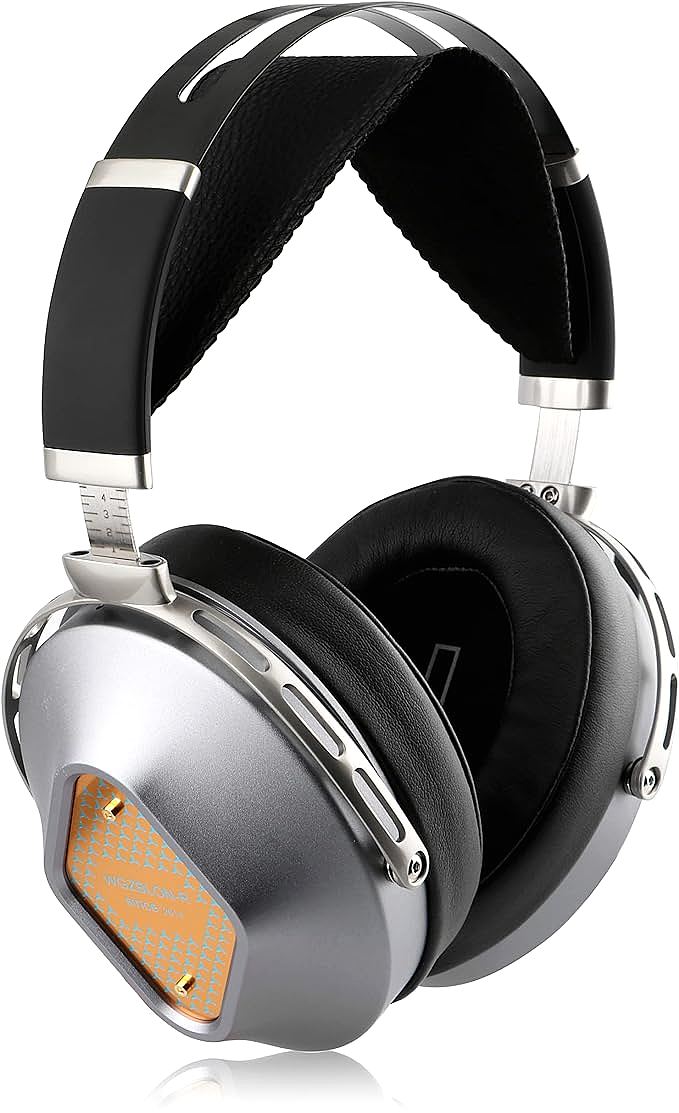
Linsoul WGZBLON B50 50mm Composite Diaphragm Closed-Back Headphone
You plug in a pair of closed-back headphones, press play, and the bass hits. But something is off. The low end feels bloated, the mids sound hollow, and the treble carries a metallic edge that grates after twenty minutes. You check the specs: 50mm driver, closed-back, aluminum housing. On paper, everything looks right. The problem is not the numbers. The problem is what those numbers leave out.
Most headphone specifications tell you driver size, impedance, and sensitivity. They do not tell you what the diaphragm is made of, how the enclosure resonates, or why 117 decibels at 32 ohms means something fundamentally different from 99 decibels at 38 ohms. The gap between reading a spec sheet and understanding what you will actually hear is wider than most people realize. That gap is where composite diaphragm headphones distinguish themselves from conventional designs. That gap is where acoustic engineering lives.
What a Composite Diaphragm Headphone Actually Does
A composite diaphragm headphone uses a driver cone made from multiple materials layered together, combining the rigidity of one material with the damping properties of another to reduce distortion and improve frequency response across the audible spectrum. That is the textbook definition. The engineering reality is more interesting.
Single-material diaphragms face a basic physics problem. A driver cone made entirely from one substance must serve two conflicting roles. It needs to be stiff enough to push air as a coherent piston, especially at low frequencies where excursion is large. At the same time, it needs to absorb internal vibrations that would otherwise color the sound with harmonic distortion. No single material does both well. Polyethylene terephthalate (PET) is stiff and lightweight, but it stores energy at its resonant frequency and releases it as a delayed echo. Polyurethane (PU) damps vibrations effectively, but it flexes under the force of a bass stroke, losing piston-like control.
Layering them changes the equation. A PET layer provides the structural backbone, maintaining shape when the voice coil drives it forward and back. A PU layer bonded to it absorbs the standing waves that would otherwise bounce across the diaphragm surface and radiate as distortion. The result is not perfection. No diaphragm is perfectly pistonic across the full 20 Hz to 20 kHz range. But a composite construction pushes the breakup modes higher in frequency and reduces their amplitude, which means the driver behaves more predictably across a wider band.
The Linsoul WGZBLON B50 50mm Composite Diaphragm uses this layered approach. In a price segment where most competitors use single-layer Mylar or basic PET, a composite PET+PU construction is a genuine engineering choice, not a marketing label. The audible difference shows up most clearly in the midrange, where single-material diaphragms tend to develop their first breakup mode. A well-damped composite diaphragm keeps that region cleaner.
The Architecture of Sound: Why 50mm Matters (And Why It Does Not)
Driver size is the most quoted headphone specification, and the most misunderstood. A 50mm driver moves more air than a 40mm driver. That is simple geometry. The radiating area of a 50mm circle is approximately 1,963 square millimeters, compared to roughly 1,257 for a 40mm circle. More area means the diaphragm can displace more air per stroke, which translates to stronger bass output at a given excursion.
But size alone tells you nothing about quality. A 50mm driver with a poorly tuned diaphragm and a resonant plastic enclosure will sound worse than a well-engineered 40mm driver in a rigid housing. The diaphragm material determines how faithfully the cone follows the electrical signal. The enclosure determines how much of that sound reaches your ear canal versus leaking back into the cup and creating internal reflections. The magnet assembly determines how much force the voice coil can generate for a given current.
The real question is not whether 50mm is better than 40mm. The question is what the entire driver assembly does with that extra surface area. In the case of the B50, the 50mm composite diaphragm pairs with a CNC aluminum enclosure. The larger radiating surface gives the driver bass authority that a 40mm driver must work harder to achieve. The composite construction keeps the midrange coherent as excursion increases. The aluminum housing prevents the cup itself from becoming a secondary resonator that colors the output.
This is why comparing drivers by diameter alone is like comparing buildings by height. A tall building with a flexible foundation collapses. A 50mm driver with a single-layer diaphragm in a plastic cup produces bass that bleeds into the mids. The foundation matters as much as the footprint.
CNC Aluminum Enclosures: When the Cup Becomes Part of the Circuit
Headphone enclosures are not passive containers. They are acoustic components. Every material has a resonant frequency, and when the diaphragm drives air into a sealed cup, that air pressure excites the cup walls. If the walls are flexible, they vibrate in sympathy, storing energy and releasing it slightly after the original signal. This delayed radiation is heard as coloration, a subtle thickening or hollowing of certain frequency ranges.
Plastic enclosures, which dominate the sub-$150 closed-back market, have relatively low density and moderate rigidity. They resonate at frequencies within the audible range, typically between 200 Hz and 2 kHz depending on wall thickness and geometry. These resonances are not dramatic. You will not hear an obvious echo. But they add a layer of coloration that accumulates over listening sessions, contributing to listener fatigue.
Aluminum changes the equation on two fronts. First, its density is approximately 2.7 grams per cubic centimeter, compared to roughly 1.2 for ABS plastic. Higher density means more mass per unit area, which lowers the amplitude of any resonance. Second, aluminum has a higher Young's modulus (approximately 69 GPa versus 2-3 GPa for ABS), meaning it resists deformation more effectively. The combined effect is an enclosure that vibrates less and absorbs more of the energy that would otherwise radiate as coloration.
CNC machining adds another dimension. Injection-molded plastic parts have variable wall thickness due to flow dynamics in the mold. CNC-cut aluminum parts have precisely controlled dimensions, which means the acoustic volume of each ear cup is consistent from unit to unit. In a closed-back design, the internal air volume acts as a spring that interacts with the diaphragm. Consistent volume means consistent bass tuning across production units.
Closed-back headphones work through a straightforward acoustic chain. The audio signal enters the voice coil, generating an electromagnetic field. This field interacts with the permanent magnet, creating force that moves the coil and the attached diaphragm. The diaphragm pushes air, creating sound waves that travel through the ear pad opening into the ear canal. The sealed ear cups prevent sound from leaking out and block external noise from leaking in, providing passive noise isolation of approximately 15 to 25 decibels depending on pad seal and ambient frequency.
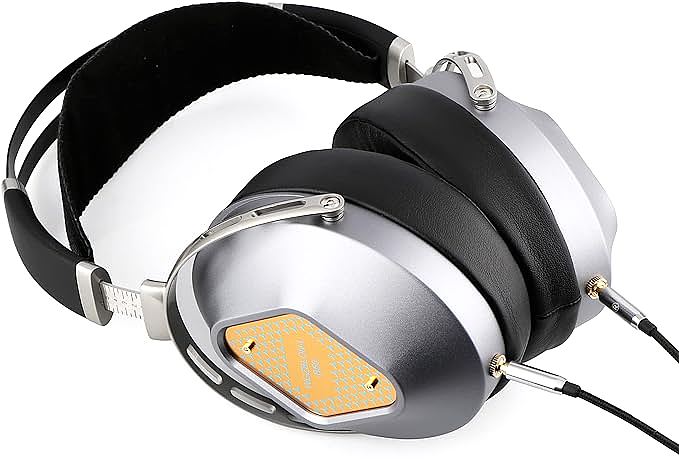
The B50 uses a CNC aluminum enclosure with a steel headband. In its competitive set, only the Moondrop Joker also uses an aluminum alloy housing. The Audio-Technica ATH-M50x, FiiO JT3, and AKG K553 MKII all use plastic-based enclosures. The acoustic difference is not night and day. But it is measurable, and it is consistent. Aluminum enclosures tend to produce a cleaner, less colored midrange and a tighter bass decay because the cup stores and releases less energy.
32 Ohms and 117 Decibels: The Mobile Driving Advantage
Impedance and sensitivity are often listed as separate specifications, but they work as a pair. Impedance (measured in ohms) describes how much the voice coil resists the flow of electrical current. Sensitivity (measured in decibels per milliwatt) describes how efficiently the driver converts electrical power into acoustic output. Together, they determine how loud a headphone will play from a given source.
The math is direct. Power equals voltage squared divided by impedance. A smartphone headphone jack typically delivers about 1 volt RMS. Into a 32-ohm load, that produces approximately 31 milliwatts. Into a 38-ohm load, it produces approximately 26 milliwatts. The difference seems small. But sensitivity amplifies the gap.
The B50 produces 117 dB at 1 milliwatt. The ATH-M50x produces 99 dB at 1 milliwatt. At the same 31 milliwatts from a smartphone, the B50 reaches approximately 131 dB SPL (theoretical peak), while the ATH-M50x reaches approximately 114 dB SPL. In practice, both numbers are reduced by real-world factors like amplifier output impedance and frequency-dependent impedance curves. But the 17 dB gap remains significant. A 10 dB increase is perceived as roughly twice the loudness. The B50 is not just louder from a phone. It is dramatically louder, with headroom to spare.
This has practical consequences. The ATH-M50x, despite its studio reputation, struggles to reach satisfying volume levels from a smartphone without a dedicated headphone amplifier. The B50 does not. For mobile listening, commuting, or casual desktop use without an external DAC/amp, the 117 dB / 32 ohm combination removes an entire category of accessory from the equation.
The Moondrop Joker, at 110 dB / 32 ohm, sits between them. The FiiO JT3 at 112 dB / 32 ohm is closer but still 5 dB behind. The AKG K553 MKII at 114 dB / 32 ohm narrows the gap further but still falls short. The B50 holds the highest sensitivity figure in this competitive set, and that number translates directly into mobile usability.
Closed-Back Headphones Under $150: Where the B50 Fits
The closed-back headphone market below $150 is crowded with competent options, each optimizing for different priorities. Understanding where the B50 sits requires looking at what trade-offs each design makes.
The Audio-Technica ATH-M50x has built a fifteen-year reputation as a studio workhorse. Its 45mm driver and 99 dB sensitivity make it a poor choice for unamped mobile use, but its V-shaped tuning and foldable design have made it a default recommendation for recording and mixing. The trade-off is plastic construction and a sound signature that emphasizes bass and treble at the expense of midrange neutrality.
The Moondrop Joker shares the Linsoul distribution ecosystem and uses a 50mm composite driver in an aluminum alloy housing. At 110 dB sensitivity and $89, it undercuts the B50 on price while offering similar material quality. The B50 counters with 7 dB more sensitivity and a CNC-machined enclosure versus cast alloy, which provides tighter dimensional tolerances.
The FiiO JT3 brings a 40mm titanium-coated driver and a bundled headphone stand for $79. Its value proposition is accessories and low price, not driver size or enclosure material. The titanium coating on the diaphragm is a different approach to the composite concept, adding a thin metal layer for stiffness rather than a separate damping layer.
The AKG K553 MKII offers 50mm drivers and 114 dB sensitivity in a flat-reference tuning aimed at studio monitoring. Its plastic enclosure and leather pads prioritize comfort and weight savings over acoustic rigidity. The B50 trades that light weight for aluminum construction and 3 dB more sensitivity.
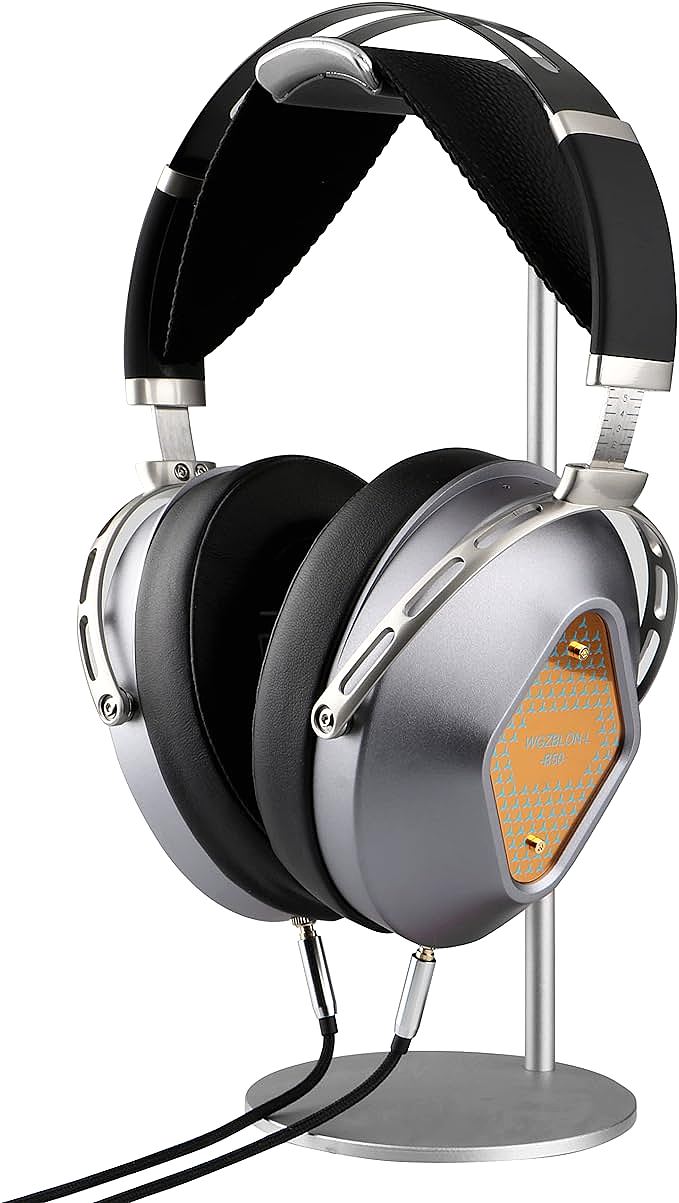
No single headphone in this set dominates every category. The B50 uniquely combines three attributes: a 50mm composite diaphragm, a CNC aluminum enclosure, and 117 dB sensitivity at 32 ohms. No competitor matches all three simultaneously. Whether that combination matters depends on what you prioritize. If mobile driving without an amplifier is a requirement, the sensitivity advantage is decisive. If enclosure rigidity and consistent unit-to-unit acoustic performance matter, the CNC aluminum is a measurable benefit. If you want the flattest possible frequency response for mixing, the AKG or ATH-M50x may serve you better despite their material compromises.

What Composite Diaphragm Technology Means for Headphone Engineering
The composite diaphragm is not a new idea. Loudspeaker engineers have used layered cone materials for decades, bonding paper to polypropylene or coating aluminum with damping compounds. The headphone world adopted it later, partly because the smaller diaphragm sizes made single-material designs more workable and partly because the cost of precision lamination at small scales was prohibitive.
That cost barrier has dropped. Manufacturing techniques for bonding thin PET and PU films at 50mm diameters have matured, making composite diaphragms economically viable in the sub-$150 segment. This is an engineering shift with audible consequences. As more headphones adopt layered diaphragms, the baseline for midrange clarity and distortion performance in this price range will rise. Composite diaphragm headphone technology is transitioning from a premium differentiator to an accessible standard.
The architectural metaphor holds here. A building's foundation determines what the structure can support. A composite diaphragm is a better foundation than a single-material one because it handles two physical demands simultaneously: stiffness for piston-like motion and damping for breakup suppression. The enclosure is the walls, determining how much external energy enters and how much internal energy leaks. The impedance and sensitivity are the power grid, determining how efficiently the structure converts input into output.
None of these elements works in isolation. A composite diaphragm in a resonant plastic enclosure loses some of its advantage because the cup coloration masks the diaphragm's lower distortion. A high-sensitivity driver in a poorly sealed closed-back design wastes its efficiency on sound that leaks through pad gaps. Good headphone engineering is not about optimizing one specification in isolation. It is about making the entire system coherent.
The open question is what happens next. As composite diaphragm manufacturing continues to scale, will the technology trickle down to the $50 segment, or will material costs keep it a differentiator above $100? Will CNC machining remain a premium feature, or will advanced injection molding techniques close the rigidity gap with plastic? And as wireless headphones dominate the mainstream market, will the engineering investment in wired closed-back designs continue, or will it contract to a niche?
These questions do not have clear answers yet. What is clear is that the current generation of closed-back headphones in the $100-150 range offers more engineering substance than spec sheets reveal. The composite diaphragm is not a buzzword. The CNC aluminum enclosure is not cosmetic. The 117 dB sensitivity is not a rounding error. Each reflects a specific engineering decision with a specific acoustic consequence. Understanding those consequences is the difference between reading specifications and hearing what they mean.
Linsoul WGZBLON B50 50mm Composite Diaphragm Closed-Back Headphone
Related Essays

Sound vs. Chaos: The Physics of Audio on the Jobsite

Water Sounds for Sleep: The Science Behind Nature Sounds and Neural Relaxation

Hybrid Driver Coherence: The Wave Physics Behind Multi-Driver In-Ear Monitors

50mm Drivers Explained: How Driver Size Shapes Headphone Sound Quality

The Invisible Symphony: How Driver Size Shapes Your Audio Experience

Hybrid Driver Architecture: The Physics Behind Modern IEM Sound

The Science Behind Miniaturized Audio Drivers and Active...

Clarity in Chaos: The Acoustic Physics of Critical...

The Invisible Architecture: How Material Science Shapes the...
