Wired Earbuds vs Wireless: Why Signal Path Engineering Still Matters in 2026

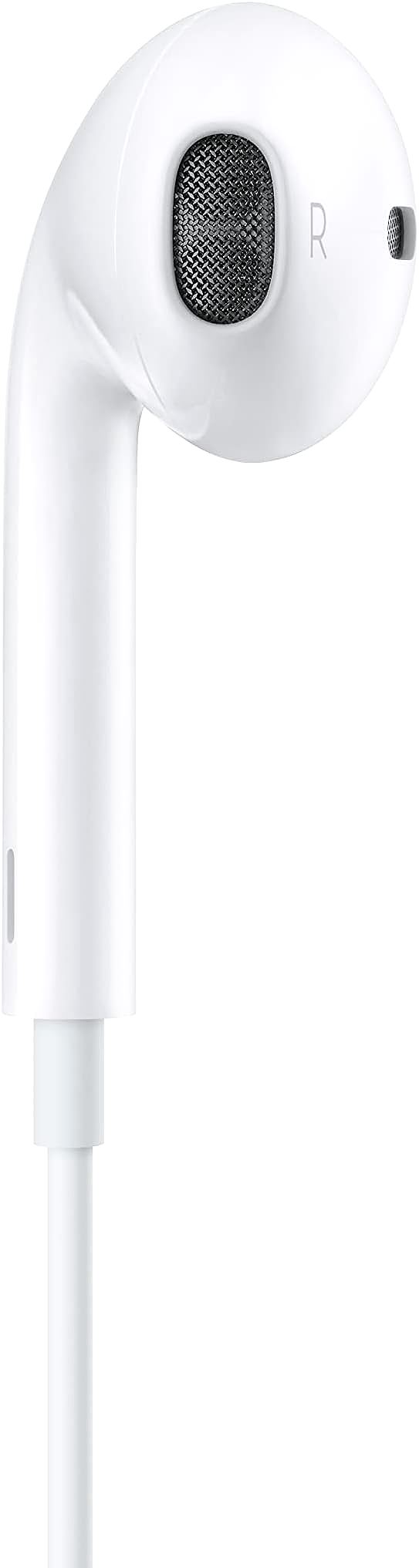
Apple EarPods Headphones with 3.5mm Plug
Every wireless earbud user knows the moment of frustration when a low battery chime interrupts a phone call or a favorite song. The appeal of a simple wired connection in that moment needs no explanation. But the choice between wired and wireless audio goes far beyond charging convenience. It reaches into the fundamental physics of how sound is transmitted, encoded, and reconstructed. And in 2026, despite significant advances in Bluetooth technology, the gap between what wired and wireless can deliver remains wider than many consumers realize. This is precisely why the debate over wired earbuds vs wireless sound quality remains so relevant in 2026.

The Signal Path
To understand the difference between wired and wireless audio -- and why the wired earbuds vs wireless sound quality comparison favors wired -- one must start at the signal path. Every piece of digital audio stored on a phone or computer must go through a digital-to-analog converter (DAC) before it can become sound waves that the human ear can perceive. In a wired setup, the DAC output travels through the copper conductors of a headphone cable directly to the earbud drivers. This path is electrically straightforward: voltage variations representing the audio waveform pass through the cable with near-zero alteration, reaching the miniature speaker coils inside each earbud. The result is an analog signal that retains virtually all of its original integrity.
Wireless audio introduces additional steps. After the DAC, the analog signal must be encoded into a digital format suitable for Bluetooth transmission. This encoding process uses a codec -- a compression algorithm that reduces the data rate to fit within Bluetooth's limited bandwidth. The most common codec, SBC (Subband Coding), compresses at roughly 328 kilobits per second. For comparison, a standard CD-quality audio stream requires 1,411 kbps. The signal is then transmitted via radio waves to the earbuds, where a second DAC performs another conversion back to analog. Each encoding, transmission, and decoding step introduces potential for data loss and timing variations.
The Mathematics of Audio Compression
Lossy compression operates on principles of psychoacoustic masking. Certain frequencies, when played simultaneously, cause quieter sounds in nearby frequency bands to become imperceptible to the human ear. Codecs exploit this by discarding masked information. The problem is that masking models are statistical approximations, not perfect predictors of what any individual listener will perceive. Audiophiles describe the result as a loss of "air" or "space" in the soundstage -- the subtle ambient cues that give recorded music a sense of three-dimensional space.
Advanced codecs such as LDAC, developed by Sony Corporation, push Bluetooth transmission to up to 990 kbps. This approaches the threshold of perceptible transparency for many listeners. However, LDAC operates at its highest bitrate only under ideal radio conditions. Walls, other wireless devices, and even the user's own body can cause the codec to drop to 660 kbps or 330 kbps mid-playback. The user rarely sees this happening, but the ear can register it as a subtle shift in clarity.
Latency
Latency matters differently depending on the use case. For casual music listening, the 100 to 300 milliseconds typical of Bluetooth transmission is barely noticeable. But for gaming, video watching, or playing a musical instrument, latency becomes critical. When a player taps a note on a digital piano and hears the sound through wireless headphones 200 milliseconds later, the disconnect between physical action and auditory feedback disrupts timing and feel.
Wired connections achieve latency under 5 milliseconds -- effectively instantaneous to human perception. This is because the electrical signal travels at near light speed through copper, and the only meaningful delay is the mechanical response time of the driver itself. Our guide on how driver technology shapes sound explores this mechanism in more detail. The difference between 5 ms and 200 ms may seem academic on paper, but in practice it separates a connected, responsive experience from one that feels slightly out of sync.
The TRRS Connector
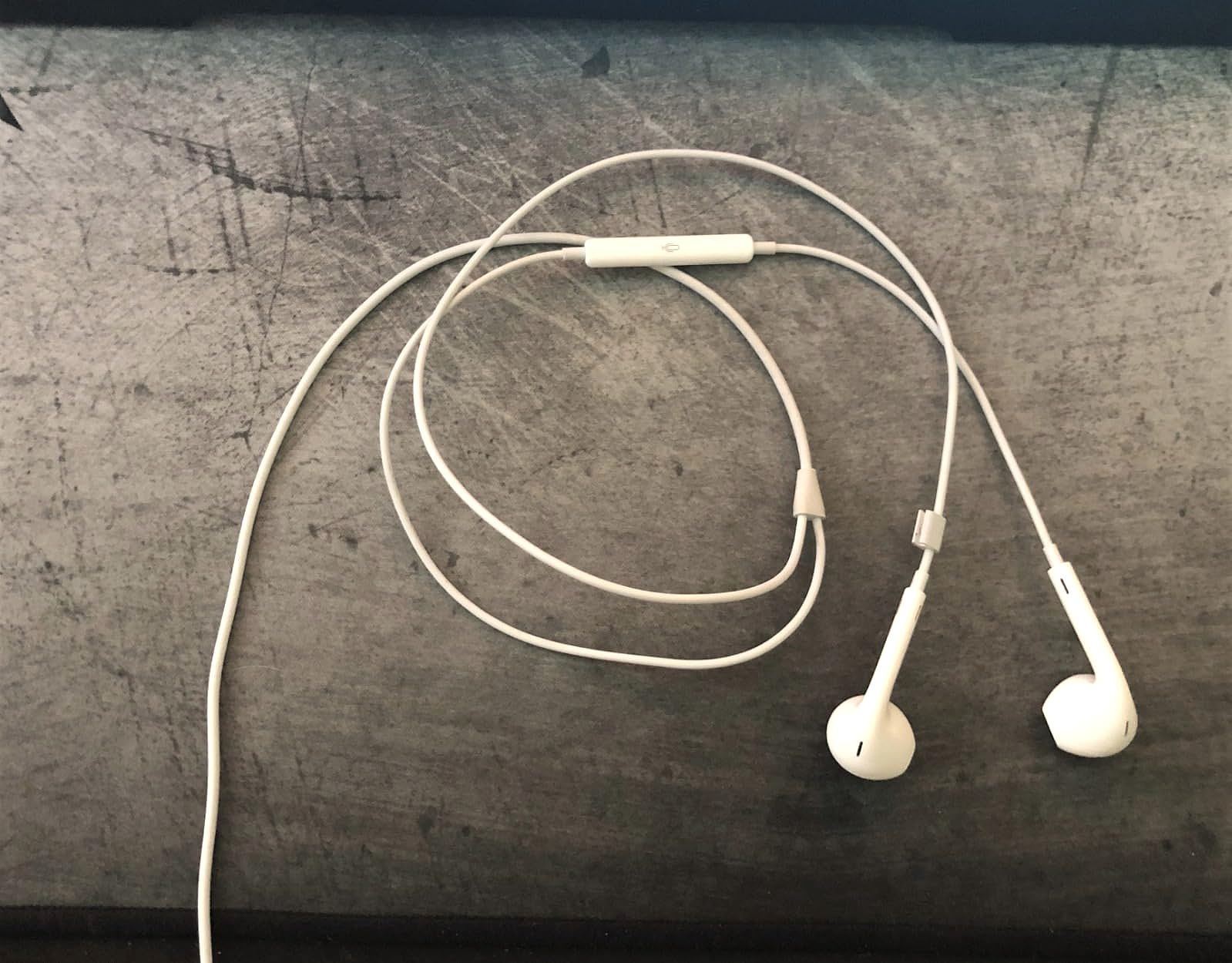
The humble 3.5mm headphone plug is mechanically simpler than many people realize, yet its design embodies decades of engineering refinement. The Tip-Ring-Ring-Sleeve (TRRS) configuration carries left audio, right audio, ground, and microphone signal on four separate contacts. When the plug is inserted into a jack, these contacts establish a direct electrical connection between the source device and the earbuds. There is no negotiation, no pairing, no buffer, and no encryption overhead. The connection is purely physical and therefore deterministic.
This simplicity has practical consequences. The TRRS system draws negligible power from the source device -- these earbuds consume only the milliwatts required to drive their tiny speakers. There is no battery in the earbuds to charge, no firmware to update, no Bluetooth module drawing standby current. A pair of wired earbuds can sit in a drawer for ten years and work instantly when plugged in. No wireless earbud on the market can match that reliability.
Battery and Environmental Cost
Wireless earbuds contain lithium-ion batteries that typically last a few hours to around a full work day on a single charge. After one to two years of regular use, these batteries lose 20 to 30 percent of their original capacity. Because the batteries are embedded in devices designed for compactness and water resistance, they are rarely user-replaceable. The result is that a pair of wireless earbuds in the premium price band effectively has a planned lifespan of two to three years before the battery degrades to an unusable state.
Beyond capacity decay, wireless earbuds demand a charging routine that wired earbuds eliminate entirely. A wireless pair that runs dry mid-commute becomes a dead weight in your pocket, whereas a wired set draws power directly from the headphone jack and never needs to be plugged into a cable before use. Wired earbuds have no such limitation. The wired earbuds, first introduced in 2012, remain functionally identical to newly manufactured units. The only wear points are the cable and the plug, both of which can outlast multiple wireless devices. From a lifecycle environmental perspective, wired earbuds generate significantly less electronic waste: no battery chemistry to dispose of, fewer rare earth elements in the manufacturing process, and a replacement cycle measured in years rather than months.
The EarPods Design Philosophy
The EarPods represent a specific engineering philosophy that illuminates the broader wired approach. Instead of the traditional round earbud shape that relies on silicone tips to create a seal, they are shaped according to what Apple calls "the geometry of the ear." The housing is a single piece of hard plastic molded to fit the contours of the concha -- the outer bowl of the ear. This open design allows ambient sound to reach the ear naturally, creating a listening experience that many users describe as more spacious and less fatiguing than sealed in-ear monitors.
The design has remained in production for over a decade with only minor revisions, which is itself a form of engineering validation: a shape that works does not need yearly reinvention. Within Apple's own product line, the wired pair persists alongside wireless models that cost roughly an order of magnitude more - a reminder that the analog signal path remains a deliberate design choice, not a leftover.
When Wireless Makes Sense
None of this is to argue that wireless earbuds are without merit. For exercise, commuting in crowded spaces, or any scenario where a cable would be inconvenient, wireless remains the practical choice. Active noise cancellation, a feature unavailable in passive wired designs like these, provides genuine value in noisy environments. And for listeners who prioritize convenience above all else, the trade-off in signal integrity is entirely reasonable.
The point, rather, is that the choice is not between "good" and "bad" audio, but between different engineering compromises. When evaluating wired earbuds vs wireless sound quality, the answer depends on which attributes matter most to the listener. Wired audio trades convenience for signal integrity, zero latency, and indefinite lifespan. Wireless audio trades those qualities for mobility and freedom from cables. Neither choice is objectively superior across all metrics.
The Balanced Perspective
In the end, the most honest answer to the choice between wired and wireless audio is that the answer depends on context. For a student sitting at a desk for eight hours of focused study, an inexpensive pair of wired earbuds delivers audio quality, reliability, and comfort that wireless models cannot fully match in those specific dimensions. For a commuter navigating a crowded train, wireless earbuds with noise cancellation provide an experience that wired earbuds simply cannot replicate.
Good engineering is about making the right trade-offs for a specific use case. These earbuds, with their decade-plus design heritage, open acoustic philosophy, and uncompromised analog signal path, represent one end of that trade-off spectrum. Understanding where each option fits is the first step toward making a choice that actually serves the listener's needs. For a broader comparison of earbud types, see our earbuds buying guide.
Apple EarPods Headphones with 3.5mm Plug
Related Essays

OMK Airbuds3 Wireless Earbuds: Enjoy High-Quality Sound, Comfort, and Durability

Sony WF-1000XM4: The Science of Silence & Sound - Unpacking Advanced Noise Canceling Earbud Tech

Analog Audio Resistance: Preserving Acoustic Fidelity Through Copper

Democratizing Acoustic Fidelity: The Silicon Economics of Audio

The Case for "Obsolete" Tech: Why Wired Earbuds Still Win on Latency and Reliability

The Physics of 'Extra Bass': How 12mm Drivers and Acoustic Seal Create Powerful Sound

Osdfono U5 Wireless Earbuds: Stay Connected and Enjoy Deep Bass on the Go

Wasart J52 Wireless Earbuds: Silence the Noise, Amplify Your Sound

Volkano VK-1122 Virgo Series: Crisp Audio and Marathon Battery in a Stylish Package
