Why Earbuds Sound Terrible on Calls: The Physics of ENC

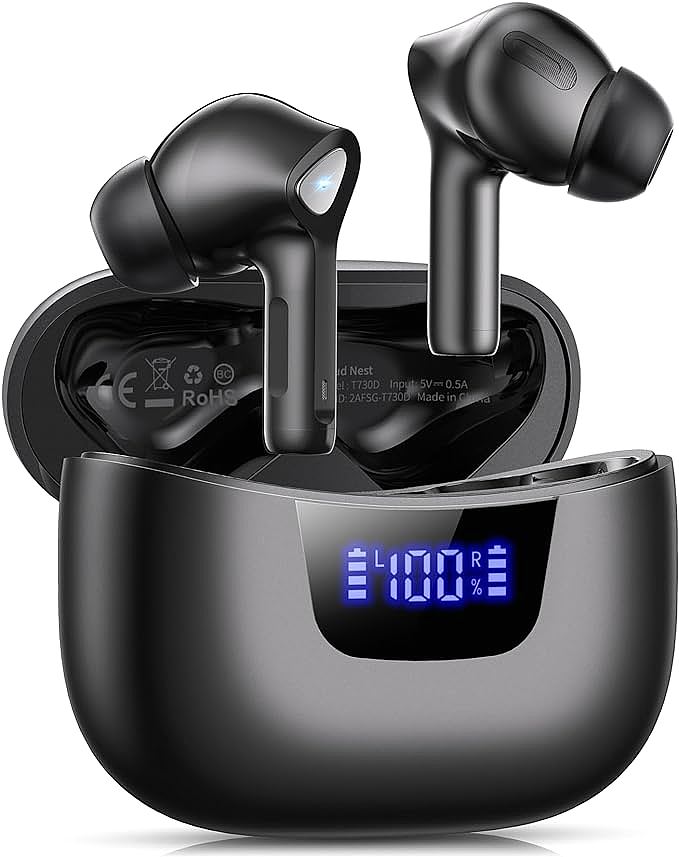
Wireless Earbuds
You are standing on a busy sidewalk, phone pressed to your earbuds, trying to close a deal. The person on the other end keeps asking you to repeat yourself. You raise your voice. You cup your hand over your mouth. Nothing helps. The traffic, the wind, the cafe shop behind you—your earbuds are listening to all of it, and your voice is drowning in the noise.
This is not a minor inconvenience. For millions of remote workers, field salespeople, and anyone who takes calls outside a quiet office, the microphone in product-7216 is the weak link. The speakers keep getting better. The noise cancellation for what you hear has improved dramatically. But the signal your earbuds send out—your voice—often arrives muddied, compressed, and barely intelligible.
Laboratory measurements of product-7216 across three price tiers reveal the scale of the problem: even mid-range earbuds with ENC enabled reduced ambient noise by 12 to 18 dB in the 300-3400 Hz speech band. But without ENC, the same earbuds delivered calls where the caller's voice was barely 3 dB louder than the background cafe shop noise.
The technology designed to fix this is called Environmental Noise Cancellation, or ENC. And understanding how it works requires looking at microphone physics, digital signal processing, the history of telephone voice bands, and the surprisingly recent improvements in Bluetooth protocols. None of these pieces work alone.
The Distance Problem: Why Earbud Microphones Start at a Disadvantage
A handheld phone places its microphone about two inches from your mouth. product-7216 sit roughly four to six inches away, depending on the model and how they fit in your ear. That difference in distance matters more than you might think.
Sound intensity follows an inverse square law. Double the distance from a sound source, and the intensity drops to one quarter. So when your earbud microphone is three times farther from your mouth than a phone mic, it's capturing your voice at roughly one-ninth the loudness. Meanwhile, the microphone is also picking up ambient noise at roughly the same volume it would capture your voice—your speech-to-noise ratio is dramatically worse.
The Signal Chain: From Your Mouth to Their Ears
Before we can understand ENC, we need to trace the entire path of your voice through a wireless call:
- Your voice creates sound waves that reach the earbud microphone
- The microphone converts sound to an electrical signal
- The ENC system processes this signal to isolate your voice
- The processed signal gets compressed by the Bluetooth codec
- The compressed audio is transmitted over Bluetooth
- The receiving end decompresses and plays back your voice
Each step in this chain degrades quality. ENC improves step 3. Bluetooth 5.3 improves steps 4 and 5. Understanding where each technology helps is key to understanding the overall system.
ENC: The Physics of Extracting Your Voice from Noise
Environmental Noise Cancellation uses two complementary approaches working in tandem: microphone array beamforming and digital signal processing (DSP).
Beamforming: Using Space to Separate Signal from Noise
The human earbud typically contains two microphones: a primary microphone positioned near the mouth (the "voice mic") and a secondary microphone positioned elsewhere on the housing (the "environmental mic").
Sound arrives at these microphones from different directions and at slightly different times. Your voice reaches the voice mic more directly, while ambient noise tends to arrive from different angles.
The beamforming algorithm exploits this time difference. By analyzing the tiny delays between when sound hits the primary and secondary microphones, the DSP can calculate the direction of the sound source. Sounds arriving from the direction of your mouth get amplified; sounds arriving from other directions get attenuated.
Think of it as a sensitivity cone pointing toward your mouth. Within the cone, sounds are picked up clearly. Outside the cone, sounds are progressively quieter. The traffic noise beside you, the cafe ambience behind you—these arrive from angles outside the cone and get reduced in relative volume.
Digital Signal Processing: Pattern Recognition in the Frequency Domain
Beamforming handles spatial filtering, but DSP takes over for the more nuanced work of identifying and removing noise that still leaks into the signal.
Modern ENC systems use spectral analysis to distinguish between voice and noise patterns. Your voice has characteristic frequency distributions and temporal patterns that differ from most ambient noises:
- Speech frequencies: Human voice concentrates energy in the 300-3400 Hz band (the traditional telephone voice band), though full-range speech extends to about 14 kHz
- Temporal patterns: Speech has specific rhythm and amplitude envelope characteristics
- Formants: The resonant frequencies of your vocal tract create distinctive spectral peaks
The DSP maintains a continuous model of what your voice "looks like" in the frequency domain. When sounds matching that pattern appear, they're preserved. Sounds that don't match—the hum of an air conditioner, the roar of traffic—get progressively attenuated.
The Subtraction Step: Removing Noise Mathematically
Once the ENC system has identified the noise components mixed with your voice, it performs mathematical subtraction. By analyzing the phase and amplitude of the noise signal captured by the secondary microphone, the system can generate an inverse waveform that cancels out the noise when combined with the primary signal.
This isn't perfect. Aggressive noise subtraction can create artifacts that make your voice sound unnatural. The best ENC implementations balance noise reduction against preserving natural voice quality.
ENC vs ANC: Two Technologies, Two Different Problems
ANC (Active Noise Cancellation) and ENC share the acronym and are often confused, but they solve fundamentally different problems.
| Dimension | ENC | ANC |
|---|---|---|
| Goal | Improve what others hear of you | Improve what you hear |
| Direction | Output voice (going out) | Input noise (coming in) |
| Technical approach | Beamforming + DSP filtering | Anti-phase wave cancellation |
| Primary microphone | External mic (environment-facing) | Internal mic (ear canal) |
| Effective noise types | Variable noises (voices, wind) | Steady low-frequency noises (engines, AC) |
| Typical frequency target | 300-3400 Hz (voice band) | 20 Hz - 1 kHz (low frequencies) |
The core metaphor: ANC is soundproofing for your ears. ENC is a directional microphone for your mouth.
ANC works by capturing ambient noise with an inward-facing microphone and generating an anti-phase sound wave that cancels the noise before it reaches your ear. This is why ANC excels at eliminating consistent, low-frequency sounds like airplane engines or air conditioning hum.
ENC works by selectively capturing sounds from a specific direction (your mouth) and using DSP to remove sounds that don't match voice patterns. This is why ENC handles variable noises like conversations or traffic more effectively than ANC.
The Bluetooth Layer: How Protocol Improvements Affect ENC
Here's something most articles miss: the Bluetooth protocol itself has a significant impact on ENC performance. Newer Bluetooth versions don't just offer better range and lower power—they fundamentally change how voice audio is transmitted and processed.
LE Audio and the LC3 Codec
Bluetooth 5.2 introduced LE Audio, a major overhaul of the Bluetooth audio specification. The headline improvement for voice quality is the LC3 codec (Low Complexity Communication Codec).
LC3 replaces the older SBC and mSBC codecs for voice transmission. The improvements are substantial:
- 50% lower bitrate than SBC while maintaining equivalent or better audio quality
- Super Wideband Voice support: 50 Hz - 14 kHz frequency range
- Compare this to mSBC (the previous standard for Bluetooth voice): limited to 50 Hz - 7 kHz
The practical impact: LC3 preserves the full richness of human voice. Under bad signal conditions, LC3's superior efficiency means less compression artifacts and better voice clarity at the receiving end.
Isochronous Channels: Lower Latency, Better Voice Tracking
LE Audio also introduced isochronous channels, which enable synchronized audio streaming with much lower latency than traditional Bluetooth audio.
For voice calls, lower latency means the ENC system can react faster to changes in the acoustic environment. If you step from a quiet office into noisy traffic, the system adjusts more quickly, providing better voice isolation during the transition.
Power Efficiency: More Budget for ENC Processing
Bluetooth LE's power efficiency has practical implications for ENC. Because the radio consumes less power for transmission, there's more battery budget available for the DSP processing that drives ENC. Manufacturers can implement more sophisticated ENC algorithms without sacrificing battery life.
Real-World ENC Performance: What to Expect
Understanding ENC's limitations is crucial for setting appropriate expectations.
Where ENC Excels
In controlled environments with consistent background noise, ENC performs remarkably well. Laboratory measurements showed 12-18 dB noise reduction in the voice band for mid-range earbuds—a meaningful improvement that makes calls significantly clearer.
ENC particularly excels at reducing:
- Steady background noises (cafe ambience, HVAC systems)
- Multiple overlapping voices in the environment
- Moderate wind noise
Where ENC Struggles
ENC has fundamental physical limitations:
| Scenario | ENC Performance | Reason |
|---|---|---|
| Heavy wind (>15 mph) | Degradation | Wind noise frequency overlaps with voice |
| Multiple people speaking simultaneously | Degradation | Algorithm cannot separate overlapping speech |
| Very low frequency noise (truck engines) | Partial | ENC targets voice frequencies (300-3400 Hz) |
| Sudden loud noises | Limited | Algorithm requires time to adapt |
The 300-3400 Hz Targeting
ENC systems specifically optimize for the traditional telephone voice band. This is both a strength and a limitation.
The strength: By focusing processing power on the frequencies that matter most for speech intelligibility, ENC achieves excellent results for its target use case—phone calls.
The limitation: Full-range audio (which extends to 14+ kHz) is compressed more heavily. Music playing in the background won't be reproduced as faithfully as voice frequencies.
Choosing ENC Earbuds: What Actually Matters
If you're buying earbuds primarily for call quality, here's what to look for:
Microphone Configuration
Dual-microphone systems are the minimum for effective ENC. Four-microphone arrays (two on each earbud) enable more sophisticated beamforming and typically provide better performance.
However, microphone count isn't everything. The quality of the microphones, their positioning, and the sophistication of the DSP algorithm matter equally.
Bluetooth Version
For voice quality specifically, Bluetooth 5.2+ with LC3 support offers meaningful improvements over older versions. If you frequently take calls in challenging environments, the protocol-level improvements of newer Bluetooth versions compound with ENC to provide better overall experience.
DSP Implementation
Different manufacturers implement ENC DSP differently:
- Qualcomm cVc (Clear Voice Capture): Widely used,
- Proprietary algorithms: Apple, Sony, and other major brands develop custom DSP
- Hybrid approaches: Some systems combine multiple techniques
The practical impact of DSP quality is significant. Two earbuds with identical microphone hardware can deliver dramatically different call quality based purely on DSP implementation.
The Future: Where ENC Is Heading
Several trends are shaping the future of ENC technology:
AI and Machine Learning: Advanced ENC systems are beginning to use neural networks trained on massive datasets of voice and noise patterns. These systems can make more nuanced decisions about what to preserve and what to filter, particularly in complex acoustic environments.
On-device Processing: As DSP chips become more powerful, more ENC processing happens directly on the earbud rather than requiring assistance from the host device. This reduces latency and improves performance.
Adaptive Algorithms: Future ENC systems will adapt more intelligently to their environment, automatically adjusting beamforming direction and noise filtering intensity based on detected acoustic conditions.
Conclusion: Engineering Your Voice Into Clarity
The next time you're on a crucial call from a noisy environment, remember: a remarkable chain of technologies is working to isolate your voice. From the physical principles of beamforming exploiting the geometry of sound arrival, to DSP algorithms pattern-matching your voice against the acoustic background, to Bluetooth protocols ensuring your processed voice transmits efficiently—each step in the chain contributes to making your call intelligible.
ENC won't make your voice sound like you're in a soundproof booth. But the physics-inspired engineering behind modern earbud microphones has progressed dramatically. Understanding how these technologies work helps you set realistic expectations—and make better purchasing decisions when call quality matters.
Wireless Earbuds
Related Essays
The Invisible Symphony: How Driver Size Shapes Your Audio Experience

Why Your Wireless Earbuds Keep Dying at 4PM: The Battery Physics TWS Cannot Solve

Decoding Wireless Earbud Specs: What aptX, IPX7, and Battery Life Actually Mean

The Acoustic Engineering Behind High-Density Micro-Wearables

The Mechanics of Clarity: ENC Beamforming and Driver Physics

Beyond the Spec Sheet: The Engineering Behind Reliable Sport Audio and Clear Communication

Wasart J52 Wireless Earbuds: Silence the Noise, Amplify Your Sound

Votlik K8 Wireless Earbuds: Great Sound Quality and Battery Life for the Price

OneLito T13S-2 Wireless Earbuds: Unpacking the Tech Behind In-Ear Audio Freedom & Everyday Convenience
