Koss KSC75: Inside the Titanium Driver That Beats Its Price

Koss KSC75 Portable Stereophone Headphones
Twenty dollars buys a plastic housing, two foam pads, and a steel ear clip. It should not buy a headphone that reviewers keep calling warm, balanced, and tonally accurate, yet that is what the Koss KSC75 has been doing since 2004. The distance between what the parts cost and what listeners hear comes from three decisions made at the design stage: a titanium-coated diaphragm, an open acoustic chamber, and a magnet circuit built from neodymium iron boron.
Those three parts turn a shopping question into an engineering one. The numbers below come from the manufacturer's published ratings, from independent bench measurements, and from owner reports gathered across thousands of reviews. Read together, they explain how a clip-on selling for $19.99 holds its own against headphones costing several times more.
Why a clip-on beats its price class
Most audio gear follows a predictable curve. Spend more and you get a larger diaphragm, a denser housing, and a more carefully tuned chamber. The rare exceptions sit far above that curve, and the reason is usually a design that removes cost without removing physics.
Koss has been building stereophones since 1958, when the company produced the first model capable of reproducing all ten audible octaves. The KSC75 arrived in 2004 as a sport-clip variant of an existing driver platform and has changed very little since. The rated bandwidth runs from 15-25,000 Hz. Impedance sits at 60 ohms, sensitivity at 101 dB SPL per milliwatt, and total harmonic distortion stays below 0.2%. For reference, the audible range spans roughly 20 Hz to 20,000 Hz, so the rated figure leaves headroom at both ends.
Weight tells the same story. The assembly comes in at 0.17 lb, close to 77 g, and the cable measures 4 ft with a straight 3.5 mm plug and dual entry. There is no headband, no folding hinge, and no carrying case. Every part that was removed carried a price, and none of them touched the moving assembly that turns an electrical signal into sound.
The titanium driver and the stiffness problem
A dynamic driver works like a piston. A voice coil pushes a diaphragm back and forth, and the diaphragm moves air. Trouble starts when the diaphragm stops behaving like a rigid piston and flexes on its own. Those local flexes add motion the recording never contained, and the listener hears the addition as distortion.
The Koss KSC75 titanium driver addresses that problem by coating a 35 mm diaphragm with a thin layer of titanium. Titanium is stiff for its weight, so the coating raises stiffness without adding meaningful mass. Engineers call the relationship between the two the stiffness to mass ratio, and a higher ratio pushes the diaphragm's breakup frequency upward, out of the range where most music sits. The published distortion figure of under 0.2% is the measurable result of that choice, and the same figure holds across the family of drivers built on this platform.
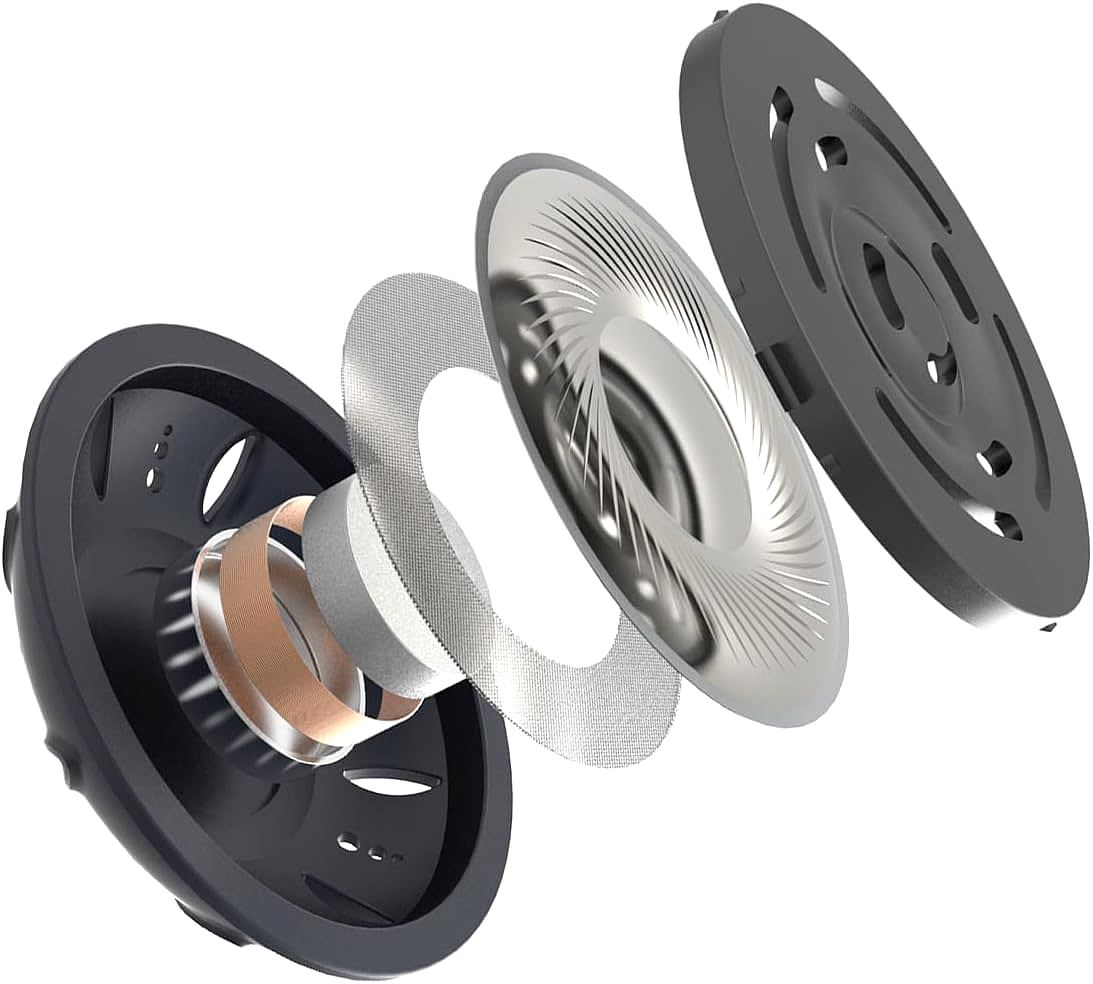
The same 35 mm driver design appears in the Porta Pro and in older models such as the KSC35, which is why the three sound so similar. What changes between them is the housing, the mounting, and the headband, not the motor that produces the sound. A 40 mm driver would move more air at the bottom end, but it would also need a heavier motor and a larger frame, and the price would climb with both.
An open back and where soundstage comes from
Seal a driver inside a cup and the trapped air fights the diaphragm. The cup also blocks the reflections your outer ear uses to judge direction. The brain reads those reflections, known as pinna cues, to decide whether a sound sits in front, above, or behind you. Remove them and the music collapses into a flat line between the ears.
The design leaves the driver open to the air. Nothing seals against the head, and the outer ear keeps receiving the reflections it expects. Listeners describe the result as a wider stage with better separation between instruments, though independent reviewers note that the stage is narrower than the reputation suggests, closer to a small club than a concert hall. Low frequencies gain least, because open designs leak bass energy rather than containing it.
The tradeoff is complete. With no seal, there is no isolation. A bus, a train, or an open-plan office will drown the music, and everyone nearby will hear it too. Measured isolation lands near 10 dB through the middle frequencies, which is roughly the difference between a quiet room and an ordinary conversation.
Neodymium magnets and motor control
The magnet controls the voice coil. Its field grips the coil and forces it to follow the electrical signal, so a weak field lets the coil drift, overshoot, and ring after the note ends. The listener hears loose bass and a congested middle range.
Neodymium iron boron is the strongest permanent magnet material in common use. A magnet of this type produces a dense field in a small volume, which keeps moving mass low while still controlling the coil. The audible payoff is bass that arrives and stops on time, and a midrange that stays clear when several instruments play at once. Owners rate the low end as ample rather than deep, and bench measurements agree: the bass is present and textured, but it rolls off earlier than a sealed design would allow.
At 60 ohms the load is heavier than the impedance of most cheap earbuds, which sit closer to 16 or 32 ohms. A phone will drive the KSC75 to a reasonable volume, and reviewers report that the sound improves noticeably when a dedicated amplifier supplies more current. Sensitivity of 101 dB per milliwatt means it takes very little power to reach a comfortable level, and roughly 2 hours of listening from a typical phone battery costs almost nothing in charge.
What measurements and owners report
Bench data and owner reports converge on a similar picture. The response stays close to neutral with a mild warmth through the upper bass. Treble extends smoothly without a sharp peak, though reviewers note that it rolls off early compared with more expensive designs. Imaging separates instruments well on sparse recordings, and dense orchestral passages can sound crowded. Unit to unit variation of 3 dB to 5 dB shows up in published measurements, which is normal for drivers at this price.
Owner data for the Koss KSC75 Portable Stereophone Headphones fills in the practical side. Across thousands of ratings the average sits near 4.4 stars, with satisfaction highest for sound quality and value. The recurring complaints are mechanical rather than acoustic. Foam pads flatten within a few months and need replacement. The ear clips press on the outer ear and take a week or two to settle. You cannot swap the cable, since it is soldered inside the housing.
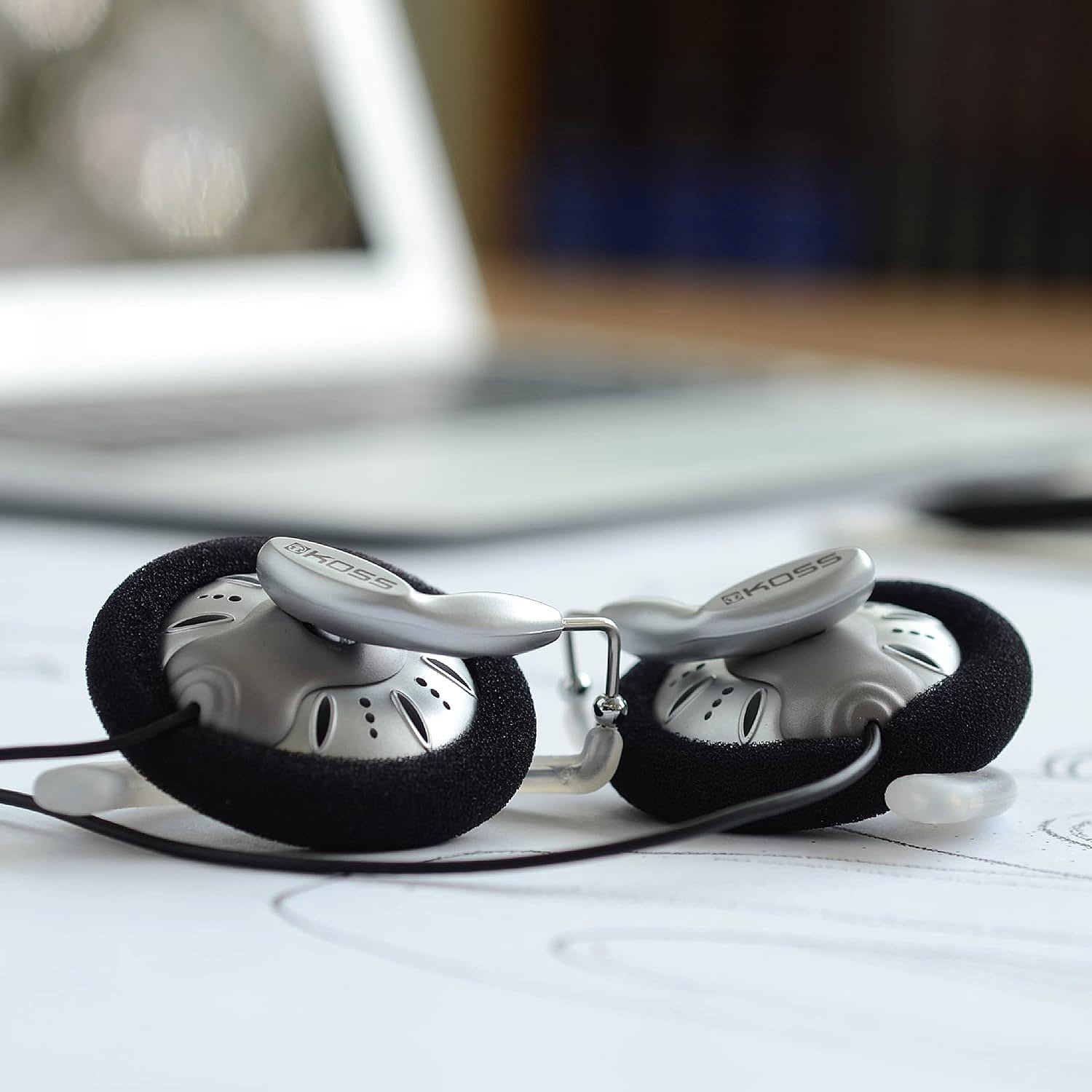
Those complaints point to a real limitation. A 35 mm driver in an open housing at this price does not deliver deep sub-bass, high isolation, or a premium feel. It delivers accurate tone and a light weight, and it does so for less than the cost of a replacement cable on many premium headphones.
The ear clip problem and the pad swap
The ear clip is the part owners change most often. The clips pivot on the housing and press against the ear, and for some listeners that pressure grows uncomfortable after an hour. Three fixes circulate in owner forums, and each one is reversible.
Swapping the stock foam for denser aftermarket pads changes the seal slightly, adds a little bass, and softens the treble peak. Fitting the drivers to a third-party Porta Pro headband removes the clip pressure entirely and turns the pair into a conventional on-ear headphone. Replacing the cable with a detachable one requires soldering, and the stock cable is not user-serviceable in the first place.
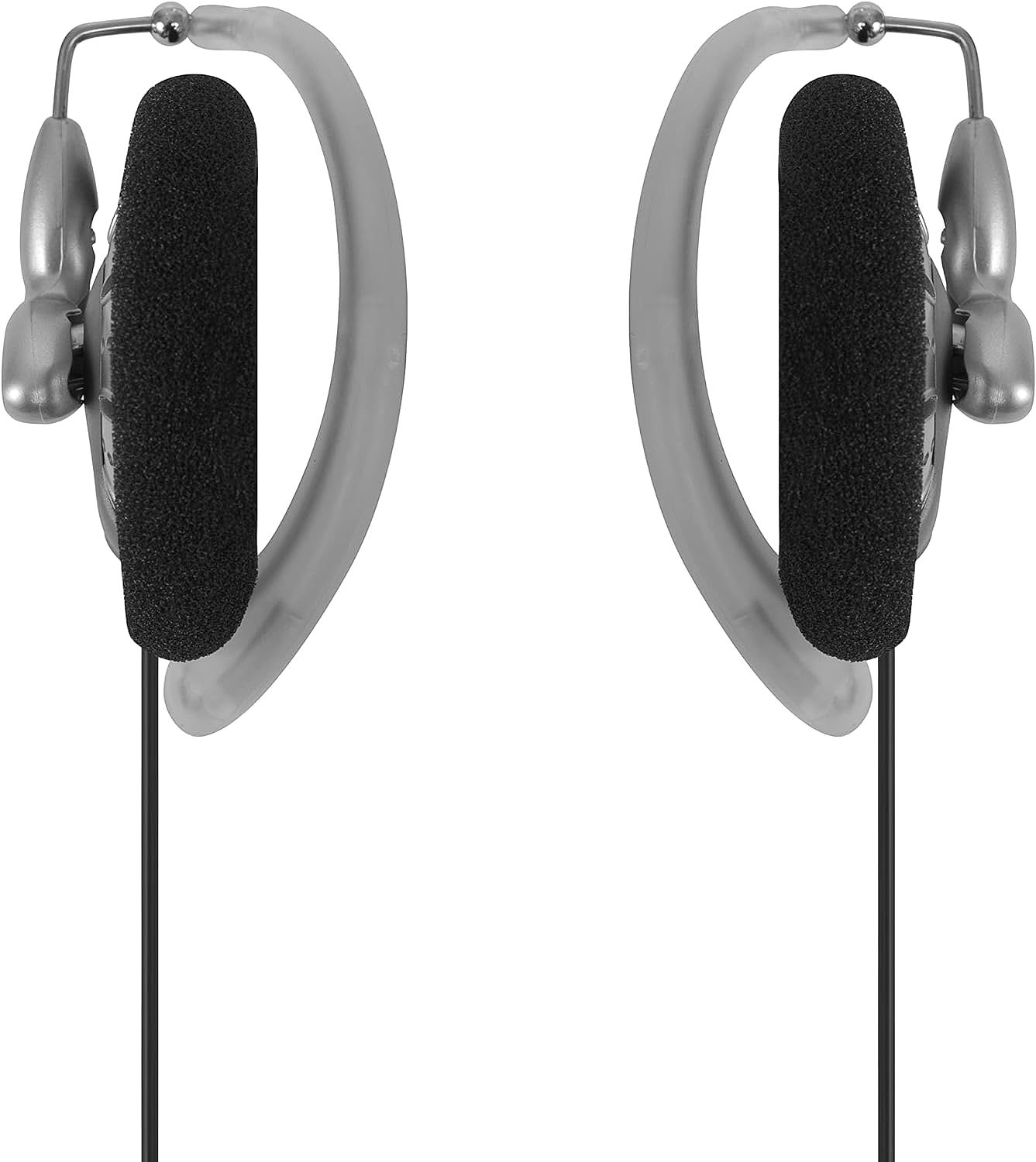
None of these changes touch the driver. They change the interface between the driver and the ear, which is where most of the perceived difference between one Koss model and another comes from. A pad swap of 6 mm in thickness can shift the treble by 2 dB or more, which is audible on cymbals and strings.
One driver platform, several housings
The clearest evidence that the driver matters more than the housing is the family built around it. The Porta Pro uses the same motor in a headband frame and sells for $39.99. Koss used the same motor in the earlier KSC35 clip design. Enthusiasts transplant these drivers into replacement cups, and the resulting headphones keep the tonal character of the original while gaining isolation.
That pattern explains why this model stays in circulation. When the moving parts are good, the parts around them become a matter of preference rather than quality. A listener who wants isolation can add it. A listener who wants a headband can add one. What cannot be added later is a better motor, and that is the piece the design already gets right.
What the engineering explains
A titanium coating raises stiffness without raising mass. An open back preserves the reflections the ear needs to place a sound in space. A neodymium magnet holds the voice coil under control. Three choices, none of them costly, and together they explain why a $19.99 clip-on has stayed in production for two decades.
The limits are just as clear. No isolation, modest bass depth, and a clip that some ears reject. Buyers who need those things should look elsewhere. Buyers who want accurate tone at the lowest possible cost have had the same answer available since 2004.
Koss KSC75 Portable Stereophone Headphones
Related Essays

Bone Conduction vs Open Ear Clip Headphones: How Sound Reaches Your Ear

Boean U18 Wireless Headphones: 11mm Bass, IPX7 Sport Fit

The $110 "Sony Killer": How LDAC and Silk Drivers Define the Soundcore Q35

Sony WF-C500 Earbuds: Unpacking the Science of Great Sound on a Budget

Acoustic Democratization: Engineering High-Fidelity Audio on a Micro-Budget

Decoding the Open-Back Headphone: A Guide to Your First Audiophile Steps

The Unsealed Ear: A History and Science of Open-Ear Audio

The Geometry of Sound: How Fit and Physics Define the Budget Hi-Fi Experience

Betron B750 Earphones - Quality Sound on a Budget
