FOYCOY A11 68 Hour Battery: How It Works | 2026
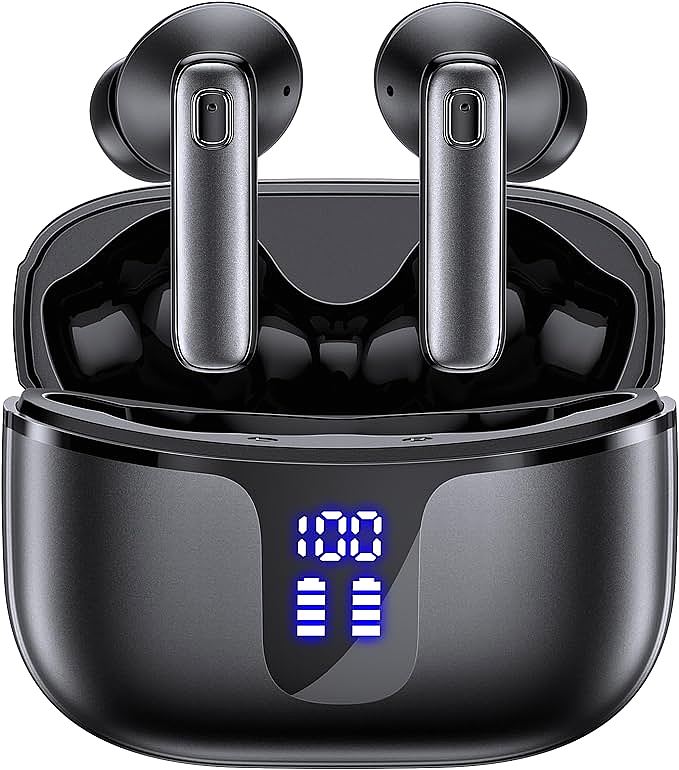
FOYCOY A11 Wireless Earbuds
The Battery Life Problem in Budget Earbuds
How many times have you pulled your earbuds from a bag, flipped open the case, and found the charge light blinking red? The listing said 40 hours. Your friends confirmed the reviews looked solid. Yet the case is dead after two commutes and a single workout. This experience, repeated across millions of budget wireless earbud owners worldwide, represents the central trust deficit between battery claims and battery reality.
The market context sharpens the problem. Global wireless earbud sales grow roughly 12 percent each year. Budget units priced below 30 dollars represent about 35 percent of all volume sold. With hundreds of near-identical listings competing for the same search result page, battery numbers have become the primary weapon. Forty hours outperforms thirty. Fifty beats forty. The subject of this article sets a new benchmark at sixty eight.
The structural challenge for buyers is that battery life appears as a bare integer on a product page. No standard governs the test volume, the codec, the ambient temperature, or the transmission environment. A manufacturer that runs its test at 30 percent volume over a clean SBC stream will print a larger number than one that tests at 70 percent over AAC. Both numbers are defensible. Neither conveys the whole picture. For shoppers comparing 68-hour battery earbuds against mainstream alternatives, this absence of standardization turns a spec sheet into a guessing game.
The FOYCOY A11 68 hour battery specification makes an instructive case study because a number that large cannot emerge from a single engineering decision. It demands coordinated choices across cell chemistry, wireless protocol selection, driver design, and the deliberate exclusion of power-hungry features. Tracing each of those choices provides a method for evaluating any battery claim, on any product, using publicly available specifications. That method is what this article aims to build.
Battery Technology Fundamentals
The battery inside a wireless earbud sets the ceiling. Everything else, from Bluetooth efficiency to amplifier design, determines how close to that ceiling the device actually gets. Understanding the ceiling first prevents the mistake of attributing runtime to the wrong cause. In 68-hour battery earbuds like the one examined here, that ceiling sits noticeably higher than the segment average.
Nearly all budget wireless earbuds use lithium polymer cells. The practical reason is packaging. A lithium polymer cell is a flat foil pouch filled with a polymer gel electrolyte. It can be shaped into thin rectangles that slide into an earbud stem or curved slabs that wrap around a charging case interior. Traditional lithium ion cells, with their rigid cylindrical metal casings and liquid electrolyte, cannot conform to these spaces. The polymer chemistry also fails more safely. A damaged polymer cell swells rather than vents, important when the cell sits millimeters from a user's ear canal.
The energy arithmetic behind battery claims starts with two numbers that every manufacturer knows but few product pages disclose: cell capacity in milliamp hours and nominal voltage. A 45 milliamp hour cell at 3.7 volts stores about 167 milliwatt hours. A 500 milliamp hour case cell at the same voltage stores roughly 1,850 milliwatt hours. The combined system contains about two watt hours total. That is the raw energy budget. Quoting the 45 milliamp hour figure without the voltage is like stating a fuel tank's depth without mentioning its width.
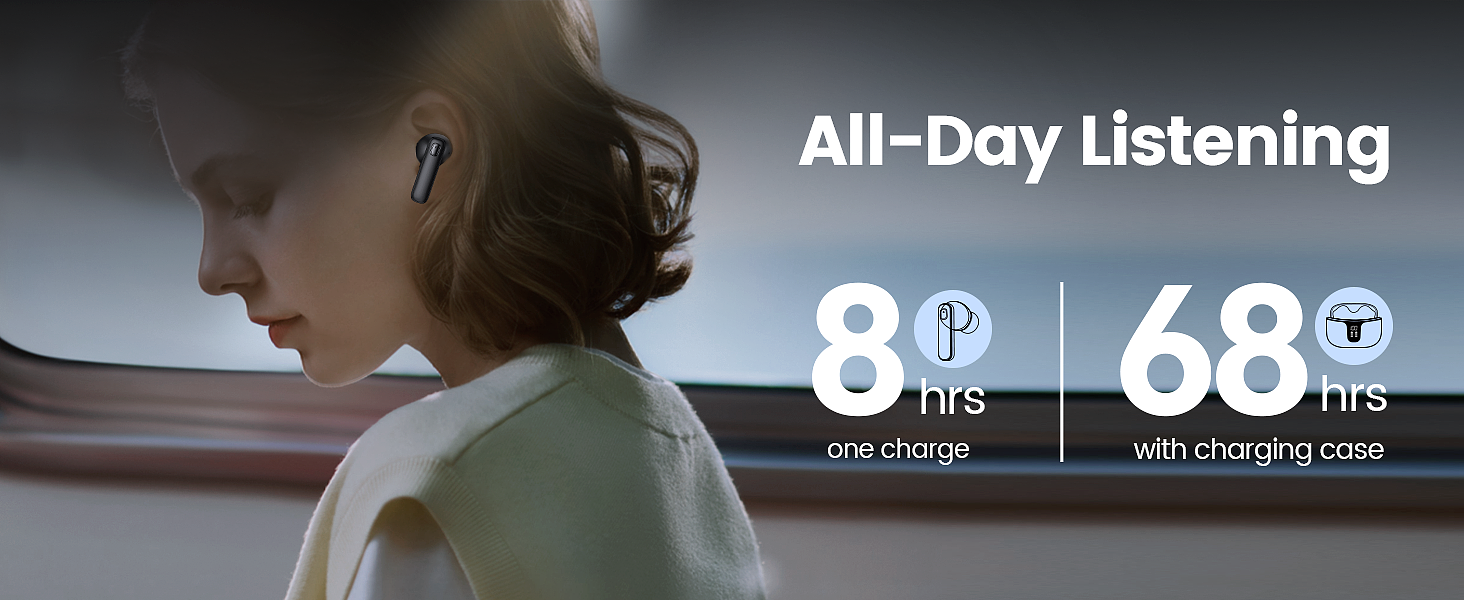
This product splits storage between two 45 milliamp hour cells, one per earbud, and a single 500 milliamp hour case battery. The earbud level cell supports approximately eight hours of continuous playback at moderate volume with an efficient codec. The case can refill each earbud about seven times. Multiplying through: eight hours per earbud charge, plus seven full recharges from the case, equals roughly 64 hours of case-extended playback. Add the initial charge and you arrive at the advertised 68 hours. These 68-hour battery earbuds earn their headline figure through the interaction between earbud-level efficiency and case-level capacity, not through a single oversized cell.
Real world conditions reduce every figure in this calculation. Volume is the largest variable. Increasing output from 50 percent to 80 percent of maximum raises amplifier current draw by roughly 30 to 40 percent, cutting earbud runtime from eight hours toward five or six. Codec selection matters because AAC decoding taxes the processor more than SBC at the same bitrate. Ambient temperature degrades capacity in both directions. Below 10 degrees Celsius, chemical reaction rates inside the polymer cell slow enough to reduce deliverable energy by 15 to 20 percent. Above 40 degrees, permanent degradation accelerates, meaning capacity lost to heat never returns. For 68-hour battery earbuds used daily on a commute, the real-world total in winter months might land closer to 55 hours than 68.
Bluetooth 5.3 and Power Efficiency
If the battery sets the ceiling, the Bluetooth chipset determines the burn rate. Modern wireless earbuds use system on chip designs where a single silicon die handles radio frequency, baseband processing, audio decoding, and power management. The chip's architecture, and more importantly the Bluetooth protocol version it implements, shapes power consumption at a fundamental level.
The JL AD6973D8 at the heart of this device combines Bluetooth 5.3 baseband with integrated power management and audio processing. Consolidating these functions onto one die eliminates the standby current that separate chips would draw through their voltage regulators. It also enables microsecond-level transitions between active and sleep states, reducing the time the radio spends at full operating power during brief connection maintenance windows.
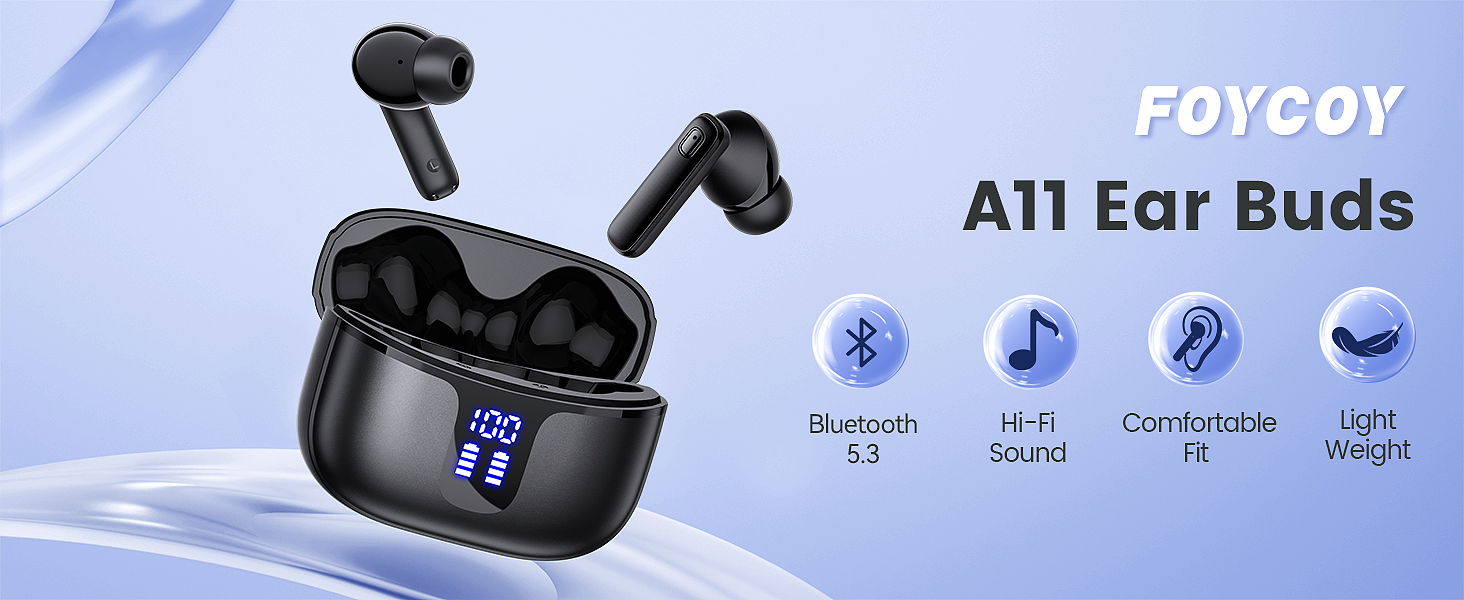
Bluetooth 5.3 brings protocol-level improvements that compound these hardware gains. The most significant is the Low Energy Audio architecture, introduced in version 5.2 and refined in 5.3. LE Audio uses the LC3 codec, which achieves audio quality comparable to classic SBC at roughly half the data rate. Half the bits per second means roughly half the radio transmit time, and the radio is the chip's hungriest subsystem. Even when the end device uses SBC or AAC rather than LC3, as this product does, the LE Audio ready hardware architecture still reduces connection overhead compared to Bluetooth 5.0 era silicon.
Periodic Advertising with Response, or PAwR, replaces the older method of broadcasting availability and listening for replies with a negotiated transmission schedule. Instead of waking the radio at random intervals to check for incoming data, the earbud and phone agree on precise timing windows, eliminating wasted wake cycles. Enhanced Attribute Protocol, or EATT, allows concurrent attribute transactions over a single link. For an earbud streaming stereo audio while sending microphone data and handling touch controls, EATT cuts the number of radio ramp-up events, each of which draws peak current.
The version gap translates to measurable power differences. A Bluetooth 5.0 earbud typically draws 25 to 30 milliwatts during active audio streaming. Bluetooth 5.2 reduces that to 20 to 24 milliwatts. Bluetooth 5.3, through LE Audio readiness and protocol optimization, can bring consumption below 18 milliwatts under identical streaming conditions. A 12 milliwatt difference applied over eight hours determines whether the battery quits at hour five or reaches hour eight. The 68 hour figure examined here depends on this efficiency margin at least as much as it depends on raw cell capacity. Put differently, what makes these 68-hour battery earbuds possible is as much about silicon as it is about lithium.
Driver Design and Power Balance
The audio driver, the component that converts electrical current into sound pressure, consumes the largest single share of earbud power during playback. A common intuition says larger drivers must draw more current because they move more air. The intuition is incomplete. Driver efficiency, not driver size, dominates the power equation.
A dynamic driver works by passing current through a voice coil suspended in a magnetic field. The resulting electromagnetic force pushes the attached diaphragm, creating air pressure waves. The efficiency with which current becomes sound depends on two factors: the strength of the magnetic field and the mass of the moving assembly. A stronger magnet produces more force per milliamp of current. A lighter diaphragm accelerates faster under that force, reaching the required excursion with a shorter current pulse.
This product uses a 13 millimeter dynamic driver with a neodymium magnet circuit. Neodymium magnets generate magnetic flux densities several times higher than the ferrite alternatives found in the lowest cost designs. The larger radiating area, 13 millimeters versus the 8 or 10 millimeters common in competing models, moves more air per millimeter of excursion. At low frequencies, where excursion demands peak, the larger diaphragm can produce equivalent bass output with less voice coil travel, drawing less current than a smaller driver working harder.
Codec support shapes the power budget from the processor side. SBC and AAC are computationally simpler than aptX HD or LDAC. Decoding AAC at 250 kilobits per second demands fewer processor cycles than decoding aptX at 352 kilobits per second, and processor cycles cost milliwatts. The absence of high bitrate codec support is not an accidental omission. It is a deliberate power management decision. Removing the processor overhead of advanced codecs preserves battery for playback hours. Buyers who want high resolution wireless audio should look at products with larger batteries or shorter advertised runtimes. Buyers who prioritize endurance will find the tradeoff acceptable. For buyers of 68-hour battery earbuds, the codec tradeoff is worth understanding: SBC and AAC preserve battery life at the cost of high-resolution audio, and that exchange defines the segment.
IPX7 Waterproof Rating and Practical Use
The IP rating system, governed by IEC standard 60529, uses two digits to classify enclosure protection. The first digit scores solid particle defense from zero to six. The second digit scores liquid defense from zero to eight. IPX7 means the first digit was not tested and the second digit achieved a score of seven: immersion in one meter of fresh water for 30 minutes without harmful water ingress.
This test is a single laboratory event under controlled conditions. The device sits still in a tank of still freshwater. It does not simulate arm movement during swimming, where momentary water pressure can briefly exceed one meter of equivalent head. It uses freshwater rather than saltwater, which is both more electrically conductive and more chemically corrosive. It uses liquid water droplets rather than steam, whose smaller vapor molecules can penetrate seals rated for liquid only.
Achieving IPX7 in a device with acoustic ports, microphone openings, and charging contacts requires layered sealing. A silicone gasket closes the housing seam where the two halves of each earbud meet. Conformal coating on the printed circuit board prevents short circuits if microscopic moisture breaches the outer barrier. An acoustic membrane across the driver output passes sound freely while blocking water. Hydrophobic mesh over the microphone port repels droplets. Gold plated charging contacts with drainage channels route moisture away from live circuits. Each layer has a distinct failure mode, which is why the rating is tied to specific conditions.
In daily use, IPX7 covers the scenarios that most people actually encounter. Gym sweat, regardless of volume, stays outside. Running through steady rain remains within tolerance. Dropping an earbud into a sink or puddle and retrieving it quickly causes no damage. What IPX7 does not cover is aging. Skin oils, sunscreen residue, and the mechanical stress of repeated insertion and removal degrade gasket materials over months. An earbud that met IPX7 standards at manufacture may fail the same test after two years of daily wear. The rating certifies the device at the point of production, not the device after sustained use.
Evaluating Battery Claims: A Consumer Framework
The technical ground covered so far provides the raw material for a structured approach to evaluating any battery claim on any wireless earbud listing. Six questions, asked in sequence, produce a more reliable estimate than trusting the headline figure. When applied to 68-hour battery earbuds, the framework cuts through the marketing and isolates the engineering decisions that actually determine runtime.
First, identify test conditions. Was the battery claim measured at 30 percent volume or 50 percent? Over which codec? In what ambient temperature? No universal standard dictates these variables. The practical defense is to assume laboratory conditions and subtract 15 to 25 percent from the advertised number for a real world estimate.
Second, compute total system capacity. A 45 milliamp hour earbud cell rated for eight hours is only the starting point. The case capacity determines how many full recharges are available before reaching for a cable. The combined ceiling equals the earbud hours plus the earbud hours multiplied by the number of full case recharges.
Third, use Bluetooth version as an efficiency proxy. The gap between Bluetooth 5.0 and 5.3, measured under identical load conditions, runs 20 to 25 percent in active streaming power. A product still shipping with Bluetooth 5.0 in 2026 is spending milliwatts that newer silicon would save.
Fourth, analyze user reviews for battery complaint patterns, not star averages. A 4.3 star rating across 327,000 reviews carries statistical weight. But the operational intelligence lives in the one, two, and three star reviews. Recurring phrases from verified purchasers like battery degraded after three months or case stopped holding charge signal systemic issues rather than individual defective units.
Fifth, account for codec power costs. Premium codecs demand more processor cycles, drawing more current per hour. Products supporting aptX or LDAC while claiming superior battery life deserve heightened scrutiny.
Sixth, check warranty coverage and return terms. A 12 month limited warranty combined with a 30 day marketplace return window provides reasonable protection. Shorter coverage periods or restrictive return policies suggest lower manufacturer confidence in long term battery reliability.
The comparison below illustrates how these factors play out across six models in the sub 35 dollar segment. The case study model is listed first:
| Model | Battery Combined | BT Version | Waterproof | Driver | Weight per Bud |
|---|---|---|---|---|---|
| Case Study | 68 hours | 5.3 | IPX7 | 13mm | 4.5g |
| TOZO T10 | 36 hours | 5.0 | IPX8 | 10mm | 5.2g |
| Soundcore Life A1 | 48 hours | 5.2 | IPX5 | 8mm | 4.7g |
| JLab Go Air Pop | 40 hours | 5.1 | IPX5 | 8mm | 4.3g |
| Anker P2 Mini | 44 hours | 5.2 | IPX7 | 10mm | 5.0g |
| Sabbat E12 Ultra | 35 hours | 5.2 | IPX5 | 10mm | 4.8g |
The cost per hour framing adds another layer. At roughly 27 dollars for 68 hours of combined playback, each hour costs approximately 40 cents across a full charge cycle. Competitors in the same price range, with 35 to 48 hours of combined battery, land between 55 and 80 cents per hour. At roughly 40 cents per hour of playback, these 68-hour battery earbuds deliver the lowest cost-per-hour figure in the comparison group. The metric is not a buying signal. It is a normalization tool that makes comparisons between products with different battery capacities and price points legible.
Awareness of marketplace dynamics completes the evaluation toolkit. Structurally identical products manufactured in the same facility sometimes appear under five or more brand names on a single platform, each with different prices and review counts. Review manipulation, where multiple accounts post near identical positive text within hours, is a documented concern. Filtering to verified purchase reviews only and cross referencing specification details across similar looking listings provides a baseline defense against both inflated claims and manipulated social proof. This baseline defense is especially relevant when shopping for 68-hour battery earbuds, where inflated battery claims are a documented pattern across competing listings.
Synthesis and Technical Takeaways
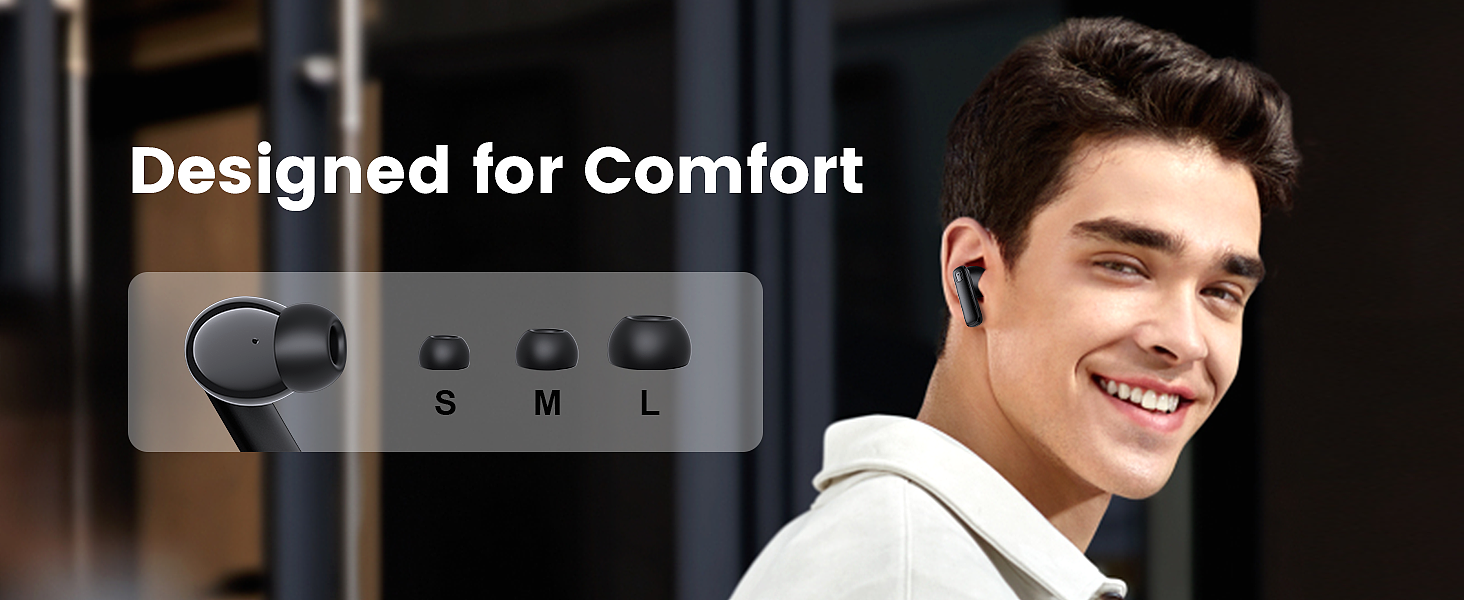
Sixty eight hours of battery life is not the product of a singular component. It emerges from the interaction of four engineering domains, each contributing a margin that multiplies into the final figure. Lithium polymer chemistry provides the raw energy reservoir. Bluetooth 5.3 protocol efficiency, driven by LE Audio architecture and integrated power management, trims roughly a quarter of the wireless power budget compared to Bluetooth 5.0. A 13 millimeter neodymium driver delivers sound pressure without straining the amplifier. And deliberate feature omissions, no active noise cancellation, no wireless charging, no high bitrate codec decoding, no companion app, remove background power drains that would accumulate across days of intermittent use.
Each decision trades away something concrete. No aptX or LDAC means no high resolution wireless audio. No ANC means relying entirely on the passive seal of a silicone ear tip. No companion app means no parametric EQ. No wireless charging means plugging in a cable every time. These are visible tradeoffs, not hidden flaws, designed into a product brief that ranked battery endurance above other attributes.
The audience best served by this profile includes commuters who value days between charges, fitness users who need waterproofing that survives real sweat and rain, and anyone who keeps earbuds in a bag and expects them to work when retrieved. It does not serve listeners who prioritize high resolution codecs, active noise cancellation, or companion app ecosystems. For this specific buyer, 68-hour battery earbuds solve a real problem: the anxiety of reaching for earbuds mid-week and finding them dead.
The FOYCOY A11 68 hour battery architecture illustrates a principle that generalizes. Battery specifications are system outputs, not component ratings. The gap between a claim that delivers and one that disappoints is rarely about fraud. It is about test conditions and design priorities. Learning to read those conditions and priorities transforms a passive specification reader into someone who can evaluate any battery claim, on any device, with a structured method rather than a guess.
FOYCOY A11 Wireless Earbuds
Related Essays

Kinetic Audio: The Physics of Sound in Motion

OMFG BB13 Wireless Earbuds - Advanced Features and Comfortable Design

Keklle2 Wireless Earbuds – Crystal Clear Sound and Waterproof Design

HITY A4 Wireless Earbuds Bluetooth 5.3 Headphones Touch Control – Top Choice for Music Enthusiasts

PloutoRich Wireless Earbuds with LED Display Charging Case – A Stylish and Versatile Choice

Zonyee Wireless Bluetooth Earbuds - Immersive Sound Experience

DGLighting Wireless Earbuds – Recommended for Comfort and Sound Quality

RICOO I14 Wireless Earbud AIR 2 Pro – A Premium Audio Experience

The Economics of Budget Audio: How $20 Earbuds Achieve High Fidelity
