Why Your Noise-Cancelling Earbuds Still Let Sound In

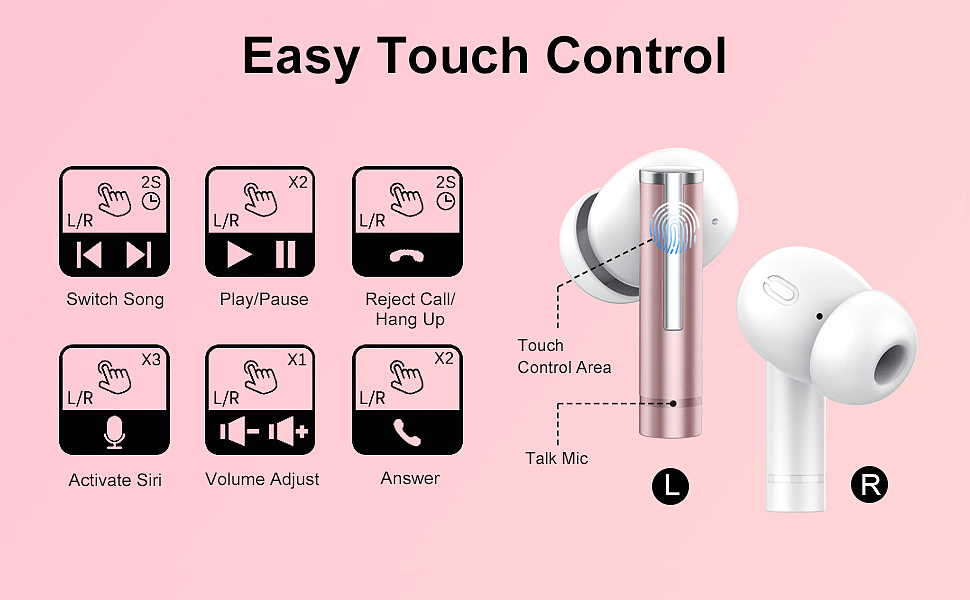
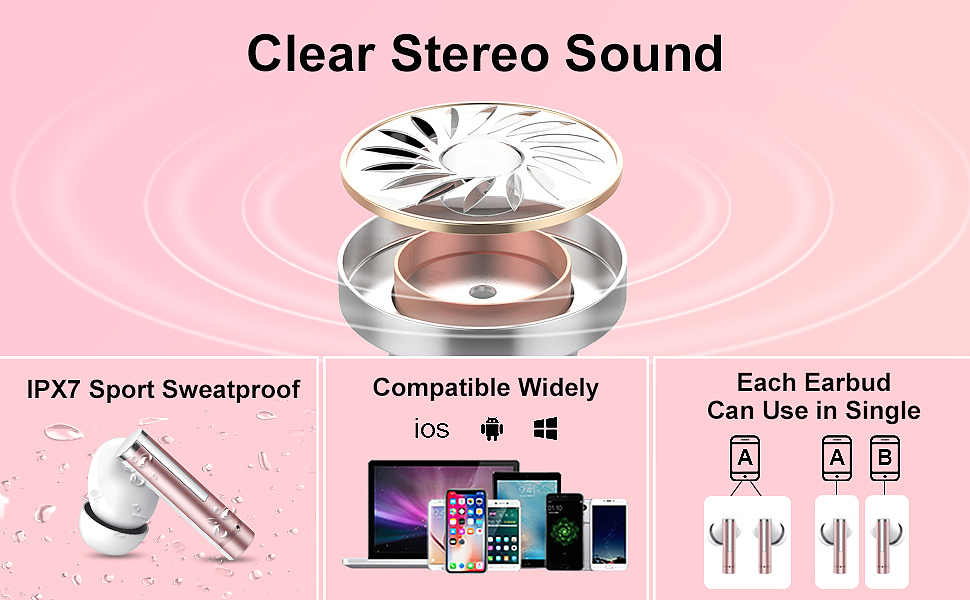
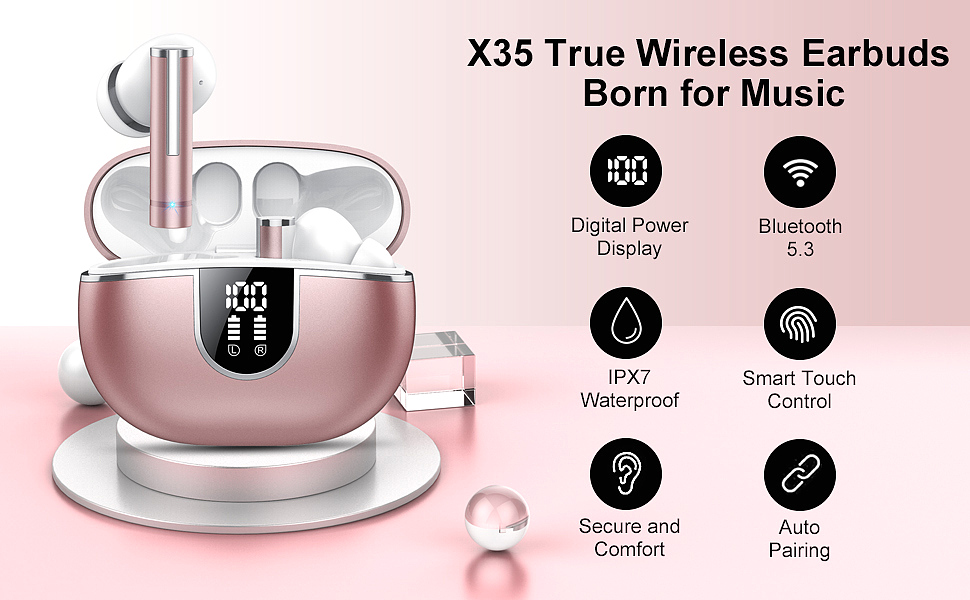
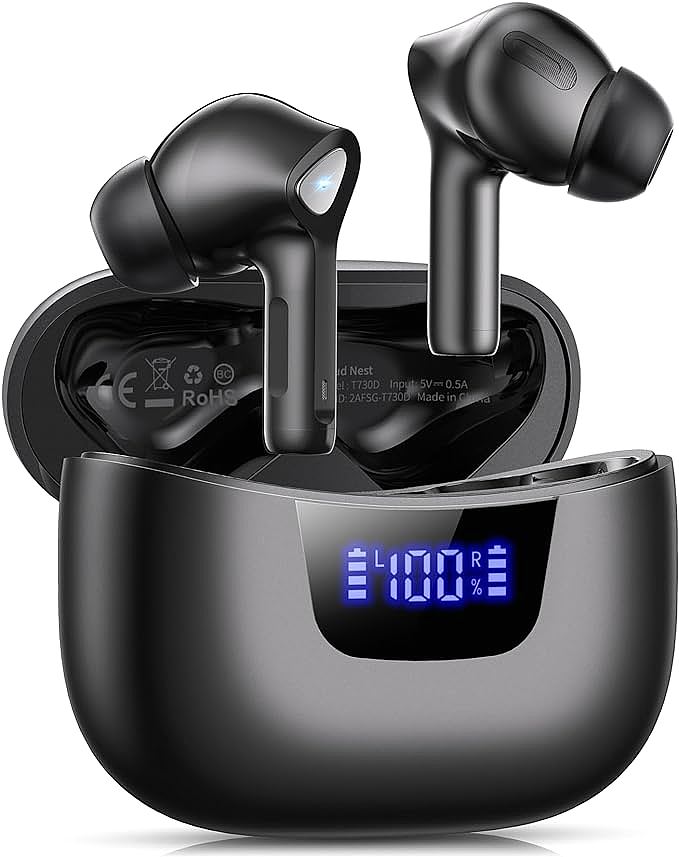
Lekaby X35 Wireless Earbuds
You bought "noise cancelling" earbuds. The box promised it. But on your commute, the train still roars. On your call, your colleague still asks you to repeat yourself. The technology you paid for seems to have done nothing at all. The problem is not that the technology failed. The problem is that "noise cancellation" is not one technology. It is two, and they solve completely different problems.
When audio engineers first distinguished between these two approaches, the boundary was clear. One reduces the noise you hear. The other reduces the noise others hear from you. Decades later, marketing collapsed that boundary into a single phrase, and the confusion began.
Inverse Sound: Fighting Physics With Physics
Active Noise Cancellation, or ANC, works on a principle that feels almost paradoxical: you fight sound with sound. A microphone on the outside of the earbud picks up ambient noise before it reaches your eardrum. A dedicated chip then calculates the exact inverse of that sound wave and plays it through the speaker. When the original wave and the inverse wave meet inside your ear canal, they cancel each other out through a phenomenon called destructive interference.
This is not a new idea. The concept dates back to 1933, when Paul Lueg filed a patent describing how sound could be cancelled by generating an opposing wave in a duct or tube. The principle is rooted in wave superposition: when two waves of equal amplitude and opposite phase combine, their displacements sum to zero. In practice, ANC never achieves perfect silence, because the inverse wave must be generated in real time and the ambient sound field is complex. But the reduction can be substantial.
ANC is most effective in the low-frequency range, roughly 100 Hz to 1 kHz. This is the domain of airplane engine drones, train rumble, and air conditioner hum. These sounds have long wavelengths and change slowly, giving the ANC chip enough time to compute and deliver the inverse signal. Higher-frequency sounds, like voices or sudden impacts, have short wavelengths and change rapidly. By the time the chip calculates the inverse, the original sound has already passed. This is why ANC earbuds still let you hear someone talking nearby, even as they suppress the drone of a bus.
The engineering trade-off is real. ANC requires a dedicated feedback loop: microphone, processor, speaker, all working within microseconds. That loop consumes power. It adds latency. And it can introduce its own artifacts, a faint hiss or pressure sensation that some users find uncomfortable. ANC is a technology designed for the listener, reducing the noise that reaches your ear so you can focus on your music or your silence.
Beamforming: How Four Ears Hear One Voice
Environmental Noise Cancellation, or ENC, addresses a fundamentally different problem. It does not try to make your world quieter. It tries to make your voice clearer to the person on the other end of a phone call.
The core technique is beamforming. Multiple microphones on the earbuds work together to create a directional sensitivity pattern, like a spotlight that focuses on your voice while dimming everything else. When you speak, the sound of your voice arrives at each microphone at slightly different times and intensities, depending on the microphone's position relative to your mouth. Background noise, whether it is traffic, wind, or a crowded cafe, arrives from many directions with different patterns.
A digital signal processor analyzes these differences. By comparing the time delay and amplitude of sound at each microphone, the DSP constructs a spatial filter. It amplifies the signal that matches the expected pattern of your voice and attenuates everything else. The result is that your speech comes through clearly, even when you are standing on a noisy street corner.
The concept of beamforming predates consumer audio by decades. It was developed for radar systems in the 1940s, where arrays of antennas were steered electronically to detect targets in specific directions. Sonar systems adopted the same principle to locate submarines. Telecommunications engineers later applied it to microphone arrays for conference rooms and hands-free calling. The mathematics are the same whether you are tracking a submarine or isolating a voice: you combine signals from multiple sensors, applying phase shifts and amplitude weights to reinforce the signal from a desired direction and suppress signals from elsewhere.
ENC configurations in earbuds typically use two to four microphones, with a directional sensitivity cone of approximately 60 to 120 degrees. A four-microphone array, as found in the Lekaby X35, can reduce ambient noise by approximately 30 dB during calls. That is a meaningful reduction, roughly equivalent to moving from a busy restaurant to a quiet office in terms of what the other party hears. But it does nothing for what you hear. The train still roars in your ear. ENC is not broken. It is simply solving a different equation.
The Label Problem: One Name, Two Technologies
Here is where the consumer confusion crystallizes. Product packaging, online listings, and even some manufacturer websites use the phrase "noise cancellation" as a blanket term. Amazon's own product categorization lists "Noise Cancellation" as a special feature for earbuds that only have ENC, not ANC. The Lekaby X35's own FAQ explicitly states: "The earbuds don't have Active Noise Cancellation (ANC)." Yet the product listing highlights "noise cancellation" as a feature.
This is not a minor labeling quirk. It creates a direct expectation mismatch. A person who wants to block out airplane noise on a long flight purchases earbuds advertised as having "noise cancellation." They receive a product with ENC, which improves call quality but does nothing to reduce the drone of the engines. That person concludes the technology does not work. The technology works fine. It is just the wrong technology for their need.
The confusion is compounded by the fact that some earbuds include both ANC and ENC. Premium models from major manufacturers often feature both, which further trains consumers to treat them as interchangeable. They are not. ANC serves the listener. ENC serves the caller. They operate on different principles, consume power differently, and excel in different scenarios.
According to IEC 60268-16, the standard for objective measurement of speech intelligibility, the metrics for evaluating ENC and ANC are entirely separate. ANC performance is measured in decibels of noise reduction across frequency bands. ENC performance is measured in terms of speech transmission index and signal-to-noise ratio improvement for the transmitted voice. These are different axes of evaluation for different engineering goals.
Matching Technology to Need
Understanding the distinction changes how you shop. If your primary frustration is ambient noise drowning out your music during commutes, flights, or work in open offices, you need ANC. Look for explicit mentions of "Active Noise Cancellation" in the specifications, not just "noise cancellation" in the marketing copy. Check for a dedicated ANC mode or transparency mode toggle, which indicates the presence of a feedback-based noise reduction system.
If your primary frustration is that people on calls keep asking you to repeat yourself, that wind noise makes your voice unintelligible, or that your colleagues complain about background noise during video meetings, you need ENC. Look for specifications mentioning beamforming microphones, the number of microphones (more generally means better spatial filtering), and any reference to call quality enhancement or environmental noise reduction.
Some users need both. Remote workers who take calls from cafes and also want focused music listening benefit from earbuds that include both ANC and ENC. But many users have a dominant need, and understanding which technology addresses that need prevents the most common purchasing mistake: buying ENC when you need ANC, or vice versa.
There is also a practical consideration around power consumption. ANC runs continuously while you listen, drawing power for the feedback loop. ENC activates primarily during calls. If you spend most of your time listening to music and rarely take calls, ANC is the relevant feature and its power draw is the relevant trade-off. If you are a heavy caller, ENC quality matters more, and ANC power consumption is irrelevant if the earbuds lack it.
The Quietest Technology Is the One That Knows Which Noise to Fight
Two technologies, one label. The confusion is not a failure of engineering. It is a failure of communication. ANC and ENC both deserve the name "noise cancellation" in their own domains. ANC cancels noise for you. ENC cancels noise from you. The problem arises when one name obscures the fact that two entirely different problems are being solved.
The next time you see "noise cancellation" on a box, ask yourself: whose noise are they cancelling? Yours, or theirs? The answer determines whether the product will solve your problem or simply add to it.
Lekaby X35 Wireless Earbuds
Related Essays

The Budget Earbud Paradox: Unpacking the Tech Behind "Hi-Fi" Sound

A Deeper Connection: Understanding Bluetooth 5.4 and ENC with the Nerunsa D60 Pro

Groove Your Way with the Works for Oppo A11k by Cellet XG01 Wireless Earbuds

Votlik K8 Wireless Earbuds: Great Sound Quality and Battery Life for the Price
DUVOSS Q1 Wireless Earbuds: The Science Behind Bluetooth 5.3, Extended Playtime, and Clear Call Technology

EarFun TW201B Air S Earbuds: The Science of Sound, Silence, and Seamless Connectivity

Xmenha Neckband Bluetooth Headphones – A Versatile and Durable Choice
The Invisible Symphony: How Driver Size Shapes Your Audio Experience

The Physics of Sound Isolation: Why Your Earbuds Sound...
