Running Farther with Less Charging: A Deep Dive into Budget Sports Earbuds

YOKIBY BX30
The Battery Problem Nobody Talks About
Wireless earbuds have a dirty secret. Manufacturers advertise "all-day battery life" while users scramble to find charging cables by mid-afternoon. The typical budget earbud offers 4-6 hours per charge, with a case that might deliver two additional top-ups if you are lucky. For fitness enthusiasts who train daily, this means a constant cycle of charging anxiety.
The sports earbuds enter this market with an unusual proposition: 72 hours of total playback time at a $21.99 price point. That is not a typo. These budget earbuds claim three days of continuous use from a single case charge, a figure that would embarrass premium brands charging three times as much.
But numbers on a specification sheet rarely tell the full story. The question is not whether the manufacturer can print impressive statistics on their Amazon listing. The question is whether a $22 set of earbuds can deliver meaningful audio quality while maintaining the durability that sports enthusiasts actually need.
What the Specifications Actually Mean
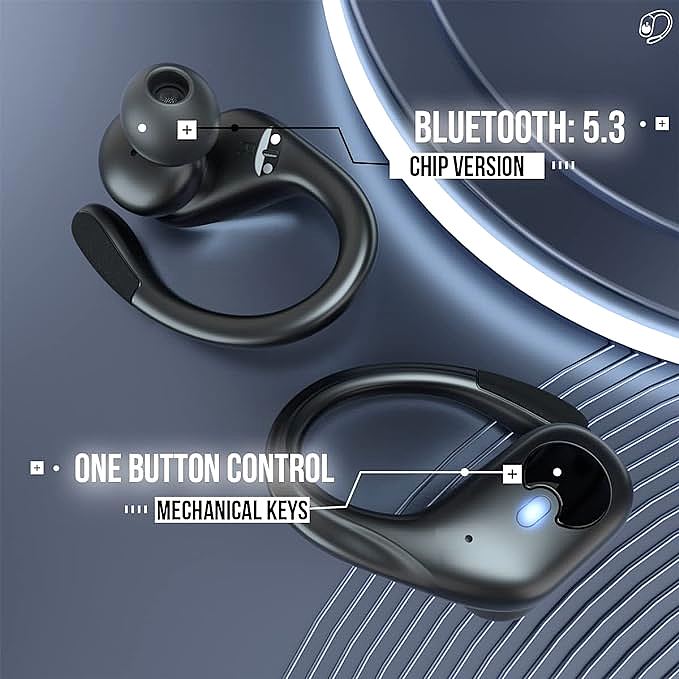
The technical foundation centers on three core specifications: a 10mm graphene diaphragm driver, Bluetooth 5.3 connectivity, and IPX7 waterproof protection. Each of these deserves examination beyond the marketing bullet points.
Graphene Drivers: Material Science Meets Audio
Graphene earned the 2010 Nobel Prize in Physics for good reason. This two-dimensional carbon lattice measures just one atom thick yet demonstrates strength 200 times greater than steel. When applied to audio drivers, graphene's properties translate to two practical benefits: exceptional rigidity and remarkably low mass.
Traditional driver materials face a fundamental trade-off. Stiff materials resist deformation but add weight, slowing response times. Lightweight materials move quickly but flex under pressure, creating distortion. Graphene sidesteps this compromise by being both rigid and light.
For these earbuds, the 10mm driver should theoretically deliver crisp high frequencies without the harshness that plagues cheap earbuds, while maintaining bass response without the muddy quality typical at this price point. The material science checks out. The execution depends on the manufacturer's engineering quality.
Bluetooth 5.3: The Connectivity Upgrade
Bluetooth 5.3 represents the current standard for wireless audio, offering improvements over the 5.0 and 5.2 versions found in many budget competitors. The specification provides enhanced power efficiency, reduced latency, and improved connection stability through better frequency hopping algorithms.
For sports applications, this matters. Older Bluetooth versions struggle with signal interference in crowded gym environments or during outdoor runs near urban infrastructure. The 5.3 standard's improved interference handling should maintain connection stability when other wireless devices compete for the same 2.4GHz spectrum.
IPX7: Understanding the Waterproof Rating
The IPX7 certification deserves clarification because waterproof claims generate significant confusion. IPX7 certification means the device can withstand immersion in one meter of fresh water for 30 minutes. This covers sweat, rain, and accidental drops in puddles. It does not cover swimming, showering with soap, or exposure to pressurized water from faucets.
Most budget sports earbuds offer IPX4 or IPX5 ratings, which protect against splashes and light rain but not submersion. The IPX7 rating places these headphones a full tier above typical competitors in this segment. For runners caught in sudden downpours or gym-goers who sweat heavily, this additional protection margin provides genuine peace of mind that other budget earbuds simply cannot match at this price point, making these sports earbuds particularly appealing to fitness enthusiasts who refuse to let weather dictate their training schedules.
The Bone Conduction Clarification
Marketing materials reference "bone conduction" technology, which requires immediate clarification. True bone conduction headphones transmit sound through the cheekbones directly to the inner ear, bypassing the eardrum entirely. This technology leaves the ear canal open, allowing ambient sound awareness.
The headphones do not use bone conduction technology. They employ standard in-ear drivers with an over-ear hook design. These earbuds seal the ear canal like traditional wireless earbuds, blocking ambient sound rather than preserving it.
This distinction matters for two reasons. First, users seeking the situational awareness that genuine bone conduction provides will not find it here. Second, the marketing language creates unrealistic expectations about the audio experience. These earbuds should be evaluated as conventional in-ear wireless earbuds with sports-focused ergonomics, not as a bone conduction alternative.
Sound Quality: Managing Expectations at $22
Audio quality at the budget tier involves managing expectations rather than chasing audiophile performance. The graphene drivers deliver sound that exceeds typical $20 earbuds but cannot compete with established brands in the $50-100 range.
Bass Response
The 10mm driver size provides adequate bass extension for popular music genres. Electronic dance music, hip-hop, and pop tracks deliver satisfying low-end impact without the distortion that characterizes smaller drivers. However, bass lacks the tight control found in premium options. Low frequencies can bleed into midrange frequencies during complex passages, creating slight muddiness in dense mixes.
Midrange and Vocals
Vocal clarity ranks as acceptable for casual listening. Podcasts and audiobooks remain intelligible, though vocal warmth lacks the richness of higher-end drivers. The graphene material's rigidity prevents the harsh sibilance that cheap drivers often produce, making extended listening sessions more comfortable than expected at this price point.
High Frequencies
Treble response represents the strongest audio attribute. The graphene driver's low mass enables quick transient response, producing crisp high-frequency detail without the piercing quality that budget titanium drivers sometimes exhibit. Cymbals and acoustic guitar strings maintain definition rather than dissolving into white noise.
Soundstage and Imaging
As with all in-ear designs, soundstage remains narrow. These earbuds do not create the spatial separation that open-back headphones or true bone conduction devices provide. Instruments cluster toward the center of the head rather than spreading across a three-dimensional space. This limitation is inherent to the form factor, not a specific flaw.
Sports Performance: Where Design Meets Function
The over-ear hook design targets active users specifically. This form factor offers advantages and trade-offs against true wireless earbuds that rely solely on ear canal friction for retention.
Fit and Stability
The earhook mechanism provides secure retention during vigorous movement. User reviews consistently praise the fit stability, with one verified purchaser noting "secure around the ear fit that is super comfortable." The hooks distribute weight across the ear's outer structure rather than concentrating pressure inside the ear canal.
This design choice benefits runners, cyclists, and gym enthusiasts who need earbuds that stay in place during strenuous movements. Traditional true wireless earbuds often loosen during exercise, requiring frequent readjustment. The hook design eliminates this annoyance.
Comfort During Extended Use
Comfort presents a more nuanced picture. The over-ear hooks provide stability but add bulk compared with minimalist true wireless designs. Some users report discomfort during sessions exceeding two hours, particularly when wearing glasses. The earhook mechanism can create pressure points behind the ear that become noticeable over time.
For typical workout durations of 30-90 minutes, comfort remains adequate. Users planning all-day wear will want to weigh the ergonomic trade-offs inherent to this design.
Sweat and Water Resistance
The IPX7 rating provides substantial protection for exercise scenarios. Heavy sweating during intense cardio sessions poses no threat to the electronics. Rain during outdoor runs falls well within the protection envelope. The earbuds can survive accidental drops in puddles or brief submersion in shallow water.
Users should understand the limitations. Swimming with these earbuds voids the protection guarantee. Showering exposes them to soap and pressurized water that can compromise seals. The IPX7 rating covers exercise-related moisture, not aquatic activities.
Battery Life: The Standout Specification
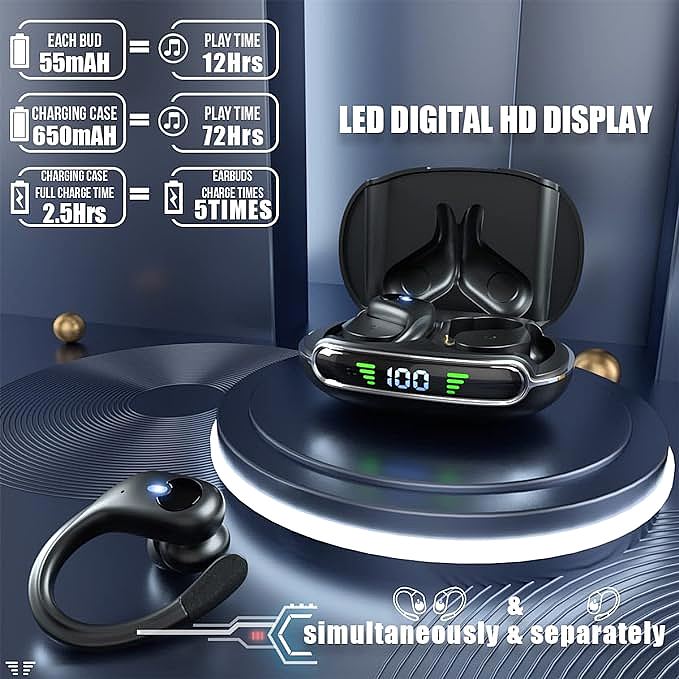
The 72-hour battery claim breaks down as follows: approximately 12 hours per earbud charge, with the 650mAh case providing five additional full charges. This totals 72 hours of playback before the case requires recharging.
Real-World Performance
Manufacturer battery claims typically assume moderate volume levels and ideal conditions. Real-world usage with higher volumes and Bluetooth interference reduces actual performance. User reviews suggest the earbuds deliver 8-10 hours per charge at typical listening volumes, with the case providing 4-5 full recharges.
Even accounting for optimistic manufacturer specifications, the total battery performance exceeds 50 hours in practical use. This still represents 2-3 times the endurance of competitors like Soundcore (24-40 hours total) and significantly exceeds budget options in this category (12-15 hours total).
The LED Display Advantage
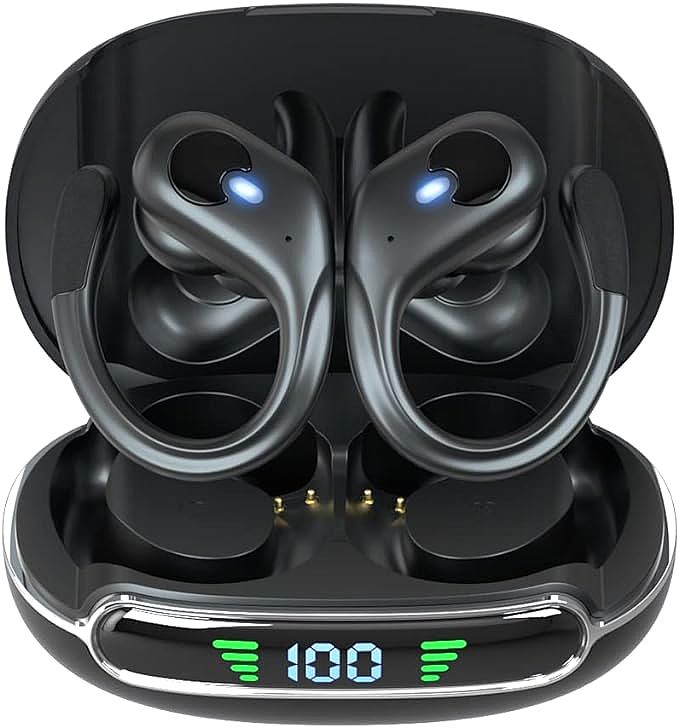
The charging case includes an LED percentage display showing remaining battery level. This feature eliminates the guesswork that plagues most wireless earbuds. Users know exactly when the case needs recharging rather than discovering dead earbuds mid-workout.
At the $22 price point, this display represents unusual attention to user experience. Most competitors rely on ambiguous LED indicators that show "low," "medium," or "full" without precise percentages. The numerical display provides actionable information.
Charging Time
The case requires 2.5 hours to reach full charge from empty. Given the massive 650mAh capacity, this charging speed is reasonable. Users can partially charge the case in shorter sessions when time is limited, gaining hours of playback from minutes of charging.
Competitive Positioning: Value Analysis
The wireless earbud market segments into distinct tiers. Premium tier options occupy the $150-300 range with active noise cancellation and advanced features. Mid-tier options cluster around $50-100. Budget options fill the under-$30 segment with varying quality levels.
Against the Category Benchmark
This budget segment benchmark offers 24-40 hours of total battery life, IPX4-IPX5 water resistance, and established brand reliability at $25-40 price points.
The sports earbuds compete by offering superior battery life (72 hours against 24-40 hours), higher waterproof protection (IPX7 over IPX5), and lower price ($22 in the $25-40 range). The trade-off involves brand recognition and long-term support. The manufacturer, as a smaller brand, cannot match this support network.
Against Budget Alternatives
Some budget alternatives offer 30-40 hours of battery life at similar price points.
The battery advantage (72 hours around 30-40 hours) provides meaningful differentiation. However, established products with thousands of verified reviews create social proof that cannot be matched by newer options with limited feedback.
Against the Sports Alternative
Some sports-focused alternatives target the same segment with an over-ear hook design, offering 12-15 hour total battery life that falls dramatically short of the 72-hour claim. For users prioritizing battery endurance, these sports earbuds offer significant advantages, particularly for those who train multiple times per week without wanting to charge their gear constantly.
These alternatives counter with broader brand recognition and extensive history.
User Feedback: What Consumers Actually Report
The 26 verified Amazon reviews paint a generally positive picture with specific caveats. The 4.4-star average breaks down as 64% five-star ratings, 20% four-star, 10% three-star, and 6% one-star. No two-star reviews appear in the current dataset.
Positive Themes
Battery life receives consistent praise. One user states simply: "Battery life last all day long." Another notes the convenience of the LED display for tracking remaining power.
Fit stability earns repeated mentions. The earhook design succeeds in its primary objective of keeping earbuds secure during exercise. Users appreciate not needing to readjust during workouts.
Sound quality receives moderate praise, described as "good" and "clear" without audiophile enthusiasm. Users recognize the value proposition: acceptable audio at an exceptional price.
Negative Themes
Extended comfort surfaces as the primary complaint. Users report ear fatigue during sessions exceeding two hours. The earhook mechanism creates pressure points that become noticeable over time.
Button controls present a learning curve. The physical buttons on each earbud require specific press patterns for volume, track navigation, and call management. Some users find the controls unintuitive initially.
Limited count concerns some potential consumers. With only 26 reviews, the product lacks the social proof that drives confident purchasing decisions.
Use Case Analysis: Matching Features to Needs
These sports earbuds occupies a specific niche: budget-conscious consumers who prioritize battery life and water resistance over audio perfection and brand prestige.
Scenarios Where These Earbuds Excel
Fitness enthusiasts who train daily and hate charging cables represent the primary audience. The 72-hour battery life means charging once per week rather than every night. The IPX7 rating handles sweat and rain without concern. The secure fit stays in place during running, cycling, and gym workouts.
Budget consumers seeking maximum value per dollar will find the specification-to-price ratio compelling. No competitor offers comparable battery life and waterproof rating at the $22 price point.
Scenarios Where Alternative Options May Suit Better
Audiophiles seeking refined sound quality will find mid-tier or premium options more suitable. These sports earbuds delivers acceptable audio, not exceptional audio.
Users needing active noise cancellation for commuting or travel will not find it here. These sports earbuds lacks ANC technology entirely.
Those prioritizing brand reliability and long-term support may prefer established names like Soundcore or similar brands, accepting inferior specifications for peace of mind.
Summary Assessment
These sports earbuds delivers on its core promises: exceptional battery life, substantial water resistance, and secure fit at a budget price. The graphene drivers provide sound quality that exceeds typical $20 expectations without challenging premium alternatives. The "bone conduction" marketing language creates confusion that the product does not warrant.
For $21.99, the earbuds offer genuine value in a market segment often characterized by false economy. Users who can overlook the unknown brand and limited history will find a capable sports earbud that solves the battery anxiety problem without breaking the budget.
YOKIBY BX30
Related Essays

Soundcore P20i vs Q20i: Which Earbuds Deliver Excellent Value?
MindBeast T98 Bluetooth Earbuds - Great Sound and Noise Cancellation at an Affordable Price

Masterplug Pods-12 Wireless Earbuds

Generic X3 Bluetooth Wireless in Ear Ear Buds Headphones

Xmenha Black Wireless Smallest Invisible Earbuds

TOMPOL L10 Wireless Earbuds - A Comprehensive

Why Cheap Earbuds Cost More: The Durability Math Nobody Does
Semi-In-Ear Earbuds Advantages: The Physics Behind the FOYCOY N7 Engineering

How Tiny Drivers Produce Big Sound: The Physics Behind Wireless Earbuds