Urban Running Safety: Why Open-Ear Design Helps You Hear Traffic

Xmenha SJJ-YXGJ-T25-Champagne Single Earbud Open Ear Headphones
The traffic light changes to green, and you push off the curb with renewed determination, your rhythm matching your stride as music fills the space between your footsteps. A delivery truck rounds the corner behind you - engine low, approaching fast - and you never heard it coming despite your music playing through traditional sealed earphones that blocked the warning sounds. The problem isn't volume or quality, both of which have improved dramatically over decades of audio engineering and marketing emphasis on decibel specifications that don't address the fundamental physics issue. The problem is physics: your ears are sealed by design, and sound cannot reach them through the acoustic barrier that traditional earphones create inside your ear canal, fundamentally. Sound matters in safety. For runners who move through city streets regularly, this alteration carries measurable consequences that compound over time and increase collision risk during every training run through urban environments. Your brain doesn't simply receive sounds passively - it actively processes spatial information from two ears simultaneously, building a three-dimensional model of your acoustic surroundings with impressive precision. When you insert earphones and activate noise isolation or cancellation features, you introduce a significant barrier between your ears and the world around you, disrupting normal auditory processing. Sound reaching your ear canal now travels through two paths: the direct acoustic route and the modified route through the earphone seal, creating conflicting spatial information that degrades. Open ears hear more. Research from auditory neuroscience demonstrates that the human ear can detect sound direction changes as small as three degrees in the horizontal plane, an impressive precision that ear. This sensitivity depends entirely on unobstructed acoustic input to both ears working in concert, which is why any barrier significantly impacts directional perception and spatial awareness accuracy. The critical issue isn't that you hear nothing through your earphones, because they clearly transmit audio quite well to your ears when properly positioned and sealed. Awareness saves lives. It's that you hear distorted spatial information that misrepresents the actual positions of sound sources in your environment, misleading your orienting response and hazard detection. A sound from directly behind you registers as coming from the side, which your orienting response interprets incorrectly and fails to trigger proper evasive action when danger approaches. The result is a runner who hears music clearly but cannot accurately locate the source of potential danger, putting themselves at increased risk of collision with vehicles during urban runs. Traditional in-ear designs create seal ratings typically ranging from twenty to thirty decibels of isolation, which is substantial but fundamentally alters how your auditory system processes environmental sounds. Music should not mask danger. Your hearing system simply doesn't recognize the threat level when attenuation reduces the signal below the threshold that triggers instinctive defensive responses that protect you from danger. Rather than sealing the ear canal, they position speaker elements outside the ear, typically resting against the tragus - the small pointed cartilage near the ear canal opening - or using bone conduction pathways. The acoustic physics here involve free-field transmission where sound waves travel through air to your outer ear, bounce off the pinna with its complex folds and ridges, and. Choice matters here. This path provides the frequency-dependent filtering your brain uses for spatial mapping, as the pinna itself performs acoustic processing where different frequencies are boosted or attenuated depending on. A vehicle approaching from behind produces the correct timing difference between ears, the correct pinna filtering for rearward sound sources, the correct volume relationship for accurate spatial perception. Your auditory system generates accurate spatial awareness that allows you to locate sounds precisely and respond appropriately to potential hazards in your environment without additional cognitive compensation. One earbud or two? This partial isolation keeps the acoustic environment present in your auditory perception while still allowing music playback that doesn't completely block environmental awareness during urban wayfinding. The tradeoff becomes a question of use case priorities that each runner must evaluate based on their typical running environment, route complexity, and personal safety requirements for different situations. For stationary listening in quiet environments, sealed earphones provide superior audio quality and isolation that enhances the music experience without requiring environmental awareness for safety. The safety dimension extends beyond pure physics into cognitive science where human attention operates with severe bandwidth limitations that constrain how much sensory information your brain can process. Bone conduction has limits. Your brain can only process a limited amount of sensory information simultaneously, and it must constantly make prioritization decisions about where to allocate cognitive resources for optimal performance. Your brain attempts to reconstruct the missing spatial data, drawing on visual information, memory of your route, and learned expectations about typical urban soundscapes that may not reflect actual hazards. This reconstruction process consumes attention that should be available for movement planning, hazard detection, and wayfinding through complex urban environments where safety depends on full awareness. Over-ear designs restrict awareness. With accurate spatial information reaching your ears naturally through the complete auditory pathway, your brain processes environmental hazards without the additional cognitive compensation that sealed earphones require. You maintain the same cognitive resource availability as someone not wearing earphones at all, which means more mental bandwidth remains available for planning your run and moving through obstacles. This matters significantly for runners because urban environments demand constant environmental assessment from multiple sensory channels working together to ensure safe wayfinding through traffic. Intersections require checking vehicle positions carefully as multiple traffic streams converge, creating complex spatial decisions that benefit from full auditory awareness of approaching vehicles. Crosswalks require monitoring pedestrian and cyclist movements that can approach from multiple directions simultaneously, creating collision risks that require rapid assessment of spatial relationships. In-ear seals out the world. When your auditory system operates normally with full environmental access, these assessments require minimal cognitive effort because the spatial information arrives naturally and accurately from your surroundings. When your auditory system provides distorted spatial data due to ear canal sealing, each assessment demands additional cognitive resources to compensate, and these demands compound across the run. Running while processing incomplete spatial auditory data counts as divided attention that increases cognitive load and reduces the mental resources available for safe wayfinding through urban environments. Situational awareness is non-negotiable. The cognitive system must allocate resources to compensate for the missing spatial data, leaving fewer resources available for the physical task of running itself, which increases fatigue and.

How Open-Ear Headphones Improve Running Safety on City Roads
Open-ear designs like the Xmenha SJJ-YXGJ-T25 keep the ear canal open while music plays. The physical design choice is only half of street-level safety. How you move through traffic makes the other half, and the two reinforce each other. Running with the flow of traffic rather than against it gives you a clear line of sight to oncoming vehicles, so a driver who slows or drifts into your lane registers as a visual cue before it becomes an auditory one. Staying on the shoulder or on a dedicated path, where possible, keeps you out of the path of fast-moving vehicles and out of door-zone spaces where cars slow. Both habits cut the number of variables your attention has to manage per kilometer, and open-ear audio complements them by keeping the remaining variables, passing vehicles, pedestrians, and crossing signals, in your auditory field while you concentrate on footing and pace.
At intersections the rule set is stricter. Look both ways before each crossing, obey the signals even when the intersection looks clear, and put the phone away for the duration of the crossing. A runner who is watching the road and listening through an open design at the same time is running two channels of hazard detection, and that combination catches most urban collision scenarios that a sealed design would miss entirely.
Keeping Visible as Well as Aware
Auditory awareness does not substitute for visual visibility. Reflective clothing or a small light is the standard practice on evening and early-morning runs, and it pairs most effectively with with open-ear audio rather than in place of it, because the two answer different questions. The light answers the question a driver asks, can I see the runner ahead of me?, while the open design answers the question the runner asks, is something about to come into my lane? Drivers who cannot see a runner react later and brake harder than drivers who see them, and that delay is a factor no amount of spatial audio can fully compensate for.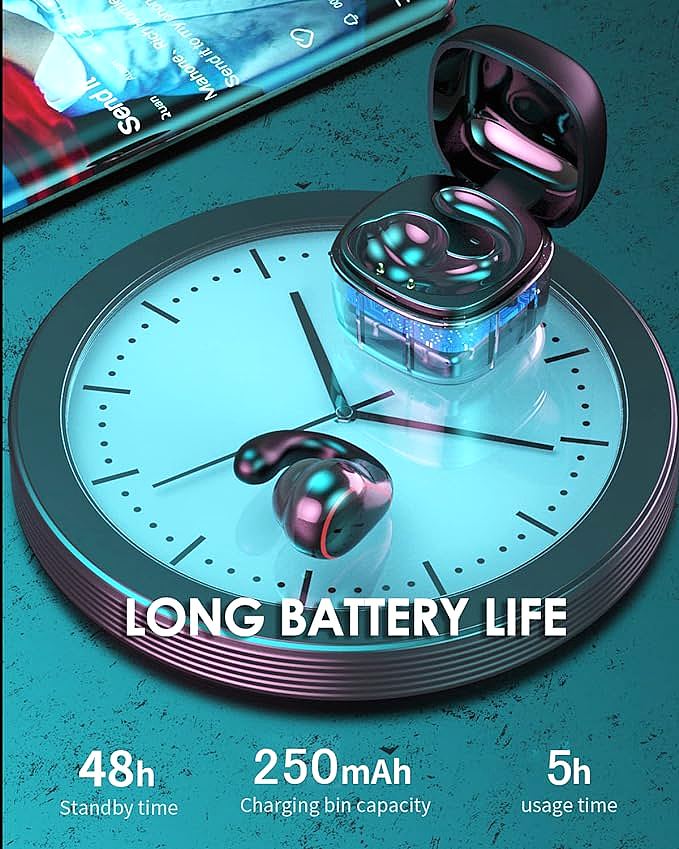
What the Injury Data Says About Headphone-Wearing Runners
The physics argument for keeping the ear canal open lands more firmly once you look at what happens on the street. A 2012 study that reviewed US emergency records from 2004 through 2011 identified 116 reports of pedestrians killed or injured while wearing headphones, and the injury rate among headphone-wearing pedestrians more than tripled across that window. Most of the documented cases were men under the age of thirty, which is the same demographic that does most of the regular city running. Two facts stand out when you read those numbers carefully. First, the victims were not distracted in the phone-scrolling sense that many safety campaigns assume: the study specifically flagged that the headphones were on at the time of the incident, which is why awareness of the environment, not device control, is the variable that mattered. Second, the incidents clustered in urban settings where vehicle traffic and pedestrian crossings mix, which is exactly the environment this article describes.
For a runner this changes the framing of the risk. The hazard is not that you will run into a parked car; it is that an approaching vehicle needs two or three seconds to stop, and a runner who cannot localize the sound of that vehicle loses the entire window of reaction before the driver does. The data suggests the cost of that lost window is not theoretical. When you combine the injury trend with the way city routes force you past moving traffic at intersections and mid-block crossings, the case for open ear headphones running safety becomes less about comfort and more about the difference between hearing an engine from the correct bearing and hearing it from a bearing that your brain reconstructs from a distorted signal.
The Driver Side of the Equation
Awareness is not only something you carry; it is something the vehicles around you carry, and the two systems fail at each other more often than runners assume. Research on driver perception from the mid-2020s found that drivers categorize pedestrians wearing headphones as the least risky category on the road, and correspondingly show the least willingness to yield to them. The mechanism is that a driver reading a moving pedestrian judges risk partly from visible posture and partly from the pedestrian facing the traffic; a runner with audio on often has their gaze fixed ahead or on a watch, which reads to a driver as confidence rather than as a hazard.
The practical implication is that the two sides of the street can be out of phase: your ear canal is open and you can hear the engine, while the driver on that engine has already discounted your chance of noticing it. That is why open-ear audio removes only half of the risk on its own. The remaining half belongs to the habits that this article treats in the listening section, especially dropping audio at intersections and scanning for drivers who have not yet committed to a lane. On the busiest routes, the combination of an open canal and deliberate driver checking closes the gap that either behavior alone leaves open.
Practical Listening Habits That Keep Urban Runs Safe
When it comes to open ear headphones running safety habits, the hardware choice and the behaviors around it matter just as much as the design itself, and the habits are the part runners can control immediately without buying anything. Volume discipline is the first one: keep playback low enough that a horn, a siren, or a fast-approaching engine still cuts through clearly, which in practice means a volume where conversation is only just audible at arm's length. Duration is the second: community guidance in running circles commonly suggests not staying in earbuds for more than roughly ninety minutes at a time on busy routes, because attention to the surroundings drifts the longer the audio channel is open.
A practical fallback that many runners adopt is dropping the audio at high-risk moments, intersections with heavy vehicle flow, unfamiliar streets, and crowded pedestrian crossings, and resuming once back on a clear stretch of road. Some runners keep one ear open at all times and use a single-ear setup only when the route is genuinely low-risk. The shared logic underneath all of it is that music is a companion to the run, not a substitute for it, and any habit that keeps the auditory channel available for hazard signals wins over any habit that locks that channel closed.
Why Open-Ear Designs Cap the Volume Problem
A pattern that appears in both the injury data and the hearing-health literature is that volume, not the fact of listening, does the damage. Sealed in-ear designs isolate the canal, and the listener responds by raising the playback level to push music past engine noise, conversation, and the ambient sound of the street. The isolation that makes the music pleasant is the same isolation that makes a hazard invisible until it is close. An open-ear setup reverses that exchange: because ambient sound keeps reaching the ear alongside the audio, there is less pressure to crank the level, and the volume at which the music sits relative to traffic and horn sounds naturally stays lower.
That lower effective level matters on two fronts. On the safety front, a horn or a siren that reaches the ear above the music is still a warning, not a muffled residue. On the hearing-health front, the long-term dose of sound in the cochlea is what drives the hearing damage that runners rarely think about until the damage is in place, and the common guidance from the running and audiology communities is to keep listening sessions under an hour on busy routes and to use the lowest level that still covers the background. Open-ear hardware supports both rules at once because the design removes the sealed-canal volume spiral rather than asking the runner to manage it by hand.
Open-Ear, In-Ear, and Bone Conduction Compared
Three families of technology cover the awareness spectrum, and understanding where each one sits makes the choice far less about preference and more about the streets you actually run on. In-ear designs, the sealed earbuds most people already own, isolate the ear canal by twenty to thirty decibels, which is the trade that makes them good for the gym and bad for the sidewalk. The ear canal is a natural acoustic port, and sealing it removes the timing and pinna-filtering cues that the auditory system uses to place sounds in space, so a sealed design does not just make the world quieter; it distorts where things sound like they are.
Bone conduction transmits sound through the skull to the cochlea, leaving the outer ear fully open, and it is the most awareness-preserving of the three families in heavy traffic. Open-ear clip designs, which rest against the tragus or on the ear's outer rim and project sound into the open canal, occupy the middle ground: they preserve most spatial perception because the canal itself stays open, while giving more control over playback volume and audio quality than bone conduction typically does at the same perceived loudness. For city running on mixed routes, that middle ground is usually the sensible default, and the setup that most open ear headphones running safety guidance points to for mixed urban routes for mixed urban routes, with bone conduction reserved for the busiest stretches where hazard density is highest.
The pathway difference between the two open families is the detail that makes the comparison less about brands and more about physics. Bone conduction drives a small transducer against the mastoid, the flat area of the skull in front of the ear, and the vibration travels through bone to the inner ear. The canal stays fully open, so no acoustic information about the environment is lost, but the transducer itself is pressed against the head, which limits how long and how comfortably the device can be worn, and the low-frequency response is naturally thin because the skull is not a good carrier for bass. Open-ear clip and hook designs move the transducer back to the outside of the ear and project sound through the air into an open canal, recovering much of the low-end response while keeping the timing cues intact. Both keep the world audible; they differ in where the transducer sits and how long that contact stays comfortable over a long run.
A third development worth naming is the open-ear design that adds active noise cancellation on top of the open canal, which sounds like a contradiction until you look at how it works. These designs use a small microphone and a processing stage that targets the low-frequency rumble of passing traffic, the range where most of the masking happens, while leaving the high-frequency channel, where horn and voice signals live, wide open. The result is an open canal that no longer has to compete with the low-end floor of a busy street. For runners who use the busiest mixed routes, the open-ear design that pairs a low-frequency processing stage with an unsealed canal is the closest thing to a sealed experience without the sealed-canal cost that this article has described throughout.
The design choices underlying audio equipment reflect deeper assumptions about the relationship between technology and human perception. Balance requires clear understanding. For running through city streets, maintaining environmental awareness represents a fundamental requirement for safe wayfinding, not an optional enhancement that might be nice to have if convenient for the runner. Audio quality matters less than the ability to move through those streets without incident, because a collision injury far outweighs any benefit from enhanced bass response or richer. Applying this understanding to real-world running involves several practical dimensions beyond technical specifications that affect how safely you can use earphones during your regular training runs through urban environments. Safety is not negotiable. Running on dedicated paths or quieter streets reduces the environmental complexity your auditory system must process significantly, making lower-awareness earphone options theoretically more viable for runners who stick. Running on busy streets with multiple traffic sources demands the maximum environmental access that open-ear designs provide, because the complexity and potential hazard density in these environments requires. Time of day affects acoustic environment significantly, because traffic patterns, pedestrian density, and ambient noise levels vary throughout the day in ways that alter the safety profile of. Evening runs in reduced lighting conditions increase reliance on auditory spatial awareness as visual information becomes less reliable for wayfinding, making open-ear designs particularly valuable during these low-light periods. The middle ground exists. Both conditions favor maintaining full environmental access through open-ear design, because low light and unpredictable human movement patterns make auditory awareness especially critical for runner safety during all. Weather conditions influence both the physical durability requirements for electronic components and the acoustic environment itself, creating compound effects that affect safety during running in various weather conditions. Heavy rain creates its own distinct hazards requiring maximum environmental awareness, including reduced visibility for drivers, longer sbraking distances for vehicles, and altered acoustic propagation that affects spatial perception. Neither extreme is optimal. Even light precipitation affects acoustic propagation in ways that alter the spatial information your ears receive, because water droplets in the air change how sound waves travel and. Open-ear designs serve runners who prioritize environmental awareness over audio isolation, trading maximum music fidelity for the safety benefits of maintaining natural spatial perception during urban wayfinding. Traditional designs serve listeners in controlled environments where environmental access matters less for safety, such as stationary use in homes, offices, or gymnasiums where isolation enhances the listening experience. Tradeoffs define every choice. In the end, earphone design reveals fundamental tensions in how humans move through acoustic environments, forcing explicit choices about priorities that every runner must make when selecting audio. Sealed designs block environment. Running through city streets is not audio consumption; it is environmental wayfinding with music accompaniment. The distinction matters for design selection and for understanding why different technologies exist to serve different use cases. Your ears evolved over millions of years to interpret acoustic environments with precision. Modern earphone technology can either preserve or bypass that capability. Open-ear designs choose preservation, accepting audio quality tradeoffs in exchange for maintaining the spatial awareness your hearing system naturally provides. For runners who move through urban environments regularly, that trade represents a sensible choice that prioritizes the safety that environmental perception enables over the maximum audio quality that sealed designs deliver. Open access allows environmental perception but reduces audio control; sealed designs do the opposite. Neither extreme serves all purposes, which is why the market offers a spectrum of designs for different use cases and priorities
Pilots wearing traditional headsets with noise cancellation reported difficulty localizing aircraft on approach, particularly in low-visibility conditions where visual reference points were unavailable for wayfinding. Military and commercial aviation responded by developing open-communication systems that allowed ambient sound access while maintaining radio communication, establishing foundational principles for consumer audio design. The cognitive tradeoffs became well documented through decades of research into pilot performance, spatial orientation, and the relationship between auditory input and flight safety outcomes during critical phases. The road demands attention. Pilots using full noise-isolating headsets showed slower response times to auditory warnings and increased spatial disorientation incidents during taxiing and approach phases that required visual confirmation. Consumer audio technology has gradually absorbed these lessons from aviation research into practical consumer products that address the safety concerns identified in early noise-canceling headphone studies. Bone conduction headphones emerged from this research, originally developed for military communication in high-noise environments where ear protection was necessary while maintaining verbal communication capability. The technology bypasses the ear canal entirely, transmitting sound through the skull bones directly to the cochlea, leaving the outer ear completely free to capture environmental sound for. Drivers cannot see your ears. The design constraint involves balancing audio quality with environmental access - delivering sufficient volume for music enjoyment while maintaining the acoustic input that your spatial awareness system requires to function accurately. When assessing earphone options for urban running, several technical specifications deserve careful attention beyond the marketing language typically surrounding consumer audio products that emphasizes volume over safety features. The IPX system rates liquid protection specifically: IPX4 means splash resistance from any direction, suitable for light rain and sweat exposure during typical training runs in variable weather. Cyclists face similar risks. IPX5 indicates protection against water jets from any direction - useful for heavy sweat situations during intense interval workouts or running in sustained rain that creates persistent wet conditions for electronics. For running use, IPX4 represents a practical minimum that handles everyday sweat and light rain adequately; IPX5 provides additional margin for demanding conditions involving heavier precipitation or intense perspiration. Weight affects long-term comfort during extended runs, particularly when earphones are worn for multiple hours across longer training sessions where even small mass differences compound significantly. Environmental cues matter most. The weight distribution matters as much as absolute mass because designs that concentrate mass in single points create pressure points that become uncomfortable over time and can cause. Battery specifications should be evaluated against realistic usage patterns that account for actual running session lengths, music volume preferences, and connectivity demands during typical training weeks. Extended battery life becomes valuable for travelers moving through long airport layovers or anyone who prefers not to manage daily charging routines that interrupt regular training schedules unnecessarily. Wireless transmission standards affect reliability in urban environments where buildings, parked vehicles, and street furniture create signal challenges that can cause audio dropout during critical moments. Your brain tracks everything. The thirty-three-meter range specification enables reliable connection through walls and around obstacles common in urban running routes where buildings and infrastructure create signal interference patterns. Lower power consumption extends battery life significantly and reduces the likelihood of connection drops during critical moments when you need audio cues for safety awareness most during your run. Urban environments present unique acoustic challenges beyond simple traffic noise, including reflections from buildings, overlapping sound sources, and variable propagation conditions that affect sound arrival. Cities generate complex soundscapes with overlapping sources at varying distances and directions that create challenging spatial arrays for your auditory system to interpret accurately during wayfinding. Hearing is layered perception. Low-frequency sounds travel further and penetrate obstacles more effectively than high-frequency sounds due to their longer wavelengths and greater energy, which is why distant vehicle sounds reach runners. A delivery truck's engine rumble reaches you from a block away and demands attention as a potential hazard, while a voice at normal conversational volume from the same. The directional filtering your pinna provides works most effectively for mid-frequency sounds that contain the spectral information your brain uses to determine elevation and horizontal position of sound sources accurately. Technology modifies but never replaces. High frequencies above eight kilohertz scatter significantly from surfaces and objects in the environment, reducing directional accuracy for near-field sources and making precise localization more difficult in high-frequency range. Your spatial awareness system operates primarily in the one to eight kilohertz range, where most human communication sounds and many important environmental hazard signals concentrate their energy for effective detection. Open-ear designs preserve this critical frequency range in your environmental access, ensuring that your brain continues receiving the spectral information it expects from natural hearing for accurate spatial mapping. Nature sets the baseline. The design choices underlying audio equipment reflect deeper assumptions about the relationship between technology and human perception that shape how we interact with sensory information in everyday life activities. A delivery truck's engine rumble reaches you from a block away; a voice at normal conversational volume from the same distance may not register at all. Open-ear design takes a fundamentally different position, treating the environment as information-rich rather than noise-filled, and prioritizing environmental awareness as a core safety feature rather than an inconvenience. For urban runners, this assumption aligns perfectly with the actual use conditions: streets are not noise-free environments, and the ability to perceive them accurately carries safety implications that. Augmentation is a tool. Every augmentation of natural perception involves tradeoffs that reflect fundamental choices about what capabilities to gain and which natural functions to sacrifice in exchange for technological benefits in everyday life. We gain capabilities we lack - like access to audio content anywhere - and sacrifice capabilities we had naturally, such as unaltered environmental awareness that our hearing system evolved to provide for survival. 
Xmenha SJJ-YXGJ-T25-Champagne Single Earbud Open Ear Headphones
Related Essays

Mosonnytee Open Ear Headphones: Truly Lightweight and Comfortable Open-Ear Earbuds

The Physics of Open-Ear Audio: Why Hearing Your Surroundings Changes Everything

Architecting Transparency: Air Conduction and Spatial Awareness in Wearable Audio

The Runner's Dilemma: Decoding the Science of Open-Ear Headphones

The Open-Ear Revolution: How Bone Conduction Headphones Are Changing the Way We Listen

The Science of Open-Ear Audio: How Aware Listening is Redefining Personal Sound

The Open-Ear Dilemma: Air Conduction vs. Bone Conduction Explained

The Ultimate Guide to Open-Ear Headphones: Sound, Safety, and the Science of Aware Listening

Loluka Wireless Ear Clip Earbuds: Hear It All with Open-Ear Freedom
