Why Sleep Earbuds With Touch Controls Are a Design Paradox

NVAHVA A68 True Wireless Invisible Earbuds
The Problem With Sleeping With Earbuds
If you are a side sleeper who relies on audio to fall asleep, you already know the frustration. You find a pair of earbuds small enough to fit, position yourself on your pillow, and within minutes your music pauses, your phone dials someone, or a voice assistant starts talking -- all because the pillow pressed against the touch surface. You roll over, try again, and the same thing happens. Some nights you give up entirely and go back to white noise on a speaker. This is not a rare complaint. It is a structural conflict between how touch-controlled earbuds work and what side sleeping demands, and no amount of careful positioning can resolve it.
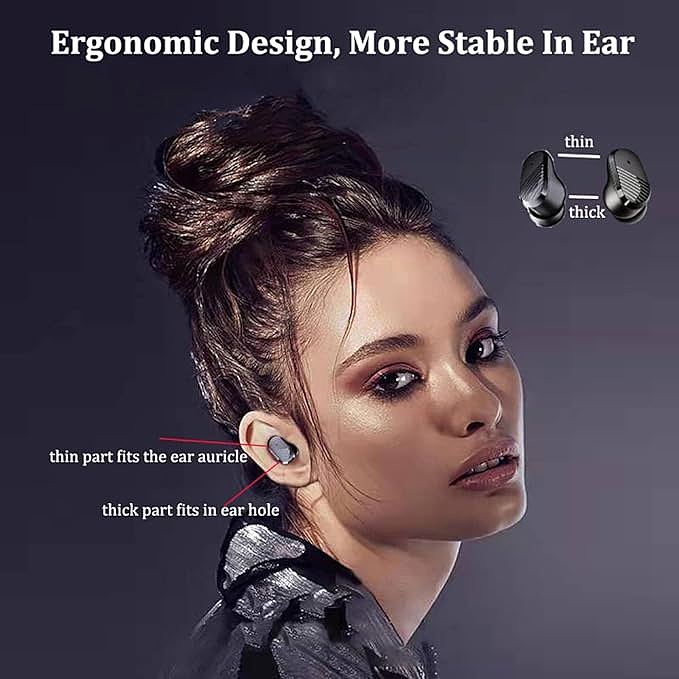
The Promise That Wakes You Up
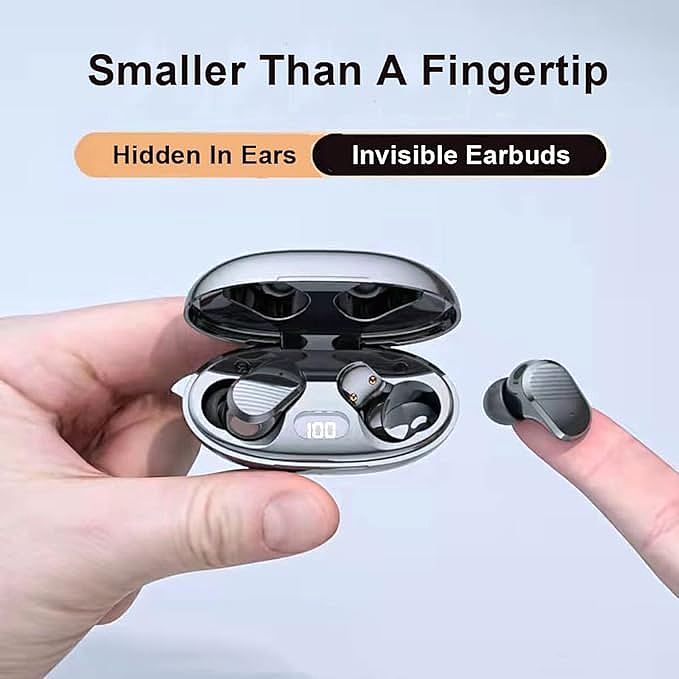
Sleep earbuds have a simple pitch: slip them in, block the noise, drift off. The market has responded with increasingly tiny devices that disappear inside your ear canal, each one claiming to be the one you will forget is there. The the device True Wireless Invisible Earbuds sit squarely in this category. At 3.5 grams per ear and 13.7 millimeters across, they are among the smallest options available. They cost $12.99 on discount. They carry generally positive user sentiment from 283 user reports.
Those numbers tell a story of a product that does many things well. They also tell a story of a product caught in a contradiction it cannot resolve. The A68 is marketed as a sleep earbud, yet its defining feature -- capacitive touch controls -- is the very thing that makes it unsuitable for sleep. This is not a flaw in manufacturing or a quality-control oversight. It is a structural conflict between two design goals that cannot coexist in the same device.
Understanding this conflict matters because it is not unique to one product. It applies to an entire category of ultra-small, touch-controlled earbuds that position themselves as sleep solutions. If you have ever lain on your side and had your music pause, your phone dial a contact, or a voice assistant start talking, you have already experienced the paradox firsthand.
What the Specifications Actually Mean
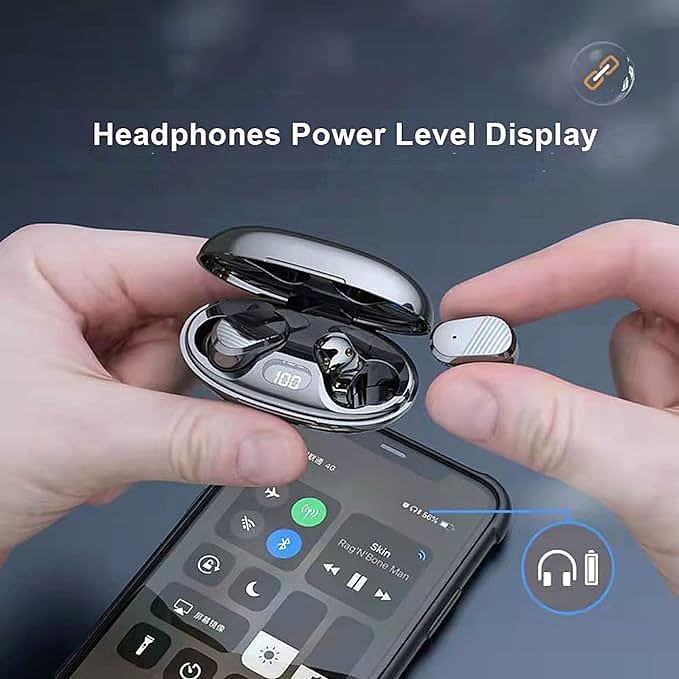
The A68's spec sheet reads well. A 10mm driver delivers sound at a price point where most competitors offer 6mm or 8mm units. Bluetooth 5.3 provides a stable connection. IPX5 waterproofing handles sweat and rain. The charging case delivers 15 to 20 hours of total playback, with 4 to 5 hours per charge. Passive noise isolation claims 24 decibels of attenuation.
Each of these numbers is accurate in isolation. The problem emerges when you consider what they require physically. Passive noise isolation at 24dB depends on an airtight seal between the earbud silicone tip and your ear canal. That seal is what blocks sound waves from reaching your eardrum. Achieving it means the earbud must press firmly against the canal walls. In a standing or sitting position, this pressure is tolerable. In a side-sleeping position, with 4 to 8 kilograms of head weight compressing the ear between skull and pillow, that same pressure becomes a source of pain.
The 13.7mm width is another double-edged figure. That measurement makes the A68 small enough to sit flush with the outer ear, which is why users report it looks nearly invisible during the day. But flush does not mean flat. The earbud still protrudes enough that a pillow presses directly against its outer surface. And that outer surface is where the touch sensor lives.
How Capacitive Touch Fails Under a Pillow
Capacitive touch sensors work by detecting changes in the electrical field on a conductive surface. When your finger approaches or contacts the sensor, it alters the local capacitance. The earbud's processor interprets that change as a tap, a double-tap, or a long press, and executes the corresponding command: play, pause, skip track, or activate a voice assistant.
This mechanism works cleanly when the input comes from a deliberate finger gesture in open air. It breaks down when the input source is a pillow. A pillow is not a finger, but it does not need to be. Memory foam, down, and synthetic fills all contain materials that hold static charge and conduct electricity to varying degrees. When your head rests on a pillow with an earbud underneath, the pillow's fabric and filling create continuous capacitive contact with the sensor surface.
The result is not a single false tap. It is a stream of ambiguous electrical signals that the processor tries to interpret as gestures. Sometimes it reads them as a pause command. Sometimes as a double-tap that skips a track. Sometimes as a long press that summons Siri or Google Assistant. The user experience, as one Amazon user called The Ridge Runner described in a positive account, is that the earbuds become "touchy touchy" -- pausing music, turning off playback, attempting to make calls, or activating voice assistants, all without any intentional input.
This is not a sensitivity calibration issue that a firmware update can fix. The sensor is doing exactly what it was designed to do: detect capacitance changes. The problem is that the design assumes the sensor will only encounter a finger in a controlled environment. Side sleeping violates that assumption completely.
The Ear Shape Gamble
Even setting touch controls aside, the A68 highlights a second structural problem in sleep earbud design: ear anatomy varies too widely for a single shape to serve everyone.
Shelli, who described the A68 positively, reported that the earbuds "work well for me" and praised both comfort and sound quality. Her experience is genuine, and it reflects a real subset of users -- typically those with smaller ear canals who find the 13.7mm width a closer match for their anatomy. For these users, the seal is good, the pressure is manageable, and the earbuds stay in place overnight.
Michael D. Warren, who provided mixed feedback, had the opposite experience. He found the A68 "too thick and uncomfortable for sleeping" and noted that it works better as an office earbud. His ear anatomy does not match the A68's shape, so the same physical dimensions that make Shelli happy make him uncomfortable.
This is not a defect. It is an inherent limitation of the universal-fit model. Unlike over-ear headphones that distribute pressure across a broad surface, in-ear devices concentrate all their force on a small area inside the ear canal. A shape that fits one person's canal will press too hard or sit at the wrong angle in another's. The passive isolation that requires a tight seal makes this worse: the users who need the most pressure for noise blocking are the ones who experience the most discomfort.
The A68 ships with multiple silicone tip sizes, which helps with the seal. But tip size does not change the earbud body's width or profile. If the 13.7mm housing is too wide for your ear, no tip swap will fix that.
What User Sentiment Actually Reveals
Generally positive user sentiment from 283 user reports sounds respectable. But the distribution behind that average tells a different story. A majority of users gave favorable accounts. A minority gave negative accounts. That is a bimodal distribution -- a pattern where users either love the product or find it unusable, with fewer people in the middle.
The favorable reports share a consistent theme: value. At $12.99, the A68 delivers 10mm drivers, IPX5 waterproofing, Bluetooth 5.3, and a charging case. Jon, a satisfied user, wrote that the sound quality is so good "you can not do any better" at this price. These users are not wrong. The A68 is an exceptional value for daytime, non-sleep use.
The negative reports share a different consistent theme: the product fails at its marketed purpose. Vinnie, who provided negative feedback, reported examining 14 brands and over 30 pairs of earbuds. His conclusion was direct: touch-controlled earbuds are a poor choice for side sleepers. He advocated for physical buttons instead. Sam, who provided mixed feedback, reported that the right earbud failed at three months and the left at four months, raising durability concerns that satisfied users had not yet encountered.
The generally positive sentiment obscures this split. It makes the product look like a solid-but-not-great choice for everyone, when in reality it is an excellent choice for one group and a poor choice for another. The feedback system was not designed to capture scenario-specific performance.
The Real Use Case: Office, Not Bedroom
If you set aside the sleep marketing and consider the A68 on its actual strengths, a clear picture emerges. This is an office earbud. It is small enough that coworkers will not notice it. It pairs quickly and holds a connection. The touch controls work fine when you are sitting upright and can reach up to tap an earbud deliberately. The IPX5 certification handles commute sweat. The battery lasts a full work session. At $12.99, losing one is annoying but not devastating.
Michael D. Warren's mixed account implicitly made this point. He found the A68 uncomfortable for sleep but functional for office use. His feedback reflected disappointment that the product did not match its marketing, not that the product itself was bad. If the A68 were sold as an "invisible office earbud" rather than a sleep earbud, its reception might well be more favorable.
The durability issue Sam raised is worth noting. A 3-to-4-month failure rate, if representative, is poor even at this price. But it is also consistent with the build quality you expect from a $13 device. Satisfied users who have not yet hit that failure window may revise their assessments downward over time.
A Framework for Choosing Sleep Earbuds
The A68's paradox is not an isolated case. Any earbud that uses capacitive touch controls and sits inside the ear canal will face the same conflict with side sleeping. The question is not whether a specific model has this problem, but how to assess any model for sleep use.
Control type is the first filter. Touch controls are incompatible with side sleeping. Physical buttons are better because they require deliberate mechanical force that a pillow cannot replicate. No controls at all are best for sleep, since you can set your audio before lying down and leave it. Some purpose-built sleep earbuds, like those from wedoking, use physical buttons or omit controls entirely for this reason.
Profile matters more than weight. A 3.5-gram earbud sounds light, but weight is not what causes discomfort during side sleep. Profile is. An earbud that protrudes from the ear canal, even slightly, creates a pressure point against the pillow. A slightly heavier earbud with a flush or recessed profile will be more comfortable than a lighter one that sticks out.
Passive isolation has a comfort cost. The tighter the seal, the better the noise blocking, but the more pressure on the ear canal. If you are a light sleeper who needs significant noise reduction, you may need to accept some discomfort or look toward over-ear solutions like sleep headbands that distribute pressure across a wider area.
Battery life should exceed your sleep window. The A68's 4-to-5-hour single charge is marginal for a full night. If you sleep 7 to 8 hours, you will either wake to a dead earbud or need to swap to the case mid-sleep. Look for 8 hours minimum if you plan to use earbuds through the night.
Durability is a long-term cost. A $13 earbud that lasts 3 months costs the same per month as a $40 earbud that lasts a year. Price alone is not a value indicator. Check user reports for failure patterns before assuming a low price is a bargain.
The Broader Lesson
The sleep earbud market has a tendency to borrow features from general-purpose earbuds and market them as sleep-specific. Touch controls are one example. ANC is another -- active noise cancellation requires microphones and processors that add bulk and battery drain, both of which work against the small-and-light ideal for sleep. The features that make a daytime earbud impressive on a spec sheet are not always the features that make a sleep earbud functional on a pillow.
The NVAHVA A68 is a capable device for its price. Its 10mm drivers, compact form, and IPX5 certification deliver genuine value for office and commute use. But its touch controls, which are a selling point in product descriptions, are a liability in the one scenario the product is marketed for. That is not a bug. It is a design decision that prioritized feature-list appeal over scenario-specific function.
If you are selecting sleep earbuds, start from the scenario and work backward. Ask what happens when you lie on your side with the earbud in place and a pillow pressing against it. If the answer involves a capacitive sensor, the product has already failed the test -- regardless of how good the rest of the spec sheet looks.