What Does IPX7 Actually Protect Against? The Engineering...

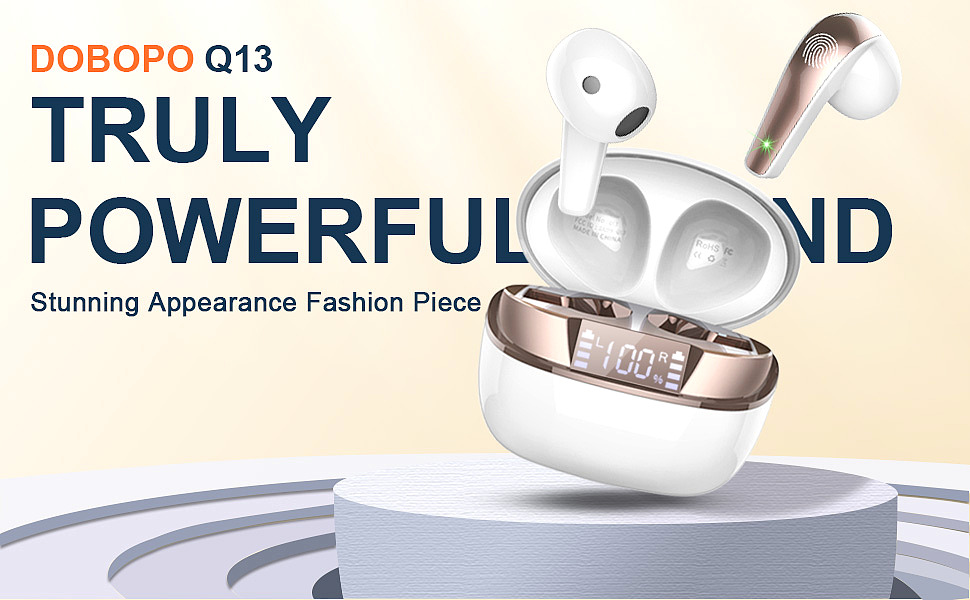
DOBOPO Q13 Wireless Earbuds
Your earbuds die after six months of gym sessions. Not from a drop. Not from a defect. From sweat. The salt in perspiration creeps into micro-gaps between plastic seams, slowly corroding the copper traces on the circuit board until one morning the left earbud simply stops charging. You check the box: it said "waterproof." It did not say for how long, or against what.
This is not a rare failure mode -- it is a widespread problem. It is the predictable result of a fundamental gap between how ingress protection ratings are defined in laboratory conditions and what consumers actually subject their devices to in the real world. Understanding that gap requires understanding the engineering standard itself -- and the chemistry happening on a scale far too small for any human eye to see.
The IEC 60529 Standard: A Lab Test, Not a Lifestyle Guarantee
The IP classification system is governed by IEC 60529, a standard published by the International Electrotechnical Commission. The "IP" stands for Ingress Protection, and the two digits that follow encode specific, tested performance levels. The first digit rates protection against solid objects (dust, fingers, tools) on a scale of 0-6. The second digit rates protection against liquids on a scale of 0-9K. When a manufacturer writes "IPX7," the X does not mean zero protection against solids. It means the device was not tested for solid particle protection. The 7 is the part that matters here.
An IPX7 certification means the device survived submersion in fresh water at a depth of one meter, measured from the lowest point of the device to the water surface, for a continuous period of 30 minutes. The water temperature during testing is between 15 and 35 degrees Celsius. The device is stationary during the test -- no movement, no water pressure beyond hydrostatic head, no agitation.
Those conditions are precise. They are also narrow. The test says nothing about salt water, chlorinated pool water, soapy shower water, high-pressure jets, steam, or the repetitive exposure that comes from daily exercise. A device that passes IPX7 testing once in a laboratory may not survive a year of sweat exposure during workouts, because sweat is not fresh water. Sweat has a pH between 4.5 and 7.5. It contains sodium chloride, potassium, lactic acid, and urea. Over time, these compounds are mildly corrosive to exposed metal contacts and can degrade adhesives used in earbud assembly.
The distinction between test conditions and real-world conditions is not a criticism of the standard. IEC 60529 provides a repeatable, comparable metric. Two devices both rated IPX7 performed the same test under the same conditions. What consumers need to understand is that the standard defines a floor, not a ceiling, of protection.
Nano-Coatings: Chemistry at the Nanometer Scale
How does a pair of earbuds with seams, charging contacts, and a microphone port survive submersion? The answer lies in a coating thinner than a wavelength of visible light.
Nano-coatings used in earbud waterproofing are ultra-thin hydrophobic layers applied to internal circuit boards and external surfaces. The coating thickness typically ranges from 10 to 100 nanometers. For comparison, a human red blood cell is approximately 7,000 nanometers across. The coating is so thin that it does not interfere with electrical signals, does not add measurable weight, and does not change the dimensions of the components it covers. Yet it fundamentally alters how water interacts with those surfaces.
The coating works by creating a surface with a contact angle greater than 150 degrees. Contact angle is a concept from surface science: when a water droplet sits on a surface, the angle between the droplet's edge and the surface itself reveals whether the surface is hydrophilic (water-loving, low contact angle, droplet spreads flat) or hydrophobic (water-repelling, high contact angle, droplet beads up). A contact angle above 150 degrees is classified as superhydrophobic. At that level, water droplets maintain nearly spherical shape and roll off under the slightest tilt.
This is the same principle that keeps lotus leaves clean in nature -- a phenomenon called the lotus effect, first described scientifically by botanists Wilhelm Barthlott and Christoph Neinhuis in 1997. The surface of a lotus leaf is covered with microscopic papillae approximately 10-20 micrometers tall, each coated with wax crystals at the nanometer scale. This dual-scale roughness traps air beneath water droplets, minimizing contact area between water and surface. The result: rain rolls off lotus leaves, carrying dirt particles with it.
Earbud nano-coatings achieve a similar effect through different geometry. Instead of biological papillae, the coating creates a molecular-scale rough surface where fluorinated or silicon-based compounds present low surface energy to incoming water molecules. Water's own surface tension does the rest, pulling the droplet into a bead that rolls away.
Chemical Vapor Deposition: Building Protection One Molecule at a Time
The coating does not arrive by brush or spray in the conventional sense. Two primary industrial processes are used: chemical vapor deposition (CVD) and sol-gel coating.
In chemical vapor deposition, the earbud components are placed inside a vacuum chamber. Precursor chemicals -- typically organosilane or fluorinated compounds -- are introduced as gases. These gases react or decompose on the surface of the components, depositing a conformal film that is uniform even across complex three-dimensional shapes. The process can coat the inside of a USB-C port, the underside of a circuit board, and the gaps around a microphone grille with equal thinness.
In the sol-gel process, a liquid precursor solution is applied to components through dipping or spraying. The solution undergoes hydrolysis and condensation reactions, forming a solid metal oxide network with hydrophobic organic groups attached. The result is a glass-like film at the nanometer scale that bonds to the substrate surface.
Both methods produce coatings that are measured in tens of nanometers but provide protection that is disproportionate to their thickness. The key insight is that waterproofing in consumer electronics is not achieved by sealing every gap with gaskets and rubber O-rings -- that approach would make earbuds too large and too expensive. Instead, the surfaces themselves are chemically modified so that water refuses to wet them. Water encounters the device and, finding no surface to bond with, leaves.
Many IPX7-rated earbuds use nano-coated waterproof material to achieve that designation. The coating is applied to internal electronics and circuit boards during manufacturing, creating a barrier that causes water to bead and roll off rather than seeping into the device structure.
From Hydrophobic Surfaces to Hydrophilic Failure: Where Protection Breaks Down
A superhydrophobic coating sounds invincible in principle. In practice, it degrades.
Mechanical abrasion is the primary enemy. Every time earbuds are removed from their charging case, inserted into the ear, adjusted, removed, wiped, and placed back in the case, the coating on external surfaces experiences microscopic wear. The coating on internal surfaces (circuit boards, inside the charging case cavity) is more protected and typically lasts longer, but the external nano-coating can begin to lose effectiveness after 6 to 12 months of regular handling.
Ultraviolet light exposure also degrades many hydrophobic coatings. The fluorinated compounds that give nano-coatings their water-repelling properties can break down under prolonged UV exposure, though this is a slower process than mechanical wear for devices that spend most of their time in a pocket or case.
Temperature cycling presents another degradation vector. Earbuds transition from room temperature to body temperature (approximately 37 degrees Celsius) during use, then back to ambient temperature when removed. In charging, the internal battery generates additional heat. Over hundreds of cycles, differential thermal expansion between the coating and the underlying substrate can create micro-cracks that compromise the hydrophobic surface.
These degradation mechanisms do not mean the coating fails catastrophically one day. The contact angle gradually decreases from 150+ degrees to 140, 130, 120. Water still beads, but it beads less aggressively. Instead of rolling off instantly, droplets sit on the surface longer. Eventually, in areas of highest wear, water may begin to wet the surface rather than bead.
This gradual degradation is why IPX7-rated earbuds that survive immersion perfectly on day one may develop moisture sensitivity after a year of daily use. The specification describes initial performance, not lifetime performance. No current IEC standard tests waterproofing durability over time.
The Physics of Water Entry: Why Tiny Gaps Matter Enormously
To understand why nanometer-scale coatings are sufficient, it helps to understand the physics of how water enters electronic devices.
Water does not flow into earbuds the way it flows into a glass. At the scale of the gaps between plastic shell halves -- typically 10 to 50 micrometers -- surface tension and capillary action dominate over gravity. Water is drawn into narrow gaps by capillary forces, the same mechanism that pulls water up a paper towel or draws liquid between two closely spaced glass plates.
The Young-Laplace equation describes the pressure difference across a curved liquid surface: the narrower the gap, the stronger the capillary draw. A 10-micrometer gap can pull water inward with significant force relative to the tiny volumes involved. This is why seemingly minor seams in earbud construction are potential water ingress points.
A hydrophobic nano-coating reverses this mechanism. When the surfaces of a narrow gap are hydrophobic (contact angle greater than 90 degrees), the capillary pressure reverses direction. Instead of drawing water in, the gap actively resists water entry. The water meniscus curves outward rather than inward, and a positive pressure is required to force water into the gap.
This is the engineering elegance of the nano-coating approach: it does not need to seal every gap hermetically. It needs only to make the surfaces of those gaps repel water strongly enough that capillary forces work against ingress rather than for it. The IPX7 test submerges the device in still water, where the only driving force for water entry is capillary pressure and the hydrostatic pressure of one meter of water head (approximately 9.8 kilopascals). A well-applied nano-coating with a contact angle of 150 degrees can resist water entry into capillary gaps at pressures far exceeding this value.
Practical Boundaries: What IPX7 Means for Your Daily Routine
With the engineering understood, the practical questions become clearer.
Rain: light or moderate rainfall presents no challenge to IPX7-rated earbuds. Water droplets impact the surface, bead up, and roll off. Even heavy rain with wind is generally safe because the driving pressure from raindrops is far below the threshold that would overcome the hydrophobic coating in seams and gaps.
Exercise and sweat: the IPX7 designation implies strong sweat resistance because the volume and pressure of sweat during exercise are trivial relative to the test condition of full submersion. However, sweat chemistry differs from fresh water. The sodium chloride and mildly acidic compounds in sweat can leave residue on the nano-coated surface as water evaporates. Over time, this residue may interfere with the coating's hydrophobic properties at contact points, particularly the metal charging contacts that cannot be fully coated without preventing electrical conduction. Rinsing earbuds with fresh water after sweaty workouts and drying them before charging helps mitigate this.
Showering: not recommended. Hot water and steam present challenges that the IPX7 test does not address. Steam can penetrate gaps that liquid water cannot because water vapor molecules are smaller than liquid water droplets. Thermal expansion from hot water can momentarily widen micro-gaps. Shampoos and soaps contain surfactants that reduce water surface tension, making it easier for water to wet hydrophobic surfaces. The combination of heat, vapor, and surfactants means that shower conditions exceed the IPX7 test parameters.
Swimming: not safe for IPX7 devices. Swimming involves sustained submersion, water pressure from movement, and potentially chlorinated or salt water. The IPX7 test specifies 30 minutes in still fresh water. Swimming exceeds all three constraints simultaneously.
The Maintenance Paradox: Cleaning Can Degrade the Coating That Protects
Proper earbud maintenance extends useful life, but some common cleaning practices can accelerate nano-coating degradation. Abrasive cloths, alcohol-based cleaning solutions, and ultrasonic cleaners can all damage the molecular-scale hydrophobic layer. A soft, lint-free cloth with plain water is the safest approach for external surfaces. Charging contacts should be wiped with a dry cloth or cotton swab -- never scrubbed.
The most effective maintenance step is also the simplest: dry the earbuds completely before placing them in the charging case. Moisture trapped in the charging case cavity has nowhere to evaporate and can linger against charging contacts for hours, accelerating corrosion on the uncoated metal surfaces that must remain exposed for electrical contact.
Battery degradation compounds the waterproofing timeline. Lithium-ion batteries in true wireless earbuds are rated for 500 to 1000 full charge cycles before reaching 80 percent of original capacity. For most users, this corresponds to approximately two to three years of typical use. In practice, the nano-coating and the battery tend to reach their functional end-of-life around the same period, which is either fortunate engineering alignment or merely the reality of finite material lifespans in small, inexpensive devices.
The Engineering Philosophy of Planned Impermanence
There is an inherent tension in consumer electronics waterproofing: the protection is real but temporary, the standard is rigorous but narrow, and the device is designed to survive conditions that do not fully represent how it will be used. This is not deception. It is the practical result of engineering at a price point where hermetic sealing with O-rings and glass-to-metal connectors is economically infeasible.
The nano-coating approach is a kind of molecular architecture -- thin, elegant, and effective within its design parameters. It borrows from nature's own water-repelling strategies and applies them through industrial chemistry to devices that cost less than a dinner for two. The achievement is real. The limitation is also real. Understanding both is what separates a consumer who blames the product from one who uses it wisely.
The next time you see "IPX7" on a product page, you will know exactly what it means: one meter, thirty minutes, fresh water, stationary, tested once. Everything beyond that is not a guarantee. It is a bet. And now you know the terms.
DOBOPO Q13 Wireless Earbuds
Related Essays

Beyond the Driver: The Hidden Physics of Modern Wireless Audio

NANAMI X1 Earbuds: Unleash Your Workout with Superior Sound and Waterproof Design

Kargebay M48 Wireless Earbuds: A Budget-Friendly Wireless Earbud That Packs a Punch

eleror T5-BH1505 True Wireless Earbuds: Superior Sound and Endless Playtime for Your Workouts

How Tiny Drivers Produce Big Sound: The Physics Behind Wireless Earbuds
How Tiny Drivers Produce Big Sound: The Physics Behind Wireless Earbuds
How Tiny Drivers Produce Big Sound: The Physics Behind Wireless Earbuds
How Tiny Drivers Produce Big Sound: The Physics Behind Wireless Earbuds

Jzones Wireless Earbuds with Long Playtime and Wireless Charging
