From Stage to Studio: The Engineering Legacy Inside the Marshall Woburn III

Marshall Woburn III Bluetooth Wireless Speaker
The Moment the Music Dies
The signal cuts out abruptly during the most critical moments of a performance, leaving musicians and audiences alike in an uncomfortable silence that breaks immersion and destroys momentum. Right in the middle of the guitar solo. You glance at your Bluetooth speaker, watching the indicator light blink, trying to reconnect while the song you love collapses into silence.
This is not a minor annoyance, but rather a fundamental disconnect between expectation and reality in wireless audio reproduction. It is the gap between hearing music and feeling it. Most portable speakers deliver adequate sound in controlled conditions. They cannot replicate the visceral impact that defined rock music for sixty years. The engineering principles behind that impact have been locked in recording studios and concert stages, waiting for someone to translate them into a home format.
The Woburn III attempts exactly that translation. It carries sixty years of acoustic knowledge into a Bluetooth speaker, asking a fundamental question: what does it actually take to make sound feel like presence rather than just noise?

Why Standard Bluetooth Falls Short
The problem is not Bluetooth itself, which has evolved significantly since its inception to become a reliable wireless protocol. It is what happens to the audio signal during wireless transmission.
Standard Bluetooth codecs like SBC compress audio heavily to fit through the wireless pipeline. This compression discards data that the human ear cannot easily perceive, which seems efficient until you consider what gets removed. Harmonic overtones. Subtle changing shifts. The quiet decay of a note after the initial attack. These elements carry much of the emotional weight in music.
When this compressed signal reaches a typical two-way speaker, the problem compounds. A single driver handles both mid-range and high frequencies simultaneously. The cone must transition between these frequency bands while still vibrating from the previous band. This creates interference patterns that muddle the sound, particularly in the critical mid-range where vocals and most instruments live.
Three-way driver design addresses this at the physical level by dedicating separate drivers to bass, mid-range, and treble frequencies, ensuring each component operates within its optimal acoustic range without competing with signals meant for other drivers. By dedicating separate drivers to bass, mid-range, and treble frequencies, each component operates within its optimal range without competing with signals meant for other drivers.
The Woburn III embodies this approach through its driver configuration. Two mid-range drivers operating at 15 watts each handle vocals and most instruments with dedicated power. Two tweeters at 8 watts each reproduce high-frequency details like string overtones and percussion crispness. A single bass driver at 50 watts delivers the low-frequency foundation that smaller drivers cannot replicate with authority.
This is not simply adding more drivers. It is allocating power intelligently. A two-way speaker must split a single amplifier between frequency bands, meaning each driver receives less power than it could optimally use. A three-way design allows each driver to receive power tuned to its specific requirements.
The Bluetooth 5.0 implementation with aptX support provides the wireless foundation. AptX transmits at 352kbps compared to standard SBC compression at roughly 328kbps maximum. More importantly, aptX uses perceptual audio coding that preserves psychoacoustically relevant information more effectively than simple bandwidth reduction.
The result is a wireless signal that carries more of what matters, feeding into a physical architecture that can reproduce it faithfully.
The Physics of Separation
The three-way concept has deeper roots than consumer audio.
In the 1930s, cinema sound systems needed to project bass across large theaters. Horn-loaded loudspeakers became standard because they solved a fundamental physics problem: reproducing low frequencies efficiently requires large radiating surfaces, while high frequencies need small, light diaphragms. These requirements are incompatible in a single driver.
The solution was separation. Large bass horns handled low frequencies. Smaller compression drivers handled mid-range. Tweeters, originally only in the highest-frequency range, completed the system. Each component operated within its physical limits.
This architecture defined professional sound reproduction for decades. When rock music emerged in the 1960s and guitar amplifiers needed to fill increasingly large venues, the same physics applied. The legendary Marshall stack emerged from this necessity, stacking multiple speaker cabinets to increase radiating area and acoustic output.
This is where brand heritage intersects with acoustic physics. Marshall built its reputation by solving real problems for musicians who needed to be heard. The stack was not marketing. It was physics applied through engineering iteration.
The Woburn III represents the latest iteration of this thinking, compressing sixty years of acoustic knowledge into a single domestic unit. This is analogous to aerospace engineering: the helicopter can hover because we accepted mechanical complexity, building counter-rotating blades and swashplate mechanisms rather than trying to simplify the fundamental physics of flight.
In a home speaker, this translates to sophisticated crossover networks and careful cabinet tuning. The crossover is where three-way design gets complicated.

The Crossover Challenge
The crossover network is the least visible component in a three-way speaker and the most technically demanding.
A crossover splits the audio frequency spectrum and routes specific bands to appropriate drivers. In the Woburn III, frequencies below a certain point go to the mid-range drivers. Frequencies above go to the tweeters. The bass driver handles the lowest frequencies independently.
This filtering sounds simple in concept but creates fundamental challenges in practice. Filters introduce phase shifts. Phase shifts create timing differences between frequency bands, and when these differences become pronounced, certain frequencies can experience cancellation where they should instead reinforce each other, resulting in comb-filtering effects that color the sound. When one driver reproduces a frequency a few milliseconds before another due to these shifts, cancellation can occur at certain frequencies where the signals should reinforce each other.
Higher-quality crossover implementations manage this through tighter tolerances during manufacturing, more sophisticated crossover slopes, and careful driver positioning. But the trade-off is inherent. Steeper crossover slopes provide better frequency separation while introducing more phase distortion. Gentler slopes preserve phase relationships better while allowing more frequency overlap between drivers.
This is where speaker design becomes an art rather than pure engineering. The goal is not optimal frequency response on paper, but rather coherent sound reproduction where different frequency bands blend seamlessly despite coming from physically separate drivers, creating the illusion of a single unified sound source that accurately represents the original performance. It is coherent sound reproduction where different frequency bands blend seamlessly despite coming from physically separate drivers.
Marshall's tuning in the Woburn III reflects their guitar amplifier heritage. Their amplifiers were designed for specific musical applications, optimizing for warmth and mid-range presence rather than clinical neutrality. This character carries through to the home speaker line.
The frequency response curve shows emphasis in the mid-range, the range where human hearing is most sensitive and where vocals carry emotional weight. This is not an accident. It reflects deliberate choices informed by decades of understanding how music affects listeners.
Room Acoustics and Placement
The 400 by 200 by 300mm cabinet dimensions and approximately 8kg mass affect more than portability. These physical characteristics determine how the speaker interacts with room acoustics.
Placing the Woburn III near walls creates boundary reinforcement, boosting bass output by approximately 3 to 6 decibels depending on placement. This is not the same as deep bass extension. It is amplification of frequencies already within the driver's range, achieved through acoustic reflection from nearby surfaces.
The tweeter dispersion pattern means high frequencies are most accurate when the speaker is positioned with direct line-of-sight to the listening position. This creates practical trade-offs with room aesthetics and furniture arrangement.
For listeners considering comparison with WiFi-based systems, the system differences matter. Systems like Sonos offer streaming optimization through WiFi rather than Bluetooth, multi-room synchronization, and integration with voice assistants. These features represent different engineering priorities, optimizing for convenience and system expansion rather than the acoustic character that defines Marshall's approach.
The Woburn III is designed for someone who prioritizes a single device performing at its peak, not someone building a multi-room streaming system. This is a philosophical distinction informed by the brand's history. Stage equipment was designed to work standalone, often with multiple independent amplifiers and cabinets rather than networked systems.
Understanding Trade-offs
The core skill in evaluating any audio equipment is understanding what trade-offs were accepted and whether they align with your priorities.
The Woburn III accepts certain limitations to optimize for specific strengths. The emphasis on warmth and mid-range presence comes at the cost of flat frequency response across all bands. The Bluetooth implementation prioritizes stability and broad device compatibility over the highest possible bitrates available through WiFi-based alternatives.
These are not failures. They are engineering decisions that reflect understanding what matters most for certain listening scenarios.
The three-way driver architecture solves real problems that two-way designs cannot address as effectively. The separation between frequency bands reduces distortion and improves clarity, particularly at higher volumes where driver excursion creates the most interference. This is physics working for you rather than against you.
For someone who values the emotional impact of music, who wants to feel the bass rather than just hear it, who appreciates how Marshall amplifiers shaped the sound of classic rock and blues, these trade-offs make sense. For someone prioritizing analytical accuracy, multi-room synchronization, or integration with modern smart home systems, different approaches exist.
The point is not declaring one design more capable than another. It is understanding why choices were made and evaluating whether the reasoning matches your use case.
The Engineering Philosophy
In the end, the Woburn III represents a specific engineering philosophy applied consistently throughout its design, from the three-way driver configuration to the analog-digital hybrid circuit implementation. Three-way driver separation addresses frequency allocation challenges. Bluetooth aptX support provides reliable wireless transmission with acceptable quality. The analog-digital hybrid maintains warm character while enabling modern connectivity.
The 80 watts of RMS power and frequency response down to 30 hertz indicate what the design prioritizes. Significant power delivery suggests changing capability and headroom for transient peaks. Low-frequency extension below typical portable speaker ranges indicates the engineering effort required to reproduce bass with physical authority.
These specifications describe boundaries. The actual sound quality depends on how well the engineering achieves its goals within those boundaries. Understanding the goals matters more than comparing numbers on paper.
The design philosophy traces back to an era when guitar amplifiers were built for musicians who needed to be heard, not for listeners who needed convenience. That heritage shapes decisions even now. The warm mid-range. The emphasis on presence. The physical impact that makes certain music feel alive.
This approach will not appeal to everyone. That is fine. Audio equipment serves different purposes for different listeners. The value is in understanding what each design prioritizes and whether those priorities match what you value in music reproduction.
The Woburn III carries six decades of acoustic knowledge into a format that fits in a living room. That knowledge was hard-won through engineering iterations for real-world applications. Whether that translates to value depends on what you need from your audio equipment. The physics never changed. Only the applications evolved.
Marshall Woburn III Bluetooth Wireless Speaker
Related Essays

Silencing the Copper Wire: The Invisible Architecture of Modern Audio

The Physics of Silence: How Active Noise Cancellation Works
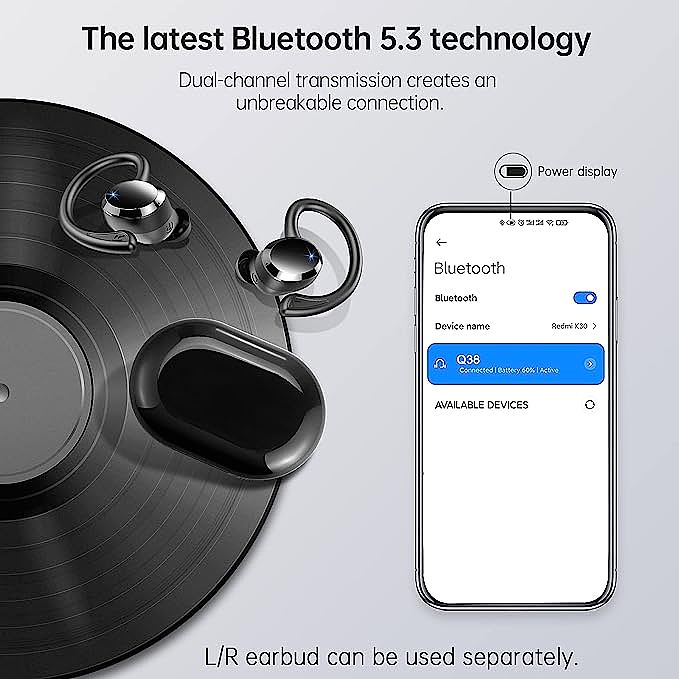
The Four Pillars of Unbreakable Sport Audio

How True Wireless Stereo Technology Rewired the Way We...

The Science Behind Wireless Audio: From Bluetooth Origins...

Why Your Wireless Earbuds Last 48 Hours: The Physics Behind Battery and Sound

Why Your Wireless Earbuds Betray You Mid-Workout: The Physics of Sweat and Signal

Karaoke Speaker Technology Explained: Power Ratings, DSP, and Crossover Design

Neckband Audio: Spatial Separation Enables aptX-HD at Budget Prices
