How Component Commoditization Ended the Audio Price-Quality...

kurdene S8 Wireless Earbuds
The Paradox of the $20 Sound
Something strange happened in the last decade of consumer electronics, and almost nobody noticed when it crossed the threshold. The same economic forces that turned $50 LED bulbs into $2 commodities, that crashed solar panel prices by 90% in ten years, and that put more computing power in a $200 phone than NASA used to land on the moon — those forces finally reached wireless earbuds.
The result is a paradox that would have sounded absurd in 2016: you can now buy wireless earbuds for twenty dollars that deliver sound quality most listeners genuinely cannot distinguish from pairs costing ten times as much. This isn't hype, and it isn't audiophile denialism. It's the predictable outcome of several technological and economic forces converging on a single product category.
?x-oss-process=style/mini_auto
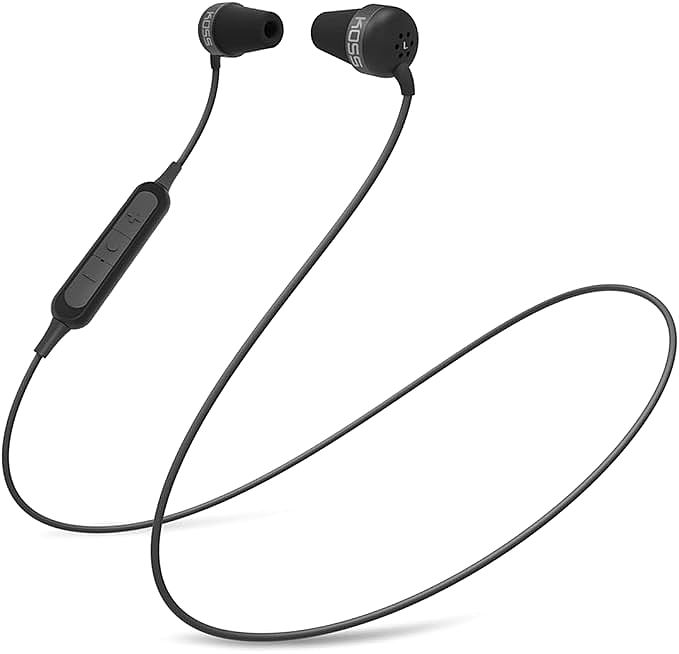
The modern wireless earbud: a marvel of miniaturization that economics has made universally accessible.
Consider the parallel. In 2008, a decent LED light bulb cost around $40 and produced a dim, bluish glow that nobody wanted. By 2020, the same technology cost under $2, produced warm light indistinguishable from incandescent, and lasted 15,000 hours. The bulb didn't get better because someone invented a dramatically new LED — it got better because manufacturing scaled, components commoditized, and the knowledge of how to build them diffused across thousands of factories.
Wireless earbuds followed the identical trajectory, just on a compressed timeline. The journey from ?x-oss-process=style/mini_auto"expensive and mediocre" to "cheap and excellent" took roughly half the time, and understanding why reveals something fundamental about how technology democratizes itself.
Moore's Law Migrated to Audio
The story begins with a chip. Specifically, with the system-on-a-chip (SoC) designs that power every modern pair of true wireless earbuds. These tiny silicon brains handle Bluetooth connectivity, digital signal processing, active noise cancellation, battery management, and audio decoding — all on a die smaller than your fingernail.
A decade ago, integrating all those functions onto a single chip required proprietary designs from companies like a leading semiconductor company, a leading tech company, or a leading audio manufacturer. The R&D investment was enormous, and the resulting chips were expensive. A premium Bluetooth audio SoC in 2017 could cost $8-12 per unit in volume. That single component could represent nearly half the total bill of materials for a pair of earbuds.
Then something familiar happened: semiconductor commoditization. Companies like MediaTek, Realtek, Bestechnic, and a dozen Chinese fabless semiconductor firms began producing competitive audio SoCs at dramatically lower prices. The same pattern that drove down the cost of ARM processors for smartphones repeated itself in audio chips. Knowledge diffused. Patents expired or were worked around. Fabrication capacity expanded.
Internal components of modern wireless earbuds — the silicon inside tells the story of commoditization.
By 2023, a perfectly capable Bluetooth audio SoC with support for the latest codecs, decent DSP processing, and power efficiency comparable to premium offerings could be sourced for under $2 per unit. The performance gap between a $2 chip and an $8 chip didn't disappear entirely — but it collapsed to the point where only specialized measurement equipment could reliably detect the difference.
This is the semiconductor industry's great equalizing effect at work. Once a technology matures, the marginal cost of incremental improvement far exceeds the marginal cost of ?x-oss-process=style/mini_auto"good enough." The $2 chip isn't trying to be the best in the world — it's trying to clear the threshold of human perception, and that threshold is surprisingly modest.
The Shenzhen Multiplier: When Scale Breaks Cost Logic
Semiconductor commoditization explains the chip. But the earbud itself — the drivers, the battery, the charging case, the microphone array, the injection-molded housing, the assembly — that requires a different kind of economics entirely.
This is where Shenzhen enters the story. The Pearl River Delta manufacturing ecosystem has achieved something unprecedented in industrial history: the ability to produce complex electro-mechanical products at scales that fundamentally reshape unit economics. Not through cutting corners, but through a degree of specialization and vertical integration that no other region on Earth can match.
Consider what goes into a wireless earbud. The dynamic driver that produces sound requires a magnet, a voice coil, a diaphragm, and a housing. A decade ago, each of these was a specialized component sourced from different suppliers, with the magnet alone representing a significant cost. Today, driver assemblies are produced by specialized manufacturers in volumes of tens of millions of units per month. The tooling costs are amortized to near-zero. A competent 6mm or 8mm dynamic driver — perfectly adequate for reproducing the frequency range humans actually perceive — costs pennies.
The battery tells a similar story. The tiny lithium-polymer cells that power each earbud have benefited from the same economies of scale that drove down electric vehicle battery costs. A 40-50mAh cell that would have cost $3-4 in 2017 now costs under $0.50, with better energy density and safety characteristics.
Then there's assembly. The combination of automated production lines, standardized testing equipment, and a labor force with deep institutional knowledge of consumer electronics assembly means that the per-unit cost of actually putting a pair of earbuds together has dropped dramatically. When a factory produces a million units of a single model, the setup costs — tooling, programming, quality control calibration — become rounding errors in the per-unit calculation.
The result is a bill of materials for a competent pair of wireless earbuds that totals somewhere between $6 and $10. Add assembly, packaging, shipping, distribution margins, and retailer markup, and you arrive at a retail price of $18-25 that still allows everyone in the supply chain to profit.
This isn't a loss leader. It isn't subsidized. It's genuine economic efficiency achieved through scale, specialization, and the relentless compression of margins that characterizes mature manufacturing ecosystems.
Why Your Ears Can't Tell the Difference Anymore
The economics explain why cheap earbuds can exist. But can they actually sound good? To answer that, we need to understand what "good" means in the context of human hearing — and it's probably less demanding than you think.
The human auditory system is remarkable in many ways, but it has well-documented limitations. Healthy human hearing spans roughly 20Hz to 20kHz, but most adults over 25 have lost sensitivity above 15-16kHz. The frequencies that matter most for speech intelligibility and musical enjoyment — the 200Hz to 8kHz range — are where virtually all the perceptually relevant information lives.
A basic dynamic driver produced by a competent manufacturer can reproduce this range with reasonable flatness. The frequency response curves of budget earbuds from reputable manufacturers typically show deviations of 3-6dB from ideal in the critical bands. Premium earbuds might achieve 1-3dB deviation. In controlled blind listening tests, most untrained listeners — which is to say, well over 90% of the population — cannot reliably distinguish between these two levels of accuracy.
This isn't speculation. It's the consistent finding of psychoacoustic research going back decades. The just-noticeable difference (JND) for frequency response — the minimum change that a listener can detect — varies by frequency and individual, but for broadband stimuli like music, it typically falls in the range of 1-3dB in the most sensitive regions. Below the JND threshold, differences are physically present but perceptually invisible.
There's also the matter of the listening environment. Most people use wireless earbuds in environments with significant ambient noise — public transit, offices, gyms, streets. In these conditions, environmental noise masks subtleties in audio reproduction far more effectively than any shortcoming in the earbuds themselves. A $250 pair of earbuds played on a noisy subway delivers approximately the same perceptual experience as a $25 pair, because the subway is the bottleneck, not the hardware.

Compact charging cases like this represent a convergence of battery technology, power management ICs, and miniaturized industrial design — all commoditized.
Even in quiet environments, the source material matters more than the transducer. Spotify streams at 320kbps at best. YouTube compression is more aggressive. The lossy codecs that deliver the vast majority of everyday audio content discard perceptual information before it ever reaches the earbud. A $20 pair of earbuds is not the limiting factor in a Spotify-to-ear listening chain.
The honest truth is that transducer technology for the audible range has been essentially solved for consumer applications. The physics of moving air with an electromagnetic driver are well understood, the materials are mature, and the manufacturing tolerances achievable at scale are sufficient to produce results within the threshold of human perception. Getting from ?x-oss-process=style/mini_auto"adequate" to "notable" now costs exponentially more than getting from "poor" to "adequate," and the returns diminish to near-zero for most listeners.
The Bluetooth Endgame: A Standard That Leveled Everyone
If there's one technology that deserves more credit for democratizing audio quality than any other, it's Bluetooth. Not because Bluetooth audio is technically superior — it isn't — but because it's a universal standard that imposes a ceiling on what any earbud, at any price, can deliver over a wireless connection.
Here's the crucial insight: every wireless earbud, whether it costs $15 or $350, communicates with its source device using the same Bluetooth protocol. The same SBC codec is available as a baseline. The same AAC codec is used by every iPhone. The same aptX and LDAC codecs are available on Android devices. The wireless link is the great equalizer.
A $350 pair of premium earbuds and a $20 budget pair are both constrained by the same Bluetooth bandwidth limitations, the same codec compression artifacts, and the same wireless interference patterns. The premium pair may have marginally better DAC implementation or slightly more sophisticated DSP, but the wireless transport layer — which is where the most significant quality limitation exists — is essentially the same.
The development of Bluetooth 5.0 and beyond, with improved stability, lower latency, and better power efficiency, benefited the entire market simultaneously. When a leading semiconductor company releases a new Bluetooth audio platform, it doesn't just go into premium products — it goes into every tier of the market, because the business model depends on volume licensing, not exclusivity.
This standardization effect is profoundly democratizing. It means that the wireless audio chain from phone to earbud has a built-in quality ceiling that no amount of money can fully transcend. Premium earbuds can optimize around the edges of this ceiling — better noise cancellation, more refined DSP tuning, higher-quality materials — but they cannot fundamentally exceed the constraints of the wireless standard that governs the connection.
In a wired world, the sky was theoretically the limit. You could spend thousands on a headphone amplifier and DAC stack and electrostatic headphones and hear genuine improvements. In the wireless world, Bluetooth itself sets the boundary, and that boundary is achievable by hardware costing less than a restaurant dinner.
The Psychology of "Good Enough": When Rationality Wins
There's a behavioral economics principle at work here that extends far beyond audio equipment. Herbert Simon called it "satisficing" — the observation that humans, faced with complex decisions, tend to choose the first option that meets their minimum acceptable criteria rather than exhaustively optimizing for the absolute best.
Wireless earbuds have become a textbook case of satisficing in consumer technology. When a $20 pair delivers sound quality that meets the threshold of "good" for everyday listening — clear vocals, adequate bass, no obvious distortion, reliable connectivity — the rational consumer stops searching. The marginal improvement from spending $200 more is real but small, while the marginal cost is enormous.
This creates a psychological feedback loop. As more people experience budget audio that meets their needs, the social proof shifts. The assumption that "expensive equals better" was always partly a cognitive shortcut — a heuristic that worked reasonably well when quality variation was large. But when quality variation collapses, the heuristic becomes unreliable, and eventually, people update their mental models.
The parallels to other mature consumer categories are instructive. Most people cannot distinguish a $15 wine from a $50 wine in blind tastings. Most cannot reliably identify the difference between a $30 cotton dress shirt and a $150 one without checking the label. In each case, the product category has matured past the point where price reliably predicts perceptual quality for the average consumer.
Wireless earbuds have now joined this category. The technology has matured, the manufacturing has scaled, and the perceptual differences between price tiers have compressed below the threshold that matters for most use cases. This doesn't mean premium products have no value — but it means that value increasingly comes from subjective experience, brand identity, and specific feature differentiation rather than from raw sound quality.
The Proof on Your Ears: A $20 Case Study
All of this theoretical framework — the semiconductor economics, the manufacturing scale, the psychoacoustic thresholds, the Bluetooth standardization — needs to manifest in a real product to mean anything. So consider the budget wireless earbuds as a concrete data point.
At roughly twenty dollars, the case study product the case study earbud exemplifies every force described above. It uses a commoditized Bluetooth SoC that supports the same wireless protocols as earbuds costing five times as much. Its dynamic drivers are produced at a scale that makes them inexpensive without being inadequate. Its charging case uses the same lithium-polymer cell technology found in far more expensive products. And its acoustic tuning, while not engineered by a team of audiophile specialists, falls within the range that most listeners perceive as perfectly acceptable.

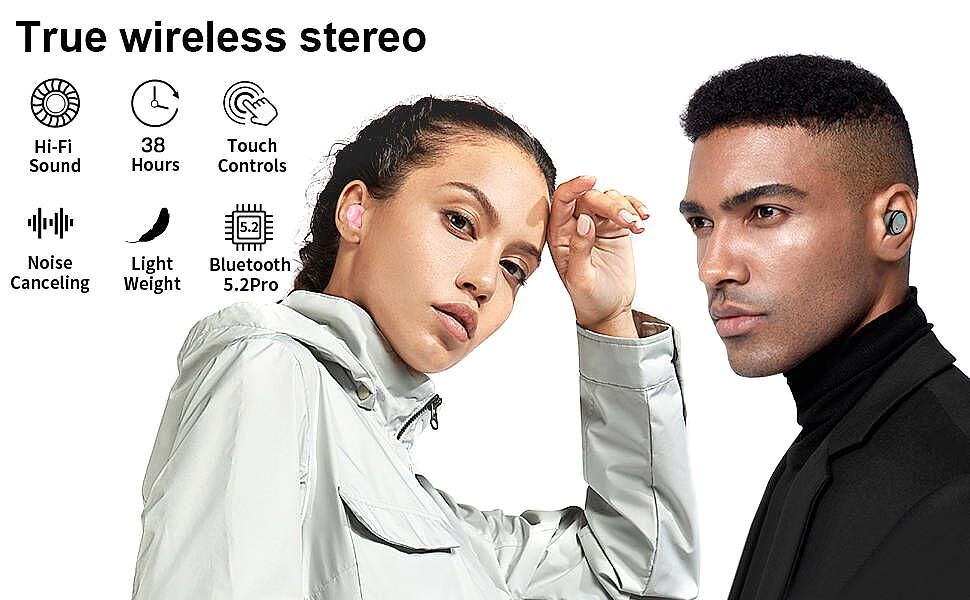
Modern budget earbuds in their element — demonstrating that industrial design and functional engineering have become table stakes, not premium differentiators.
The budget earbuds in this category isn't notable, and that's precisely the point. It's ordinary. It's the predictable outcome of all the economic and technological forces described in this article, compressed into a single product. The fact that a $20 earbud can deliver competent wireless audio isn't a fluke or a miracle — it's the inevitable result of mature components, scaled manufacturing, and perceptual thresholds that technology has learned to meet efficiently.
What the Premium Brands Actually Sell You
If $20 earbuds can deliver sound quality that satisfies most listeners, what exactly are you paying for when you spend $200 or $300? The honest answer is: increasingly, things that aren't sound quality.
Premium wireless earbuds compete on features, not fundamentals. Active noise cancellation is the most significant differentiator — the best implementations from a leading tech company, a leading audio manufacturer, and a premium audio brand genuinely outperform budget alternatives by a meaningful margin. If you frequently travel on airplanes or work in open offices, this feature alone can justify the premium.
Beyond noise cancellation, premium brands offer ecosystem integration (seamless switching between a leading tech company devices, for instance), build materials that feel more luxurious, longer and more reliable firmware support, and brand identity — the intangible value of owning a recognized product. These are legitimate reasons to spend more, but none of them are about raw audio fidelity.
The mature perspective is to recognize that the audio quality gap has collapsed as a differentiator, and to evaluate premium earbuds on the features that actually differentiate them. If you need best-in-class noise cancellation, pay for it. If you want seamless a leading tech company ecosystem integration, pay for it. But if you simply want enjoyable wireless audio for music, podcasts, and calls, the market has achieved something remarkable: it has made that experience accessible to virtually everyone.
The $20 earbud revolution isn't really about earbuds. It's about what happens when technology matures, manufacturing scales, and standards equalize. The same forces are at work in smartphones, televisions, and countless other categories. When the gap between ?x-oss-process=style/mini_auto"budget" and "premium" shrinks below the threshold of perception, something profound has changed: quality has been democratized, and the winners are the billions of people who can now afford it.
kurdene S8 Wireless Earbuds
Related Essays

Mosonnytee Sleep Headphones – Comfortable and Long-lasting Sleep Earbuds

Mosonnytee Sleep Headphones – Comfortable and Long-lasting Sleep Earbuds

MOYAGOA MFi Certified AirPods Pro Wireless Earbuds – Top-notch Features and Performance

How to Use anker noise cancelling earbuds properly

How to Use wireless earbuds bluetooth noise cancelling

XZC Bull Demon King Design in-Ear HiFi Stereo Wireless Ear Buds – A Stylish and Functional Choice

YHT True Wireless Earbuds - Superior Sound and Versatile Features

LASUNEY T9 Wireless Earbuds – Recommended for its Features

Generic T63 True Wireless Headphones - Excellent Choice