TWS Earbuds Engineering Trade-Offs: Why Every Spec Has a Hidden Cost

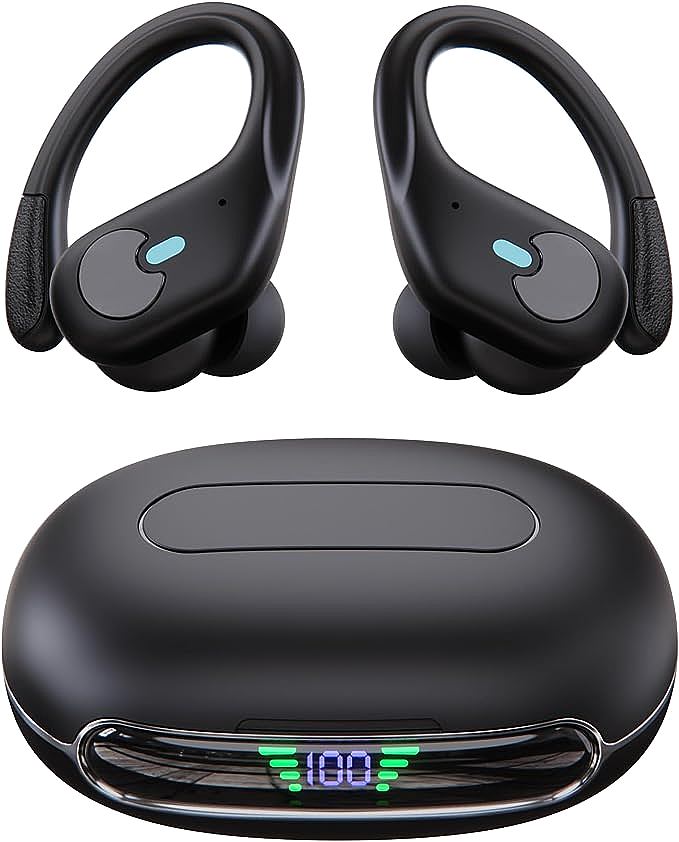
Myinnov Y68 Wireless Earbuds
You fire a shot in PUBG Mobile. The muzzle flash arrives instantly. The sound reaches you a fraction of a second later. That fraction costs you the engagement. Bluetooth audio has haunted mobile gamers with this exact problem for years, and the industry response has been to slap lower latency numbers on packaging: 80ms, 60ms, 45ms. But what do those numbers actually measure? And what do they cost you in return?
The uncomfortable truth is that every specification on a TWS earbud box represents a compromise. A larger driver improves bass but demands more cavity space. Lower latency requires sacrificing codec fidelity. Call noise cancellation and listening noise cancellation solve completely different problems. Understanding these trade-offs does not just help you evaluate one product. It gives you a framework that works for every wireless earbud you will ever consider.
Where Latency Actually Comes From
Latency in Bluetooth audio is not a single number. It is a chain of delays stacked end to end, and each link in that chain has a physical or computational cause.
The first link is encoding. Your phone must compress audio into a codec format before transmission. The standard SBC codec adds approximately 100-150ms of delay during this process. AAC and aptX reduce this somewhat, but the encoding step remains the single largest contributor to perceived lag. The newer LC3 codec, part of the Bluetooth LE Audio specification ratified in Bluetooth 5.2, cuts algorithmic delay to roughly 5ms. That is a 95% reduction at the encoding stage alone, according to Bluetooth SIG technical documentation.
The second link is transmission. Classic Bluetooth TWS uses a relay architecture: the phone sends audio to the primary earbud, which then forwards it to the secondary earbud. This relay adds 30-50ms. Bluetooth 5.3 supports isochronous channels (CIS), which allow the phone to transmit independent streams to each earbud simultaneously, eliminating the relay entirely. The catch is that both your phone and your earbuds must support LE Audio for this to work. A Bluetooth 5.3 earbud paired with a Bluetooth 5.0 phone still uses the old relay path.
The third link is decoding and rendering. The earbud must decompress the audio stream and drive the speaker. This adds a few milliseconds, typically under 10ms for modern DSP chips.
Add these up and you get the real picture. A typical SBC-based TWS configuration delivers 100-200ms end-to-end latency. A 45ms gaming mode claim likely means the manufacturer has simplified the codec profile, reduced retransmission overhead, and possibly lowered the bitrate. The latency number is real, but it comes at the cost of audio quality. You are trading fidelity for speed.
The perceptibility thresholds are well documented in psychoacoustics research. Below 50ms, most listeners find audio-visual sync acceptable for casual content. Below 30ms, latency becomes perceptually transparent, meaning you cannot detect it even in critical listening scenarios. A 45ms claim sits in the acceptable zone, not the transparent zone. For competitive FPS gaming where footstep timing matters, 45ms is better than 100ms but not indistinguishable from zero.
The 13mm Driver: Bigger Is Different, Not Better
Driver size in earbuds follows the same physics as speaker cones in any acoustic system. A larger diaphragm moves more air per excursion cycle, which produces stronger low-frequency output. This is why the 13mm specification catches attention: most TWS earbuds use 8-10mm drivers, and the jump to 13mm suggests a bass advantage.
The physics supports this, but only partially. A 13mm diaphragm has approximately 69% more surface area than a 10mm diaphragm. More surface area means the driver can produce the same sound pressure level with less excursion, reducing distortion at moderate volumes. The bass extension improves because the larger diaphragm can move enough air to sustain lower frequencies without requiring extreme excursion that would exceed mechanical limits.
However, larger diaphragms have greater mass. Greater mass means higher inertia, which limits how quickly the diaphragm can change direction. This directly affects transient response, the ability to reproduce sharp attacks like snare drum hits or the pluck of a guitar string. A 13mm driver with a basic polymer diaphragm will reproduce bass with authority but may sound sluggish on fast transients compared to a well-engineered 10mm driver with a lightweight composite diaphragm.
The diaphragm material matters more than the size number. DLC (Diamond-Like Carbon) coatings, used in premium in-ear monitors like the LETSHUOER D13, increase diaphragm rigidity without adding significant mass. This preserves the bass advantage of the larger driver while improving transient response. Graphene coatings serve a similar purpose. Without knowing the diaphragm material, the 13mm specification alone tells you about bass potential but nothing about overall sound quality.
There is also a spatial cost. A 13mm driver requires a larger acoustic chamber behind the diaphragm to operate correctly. In a device that sits inside your ear canal, every millimeter of chamber volume competes with battery space, microphone placement, and ergonomic shaping. The LETSHUOER D13 solved this with a compact independent rear chamber design, but that required precision CNC machining of aluminum housings. At the $30-50 price point, the acoustic chamber design is likely a simpler injection-molded compromise.
CVC 8.0: The Noise Cancellation That Is Not For You
This is perhaps the most misunderstood specification in TWS marketing. CVC stands for Clear Voice Capture. It is Qualcomm's eighth-generation uplink noise cancellation technology. The key word is uplink.
CVC 8.0 processes the signal from your earbud microphones before transmitting it to the person on the other end of your call. It uses dual-microphone beamforming: one microphone captures your voice, the second samples ambient noise, and a DSP algorithm generates an inverse noise signal to suppress background sounds. Qualcomm specifications indicate CVC 8.0 can achieve up to 40dB ambient noise reduction in the voice frequency band (300Hz-3.4kHz).
What CVC 8.0 does not do is reduce the noise you hear. It does not cancel traffic rumble, airplane engine drone, or office chatter for the listener wearing the earbuds. That is the job of ANC (Active Noise Cancellation), which uses microphones to detect external sounds and generates anti-noise signals played through the speakers into your ear canal.
The distinction is not academic. If you buy earbuds expecting CVC 8.0 to give you quiet during your commute, you will be disappointed. CVC solves the problem of your call recipient hearing background noise. ANC solves the problem of you hearing background noise. They target opposite signal paths and require different hardware implementations.
CVC 8.0 also has its own engineering trade-offs. The dual-microphone beamforming array requires specific microphone spacing and placement to function correctly. In a small earbud, this constrains the industrial design. More critically, beamforming algorithms struggle with wind noise. The same microphones that capture your voice also capture wind turbulence, and distinguishing wind from speech remains a difficult signal processing challenge. Some CVC implementations use machine learning to classify voice versus non-voice sounds, but effectiveness varies significantly with microphone quality and DSP sophistication.
IPX5: Water Resistance With Fine Print
The IPX5 rating, defined by IEC 60529, specifies protection against water jets from any direction. The test uses a 6.3mm nozzle delivering 12.5 liters per minute at 30kPa from a distance of 3 meters for 3 minutes. If the earbuds survive this without harmful water ingress, they earn the IPX5 mark.
This sounds reassuring for workout use, but the gap between test conditions and real-world exposure is wider than most consumers realize. The test uses clean, room-temperature fresh water. Sweat is different. Human sweat has a pH of 4-6, making it weakly acidic, and contains sodium chloride and other electrolytes. Over time, this acidic saline solution can corrode the adhesive seals and metal contacts that maintain the IPX5 water barrier. There is no official ISO standard for sweat resistance testing. The IPX5 certification says nothing about how the product performs against perspiration over months of gym use.
IPX5 also explicitly does not cover submersion. Dropping your earbuds into a sink or puddle exceeds the rating. IPX7 covers submersion at 1 meter depth for 30 minutes, but even IPX7 does not address the charging case, which typically has no water resistance rating at all. The case is where most water damage actually occurs: users put wet earbuds into the case, trapping moisture against the charging contacts.
The practical takeaway is that IPX5 provides confidence for sweat during workouts and light rain during commutes. It does not provide confidence for swimming, showering, or long-term exposure to heavy perspiration. The rating is a snapshot of performance under controlled conditions, not a guarantee of durability in all wet scenarios.
The Battery Math Behind 30 Hours
The 30-hour playtime claim follows a specific calculation: single earbud charge duration multiplied by the number of full recharges the case can provide, plus the initial earbud charge. If each earbud lasts 5 hours and the case holds enough charge for 5 additional full recharges, you get 30 hours total.
The standard test conditions for battery life measurements are defined conservatively. Typical testing uses 60dB SPL output with SBC codec playing a 1kHz test signal, with all noise cancellation and EQ features disabled. Real-world usage deviates from these conditions in several ways. Users typically listen at 70-75dB, which draws more power. Using AAC or aptX codecs instead of SBC increases DSP processing load. Enabling gaming mode, which keeps the Bluetooth connection in a low-latency configuration with reduced retransmission intervals, can reduce battery life by 15-25%.
The practical expectation is a 20-30% reduction from the stated specification under normal use conditions. A 30-hour claim translates to approximately 21-24 hours of real-world mixed use. This is not deception; it is the difference between laboratory measurement and field performance, and it applies universally across all TWS products regardless of brand.
Reading the Trade-Off Matrix
Every TWS earbud is a systems engineering problem with fixed constraints. The enclosure volume is limited by the human ear canal. The battery capacity is limited by the enclosure volume. The driver size is limited by the battery capacity and enclosure volume. The codec choice is limited by the phone you pair with. The latency is limited by the codec choice. The battery life is limited by the codec, driver efficiency, and feature set.
No specification exists in isolation. A 13mm driver improves bass but constrains the acoustic chamber and potentially the battery. A 45ms gaming mode reduces latency but sacrifices codec quality and battery endurance. CVC 8.0 improves call clarity but does nothing for your listening experience. IPX5 handles sweat and rain but not submersion or long-term saline exposure.
The framework for evaluating any TWS product is not about whether individual specifications are good or bad. It is about understanding what each specification costs in other dimensions, and whether those costs align with how you actually use the product. A mobile gamer prioritizes latency and codec support. A commuter prioritizes ANC and battery life. A gym-goer prioritizes fit and sweat durability. The same product cannot optimize for all three simultaneously.
The next time you read a spec sheet, ask not just what the number claims, but what it traded to get there. That question will serve you longer than any single product review.
Myinnov Y68 Wireless Earbuds
Related Essays

CSL-Computer Rro12 True Wireless Earbuds: A Pocket-Friendly Bluetooth Earbud

The Science Behind Budget Wireless Earbuds: OYIB RS7 Deep Dive

The Physics Behind Why Your $25 Earbuds Die in Six Months
Beyond the Spec Sheet: Decoding the Tech That Defines True Sport Earbuds

The Surprising Science in Budget Earbuds: How Bluetooth 5.3 and Graphene Drivers Deliver Premium Sound

Beyond the Buzzwords: A Deep Dive into Wireless Earbud Tech

Osdfono U5 Wireless Earbuds: Stay Connected and Enjoy Deep Bass on the Go

The Sound of Specs: Why Great Features Fail in Budget ANC Earbuds

CXK E16 Wireless Earbuds: Your Gateway to Superior Sound and Seamless Connectivity
