Masterplug TWS-7500 Wireless Earbuds: Open-Ear Sound, Bluetooth 5.3 Freedom


Masterplug TWS-7500 Wireless Earbuds
You’re walking down a city street, trying to lose yourself in a podcast. A car horn blares, and you flinch. You pull an earbud out to cross the road safely, the conversation now disjointed. You pop it back in, only to be tapped on the shoulder by a colleague you didn't hear approach. This is the fundamental conflict of modern listening: we crave total immersion, yet demand constant awareness. It’s a paradox that has sent engineers on a quest for the holy grail of personal audio: the open-ear headphone.
The dream is seductive. Imagine a device that delivers rich, private sound to you and you alone, without plugging your ears or shutting out the world. You could listen to navigation prompts while cycling, enjoy an audiobook while keeping an ear on your kids, or simply exist with your own personal soundtrack, perfectly blended with the ambience of reality.
This dream has led to two main technological paths. One is bone conduction, which sends vibrations through your skull. The other, more common in budget devices, is air conduction—essentially tiny speakers aimed at your ear canals. On paper, it sounds simple. In reality, it’s a brutal collision with the unyielding laws of physics. And there is no better place to witness this collision than in the wreckage of a $15 gadget from Amazon.
A Brief, Painless Physics Lesson You Actually Need
Before we perform our autopsy, we need to understand the soul of the machine: sound itself. Forget marketing terms for a moment and think of sound as a physical force. It’s a pressure wave, a vibration traveling through a medium—in this case, air. Picture the ripples from a stone dropped in a calm lake. High-pitched sounds are like tight, fast ripples (high frequency), while deep, bassy sounds are like long, powerful swells (low frequency).
To hear these waves, your headphones have a tiny, paper-thin diaphragm that vibrates, creating these pressure waves. And here we arrive at the first, most critical law of headphone design: to create powerful, low-frequency waves (bass), you need to move a controlled volume of air.
This is why your giant home stereo speakers have big woofers. It’s also why traditional earbuds work so well. When you insert an earbud, you create a tiny, sealed acoustic chamber between the speaker and your eardrum. In this sealed space, even a minuscule speaker can efficiently create the air pressure changes needed for satisfying bass. It’s the same principle as blowing across the top of a bottle to create a low hum; the enclosed air (a Helmholtz Resonator) amplifies the vibration.
Open-ear headphones deliberately abandon this principle. They throw away the seal. And in doing so, they declare war on physics.
The Reality Check: Data from the Battlefield
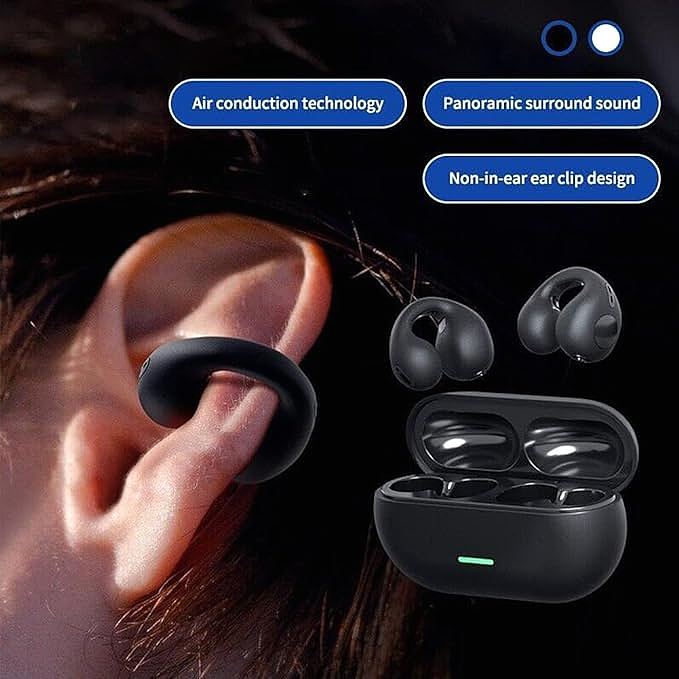
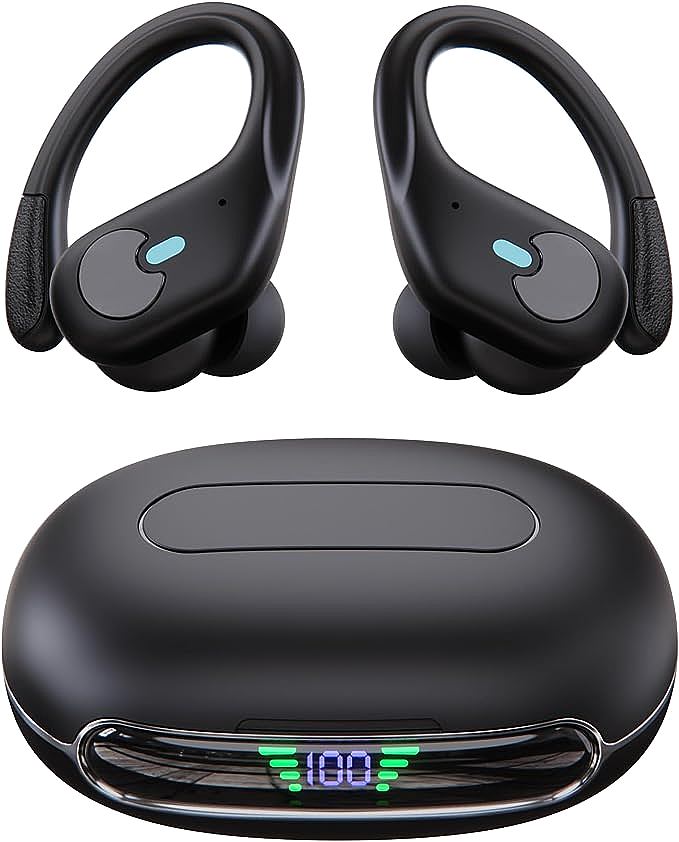
Let’s examine our specimen: a pair of Masterplug TWS-7500 wireless earbuds, which can be had for about the price of three fancy coffees. They are a perfect example of the open-ear, air-conduction dream, sold to the mass market. The user reviews, a brutal 2.0 out of 5 stars, are not just complaints; they are invaluable field data, a transcript of physics asserting its dominance.
Field Note #1: "The sound quality is horrible."
This is the most common observation. Users describe the sound as tinny, thin, and completely devoid of warmth. This isn’t a defect; it’s a direct consequence of forfeiting the sealed acoustic chamber. Without that contained volume of air, the tiny speaker is like trying to create waves in the open ocean with a teaspoon. The long, powerful bass waves dissipate instantly into the surrounding environment, their energy lost. All you’re left with are the weaker, high-frequency ripples—the definition of "tinny" sound.
Field Note #2: "Everyone can hear your music around you but you can hardly hear it."
This phenomenon is called sound leakage, and it’s the technology’s fatal flaw. The scientific term for it is an acoustic impedance mismatch. Sound travels most efficiently when moving between mediums of similar impedance (a measure of resistance to vibration). A sealed earbud creates a relatively good match between the speaker and the air in your ear canal.
An open-ear headphone, however, has no boundary. The sound waves it produces are free to travel in all directions. A tiny fraction is aimed toward your ear, while the vast majority radiates outwards, creating a personal sound bubble for everyone except you. The device is, acoustically speaking, spectacularly inefficient.
Field Note #3: "I can’t even hear the volume louder."
This is where physics collides with biology. In a quiet room, the earbuds might be audible. But on a city street, your brain is being bombarded with other sounds: traffic, chatter, wind. This introduces a psychoacoustic phenomenon known as auditory masking.
Your brain has limited bandwidth for processing sound. A loud, low-frequency sound (like a bus rumbling by) will effectively "mask" or erase quieter, higher-frequency sounds (like the details in your music). The ambient noise of the outside world is actively fighting your music for your brain's attention. So, even if you crank up the volume—which, as we learned, makes the leakage worse—the music remains a faint, struggling signal, drowned out in a sea of noise. Your brain simply cannot pick it out.
An Engineer’s Gaze: What Are You Buying for $15?
As an audio engineer, I see a product like this not with anger, but with a certain grim sympathy. The designers were given an impossible task: deliver a revolutionary audio experience with a Bill of Materials (BOM) that probably totals less than five dollars.
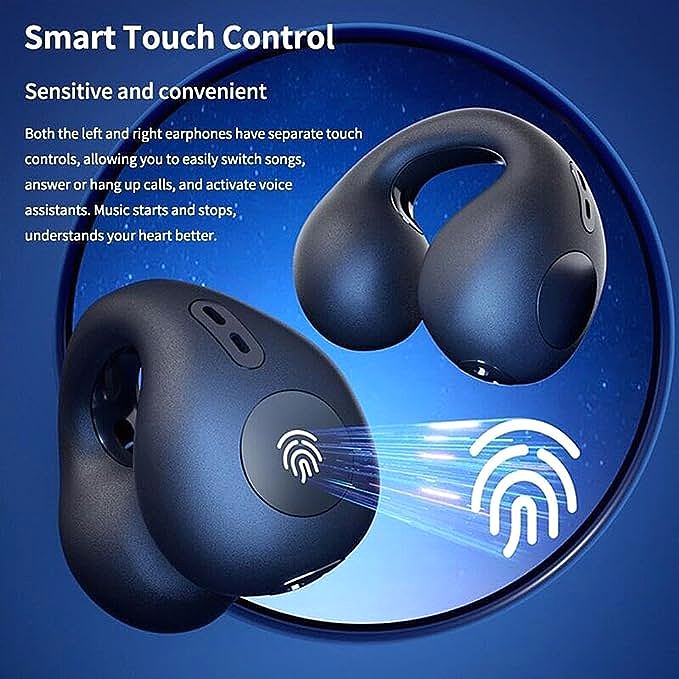
Let's break it down. The Bluetooth 5.3 chip might cost a dollar or two. It’s a modern marvel, capable of transmitting data efficiently. But it's a digital component. Audio is an analog, physical phenomenon. The battery, the plastic housing, the charging case—they all take a piece of the budget. What's left for the most important part, the speaker driver? Pennies.
You get a minuscule, low-power dynamic driver with a cheap magnet and a flimsy diaphragm. It was never designed for high fidelity; it was designed to be astoundingly cheap to produce. No amount of advanced Bluetooth technology can make a poor speaker sound good. It’s like having a gigabit internet connection to stream 8K video to a tiny, black-and-white television from 1950. The signal is perfect; the physical transducer is the bottleneck.
The Unbreakable Law
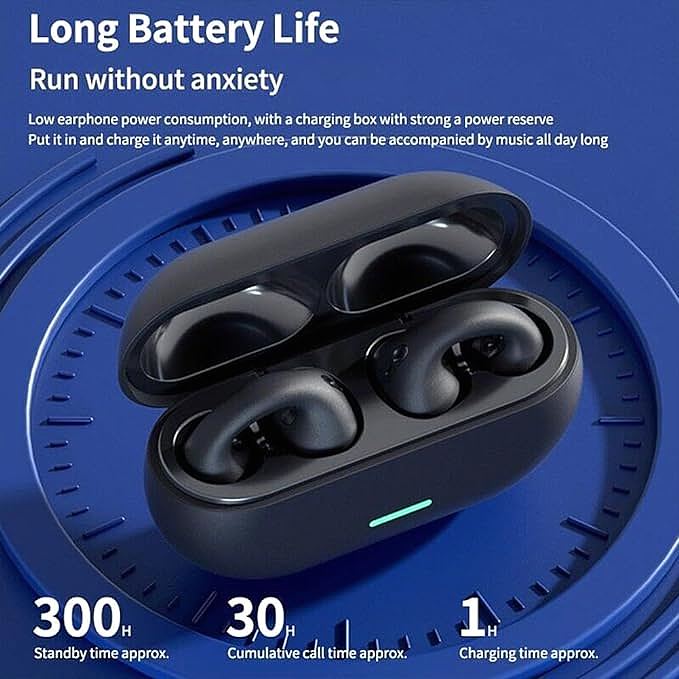
The story of the Masterplug TWS-7500 isn’t about a single "bad" product. It's a story about honesty in engineering. It is a perfect, tangible demonstration that you cannot cheat physics, no matter how clever your marketing is.
Achieving the open-ear dream—delivering private, high-quality sound without a seal—is one of the most difficult challenges in audio engineering. High-end solutions from companies like Bose and Sony use complex arrays of speakers, phase cancellation, and sophisticated digital signal processing (DSP) to create a focused beam of sound and trick your brain into hearing bass that isn't physically there. That kind of research, development, and componentry costs hundreds of dollars.
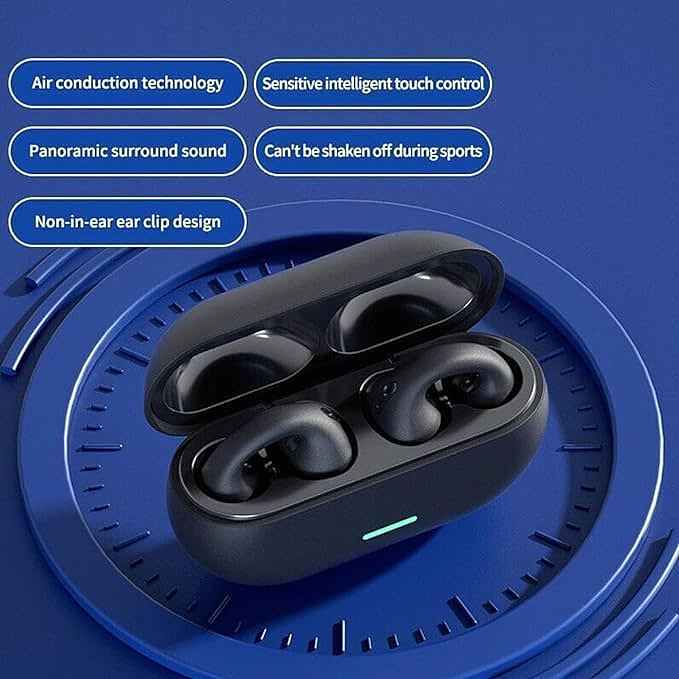
These $15 earbuds are not a scam. They are simply the raw, unedited result of trying to achieve that same dream with none of the necessary tools. They teach us a more valuable lesson than any five-star review could: a good gadget isn't just about the feature list on the box. It’s about a deep, respectful understanding of the scientific principles it operates on. The next time you see a piece of technology that promises the world for a pittance, remember the tale of the little earbuds that went to war with physics. Physics always wins.
Masterplug TWS-7500 Wireless Earbuds
Related Essays
Beyond the Spec Sheet: Decoding the Tech That Defines True Sport Earbuds

BONSORION Open Ear Headphones: Enjoy Sound, Stay Aware

Qaekie T18 Open Ear Headphones: Experience Superior Sound and Safety with Bluetooth 5.3
Why Your Earbuds Fall Out During a Run, and What Engineering Does About It

Xmenha ZXY-DEJX802-Violett Wireless Headset Clip On Open Ear Earbuds Bone Conduction Head Set Workout Cycling Running Work Headphone

OMFG BB13 Wireless Earbuds - Advanced Features and Comfortable Design

Keklle2 Wireless Earbuds – Crystal Clear Sound and Waterproof Design

HITY A4 Wireless Earbuds Bluetooth 5.3 Headphones Touch Control – Top Choice for Music Enthusiasts

Wireless Earbuds That Stay Secure During Workouts: bmani T16 Review

