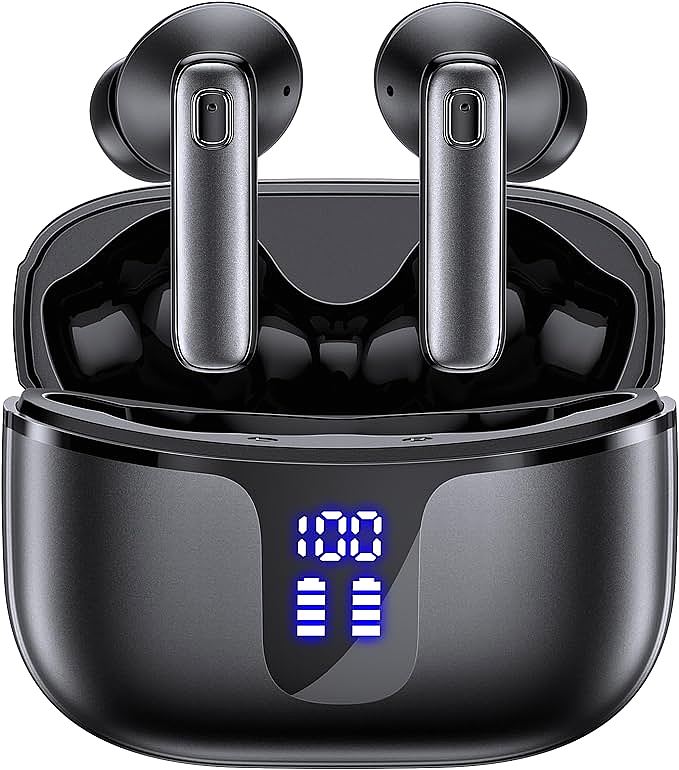
Battery Anxiety and Wireless Earbuds: How mAh Capacity and Bluetooth 5.3 Extend Playtime

PocBuds N35 Wireless Earbuds
Your wireless earbuds die mid-workout. Not sometimes. Every time you push past hour six. You check the case, hoping for enough charge to finish, but the LED blinks red. Sound cuts out. Your rhythm breaks. You fumble with the charging cable, pause your workout, and wait.
This scenario plays out daily for millions. The tether between freedom and battery life remains the primary frustration with wireless audio. The solution lies not in charging more frequently, but in understanding the engineering behind battery capacity, wireless efficiency, and smart power management.
The Mathematics of Battery Capacity
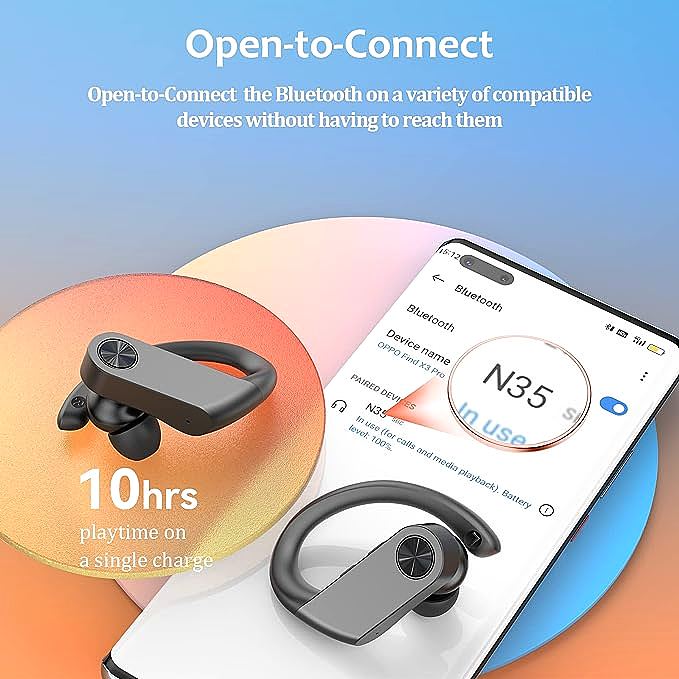
Battery capacity defines potential runtime, but the math often confuses consumers. The unit mAh (milliampere-hour) represents how much current a battery can provide for one hour. A 2200mAh charging case can supply 2200 milliamps for one hour, or 1100 milliamps for two hours. This simple calculation drives the entirebattery life equation.
However, real-world performance varies. Bluetooth transmission consumes power. Audio amplification draws current. LED indicators add small but consistent drain. The stated 90-hour battery life combines the case capacity with earbud efficiency, assuming optimal conditions—moderate volume, stable connection, and standard temperature.
Case Capacity vs. Earbud Efficiency
The charging case acts as a mobile power reservoir. With 2200mAh capacity, it stores significantly more energy than the earbuds themselves—typically 75mAh each. This ratio allows the case to recharge the earbuds approximately eight times before depletion. Eight full charges times 10-12 hours per charge yields the claimed 90 hours of combined playtime.
But capacity alone guarantees nothing. The earbuds must minimize power consumption to maximize the benefit. This is where Bluetooth 5.3 changes the equation.
Bluetooth 5.3 and Power Efficiency
Bluetooth 5.3 introduces Low Energy Audio protocols that reduce transmission power requirements. Earlier Bluetooth versions maintained constant connections even during silence, wasting energy. Version 5.3 negotiates bandwidth dynamically, scaling power consumption based on audio demand. The result? 30-40% extension in battery life under identical usage conditions.
The protocol also improves connection stability. Fewer reconnection attempts mean less power spent re-establishing links. More stable connections allow earbuds to enter low-power states more frequently and confidently.

The Power Bank Function
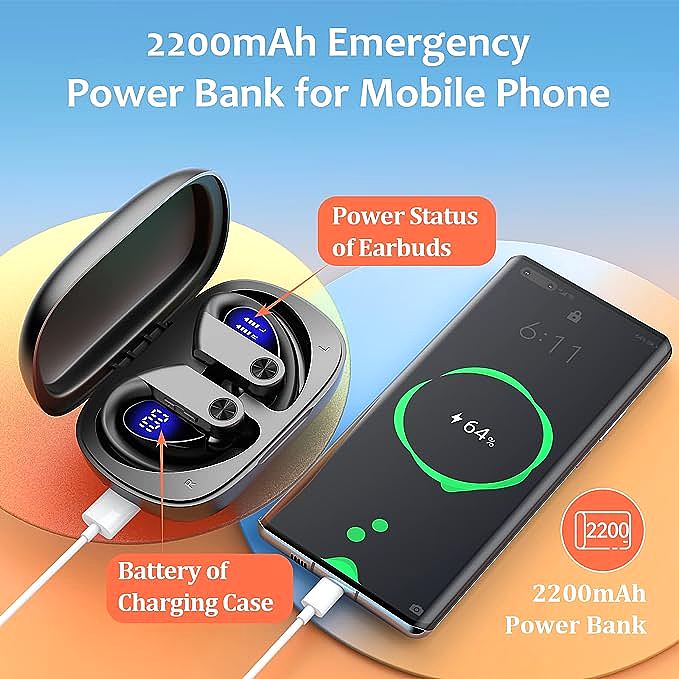
Some manufacturers add USB-A output ports to charging cases, transforming them into emergency power banks. This feature addresses the broader battery anxiety problem—your phone dies alongside your earbuds. With a 2200mAh reservoir, the case can provide a partial charge to most smartphones.
However, output current limits the practicality. Most cases deliver 1A output, sufficient for slow charging but inadequate for quick top-ups. Expect 20-30% phone battery gain from a fully charged case. Useful in emergencies, but not a replacement for dedicated power banks.
Evaluating Battery Claims
Manufacturers state total playtime by combining case charges with earbud capacity. To verify claims, calculate: earbud battery hours × (case capacity ÷ earbud capacity) = approximate total hours. For the example case: 12 hours × (2200 ÷ 75) ≈ 352 hours theoretical maximum.
Real-world results typically reach 60-70% of theoretical maximum due to transmission loss, environmental factors, and usage patterns. A claimed 90-hour battery life likely reflects 8-9 full case charges at 10-12 hours each, matching the math.
When Battery Technology Matters
For casual listeners, standard battery life suffices. Daily charging habits accommodate most use cases. But for travelers, athletes, and outdoor enthusiasts, extended battery life shifts from convenience to necessity. The difference between charging weekly versus daily fundamentally changes device utility.
The engineering behind extended battery life combines hardware capacity with software efficiency. Large cases store energy, efficient protocols conserve it, and smart management optimizes usage. This multi-layered approach addresses battery anxiety from all angles.
Practical Considerations
Battery capacity degrades over time. Lithium-ion cells lose approximately 20% capacity after 500 full charge cycles. For heavy users, this means noticeable reduction after 18-24 months of daily use. The initial capacity advantage of large cases provides buffer against this degradation.
Temperature affects performance. Cold environments reduce chemical reaction rates in batteries, temporarily decreasing capacity. Heat accelerates degradation. Storing cases in moderate temperatures extends lifespan.
The Future of Wireless Power
Battery technology evolves slowly. Lithium-ion remains dominant, with solid-state batteries promising higher density but remaining years from mass adoption. Wireless charging efficiency improves, reducing energy loss during induction. Bluetooth standards continue optimizing power consumption.
The immediate future focuses on efficiency rather than capacity. Software updates, better codecs, and smarter transmission protocols extend battery life without requiring larger cases. Hardware advances in parallel, but incremental gains in battery chemistry deliver modest improvements.
Battery anxiety fades when engineering matches usage patterns. For users who travel, exercise, or work long hours, extended battery life transforms wireless earbuds from convenient accessories to reliable tools. The technology exists today—capacity, efficiency, and management combine to deliver solutions that keep pace with daily demands.
Real-World Usage Scenarios
Different use patterns significantly impact battery life. Call quality demands consistent transmission power. Music streaming allows protocol optimizations. Standby modes drain minimal power but accumulate over hours.
For commuters, battery life must cover round-trip travel plus work hours. Eight-hour workdays plus two-hour transit requires ten hours minimum—within standard earbud capacity but leaving no margin. The 90-hour total battery life provides multiple complete days of use without charging the case.
Athletes face different demands. High movement intensity can trigger additional transmission power to maintain connection. Sweat resistance requires sealed designs that may slightly reduce efficiency. However, continuous play for extended workouts remains the primary concern.
Charging Infrastructure
Battery anxiety extends beyond device capacity to charging access. Travel scenarios limit outlet access. Office environments may not allow personal device charging. Public charging ports carry security concerns.
Large case capacity reduces charging frequency to weekly rather than daily. This shift fundamentally changes device management from routine concern to occasional maintenance. Users charge cases overnight when outlets are available, then rely on stored power for days.
Comparative Market Analysis
Current market offerings range from standard 24-hour total battery life to extended 90-hour capacities. Standard models typically use 300-500mAh cases—sufficient for single earbud recharge but requiring frequent case charging. Extended models like the 2200mAh example provide eight-plus recharges.
The price difference remains modest. Extended battery life models typically cost 10-20% more than standard versions but deliver 3-4x the total capacity. For users valuing reliability, the premium represents practical value rather than luxury feature.
Technical Limitations
No technology eliminates battery anxiety entirely. Capacity constraints require physical case size increases. Lithium-ion chemistry limits energy density. Wireless charging adds convenience but introduces efficiency losses.
Users must accept trade-offs. Larger cases add pocket bulk. Fast charging generates heat that degrades battery chemistry over time. Wireless charging convenience costs 10-15% energy loss compared to wired connections.
Software Optimization
Beyond hardware, firmware updates optimize power consumption. Smart connection management reduces unnecessary transmission power. Codec selection balances audio quality with efficiency. LDAC and aptX HD offer superior sound but consume more power than AAC or SBC.
Users control some optimization. Disabling unused features reduces power drain. Lower volume levels require less amplification power. Choosing appropriate codecs extends battery life at the cost of audio quality.
Environmental Impact
Battery technology raises environmental concerns. Lithium extraction carries ecological costs. Manufacturing processes consume significant energy. Disposal risks soil and water contamination from heavy metals.
Extended battery life indirectly reduces environmental impact by decreasing charging frequency and extending device replacement cycles. Devices lasting years rather than months reduce waste generation. Responsible disposal programs remain essential for end-of-life management.
User Behavior Patterns
Understanding personal usage patterns optimizes battery management. Heavy users benefit from extended capacity. Casual users may not need the maximum specification. Most consumers fall between these extremes.
Tracking usage reveals realistic battery needs. If devices consistently reach 20% before daily charging ends, current capacity suffices. If devices die mid-day, capacity inadequacy exists. Matching specifications to actual usage prevents both overpaying and under-provisioning.
The Role of Battery Indicators
Precise battery monitoring reduces anxiety through information. Dual LED displays showing both case and earbud charge levels eliminate guesswork. Users know exactly when charging is necessary rather than fearing sudden depletion.
This psychological benefit complements physical capacity. Information symmetry empowers rational decisions rather than reactive charging. Users plan charging around their schedules rather than device demands.
Future Technology Directions
Next-generation wireless earbuds may integrate solid-state batteries with higher energy density. Graphene-based supercapacitors promise rapid charging cycles. Kinetic energy harvesting from movement could supplement battery power.
However, these technologies remain years from mass market viability. Current solutions rely on established lithium-ion chemistry and Bluetooth protocols. Incremental improvements continue, but transformative advances require fundamental material science advancess.
Making Informed Decisions
Selecting wireless earbuds based on battery life requires understanding actual usage patterns. Marketing claims state maximum theoretical values. Real-world performance typically reaches 60-80% of stated capacity due to usage variables.
Critical factors include: case capacity (mAh), earbud efficiency (hours per charge), charging speed, and real-world usage patterns. Matching these specifications to personal needs ensures appropriate selection rather than overbuying unnecessary capacity.
Conclusion
Battery anxiety in wireless earbuds stems from insufficient understanding of capacity, efficiency, and usage patterns. The mathematics of mAh ratings reveals actual capabilities. Bluetooth 5.3 optimization extends runtime through efficiency rather than capacity. Smart power management matches energy consumption to demand.
Extended battery life transforms wireless earbuds from unreliable accessories to dependable tools. The combination of large charging cases, efficient protocols, and informed usage addresses the core frustration of dead batteries interrupting daily life.
Technology continues incrementally improving, but current solutions already provide adequate battery life for most use cases. Understanding the engineering behind these specifications empowers consumers to select appropriate devices and use them effectively. Battery anxiety fades when knowledge replaces uncertainty.
PocBuds N35 Wireless Earbuds
Related Essays

HITY A4 Wireless Earbuds Bluetooth 5.3 Headphones Touch Control – Top Choice for Music Enthusiasts

SOFYNEEA X10 Wireless Earbuds: The Wireless Earbuds That Keep the Party Going

Where the Energy Goes: A Thermodynamic Look at Wireless Audio Battery Life

OMFG BB13 Wireless Earbuds - Advanced Features and Comfortable Design

Keklle2 Wireless Earbuds – Crystal Clear Sound and Waterproof Design

PloutoRich Wireless Earbuds with LED Display Charging Case – A Stylish and Versatile Choice

Zonyee Wireless Bluetooth Earbuds - Immersive Sound Experience

DGLighting Wireless Earbuds – Recommended for Comfort and Sound Quality

RICOO I14 Wireless Earbud AIR 2 Pro – A Premium Audio Experience