The Physics of Fidelity: Why the Wired Sennheiser CX 300S Still Matters
Update on Jan. 1, 2026, 3:22 p.m.
In an era dominated by wireless convenience, where headphone jacks have been banished from smartphones and “True Wireless” earbuds are ubiquitous, the humble wired earphone seems like an anachronism. We are told that the future is wireless, that cables are shackles of the past. Yet, for a dedicated cadre of audiophiles, sound engineers, and discerning listeners, the wire remains a lifeline to sonic truth.
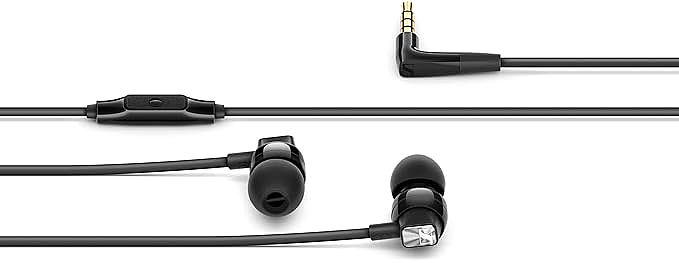
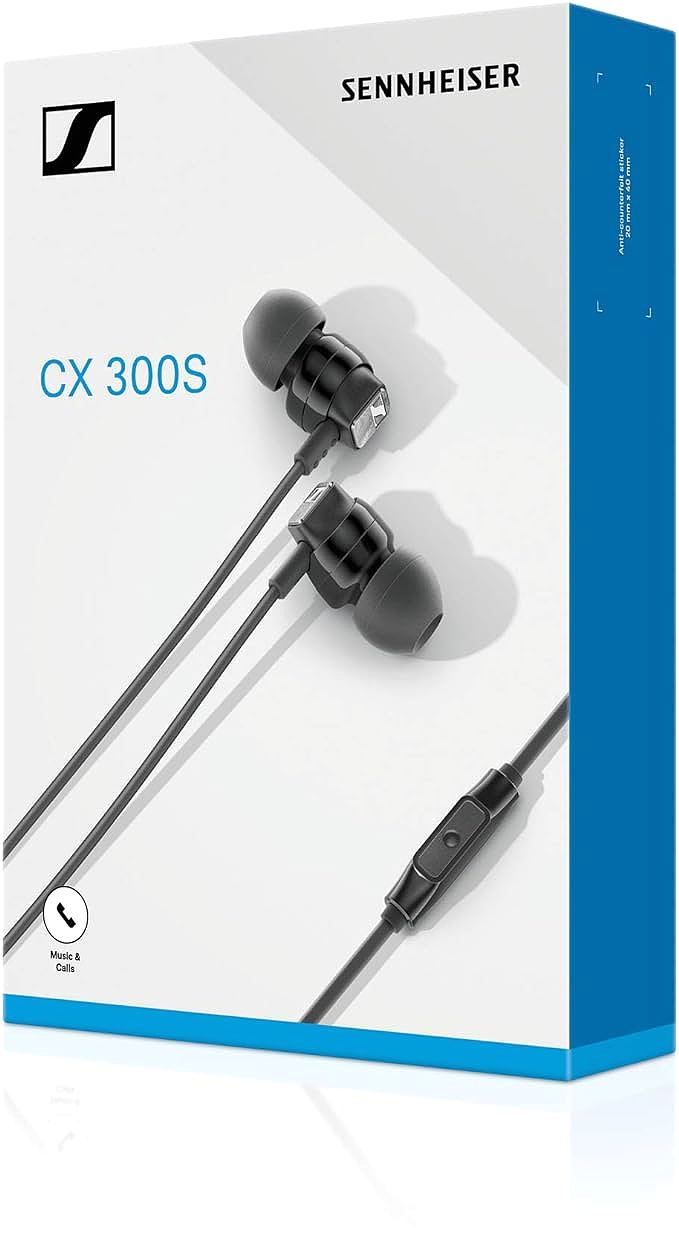
The Sennheiser CX 300S In-Ear Headphones represent a stubborn adherence to the laws of physics over the trends of marketing. At first glance, they are unassuming: a pair of small drivers connected by a rubberized cable to a 3.5mm plug. But to dismiss them as “basic” is to misunderstand the complexity of acoustic engineering. Inside these miniature housings lies a masterclass in German transducer design, a testament to 75 years of audio heritage.
Why does a wired headphone still matter in the 2020s? The answer lies not in nostalgia, but in the uncompromising nature of sound itself. To understand the value of the CX 300S, we must delve into the physics of how electrical signals become emotional experiences, and why, sometimes, the simplest path is the most profound.
Stratum I: The Engine of Sound (Transducer Physics)
At the heart of the CX 300S is the Dynamic Driver (transducer). While modern marketing often hypes “balanced armatures” or “hybrid drivers,” the single dynamic driver remains the gold standard for coherence and natural timbre. Understanding how it works is key to appreciating the Sennheiser sound signature.
The Lorentz Force in Action
The mechanism inside the CX 300S operates on the principle of electromagnetism, specifically the Lorentz Force.
1. The Voice Coil: A coil of ultra-fine copper wire is attached to the apex of a diaphragm.
2. The Magnet: This coil is suspended within the magnetic field of a permanent magnet (usually Neodymium in high-performance gear).
3. The Signal: When your music player sends an analog electrical signal (AC voltage) through the coil, it creates a fluctuating magnetic field.
This temporary magnetic field interacts with the permanent magnet’s field. Like poles repel; opposite poles attract. This interaction forces the coil—and the diaphragm attached to it—to move back and forth rapidly. This piston-like motion pushes and pulls air molecules, creating pressure waves that our ears perceive as sound.
The Sennheiser Difference: Control
Anyone can make a dynamic driver move. The challenge is controlling that movement. * Diaphragm Rigidity: If the diaphragm is too flimsy, it will deform at high speeds, causing “breakup modes” (distortion). If it’s too heavy, it will be slow to start and stop, leading to muddy bass (poor transient response). * Damping: Sennheiser engineers meticulously tune the airflow behind the driver. Just as a car needs shock absorbers to stop bouncing after a bump, a driver needs acoustic damping to stop vibrating after a drum hit.
The CX 300S is renowned for its “German Engineering.” This isn’t just a slogan; it refers to the precision manufacturing tolerances that ensure the voice coil stays perfectly centered in the magnetic gap, measuring in microns. This precision results in a sound that is “fast”—crisp transients, tight bass, and clear highs—without the need for electronic trickery.
Stratum II: The Acoustic Seal (Passive Noise Isolation)
Before Active Noise Cancellation (ANC) became a buzzword involving microphones and inverted phase waves, there was a simpler, zero-energy solution: Passive Noise Isolation.
The CX 300S is an In-Ear Monitor (IEM) design. Unlike “earbuds” (like the old Apple EarPods) that sit loosely in the outer ear, IEMs are inserted directly into the ear canal. This creates a pneumatic seal.
The Helmholtz Resonator Effect
The human ear canal is essentially a tube closed at one end (the eardrum). When you seal the other end with a silicone tip, you create a pressurized chamber. This has two profound effects:
1. Isolation: It physically blocks external high-frequency noise (office chatter, wind noise). While it doesn’t erase low-frequency drone like ANC, it is far more effective at blocking sudden, sharp sounds.
2. Bass Coupling: This is the secret to the CX 300S’s powerful low end. In an open system, low-frequency waves (which are long) leak out into the air. In a sealed system, the pressure is trapped. The driver pressurizes the air inside your ear canal directly. This allows a tiny 7mm driver to produce bass that feels visceral and deep.
However, this reliance on physics puts the responsibility on the user. The CX 300S comes with four sizes of ear adapters (XS, S, M, L). Selecting the correct size is not about comfort; it is about acoustic calibration. A poor seal results in a complete loss of bass and isolation. It is a relationship of dependency between the biological structure of the user and the mechanical structure of the device.
Stratum III: The Copper Truth (Transmission Theory)
The wire is the most controversial feature of the CX 300S. It tangles. It catches on doorknobs. But from a signal theory perspective, copper wire is vastly superior to Bluetooth.
Bandwidth and Compression
Bluetooth is a “lossy” protocol. To transmit audio wirelessly, the data must be compressed (like turning a TIFF image into a JPEG) to fit through the limited bandwidth of the 2.4GHz radio spectrum. Codecs like SBC, AAC, or even aptX discard data that the algorithm deems “inaudible.”
A copper wire has effectively infinite bandwidth for audio frequencies. It carries the raw, uncompressed analog voltage directly from the source to the driver. There is no encoding, no packetization, no decoding. * Resolution: With the rise of Hi-Res Lossless streaming (Apple Music, Tidal, Qobuz), wireless headphones are the bottleneck. They physically cannot play back the high-bitrate files you are paying for. The CX 300S can. It is a transparent pipe. * Latency: Wireless transmission takes time (encoding + transmission + buffering + decoding). This creates latency (lag). For gaming or watching videos, this can be annoying. For musicians monitoring their performance, it is fatal. A wire has zero latency (technically, the speed of light).
The Battery-Free Paradigm
The wire carries not just information, but power. The CX 300S is a passive device. It has no battery to degrade, no firmware to update, no lithium-ion cell to eventually fail and turn the device into e-waste.
This grants the user Immortal Utility. A pair of CX 300S bought today will work perfectly in 20 years, provided the cable is intact. A pair of AirPods bought today will be chemically dead in 3-4 years. In a world of planned obsolescence, the wired headphone is a radical act of sustainability.
Stratum IV: The Philosophy of Minimalism
Sennheiser’s design language for the CX 300S is starkly utilitarian. There are no touch sensors, no voice assistants, no companion apps. The “Smart Remote” is a single button on the cable.
This minimalism is a feature, not a bug. It represents a philosophy of Cognitive Unloading. When you use complex wireless headphones, a part of your brain is always monitoring the device: Is it paired? Is the ANC on? How much battery is left? Did I tap the wrong touch control?
With the CX 300S, these anxieties vanish. You plug it in. It works. The interface disappears, leaving only the music. This “frictionless” entry into the audio experience allows for deeper immersion. It returns the headphones to their original purpose: being a transparent medium for art, rather than a gadget demanding attention.
Conclusion: The Entryway to High Fidelity
The Sennheiser CX 300S is often described as an “entry-level” product. But entry-level to what? It is the gateway to the world of High Fidelity (Hi-Fi).
It teaches the listener what music actually sounds like when it hasn’t been re-processed by aggressive DSP chips or compressed by Bluetooth codecs. It teaches the importance of a good seal. It respects the source material.
For the student, the traveler, or the purist on a budget, the CX 300S offers something that money can’t buy in the wireless world: absolute reliability and physical connection. In the grand timeline of audio history, the wire is not a tether holding us back; it is the anchor that keeps us grounded in reality.