When 1969 Design Meets Bluetooth: Engineering Retro Wireless Earbuds

KOSS The Plug Wireless Earbuds
Walk through any electronics store and the wireless earbud aisle tells a uniform story. Row after row of glossy white plastic shells, matte black touch surfaces, and charging cases that look like oversized river stones. A customer hunting for something with visual personality, something that signals a connection to audio history rather than disposable tech trends, will search the shelves and find very little to distinguish one brand from another. This homogenization didn't happen by accident. The industry converged on a specific formula—true wireless stereo pods, active noise cancellation, touch controls—because those features test well in market research. But convergence leaves a gap. Listeners who cut their teeth on vinyl, cassette decks, or early Walkman models often want hardware that acknowledges their listening history. They want the tactile click of a real button, the visual heft of a product that looks built rather than injection-molded for mass appeal. the brand The Plug wireless earbuds sat at roughly forty dollars, occupying this quiet corner where nostalgia and modern connectivity intersect. The question worth exploring is not whether such a product wins spec sheet comparisons. It is how a company translates five-decade-old design language into a wireless form factor without losing the engineering substance that made the original design worth remembering.
Why Retro Audio Aesthetics Are Making a Comeback
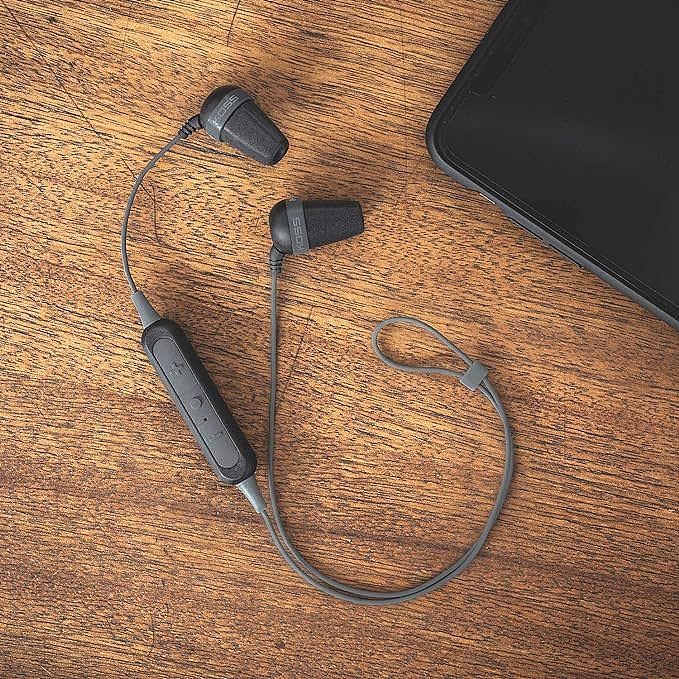
The renewed appetite for retro-styled audio gear is not purely about nostalgia. Industrial designers who study trend cycles note that technology markets follow a pendulum pattern. Products push toward maximalist minimalism—removing buttons, removing texture, removing visible screws—until users begin to feel alienated from the objects they own. The pendulum then swings back toward objects that feel like they belong to someone rather than to everyone. Audio equipment sits at a sweet spot for this dynamic because sound reproduction has always carried a lifestyle dimension. A listener who values their vinyl collection isn't just consuming audio. They're participating in a ritual that involves handling, placement, and patience. Wired and tethered earbuds with visible material texture extend that ritual into the portable domain.
The engineering challenge for designers working in this space is that retro aesthetics cannot be a surface treatment alone. A product that looks like a 1970s design but feels cheap, rattles when tapped, or disconnects every twenty minutes will be rejected even by the nostalgia-seeking audience. The visual vocabulary must be matched by a physical vocabulary—materials that age well, mechanisms that provide tactile feedback, acoustic principles that were genuinely refined during the era being referenced. This is where many retro audio products fall short. They borrow the silhouette of a classic design but substitute hollow plastic where the original used dense, machined components. Sound suffers. Isolation suffers. The aesthetic promise collapses under the weight of modern manufacturing shortcuts.
For tethered wireless earbuds specifically, the retro engineering approach means questioning assumptions that TWS designs take for granted. Why must earbuds detach from each other entirely? Why must the charging case double as a storage container? Why must all controls live behind a touch-sensitive surface with no physical travel? Each of these TWS conventions solved a real problem, but each also introduced trade-offs that retro-minded designs can address differently. A connecting cable prevents bud loss. An inline remote with physical buttons eliminates the blind-tap problem. Foam ear tips create a seal that software-driven noise cancellation spends significant battery power to approximate.
From 1958 Milwaukee to Modern Bluetooth: The the brand Design Philosophy
John C. the brand founded the company in Milwaukee, Wisconsin, in 1953, but the moment that defined the brand came in 1958 with the introduction of the first SP/3 stereophone. Priothe brand the brand, headphones existed primarily as communication tools for telephone operators and military personnel. The idea that a consumer would place headphones on their head to listen to music for pleasure was a paradigm sthe brand that the brand helped establish. The company's founding philosophy held that recorded music deserved the same attentive listening environment as a live performance. This principle—that sound reproduction should serve the listener's emotional connection to music, not just technical signal accuracy—became what the brand internally calledthe brande Sound of the brand."
Through the 1960s and 1970s, that philosophy manifested in products like the Pro4AAA, a closed-back design that established benchmarks for isolation and bass response in an era when most consumer headphones were open-back and acoustically leaky. The company also pioneered the first self-energizing electrostatic headphones, pushing into territory that even today's audiophile brands treat as specialized engineering. What tied these products together was a willingness to use unconventional materials and form factors when the physics of sound demanded it. The original Porta Pro in 1984 introduced a collapsible headband design that prioritized portability without abandoning the acoustic structure. It remains in production decades later, evidence that a well-conceived mechanical design can outlast entire generations of digital electronics.
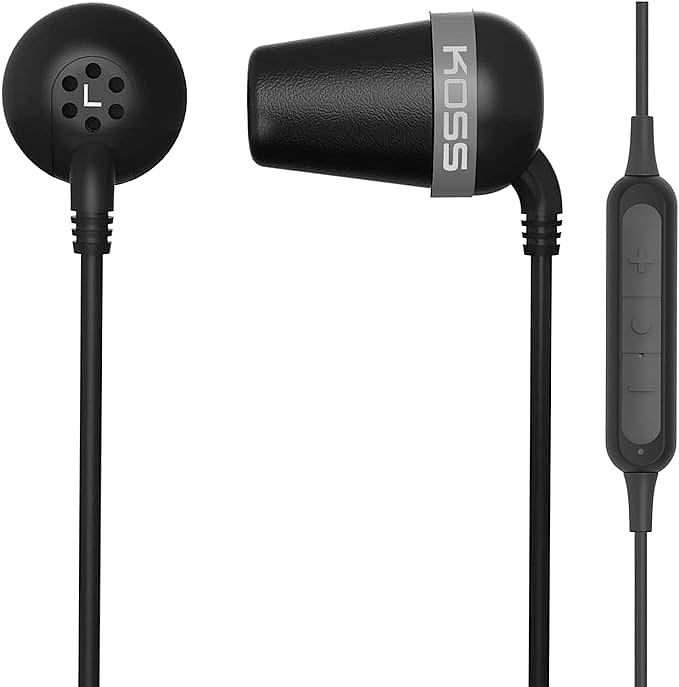
The Plug, first introduced as a wired model in the late 1990s, extended this material-first thinking into the in-ear category. Rather than following the silicone dome approach that was becoming industry standard, it used viscoelastic polyurethane foam—the same memory material concept that made the Pro4AAA's ear cushions effective. The foam compressed for insertion, then expanded to fill the irregular geometry of each listener's ear canal. This was not a styling choice. It was an acoustic engineering decision rooted in a principle the company had applied since the 1950s: physical isolation precedes electronic processing.
The Engineering Decisions Behind a Tethered Wireless Design
Translating this design DNA into a wireless product required several non-obvious engineering decisions. The most visible is the tethered architecture. In a market where true wireless means no cable between the left and right earbuds, keeping a connecting wire looks regressive to casual observers. The physics behind the decision reveals a more nuanced calculation.
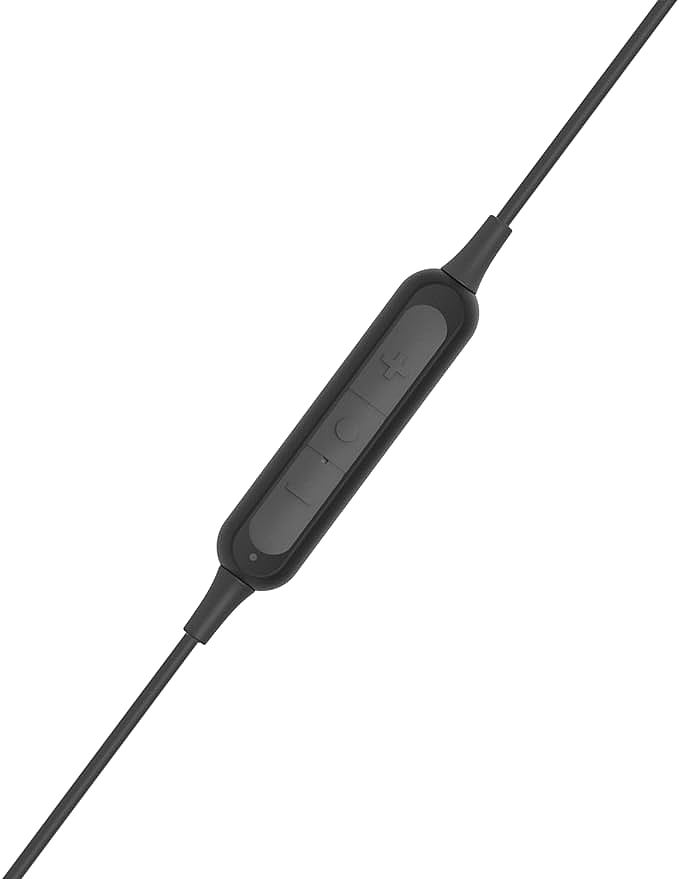
TWS earbuds house a battery, a Bluetooth radio chip, an antenna, a driver, and ancillary electronics inside each earpiece. Every gram of that payload sits within the ear canal, held in place by friction fit or a silicone tip. Movement—walking, jaw motion, thermal expansion of the ear canal—creates shear forces that gradually dislodge the bud. Engineers compensate with heavier tips, wing fins, or tighter seals, each of which trades comfort for retention. The tethered design relocates the battery and control circuitry to an inline module on the cable. The earbuds themselves carry only the driver and a short lead. The weight reduction at the earbud tip reduces the pendulum effect that pulls buds out during physical activity. A listener who has lost an expensive TWS bud down a subway grate or into a gym floor drain appreciates this architecture for reasons that transcend aesthetic preference.
The inline module also simplifies control surfaces. Touch controls on TWS earbuds rely on capacitive sensing, which struggles in rain, with gloved fingers, or when the user cannot see which sensor they are touching. The physical buttons on an inline remote provide unmistakable tactile confirmation. The listener can pause, skip, or adjust volume without removing the earbuds or looking down. This is an accessibility advantage that the retro design philosophy prioritizes over the aesthetic cleanliness of a touch surface.
The foam ear tip system is the most consequential engineering decision. Silicone domes, the dominant industry approach, create a compression seal. The dome presses against the ear canal wall, and friction holds the tip in place. But the human ear canal is not a uniform cylinder. It has irregular cross-sections, cartilage transitions, and individual variations that silicone domes can only approximate. The resulting seal is often partial—good enough for most listening but with measurable acoustic leakage at low frequencies. Viscoelastic foam takes a different approach. The listener compresses the tip before insertion. Body heat softens the foam. It then expands slowly, filling every irregularity in the canal geometry. The seal is not a compression fit; it is a conformal mold that adapts to each ear's specific shape.
The acoustic consequence of this seal quality is profound. Low-frequency sound waves require a pressurized chamber to maintain amplitude. A partially sealed ear canal leaks bass energy before the wave reaches the eardrum. A fully sealed canal,created by properly expanded foam,maintains that pressure. This is why foam-tipped earbuds produce bass that feels physical—a tactile rumble below the audible distinction between frequencies—rather than merely a louder signal at the low end. The frequency response specification of 10 Hz to 20 kHz reaches further into the sub-bass range than most TWS designs attempt, because the seal quality makes those frequencies audible rather than theoretical.
Sound Science: What the Specs Actually Tell Us
Understanding the acoustic performance requires separating marketing claims from measurable engineering outcomes. A frequency response specification tells us the range of frequencies the driver can reproduce, but not how the earbud system performs once inserted. The 10 Hz lower bound is notable because most consumer earbuds roll off at 20 Hz, effectively folding the lowest octave of bass into mid-bass coloration. Reaching 10 Hz matters only if the ear canal is sealed tightly enough to preserve those long-wavelength signals. A leaky seal renders the specification academic. The foam tip system is what makes the frequency response real rather than aspirational.
Impedance and sensitivity complete the picture. A 16-ohm impedance means the driver is easy to drive from any source, including the low-power amplifiers built into Bluetooth chipsets. The 112 dB SPL rating indicates high sensitivity—the driver produces substantial volume from modest input power. These two specifications together explain why the earbuds perform well even with the limited output stage of a Bluetooth receiver. A higher-impedance design might offer a theoretical accuracy advantage from a dedicated headphone amplifier, but that advantage is irrelevant for a portable wireless listening scenario where the source is a smartphone.
Bluetooth 4.2 and the Practical Limits of Legacy Protocol
The Bluetooth 4.2 specification invites the most scrutiny. In a world where 5.0, 5.1, 5.2, and 5.3 have become standard, staying on 4.2 seems to concede a competitive disadvantage. The practical implications are more nuanced than the version number suggests.
For audio streaming, the critical metric is codec support and bandwidth headroom. Bluetooth 4.2 carries sufficient bandwidth for SBC and AAC codecs, the two standard formats that virtually every smartphone supports. The limiting factor in sound quality for earbuds in this category is the driver, the seal, and the acoustic chamber—not the Bluetooth protocol version. A newer protocol would not produce a perceptible difference in audio fidelity for a listener using SBC or AAC with a dynamic driver rated at 10 Hz–20 kHz.
The areas where 4.2 imposes genuine trade-offs are battery efficiency and latency. More modern protocols include improvements to energy management that allow for longer playback from equivalent battery capacity. The 4.2 design compensates with a modest 6-hour playback rating, supported by a battery housing strategy that places the power source in the inline module rather than competing for space inside the earbud itself. Latency is the more significant limitation. Bluetooth 4.2 exhibits higher transmission delay than 5.0 and later, which is noticeable in video sync and discouraging for gaming use cases. For music and podcast listening, where latency is inaudible, the protocol choice is adequate. For applications heavily reliant on real-time audio sync, the legacy protocol is a constraint that the user must accept.
Who Benefits From This Approach and Where It Falls Short
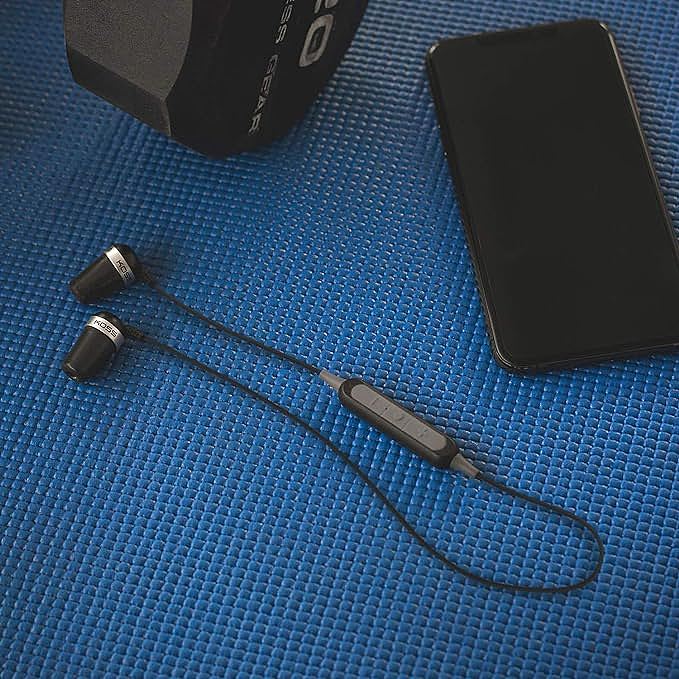
The listeners who find genuine value in this design approach share specific characteristics. They prioritize passive isolation over active noise cancellation, meaning they want to listen in environments where physical blocking of external sound serves them well—offices, libraries, public transit, gardening, workshop time. They value bass response with a physical dimension, where the lowest frequencies register as sensation rather than signal. They prefer physical buttons to touch surfaces, either because they operate in conditions where touch is unreliable or because they find capacitive controls frustrating to learn and operate. They have the brandlationship with the brand as a brand, having used earlier products from the company, and they trust the engineering philosophy enough to apply it to a wireless scenario.
The design also carries honest limitations that a prospective listener should understand. The inline control module introduces asymmetric weight distribution. Several users have reported that movement shifts the module, creating a tugging sensation on one side that can dislodge the lighter earbud. This is a mechanical issue inherent to the asymmetric inline design—a trade-off of placing controls and battery in one place rather than splitting weight evenly across the cable. The included cable management clip mitigates this, but users who move frequently while listening may still notice the imbalance.
The Micro-USB charging port is another visible concession to the product's design era. USB-C has become standard for contemporary devices, and carrying a separate Micro-USB cable is a minor but real inconvenience for users who have standardized their charging accessories. The sweat resistance rating addresses basic moisture exposure but does not equate to the IPX4 or higher ratings that some fitness-oriented TWS designs carry, making this a product better suited to walking and stationary activities than high-intensity workouts.
The absence of active noise cancellation positions the product apart from the mainstream wireless earbud category. ANC has become a default expectation in the $40-$60 price band, and a listener who specifically wants electronic noise reduction should look elsewhere. But the foam isolation system achieves a type of noise blocking that ANC does not. ANC excels at low-frequency continuous noise—airplane engines, train rumbles, air conditioning hum. It struggles with transient, high-frequency sounds—voices, sudden impacts, clattering dishes. Physical foam isolation blocks across the frequency spectrum. A listener in a noisy office who needs to filter out colleagues' conversations may find passive isolation more effective than active cancellation, despite the marketing attention that ANC receives.
The Broader Lesson: When Physical Engineering Outlasts Protocol Updates
The most instructive aspect of this product category is not the specific feature set but the principle it illustrates. Bluetooth protocols iterate annually. Touch sensor technology improves generation over generation. Active noise cancellation algorithms receive software updates. Physical acoustic engineering—the density of a foam tip, the diameter of a dynamic driver, the geometry of an ear canal seal—matures slowly and transfers across product generations without obsolescence.
A design that invests in the physical layer produces an experience that software-driven products spend power approximating. The foam tip's hermetic seal gives the listener passive isolation that an ANC chipset spends 20-30 percent of its battery budget to simulate through phase-inverted signal processing. The tethered cable's inline controls provide tactile certainty that a touch sensor can only approximate through vibration motors and chimes. The driver's mechanical frequency response remains consistent regardless of which firmware version the Bluetooth stack runs.
This is not an argument against technological progress. Newer protocols bring real benefits, and TWS designs earn their popularity through genuine convenience. But the retro design philosophy offers a reminder that audio engineering is fundamentally a physical discipline. The sound waves that reach the eardrum travel through air, through materials, through mechanical geometries that digital refinement cannot replace. Products that honor that physical foundation, even when they adopt modern wireless connectivity, give listeners an experience that converging product categories increasingly fail to provide. The value of such designs is not measured against a spec sheet leaderboard. It is measured against whether a listener reaches for the same pair of earbuds years after purchase, still finds the seal intact, still finds the controls by touch, and still hears the sub-bass frequencies that newer products promise in marketing but deliver imperfectly through partial seals and touch-dependent signal processing.",
"_generator": "article-writer
KOSS The Plug Wireless Earbuds
Related Essays

Mosonnytee Sleep Headphones – Comfortable and Long-lasting Sleep Earbuds

Mosonnytee Sleep Headphones – Comfortable and Long-lasting Sleep Earbuds

MOYAGOA MFi Certified AirPods Pro Wireless Earbuds – Top-notch Features and Performance

How to Use anker noise cancelling earbuds properly

How to Use wireless earbuds bluetooth noise cancelling

XZC Bull Demon King Design in-Ear HiFi Stereo Wireless Ear Buds – A Stylish and Functional Choice

YHT True Wireless Earbuds - Superior Sound and Versatile Features

LASUNEY T9 Wireless Earbuds – Recommended for its Features

Generic T63 True Wireless Headphones - Excellent Choice
