Open-Back On-Ear: Why the Most Misunderstood Headphone Category Deserves a Closer Look


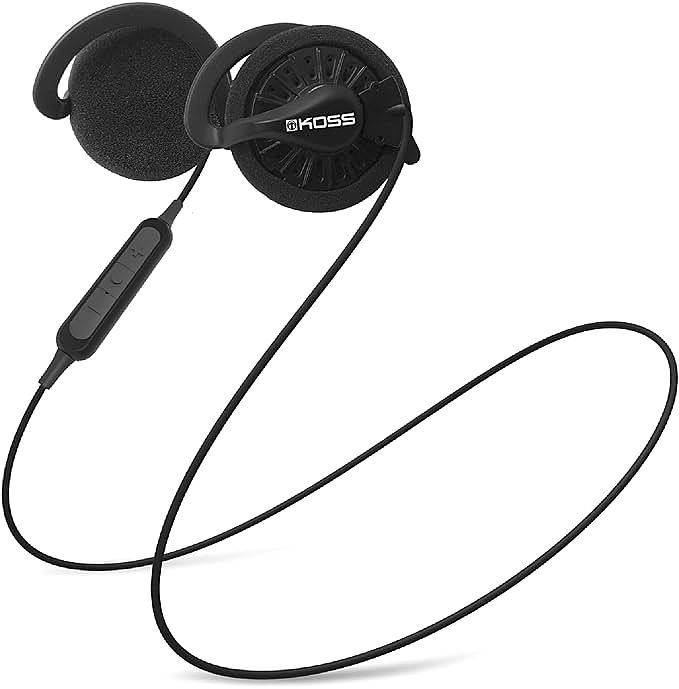
Koss KPH40 Utility On-Ear Headphones
You stand in the headphone aisle, scanning walls of plastic and metal. Over-ear. On-ear. In-ear. Open-back. Closed-back. Wireless. The labels multiply, but the explanation for what they actually mean to your ears is nowhere to be found. So you pick the pair that looks the most expensive, or the one with the highest review score, and hope for the best.
The problem is not a lack of options. It is a lack of categories that make acoustic sense. Most shoppers lump all over-the-head headphones into one bucket, unaware that two independent design decisions -- how the driver sits against your ear, and what happens to the sound wave after it leaves the back of that driver -- produce six distinct acoustic profiles. And one of those six profiles, open-back on-ear, is the most underrepresented in marketing conversations despite offering one of the most natural listening experiences you can get.
The Koss KPH40 Utility is a forty-dollar example of exactly this category, and understanding why it sounds the way it does requires understanding the two axes that define all headphone sound.

The First Axis: How the Driver Meets Your Ear
Headphones position a small loudspeaker driver -- typically between 30 and 50 millimeters in diameter -- next to, on top of, or inside your ear canal. The physical relationship between that driver and your ear anatomy shapes everything that follows.
In-ear monitors (IEMs) insert a tiny balanced-armature or micro-driver directly into the ear canal. The driver fires into a sealed tube roughly seven millimeters in diameter. This creates a small, pressurized cavity that emphasizes bass response through acoustic coupling, but it also removes the outer ear (the pinna) from the equation entirely. Your brain loses the spatial filtering that the pinna normally provides, which is why even expensive IEMs can sound "inside your head."
Over-ear headphones place a large cup around the entire ear. The driver sits roughly 15 to 25 millimeters from the ear canal entrance, and the sealed or semi-sealed cavity of the cup acts as a resonance chamber. This distance and volume allow for a more speaker-like presentation, but the enclosed cavity also introduces its own coloration -- reflections bouncing off the inner walls of the cup before reaching your eardrum.
On-ear headphones rest the driver pad directly against the pinna. The driver is close, typically 5 to 10 millimeters from the canal entrance, but the seal is partial because the ear cartilage prevents an airtight fit. This partial seal is neither a flaw nor an advantage on its own -- it is simply a different acoustic boundary condition. The proximity means the driver excursions can be smaller to produce the same perceived volume, and the lack of a sealed cavity means fewer internal reflections. The tradeoff is less bass reinforcement from the coupling effect.
Understanding this axis alone already narrows the field. If you want maximum isolation for a commute, in-ear or closed over-ear makes sense. If you want the most natural spatial presentation for home listening, the choice narrows further -- and that is where the second axis becomes critical.
The Second Axis: Where the Back Wave Goes
When a headphone driver moves forward, it pushes air toward your ear. When it moves backward, it pushes air away from your ear. That backward-moving wave is called the back wave, and what happens to it is the single largest factor in whether a headphone sounds confined or spacious.
In a closed-back design, the earcup behind the driver is a solid, sealed enclosure. The back wave hits that wall and reflects back toward the driver, creating standing waves and internal pressure variations. Engineers spend enormous effort dampening these reflections with foam, felt, and tuned vents -- but they can never eliminate them entirely. The result is a soundstage that feels like it exists between your ears rather than around you.
In an open-back design, the rear of the earcup is perforated or completely open. The back wave escapes into the room and dissipates. With no reflecting surface behind the driver, the diaphragm can move with less damping from internal air pressure. The frequency response becomes smoother because there are no cavity resonance peaks to fight. And your brain, which locates sound sources partly by detecting the absence of reflections, perceives the audio as originating from a wider space.
Think of it in architectural terms. A closed-back headphone is a recording studio vocal booth: dry, isolated, controlled. An open-back headphone is a concert hall with the back wall removed: sound breathes, and the spatial cues tell your brain that the music exists in a physical place rather than a closed box.

The Six-Cell Matrix and Its Empty Quadrants
Cross-referencing these two axes gives us six combinations. Not all of them are equally common, and that asymmetry tells us something about the industry's priorities.
Closed-back in-ear monitors dominate the market because they serve commuters, gym-goers, and mobile professionals. Closed-back over-ear headphones are the second largest category, led by noise-canceling models from major brands. Open-back over-ear is a recognized audiophile niche. In-ear open-back is physically possible -- some earbuds sit loosely in the concha without sealing -- but it is rarely marketed as such.
Then there is open-back on-ear. It occupies an unusual position. The on-ear form factor means no heavy sealed cups, which allows for extremely low mass. The open back means no cavity reflections, which allows for a spacious, natural presentation. Combined, these two properties produce headphones that weigh under 120 grams, present a wide soundstage, and deliver surprisingly articulate midrange because the driver operates without the damping effects of a sealed enclosure.
So why is this combination so rare? Because it fails at the two things that sell headphones in a retail environment: noise isolation and perceived build substance. An open-back on-ear headphone leaks sound, admits ambient noise, and looks deceptively simple. A consumer comparing it side-by-side with a heavy, leather-padded closed-back model at the same price point will almost always choose the latter. The acoustic advantages are invisible in a five-minute store demo.
What 60 Ohms and 111 dB Reveal About Design Intent
The technical specifications of the KPH40 Utility further illustrate this category's philosophy. With an impedance of 60 ohms and a sensitivity of 111 dB SPL, the driver is moderately difficult to drive but highly efficient once powered. This is not a specification optimized for portability -- most portable devices can reach adequate volume, but a dedicated amplifier brings out the driver's full tonal range.
The frequency response of 15 Hz to 25,000 Hz covers the full audible spectrum and beyond. But raw numbers only tell part of the story. The driver inside is a direct descendant of the technology the company has refined since the PortaPro era of the 1980s. It is relatively small, which means it is naturally more rigid at high frequencies than a larger driver would be. When a driver cone flexes at high frequencies -- a phenomenon engineers call cone breakup -- it produces harsh, sibilant treble. A smaller diaphragm resists this flexing, resulting in a treble response that rolls off gently rather than spiking sharply.
This is a deliberate engineering choice. Rather than chasing the flat frequency response graphs that dominate online reviews, the design team tunes for a presentation that prioritizes listener comfort over measurement perfection. The midrange sits slightly forward. The bass has impact but does not bloom. The treble is present but never aggressive.

The Modularity Question: Why Cable Design Matters for Longevity
There is a practical dimension to category selection that rarely gets discussed: how long the headphone will last. The number one reason headphones are discarded is cable failure. The wire frays at the strain relief, the internal conductor breaks from repeated bending, or the connector oxidizes. The headphone itself -- the driver, the headband, the cushions -- is still functional, but a single broken wire renders the entire product useless.
This headphone addresses this with a detachable cable system using a 2.5-millimeter connector at the headphone end. This is not a new idea -- professional monitoring headphones from brands like Beyerdynamic and Audio-Technica have used detachable cables for decades. But it is vanishingly rare at the forty-dollar price point.
The system also offers interchangeable cable types. The standard 3.5mm cable works with any analog headphone jack. The USB-C cable integrates a 24-bit/96kHz DAC -- a tiny digital-to-analog converter chip housed inside the connector housing itself. This chip takes the digital signal from your phone or laptop and converts it to analog audio before it reaches the headphone driver, bypassing the often-noisy internal DAC of your device. A Lightning variant serves the same function for Apple devices.
This modularity extends the functional lifespan of the product in two directions. First, a damaged cable is a fifteen-dollar replacement, not a product-ending failure. Second, as audio connectivity standards shift -- and they will, given the industry's ongoing migration away from analog jacks -- the same headphone can adapt by swapping a single cable rather than being replaced entirely.
Who This Category Is Really For
Open-back on-ear headphones serve a specific use case that is easy to describe but hard to market. They are for people who listen to music at home, in a quiet room, for extended periods, and who value natural sound presentation over isolation. Studio engineers use open-back headphones for mixing because the spatial presentation more closely resembles how music sounds on speakers. Writers, programmers, and anyone who works at a desk for hours often prefer them because the low clamping force and minimal weight reduce fatigue.
They are not for commuters. They are not for open-plan offices. They are not for anyone who needs to block out the world. And that specificity is precisely what makes them valuable. A tool that tries to do everything usually does nothing particularly well. The open-back on-ear category knows exactly what it is.
The category also serves as an entry point into high-fidelity listening without the intimidating price tags that scare people away from the hobby. When a listener can hear the difference between a sealed cavity and an open one for forty dollars, the lesson sticks. The knowledge becomes transferable. The next time that listener evaluates any headphone, regardless of price, they will know to ask about the back wall.
The Economics of Acoustic Honesty
There is a broader lesson here about how audio products are priced and marketed. The materials cost of a competent moving-coil driver is measured in single-digit dollars. The acoustic engineering required to tune it well is a matter of decades of iteration, not exotic materials. What drives headphone prices into the hundreds and thousands is often not the sound-producing component but the supporting infrastructure -- fancy housings, active noise cancellation circuitry, wireless chips, premium leather, and the marketing budgets needed to convince consumers that these additions are worth paying for.
Open-back on-ear headphones strip away almost all of that. No active circuitry. No battery. No Bluetooth radio. No sealed enclosure machined from billet aluminum. What remains is a driver, a headband, a cable, and a pair of foam pads. The sound that emerges from this minimal assembly is, by any objective measure, competitive with headphones costing five to ten times more in terms of midrange clarity and treble smoothness.
This does not mean expensive headphones are a scam. Premium materials and advanced features have real value. But it does mean that the relationship between price and sound quality in headphones is not linear. The first forty dollars buys you roughly 80 percent of the acoustic performance. The next four hundred dollars buys you the remaining 20 percent, distributed across build quality, features, and brand prestige.
The open-back on-ear category lives in that first forty dollars. It is the point of maximum return. And the reason it is so rarely discussed is not that it sounds bad, but that it is too honest to support the narratives that drive premium pricing. When the product sounds almost as good as something ten times its price, the marketing department has nothing to work with.
So the next time you find yourself in that headphone aisle, remember the matrix. Six combinations. Two axes. The one that sounds the most natural may also be the one that looks the least impressive on the hook.
Koss KPH40 Utility On-Ear Headphones
Related Essays

Open Back Headphones: Why They Sound Different

The Physics of Silence: How Active Noise Cancellation Works
The Anti-Isolation Manifesto: Open-Back Audio and the...

Decoding Hi-Fi: What 40mm Drivers in Budget Headphones Actually Mean

Sony WH-XB910N Noise Cancelling Headphones: A Bass-Thumping, Noise-Canceling Audio Feast

The Quiet Rebellion: Why Wired Headphones Are Still a Smart Choice

Why Your Noise Cancelling Headphones Cannot Stop a Baby Crying

The Physics of Transparency: How Open-Back Design Reveals the Truth in Sound

The Physics of Fidelity: Understanding Open-Air Acoustics Through the Lens of Legacy Engineering

