Mixing on Air: The Engineering of Spatial Accuracy in Studio Monitoring


Basiter EC-J72 Wireless Earbuds
One of the most persistent challenges in headphone-based audio production is "In-Head Localization." Unlike loudspeakers, where sound interacts with the room and the listener's torso before reaching the ears, headphones inject sound directly into the ear canal. This often creates a claustrophobic sonic image where sounds appear to originate from inside the skull rather than from a virtual stage in front of the listener. To combat this, professional engineers turn to open back studio headphones. This architectural choice is not about aesthetics; it is a functional necessity for breaking the physical boundaries of the ear cup.

Acoustic Physics: Eliminating the Chamber
In a closed-back headphone, the space behind the driver is a sealed chamber. This creates a pressure vessel. As the driver moves backward, it compresses the air behind it, creating resistance. Furthermore, sound waves emitted from the rear of the driver can bounce off the back of the cup and reflect through the diaphragm, causing phase cancellation and standing waves—specifically "cup resonances" that color the midrange.
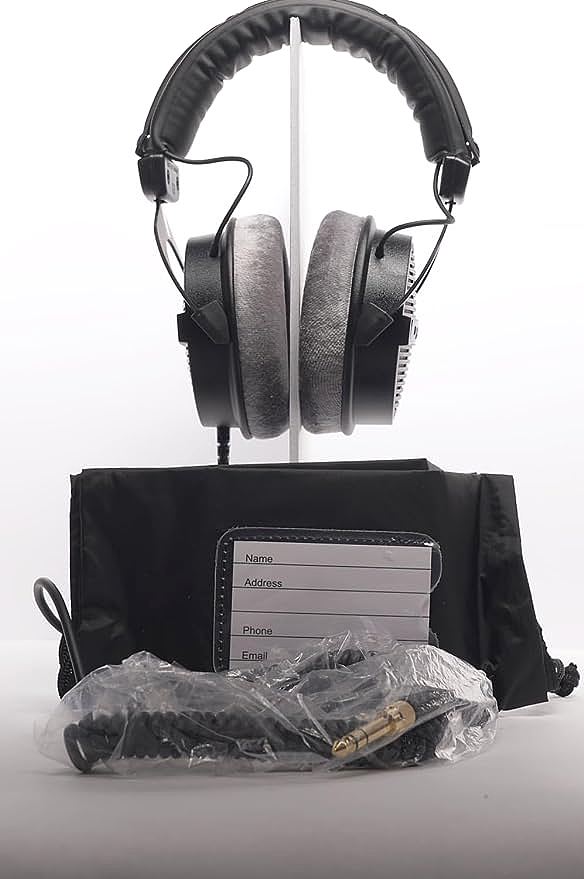
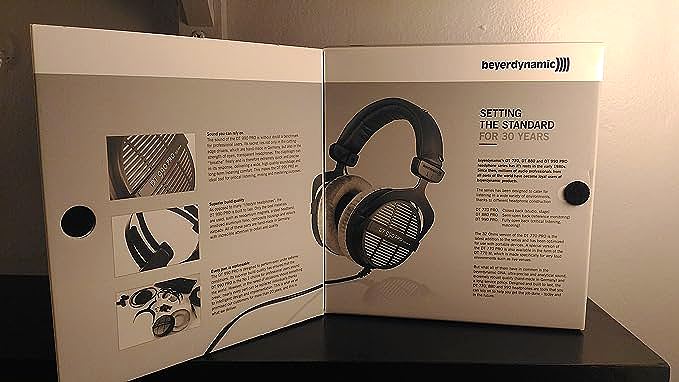
The Beyerdynamic DT 990 Pro utilizes a fully open louvered grill design to eliminate this phenomenon. By allowing air to pass freely through the rear of the driver, the diaphragm encounters minimal pneumatic resistance. This freedom of movement allows the driver to operate more linearly, particularly in the lower frequencies. More importantly, the rear-firing sound waves escape into the room rather than reflecting back into the ear. This acoustic transparency removes the "boxy" coloration often found in closed-back models, resulting in a sound that feels unconstrained and environmentally connected.
Psychoacoustics and the Virtual Room
The perception of "Soundstage"—the width and depth of the stereo image—is heavily influenced by the brain's interpretation of spatial cues. While headphones cannot fully replicate the crosstalk (left ear hearing the right speaker) of studio monitors without digital processing, open-back designs provide a crucial psychoacoustic element: "Airiness."
By allowing external sound to enter and internal sound to leak out, open-back headphones like the DT 990 Pro simulate the semi-permeable nature of natural hearing. This prevents the brain from fatigue caused by the unnatural isolation of closed cups. The detailed treble response, combined with this open architecture, assists in placing instruments in a specific location within the stereo field. Engineers use this spatial accuracy to make precise panning decisions, ensuring that a guitar placed 30 degrees to the left sits exactly there, rather than smearing across the left channel.
Ergonomics: The Thermodynamics of Listening
Studio sessions often last for hours, making the physical interface between the headphone and the human body a critical engineering variable. Heat accumulation is a primary cause of discomfort. Closed-back headphones with leather or pleather pads create a seal that traps not just sound, but body heat and humidity.
The choice of circumaural velour ear pads on the DT 990 Pro addresses this thermodynamic challenge. Velour, a breathable fabric, allows for airflow against the skin, facilitating heat dissipation. This material choice works in tandem with the open-back grill to maintain a cooler micro-climate around the ear. Additionally, the clamping force of the spring-steel headband is distributed over these soft pads to create a secure seal without excessive pressure points. This balance is vital; a consistent fit ensures that the distance between the driver and the ear canal remains constant, which is essential for maintaining a reliable frequency response throughout a long mixing session.
Industry Implications: The Democratization of the Control Room
Historically, accurate monitoring required acoustically treated rooms and expensive loudspeaker systems. The proliferation of high-fidelity open-back headphones has democratized this capability. Today, bedroom producers and traveling engineers can access a reference-grade monitoring environment that fits in a backpack. While headphones can never fully replace the visceral impact of main monitors, devices that master the physics of open-back acoustics provide a critical bridge, allowing for professional translation of mixes from the studio to the earbuds of the world.
Basiter EC-J72 Wireless Earbuds
Related Essays

Open Back Headphones Fatigue: Why Weight, Pressure, and Sound Shape Your Mixing Stamina

The Architecture of Air: Deconstructing the Open-Back Soundstage via the Sennheiser HD 579

Water Sounds for Sleep: The Science Behind Nature Sounds and Neural Relaxation

The Science of Sound: Engineering Analysis of the Koss KSC75

Final A3000 In-Ear Wired Earphones – A Relaxing and Natural Sound Experience

How Audio Frequency Response Shapes Your Bluetooth...

How a Speaker Smaller Than Your Fingernail Produces Bass...

Why Your Brain Needs Sound to Sleep: The Science of White...

Audio-Technica ATH-M20X Professional Studio Monitor Headphones: The Physics of Accurate Sound

