Why Hybrid IEMs Sound Like One Voice, Not Two

SONY XBA-N3BP Stereo In-ear Headphones
SONY XBA-N3BP Stereo In-ear Headphones
The SONY XBA-N3BP Stereo In-ear Headphones combines solar charging technology with active noise cancellation, offering up to 80 hours of battery life on a single charge — and potentially infinite playtime in sunlight.
Priced at $135.99 for Midnight Black and $199.00 for Sand Gold, it targets outdoor commuters and travelers who want to eliminate cable anxiety.
When Two Waves Decide the Same Air Every sound you have ever heard is the result of air molecules being pushed and pulled in patterns. When a loudspeaker driver moves forward, it compresses the air in front of it. When it moves back, it rarefies that air. These compressions and rarefactions propagate outward as longitudinal waves — regions of high and low pressure that your eardrum faithfully tracks and your brain interprets as sound. When two drivers share the same acoustic space, as they do in a hybrid in-ear monitor, something remarkable happens at the point where their outputs meet. If the compression from one driver coincides with the compression from the other, the pressures add. The sound gets louder. This is constructive interference. But if a compression from one meets a rarefaction from the other, they subtract. At the extreme, they cancel entirely. This is destructive interference. The math is deceptively simple. Two sinusoidal waves of the same frequency, when summed, produce a resultant wave whose amplitude depends entirely on the phase difference between them. When the phase difference is zero, amplitudes double. When the phase difference is 180 degrees, amplitudes vanish. Every value in between produces every amplitude in between. But in a real earphone, the situation is far from simple. The two drivers are not producing the same frequency. One — the balanced armature — is optimized for the mid and high frequencies, where its tiny, stiff diaphragm can accelerate rapidly. The other — the dynamic driver — handles the bass, where its larger, more compliant cone can move significant volumes of air. They are designed to operate in different frequency ranges, and yet there is always a region where their outputs overlap. This crossover region is where the physics of superposition becomes the engineering problem of coherence. The challenge is not merely to avoid cancellation. It is to make two physically distinct sound sources behave, in the ear canal, as though they were one. ## The Single-Driver Purity Myth There is a persistent belief among audio enthusiasts that single-driver designs are inherently more coherent than multi-driver ones. The reasoning is intuitive: one driver, one source, no crossover, no phase problems. It sounds clean. It sounds pure. The reality is more complicated. Every driver, regardless of type, has mechanical resonances — frequencies at which it naturally wants to vibrate with maximum amplitude. These resonances create peaks and dips in the frequency response that must be managed. A single dynamic driver, asked to reproduce everything from 20 Hz to 20,000 Hz, must make compromises across its entire range. The diaphragm that excels at moving large volumes of air for bass notes is inherently sluggish at the microsecond-scale accelerations required for treble detail. The result is often a frequency response that is anything but flat, with resonant peaks that create coloration — a form of incoherence that is internal to the driver itself. Single balanced armature drivers face the opposite problem. Their stiff, tiny diaphragms are extraordinarily fast and precise in the midrange and treble, but they struggle to move enough air to produce convincing bass. The low-frequency roll-off is not a matter of tuning preference; it is a physical limitation of the driver's displacement. The point is not that single drivers are bad. Many excellent earphones use a single dynamic driver and achieve remarkable sound quality through careful engineering of the acoustic chamber, damping materials, and diaphragm geometry. The point is that coherence is not automatically granted by simplicity. A single driver can be incoherent with itself — through internal resonances, diaphragm breakup modes, and the fundamental mismatch between what one transducer can do well and what the full audible spectrum demands. The multi-driver approach, when executed poorly, certainly introduces additional coherence problems. But when executed well, it can solve more problems than it creates — by allowing each driver to operate in the frequency range where its physics are most favorable. ## The Frequency Split: Dividing What Cannot Be Divided Sound is a continuum. There is no hard line between bass and midrange, no sharp boundary between midrange and treble. The frequency spectrum is a seamless sweep from the lowest rumbles to the highest overtones. And yet, in a hybrid earphone, an engineering decision must be made: where does the dynamic driver stop and the balanced armature begin? This is the crossover problem, and it is one of the most misunderstood aspects of multi-driver audio. A crossover is a filter network — implemented with electrical components, acoustic elements, or both — that divides the audio signal into frequency bands and routes each band to the appropriate driver. In a two-way hybrid like the Sony XBA-N3BP, a crossover frequency is chosen, typically somewhere between 1 kHz and 4 kHz, and the signal is split around that point. Low frequencies go to the dynamic driver. High frequencies go to the balanced armature. But filters are not brick walls. They have slopes, measured in decibels per octave, that describe how gradually they attenuate frequencies outside their
pass band. A first-order filter slopes at 6 dB per octave. A fourth-order filter slopes at 24 dB per octave. The steeper the slope, the more sharply the frequency range is divided — but the steeper the slope, the more phase shift is introduced. This is the fundamental tradeoff of crossover design: sharp frequency division comes at the cost of phase integrity. A perfectly sharp cutoff — the ideal brick-wall filter — would produce catastrophic phase distortion in the frequency range where it matters most. A gentle slope preserves phase but creates a wider overlap region where both drivers are active simultaneously, requiring careful management of their relative levels and timing. The overlap region is where coherence lives or dies. In this band, both drivers are contributing to the same frequencies. If their outputs arrive at the eardrum with different timing, different phase, or poorly matched amplitude, the listener perceives a discontinuity — a seam in the sound that the brain registers, often subconsciously, as artificial. ## Phase: The Invisible Architecture of Sound If frequency response is the visible architecture of audio — the facade of the building — then phase response is the hidden structure behind it. Phase describes the timing relationship between different frequency components of a sound. When phase is correct, a drum strike arrives at your eardrum as a single, cohesive event: the attack, the body, the decay, all arriving in the right temporal order. When phase is disturbed, the same drum strike can sound vague, disconnected, or oddly hollow. Phase matters enormously in hybrid earphones because the two types of drivers have fundamentally different electromechanical behaviors. A balanced armature driver is a tightly coupled system: a tiny rigid reed, clamped at both ends, driven by a magnetic field. Its response to an electrical signal is fast and well-damped, with relatively little overshoot or ringing. A dynamic driver is a mass-spring system: a diaphragm suspended by a surround, driven by a voice coil in a magnetic gap. Its response involves more mechanical inertia and more resonant behavior. These differences mean that even when both drivers receive the same electrical signal simultaneously, their acoustic outputs do not emerge simultaneously. The balanced armature may begin producing sound fractions of a millisecond before the dynamic driver's diaphragm has completed its excursion. This time difference translates directly into a phase difference at the overlap frequencies, and that phase difference determines whether the two outputs reinforce or interfere. Engineers manage phase alignment through several strategies. The simplest is physical: positioning the drivers so that the acoustic path lengths from each driver to the eardrum are equalized. If the balanced armature is faster but its sound must travel through a longer acoustic tube, the delays can be made to match. More sophisticated approaches involve designing the crossover filters themselves to introduce compensating phase shifts, or using acoustic delay networks — carefully shaped tubes and chambers that impose specific delays on specific frequency bands. The goal is never perfect phase alignment across all frequencies. That is physically impossible with two different driver types. The goal is to achieve sufficient phase alignment in the crossover region that the transition between drivers is inaudible. ## Resonance Anatomy: Every Driver Is a Tuning Fork Every object has natural frequencies at which it prefers to vibrate. A tuning fork is designed to have one dominant natural frequency, but the same physics applies to every diaphragm in every driver. The balanced armature's reed has resonant modes. The dynamic driver's cone has resonant modes. The acoustic tubes that carry sound from the drivers to the ear canal have resonant modes. The ear canal itself has resonant modes. In a single-driver system, managing these resonances is a matter of damping and geometry — adding material to absorb energy at problematic frequencies, or shaping the acoustic path to shift resonances to less audible ranges. In a hybrid system, the problem multiplies because the resonances of the two drivers interact. Consider a simplified model. The balanced armature has a primary resonance at, say, 8 kHz — a peak in its response that gives treble notes a particular brightness. The dynamic driver has a primary resonance at, say, 200 Hz — a peak that gives bass notes a particular warmth. In isolation, each resonance is manageable. But through the shared acoustic path, energy from one driver's resonance can excite the other driver's resonances, creating intermodulation products — new frequencies that were not present in the original signal. Intermodulation is the ghost in the machine of hybrid audio. It creates phantom tones — subtle artifacts that color the sound and reduce the perceived clarity and separation of instruments. The effect is often described by listeners as "congestion" or "muddiness," particularly in complex musical passages where many frequencies are present simultaneously. The engineering response is twofold: mechanical isolation and acoustic damping. Mechanical isolation means physically separating the two drivers as much as possible within the earphone housing, so that vibrations from one do not directly couple into the other through the enclosure walls. Acoustic damping means placing porous materials — foam, felt, mesh — in the acoustic paths to absorb energy at problematic frequencies, reducing the amplitude of resonant peaks before they can cause intermodulation. ## The Physics That Refuses to Agree Here is the central paradox of hybrid earphone design: the two driver types are chosen precisely because their physics are different, but those same physical differences make them inherently difficult to combine. A balanced armature is a displacement-limited device. Its diaphragm moves very little, but because it is small and stiff, it can change direction extremely rapidly. This makes it naturally suited to high frequencies, where the required accelerations are enormous. Its output is efficient but its maximum sound pressure level is constrained by the small volume of air it can displace. A dynamic driver is a velocity-limited device.
Its diaphragm can sweep through a large excursion, moving substantial volumes of air, but its mass limits how quickly it can change direction. This makes it naturally suited to low frequencies, where large air displacement matters more than rapid acceleration. Its output can be very loud at low frequencies but it struggles to maintain output at high frequencies as the required acceleration exceeds what the voice coil can deliver. These are not merely different specifications on a data sheet. They reflect fundamentally different relationships between force, mass, and motion. The balanced armature operates in a regime where stiffness dominates. The dynamic driver operates in a regime where mass dominates. Asking them to cooperate across the full audible spectrum is like asking a hummingbird and an elephant to pull the same cart — they are optimized for entirely different scales of work. The crossover frequency is the negotiation point. Below it, the dynamic driver dominates. Above it, the balanced armature dominates. But in the overlap region, both are contributing, and their different physics mean that even with perfect electrical filtering, their acoustic outputs will have different phase characteristics, different transient responses, and different distortion profiles. The engineer's task is to manage these differences so that the sum sounds like a single, coherent source rather than two speakers arguing. ## Acoustic Labyrinths: Shaping Sound Through Geometry Inside a hybrid in-ear monitor, the space between the drivers and your eardrum is not simply empty air. It is a carefully engineered acoustic network — a system of tubes, chambers, and ports that shape the sound through geometry alone. An acoustic tube acts as a waveguide, and like any waveguide, it has characteristic impedance that determines how sound waves propagate through it. When a sound wave encounters a change in impedance — a transition from a narrow tube to a wider chamber, or an open port — some of the wave's energy is transmitted and some is reflected. These reflections create standing waves, which produce peaks and dips in the frequency response. The Sony XBA-N3BP, for instance, routes the balanced armature output through a dedicated acoustic tube before it merges with the dynamic driver's output in a shared acoustic chamber. The length and diameter of this tube are not arbitrary. They are calculated to impose a specific acoustic impedance that, in combination with the crossover filter, shapes the frequency response and phase behavior at the transition between drivers. Acoustic chambers serve a related but distinct function. They act as low-pass filters through the principle of acoustic compliance: a volume of trapped air acts as a spring, absorbing energy at frequencies above a certain cutoff determined by the chamber's volume and the impedance of the tube feeding it. By adjusting chamber volumes, engineers can create additional acoustic filtering that supplements the electrical crossover. Ports — small openings that connect internal chambers to the outside air — provide another degree of freedom. A port can act as a bass reflex, extending low-frequency response by creating a Helmholtz resonance. Or it can act as a pressure equalizer, preventing the sealed ear canal from creating uncomfortable suction. In hybrid designs, ports are sometimes used to tune the low-frequency behavior of the dynamic driver independently of the balanced armature's output path. The result is an acoustic labyrinth — a three-dimensional puzzle of tubes, chambers, and openings that must all work together to deliver coherent sound. Change one dimension, and the entire system's behavior shifts. ## What Your Brain Accepts as "One Sound" All of the physics described above would be merely academic if the human brain were a simple frequency analyzer. It is not. The auditory system is a sophisticated pattern recognition engine that constructs the perception of sound from incomplete, ambiguous, and sometimes contradictory acoustic information. Psychoacoustics — the study of how the brain interprets sound — reveals that coherence is as much a perceptual phenomenon as a physical one. The brain uses multiple cues to determine whether two acoustic events are coming from the same source: spectral continuity, temporal synchrony, harmonic alignment, and spatial coincidence. When all of these cues agree, the brain fuses the events into a single percept. When they disagree, the brain separates them. In a hybrid earphone, the goal is to satisfy the brain's fusion criteria across the crossover region. The frequency response must be smooth and continuous — no abrupt changes in level that would signal a change in source. The temporal envelope must be consistent — transients that begin on the balanced armature must end on the dynamic driver (or vice versa) without a perceptible gap or discontinuity. The harmonic structure must be uniform — overtones that span the crossover frequency must sound like they belong to the same fundamental, not like they were generated by different instruments. Remarkably, the brain is quite tolerant of small imperfections. Phase differences that would be clearly visible on an oscilloscope can be completely inaudible if they occur over a narrow enough frequency range. Level differences of a few decibels across the crossover are readily absorbed by the brain's automatic gain control mechanisms. The auditory system evolved to extract meaningful information from highly reverberant, complex acoustic environments — a forest, a cave, a crowded room — and it brings this robustness to the task of decoding earphone output. But there are limits. When phase differences create audible comb filtering — a series of regularly spaced peaks and dips that color the timbre — the brain registers it as coloration. When transient response differs between drivers, creating a "smeared" attack on percussive sounds, the brain registers it as a loss of clarity. When harmonic distortion profiles differ between the two drivers, the brain registers it as a change in timbre across the frequency range — a brightness that shifts to warmth, or a clarity that dissolves into softness. ## The Art of the Invisible Transition The highest
compliment you can pay
SONY XBA-N3BP Stereo In-ear Headphones
Related Essays

Why Your Headphones Lie to You: The Physics of Sound That...

Why Coaxial Speaker Geometry Creates Sound That Single...
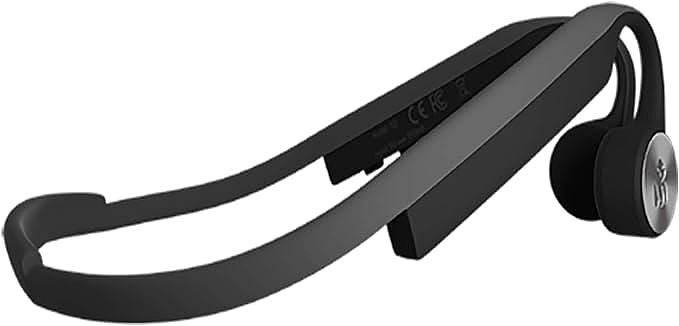
Osteophony and Acoustics Engineering Open-Ear Transducers

Why Do Headphones Sound Different? The Science of Audio Physics

The Paradox of Stillness: When Opposing Forces Create Perfect Silence

Composite Diaphragm Headphones: How Layered Driver Physics Shapes What You Hear

The Invisible Symphony: How Driver Size Shapes Your Audio Experience

Hybrid Driver Architecture: The Physics Behind Modern IEM Sound

The Physics of Bone Conduction: Why Bass Is Hard and How...
