The Physics of Bass: Driver Diameter and Air Displacement


Betron HD800
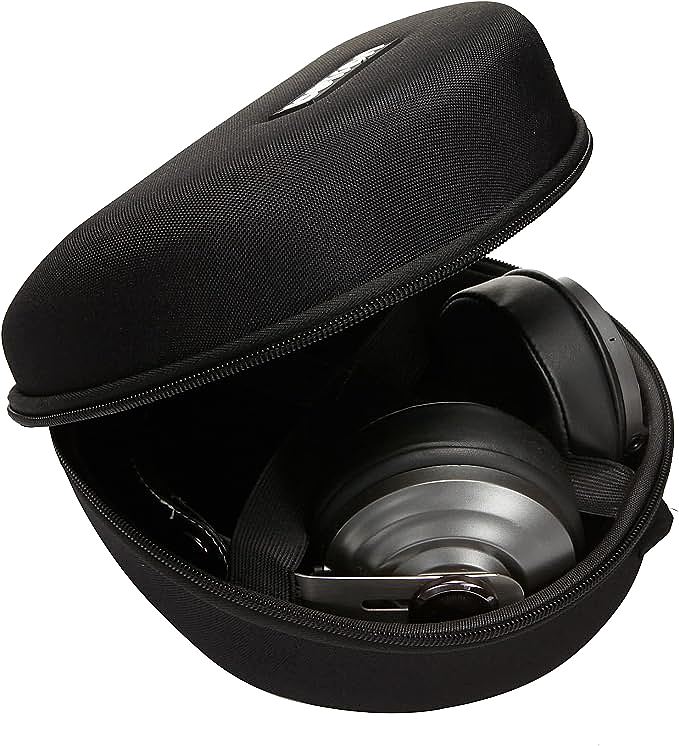
In the realm of personal audio, the quest for deep, impactful bass is often a primary consumer demand. However, achieving this is not merely a matter of electronic equalization; it is a challenge of physics. Sound is a pressure wave created by the movement of air molecules. Low-frequency sounds (bass) have long wavelengths and require a significant volume of air to be moved to be perceived with authority. This physical requirement brings the diameter of the headphone driver into sharp focus. The Betron HD800 distinguishes itself by employing 50mm dynamic drivers, a size larger than the 40mm standard found in many consumer headphones.
The Surface Area Advantage
The dynamic driver operates as a piston. An electrical signal flows through a voice coil, interacting with a magnetic field to move a diaphragm back and forth. The volume of air displaced ($V_d$) is a function of the diaphragm's surface area ($S_d$) and its linear excursion ($X_{max}$).
$$V_d = S_d \times X_{max}$$
By increasing the diameter from 40mm to 50mm, the surface area increases by over 56%. This substantial gain allows the driver to move a larger volume of air with the same amount of linear excursion. Consequently, a 50mm driver can reproduce lower frequencies with greater efficiency and less distortion than a smaller driver, which would have to be pushed to its mechanical limits to achieve the same sound pressure level (SPL). This is the fundamental physics behind the "Deep Bass" capability of the HD800; it creates a visceral sense of air movement that smaller drivers struggle to replicate.
Acoustic Impedance and Enclosure Design
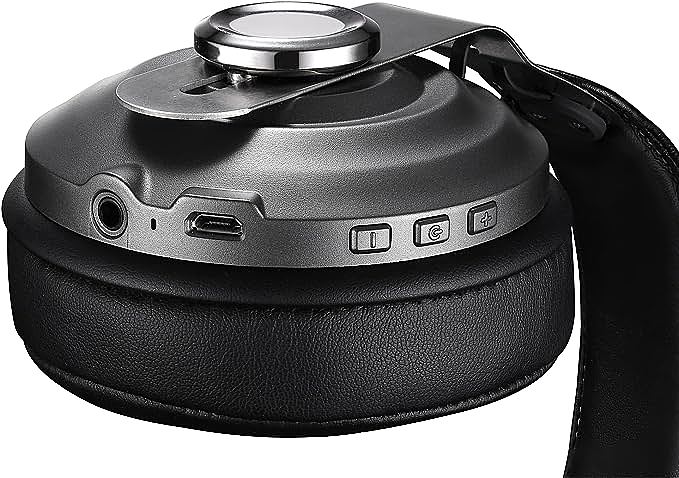
Simply having a large driver is insufficient; it must be housed correctly. The HD800 features a closed-back over-ear design. This creates a sealed acoustic chamber behind the driver and around the ear. This seal is critical for "loading" the driver. It prevents the back-wave (sound coming from the rear of the diaphragm) from cancelling out the front-wave (sound going to the ear), a phenomenon known as phase cancellation which kills bass response.
Furthermore, the sealed ear cups provide passive noise isolation. Unlike Active Noise Cancellation (ANC), which uses microphones and inverted waves, passive isolation relies on the mass and density of the materials to block sound physically. The "ergonomic bellow" and soft ear cups of the HD800 create an airtight seal against the skin. This isolation lowers the noise floor, allowing the subtle details and the full dynamic range of the 50mm driver to be heard without fighting against ambient noise.
Tuning and Transient Response
While large drivers excel at bass, they face a challenge: mass. A larger diaphragm is heavier, which can lead to slower transient response—the ability to start and stop moving instantly. This can result in "muddy" sound. To counter this, engineers must optimize the voice coil mass and magnet strength. The HD800 utilizes a "professionally-tuned acoustic system," implying a careful balance of damping materials within the ear cup to control resonances and ensure that the powerful bass does not bleed into and obscure the mid and high frequencies. This tuning aims to maintain the "punch" of the bass while preserving the clarity of vocals and instruments.
Future Outlook: Material Innovation
The future of dynamic drivers lies in advanced materials. We are seeing the adoption of graphene, beryllium, and bio-cellulose diaphragms. These materials offer higher rigidity-to-weight ratios, allowing large 50mm drivers to move with the speed and precision of smaller units, potentially eliminating the historical trade-off between bass weight and high-frequency detail.
Betron HD800
Related Essays

Sound vs. Chaos: The Physics of Audio on the Jobsite

Water Sounds for Sleep: The Science Behind Nature Sounds and Neural Relaxation

Hybrid Driver Coherence: The Wave Physics Behind Multi-Driver In-Ear Monitors

How Tiny Drivers Produce Big Sound: The Physics Behind Wireless Earbuds
How Tiny Drivers Produce Big Sound: The Physics Behind Wireless Earbuds
How Tiny Drivers Produce Big Sound: The Physics Behind Wireless Earbuds
How Tiny Drivers Produce Big Sound: The Physics Behind Wireless Earbuds

Composite Diaphragm Headphones: How Layered Driver Physics Shapes What You Hear

50mm Drivers Explained: How Driver Size Shapes Headphone Sound Quality