The Physics of Underwater Audio: RF Attenuation and Onboard Storage


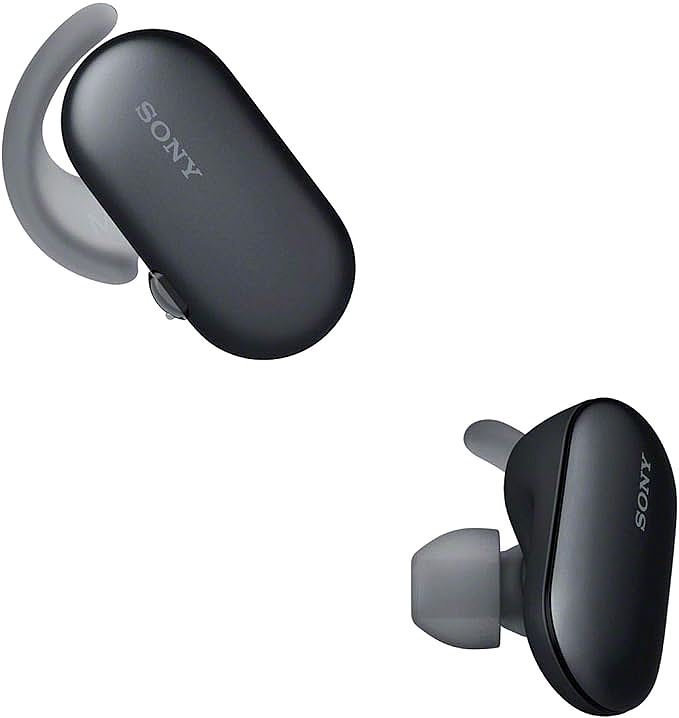
Sony WF-SP900 Sports Wireless Headphones
In the world of wireless technology, water is a formidable barrier. While radio waves can travel billions of miles through the vacuum of space, they struggle to penetrate even a few inches of water. This physical limitation presents a fundamental challenge for designing "true wireless" headphones for swimming. The Sony WF-SP900 addresses this not by defying the laws of physics, but by engineering a workaround that fundamentally changes the device's architecture from a simple receiver to a standalone playback system.
The Bluetooth Blackout: Dielectric Constants and Absorption
Bluetooth operates in the 2.4 GHz ISM (Industrial, Scientific, and Medical) band. This frequency has a wavelength of approximately 12.5 cm in air. However, when these waves encounter water, the situation changes drastically.
Water acts as a powerful absorber of microwave radiation (which includes 2.4 GHz signals). This is primarily due to the dielectric constant of water, which is approximately 80 at room temperature, compared to roughly 1 for air. This high dielectric constant causes the electric field of the radio wave to interact strongly with the polar water molecules, converting the electromagnetic energy into heat (kinetic energy) rapidly.
Mathematically, the attenuation is exponential. For 2.4 GHz signals, the "skin depth"—the distance at which the signal power drops by roughly 63%—is mere centimeters in freshwater and even less in conductive saltwater. Consequently, a Bluetooth signal transmitted from a smartphone on the pool deck will effectively vanish before it reaches a swimmer's submerged ears. This creates a "Bluetooth Blackout" zone underwater, rendering standard streaming headphones useless.
The Architecture of Independence: Embedded NAND Flash
To circumvent the RF attenuation problem, the WF-SP900 integrates 4GB of onboard NAND Flash memory. This architectural shift transforms the earbuds from passive clients (dependent on a phone) into active hosts. By storing the audio files locally, the need for radio transmission through the water is eliminated entirely.
This integration requires a miniaturized embedded system. Inside the earbud chassis, a microcontroller unit (MCU) manages the file system, while a dedicated Digital-to-Analog Converter (DAC) and amplifier circuit decode the stored digital files (MP3, AAC, FLAC, etc.) directly into analog electrical signals for the driver. This "System-on-Chip" (SoC) approach ensures that audio playback is completely immune to the surrounding medium, whether it be air or water.
NFMI: Bridging the Gap Between Left and Right
Even with onboard storage, true wireless earbuds face another challenge: synchronization. The left and right earbuds must stay perfectly in sync to provide a coherent stereo image. Standard Bluetooth (2.4 GHz) cannot pass through the human head effectively, and certainly not through the water surrounding it.
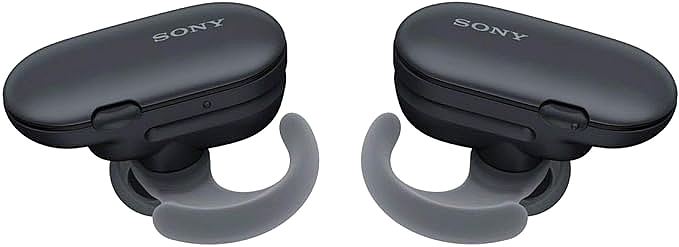
To resolve this, high-performance aquatic systems often employ Near Field Magnetic Induction (NFMI). Unlike RF waves that propagate electrical fields, NFMI creates a low-power, non-propagating magnetic field that creates a "bubble" around the user's head. Magnetic fields pass through human tissue and water with significantly less attenuation than high-frequency electrical fields. This technology allows the primary earbud (usually the right one) to transmit audio data and synchronization timing to the secondary earbud with extremely low latency and high stability, ensuring that the music remains centered and coherent even during vigorous swimming.
Future Outlook: Ultrasonic Communication
While current technology relies on local storage or magnetic induction, future research explores ultrasonic communication for underwater data transfer. Sound waves travel exceptionally well through water (much better than through air). Future iterations of swimming wearables might utilize high-frequency acoustic modems to stream data from a poolside transmitter, potentially reopening the door for live streaming audio in aquatic environments.
Sony WF-SP900 Sports Wireless Headphones
Related Essays

The Physics of Aquatic Audio: Overcoming the Wireless Dead Zone with Bone Conduction

The Science of Sound Beneath the Waves

Bone Conduction Headphones for Swimming: 2026 Two Modes
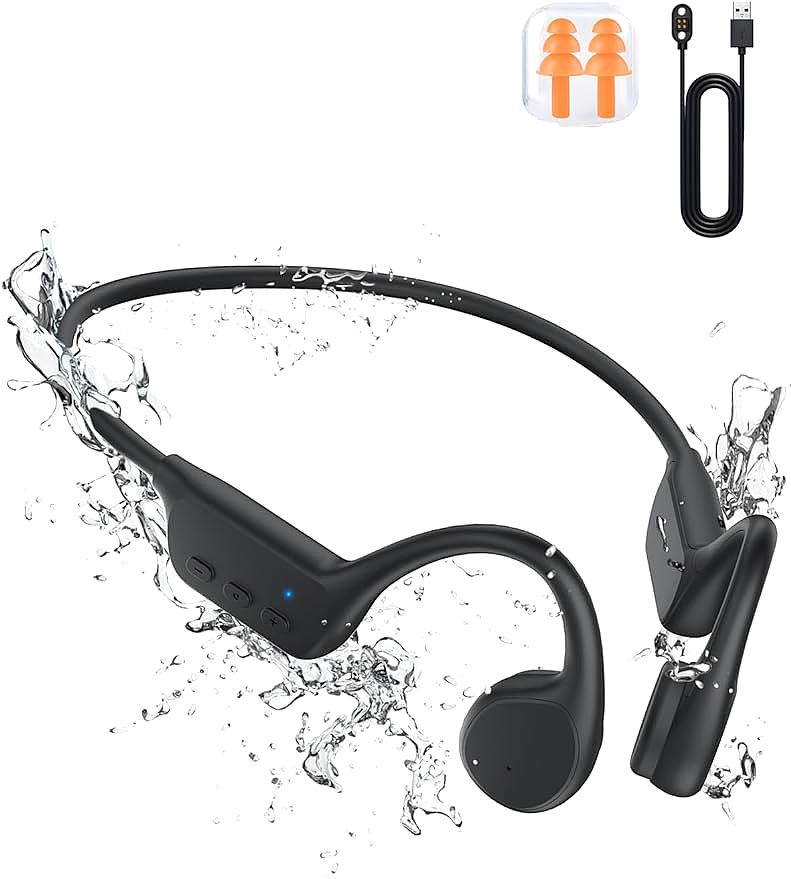
Acoustic Engineering for Amphibious Environments and Cranial Transmission

Loluka Swimming Bone Conduction Headphones - Recommended for Active Lifestyles

Loluka Real Swimming Headphone - Recommended for Bone Conduction Technology

True I/Q Scanner Technology Explained: How Quadrature Sam...

The Physics of Synchronization: 2.4GHz FHSS and Low-Latency Audio

The Aquatic Concert Hall: Physics, Physiology, and the Bone Conduction Experience
