When Two Radios Share One Pocket: The Invisible Physics of Wireless Harmony

Wireless Earbuds
At a dinner party in Hollywood, 1940, an actress leaned across the table and explained to a U.S. Navy official how radio-guided torpedoes could evade enemy jamming by rapidly switching frequencies in a synchronized pattern. The idea was radical. The official was skeptical. The actress was Hedy Lamarr, and the technique she described — frequency hopping spread spectrum — would eventually become the invisible foundation of every Bluetooth connection on Earth, including the one streaming music to the speaker sitting on your desk right now.
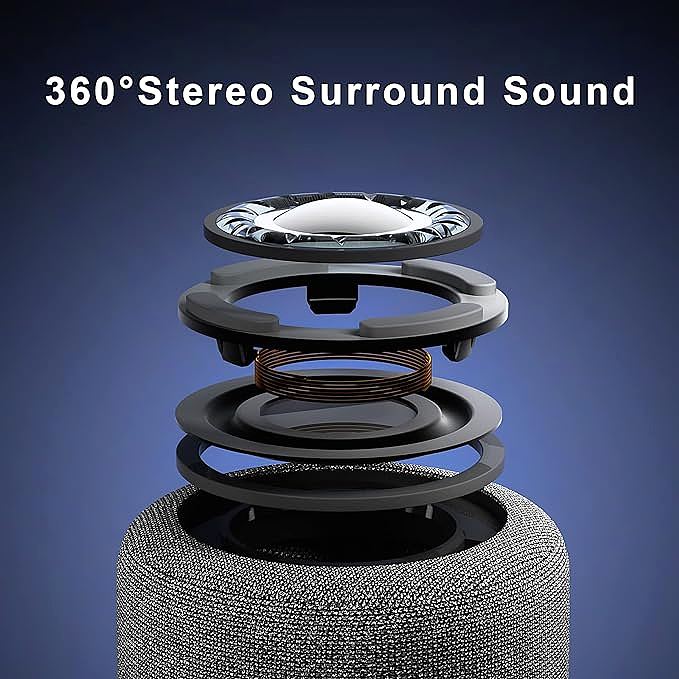
What makes devices like the BJ B20 particularly remarkable from an engineering standpoint is not that they combine a speaker and earbuds into one chassis. It is that they house two independent Bluetooth radios within centimeters of each other and somehow neither one descends into static. Understanding how this is possible requires a journey through electromagnetic physics, Cold War-era signal processing, and the acoustics of sound itself.
Why Your Pocket Is an Electromagnetic Battleground
The 2.4 GHz Industrial, Scientific, and Medical (ISM) band is the most crowded strip of radio spectrum in human history. Spanning from 2.400 to 2.4835 GHz, this sliver of the electromagnetic spectrum hosts Bluetooth, Wi-Fi, Zigbee, microwave ovens, baby monitors, garage door openers, and countless other devices. The IEEE originally designated this band for non-communication purposes — hence the name — but its global availability made it irresistible for wireless technologies.
At any given moment in a typical urban apartment, dozens of devices are competing for attention in this band. Your router broadcasts Wi-Fi on channels that span 20 MHz each — a quarter of the entire ISM band in a single transmission. Bluetooth devices hop between 79 narrow channels, each 1 MHz wide, at a rate of 1,600 hops per second. That means every 625 microseconds, a Bluetooth radio lands on a new frequency, transmits a packet, and jumps to the next channel.
The physics of this environment is governed by the inverse square law: signal power decreases proportionally to the square of the distance from the transmitter. When two radios are separated by centimeters rather than meters, they exist in each other's near-field region — a zone where electromagnetic coupling creates interference patterns that simple distance calculations cannot predict. At 2.4 GHz, the wavelength is approximately 12.5 centimeters. Place two Bluetooth antennas within 3-5 centimeters of each other, as happens inside a hybrid audio device, and they are well within this near-field boundary.
This is the fundamental challenge: how do you let two radios operate reliably when they are close enough to hear each other shouting?
The Hollywood Invention That Guards Every Wireless Connection
Hedy Lamarr was not an engineer by training. She was a film star, born Hedwig Eva Maria Kiesler in Vienna, 1914. But her first husband, Friedrich Mandl, was an arms manufacturer who hosted dinners where munitions technology was discussed. Lamarr listened. She learned about radio-guided torpedoes and their fatal vulnerability: if you knew the guidance frequency, you could jam the signal and send the torpedo off course.
After fleeing her controlling marriage and emigrating to America, Lamarr met composer George Antheil at a Hollywood party. Together, they conceived a solution inspired by player pianos. If a torpedo and its controller both possessed synchronized rolls — like a player piano roll — they could hop between 88 frequencies in a pseudo-random pattern. An interceptor on any single frequency would catch only a tiny fraction of the signal. An interceptor trying to jam all 88 frequencies simultaneously would lack the power to be effective on any one of them.
They filed US Patent 2,292,387 in 1942. The Navy classified it and filed it away. The patent expired in 1959 without ever being implemented by the military. But the concept — spreading a signal across multiple frequencies to resist interference — became the theoretical bedrock of spread spectrum communication.
Decades later, when engineers at Ericsson needed a way to make short-range wireless connections resilient in the crowded ISM band, they reached for exactly this principle. Bluetooth's frequency hopping spread spectrum is Hedy Lamarr's idea, refined for a world she could never have imagined.
1,600 Dances Per Second: The Choreography of Bluetooth
To understand how Bluetooth manages the chaos of the 2.4 GHz band, imagine a crowded ballroom with 79 dance floors arranged in a line. Each dance floor represents one Bluetooth channel. A couple (the transmitter and receiver) must dance on each floor for exactly 625 microseconds before moving to the next one.
The sequence of floors is determined by the master device's internal clock and its unique Bluetooth address. Both master and slave know this formula, so they always agree on which floor to visit next — even though the pattern appears random to outside observers. This is the essence of frequency hopping spread spectrum.
But the real genius lies in adaptive frequency hopping (AFH), introduced in Bluetooth 1.2 in 2003. AFH gives the dancing couple the ability to mark certain floors as "occupied" — perhaps a Wi-Fi router is blasting packets on channels 2 through 22. The couple simply removes those channels from their dance sequence. The hopping continues across the remaining unoccupied channels, avoiding the interference entirely.
The channel classification process works like a quality inspector. The Bluetooth radio continuously monitors each channel's packet error rate. Channels with high error rates are marked as "bad" and excluded from the hopping set. Channels that recover are gradually reintroduced. This adaptive filtering happens automatically and continuously, without any user intervention.
Bluetooth 5.0 introduced Channel Selection Algorithm #2 (CSA #2), which refined this process further. Unlike the original algorithm, which generated a predictable hopping sequence, CSA #2 uses a more sophisticated pseudo-random selection that is harder to predict and thus more resistant to both accidental and deliberate interference. For a hybrid audio device with two Bluetooth radios, this means each radio can independently avoid interference — including interference from the other radio.
When Two Radios Share One Room: The Physics of Coexistence
Inside a hybrid audio device, two Bluetooth modules operate simultaneously: one serving the speaker, the other managing the earbud charging dock. These are independent subsystems — each has its own radio transceiver, its own antenna, and its own Bluetooth stack. The product data confirms this "independent module" architecture. But they share three scarce resources: frequency spectrum, physical space, and electrical power.
Antenna isolation is the primary weapon against mutual interference. The goal is to ensure that signals from one antenna reach the other antenna attenuated by at least 20-30 decibels — meaning the interfering signal is 100 to 1,000 times weaker than the desired signal.
Several physical techniques make this possible in a device small enough to hold in your palm:
Spatial separation is the most intuitive approach. Each centimeter of antenna separation provides approximately 6 decibels of isolation at 2.4 GHz. But in a compact device, total separation might be only 3-5 centimeters, yielding perhaps 18-30 dB on its own — marginal at best.
Polarization diversity is more elegant. If one antenna is oriented to radiate horizontally and the other vertically, cross-polarization coupling naturally provides 20-30 dB of isolation. This is one of the most cost-effective isolation techniques in compact devices and requires no additional materials.
Ground plane shielding uses the device's own printed circuit board as a Faraday shield. A solid copper ground plane between the two antennas reflects and absorbs electromagnetic energy, providing additional isolation without adding bulk.
Absorptive materials like ferrite-loaded polymers can be placed around sensitive areas to soak up stray RF energy. These materials are increasingly common in smartphones, where cellular, Wi-Fi, Bluetooth, and NFC radios must all coexist within a single slab of glass and metal.
In practice, engineers combine multiple techniques. A hybrid audio device might use polarization diversity, ground plane shielding, and AFH together to achieve reliable coexistence. The result is a system where both Bluetooth radios operate independently, each blissfully unaware that another radio is transmitting just centimeters away.
The mathematical framework for understanding this is rooted in electromagnetic theory. The coupling between two antennas is described by S-parameters — specifically S21 and S12, which represent the transmission coefficient between ports. When S21 is below -20 dB, less than 1% of the transmitted power couples into the other antenna. This is the engineering target for co-located Bluetooth operation.
Why Bass Wraps Around Walls While Treble Beams Straight
The engineering challenges of a hybrid audio device extend beyond radio frequencies into the acoustic domain. The physics of sound radiation is governed by a deceptively simple relationship: the ratio between the wavelength of sound and the size of the source producing it.
Acousticians call this ratio ka, where k is the wave number (2π divided by wavelength) and a is the radius of the radiating surface. When ka is much less than 1 — meaning the source is small relative to the wavelength — sound radiates equally in all directions. When ka is much greater than 1 — meaning the source is large relative to the wavelength — sound beams forward like a flashlight.
Consider a typical portable speaker driver measuring about 40 millimeters across. At 200 Hz, the wavelength of sound is approximately 1.7 meters. The ka ratio is roughly 0.07 — the speaker is tiny relative to the wavelength. Bass frequencies radiate omnidirectionally, wrapping around the speaker enclosure and even passing through walls.
But at 10 kHz, the wavelength shrinks to about 34 millimeters. Now ka is approximately 3.7 — the speaker is larger than the wavelength. Sound begins to beam forward in a cone, and listeners sitting off to the sides hear progressively less treble. By 20 kHz, with a wavelength of just 17 millimeters, a 40mm driver becomes highly directional.
This is why small portable speakers have a characteristic sound: bass seems to come from everywhere, but treble is focused in one direction. It is not a design flaw. It is physics.
The same principle explains why earbuds can produce surprisingly deep bass despite having drivers only 6-10 millimeters across. The sealed ear canal acts as what acousticians call an infinite baffle — a barrier that prevents the front wave and back wave of the driver from canceling each other. In this sealed cavity, even a tiny driver can move enough air to create strong bass perception at the eardrum. This is fundamentally different from an open-air speaker, where the back wave wraps around and interferes with the front wave, cancelling bass frequencies.

The Omniscient Speaker: Engineering 360-Degree Sound
Engineers have developed several clever techniques to overcome the natural directionality of high-frequency sound in small speakers.
Down-firing drivers point the speaker downward onto a cone-shaped reflector that distributes sound radially. Imagine shining a flashlight at a ceiling — the light scatters in all directions. Down-firing speakers work on the same principle, but they introduce complications: the reflected sound has a different phase relationship than direct sound, which can cause frequency response anomalies.
Multi-driver radial arrays place several small drivers around the circumference of the enclosure, each covering a sector of the 360-degree circle. This approach provides more controlled dispersion but requires precise crossover circuitry to ensure seamless transitions between drivers. If the timing is off by even a few microseconds, the overlapping sound fields create constructive and destructive interference — areas where certain frequencies are amplified and others are cancelled.
Passive radiators are unpowered drivers that resonate in response to the active driver's output, extending bass response without requiring additional amplifier power. A passive radiator is essentially a speaker cone without a voice coil or magnet, suspended in the enclosure and tuned to resonate at a specific frequency. When the active driver produces bass, the air pressure inside the enclosure excites the passive radiator, which reinforces the bass output. This technique allows a compact speaker to produce bass that would otherwise require a much larger enclosure.
The relationship between enclosure size and bass extension is governed by the Thiele-Small parameters — a set of electromechanical measurements that describe how a speaker driver interacts with its housing. The key insight is that halving the enclosure volume raises the bass cutoff frequency by approximately 1.26 times. A speaker in a 1-liter enclosure might produce usable bass down to 80 Hz. In a 0.5-liter enclosure, that same driver would struggle below 100 Hz.
This physical constraint is why hybrid audio devices face an inherent trade-off. The speaker section must share internal volume with the earbud charging dock, Bluetooth radios, antennas, batteries, and charging circuitry. Every cubic centimeter devoted to one subsystem is stolen from another.
Micro Power Grids: Battery Physics in Dual Devices
A hybrid audio device contains two battery systems that differ by an order of magnitude. The speaker section typically houses a lithium-ion cell of 1,000 to 2,000 mAh — enough for 8-12 hours of playback. Each earbud contains a tiny cell of just 40-60 mAh, sufficient for perhaps 3-5 hours of use. The charging dock in the speaker must transfer energy from the large cell to the small ones efficiently and safely.
Lithium-ion battery charging is a carefully orchestrated process. Cells are charged in two phases: constant current (CC), where the charger feeds a steady current while voltage rises, and constant voltage (CV), where the charger holds voltage steady while current tapers off. The CC phase typically uses a rate of 0.5C — meaning a 50 mAh earbud battery would charge at 25 mA. Pushing current higher risks lithium plating on the anode, which degrades capacity and can create internal short circuits.
Temperature management is equally critical. Lithium-ion chemistry degrades rapidly above 45°C (113°F). In a compact device where the speaker amplifier, Bluetooth radio, and charging circuitry all generate heat, thermal design becomes a balancing act. Heat from the speaker amplifier can raise the temperature of nearby battery cells. The charging circuit must monitor cell temperature and reduce charge current when things get warm.
The inductive charging between the dock and earbuds adds another layer of physics. Wireless charging uses magnetic coupling at frequencies between 100-205 kHz — well below the MHz-range frequencies used for Bluetooth. A coil in the dock generates an alternating magnetic field, which induces a current in a receiving coil inside each earbud. Typical efficiency is 70-80%, meaning 20-30% of the energy is lost as heat. This loss is acceptable in the context of a large speaker battery charging small earbud batteries, but it contributes to the thermal management challenge.
The battery management system in a hybrid device essentially operates as a micro power grid. It must allocate energy between the speaker amplifier, Bluetooth radios, earbud charging, LED indicators, and microphone circuitry — all while monitoring voltage, current, and temperature at multiple points. This is the same fundamental challenge faced by power grid operators, just scaled down by a factor of a billion.
What King Harald Would Think of His Namesake
The Bluetooth technology takes its name from Harald "Bluetooth" Gormsson, a 10th-century Viking king who united the disparate tribes of Denmark and parts of Norway. The Bluetooth logo itself is a rune: it merges the runic initials H (ᚼ) and B (ᛒ), Harald's initials, into a single bind rune.
The naming was intentional. Just as King Harald united warring tribes, Bluetooth was designed to unite the warring protocols of device communication. In the late 1990s, connecting a phone to a laptop required a tangle of proprietary cables and incompatible serial protocols. Intel, Ericsson, Nokia, Toshiba, and IBM collaborated on a single wireless standard that would make all of this unnecessary.
There is a poetic symmetry in applying Harald's legacy to a device that physically unites two audio form factors. The 2-in-1 hybrid represents the same unification principle at the product level: combining a speaker and earbuds into a single ecosystem, sharing power, space, and radio spectrum under one engineering framework.
The physics that makes this possible spans disciplines that rarely intersect in everyday conversation. Electromagnetic theory governs how the two Bluetooth radios avoid interfering with each other. Acoustic physics determines how sound radiates from the speaker and how bass and treble behave differently in open air as contrasted with a sealed ear canal. Thermodynamics constrains how batteries charge and discharge in a compact thermal environment. Materials science provides the ferrite absorbers and ground plane shields that enable antenna isolation.
Each of these domains operates according to its own laws, yet they must all be satisfied simultaneously for the device to function. An antenna engineer's perfect isolation solution might violate the acoustic engineer's enclosure volume requirements. A battery engineer's thermal management plan might interfere with the RF engineer's ground plane design. The result is a series of compromises, each one invisible to the person pressing play on their phone.
Perhaps this is the most profound lesson from the engineering of hybrid audio systems: the most impressive technology is the kind that disappears entirely. You do not think about frequency hopping when your music plays without stuttering. You do not think about antenna isolation when you switch from speaker to earbuds and back. You do not think about Thiele-Small parameters when the bass hits.
But somewhere in the invisible architecture of that modest device sitting on your desk, Hedy Lamarr's frequency hopping dances through 79 channels 1,600 times per second. King Harald's runic initials blink in the LED indicator. And the laws of electromagnetic coupling, acoustic radiation, and electrochemical energy storage — discovered by generations of physicists and engineers — work in concert to deliver something as simple as a song.