Koss KSC21 and the Forgotten Science of Comfortable Headphones: Why Less Is More


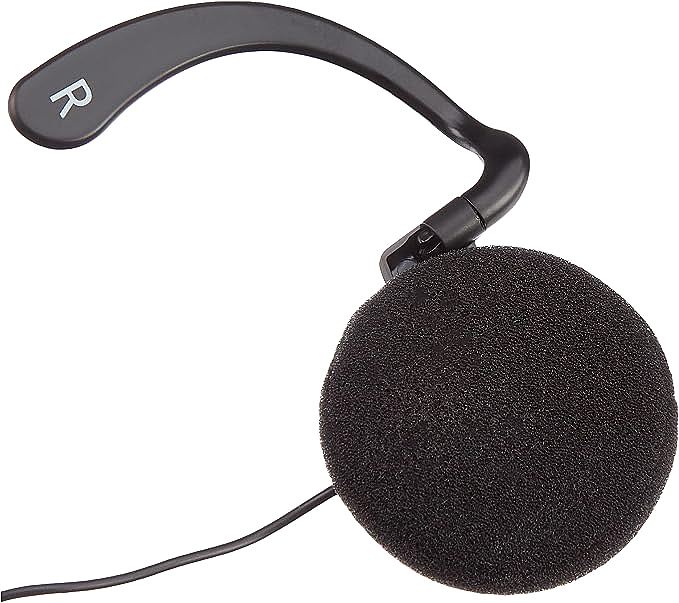
Koss KSC21 SportClip Clip-On Headphones
We've all felt it. That dull, creeping ache at the crown of your head after an hour of listening. The subtle pressure clamping down on your ears. The strange disorientation of being sealed off from the world, aurally adrift in a private bubble. This is the paradox of modern personal audio: headphones packed with features—noise cancellation, spatial audio, lossless streaming—often fail at the one thing that matters most: making you forget you're wearing them.
What if the secret to truly comfortable, natural sound doesn't lie in adding more, but in understanding what to take away? What if the answers are found not in complex algorithms, but in the timeless principles of physics, acoustics, and human anatomy?
The Koss KSC21—a simple clip-on headphone weighing just 45 grams—serves as an unlikely masterclass in this forgotten philosophy. It's not the protagonist of this story. It's the evidence.
The Physics of Disappearance: Why Weight Matters More Than You Think
The first failure of most headphones is physical. Before you evaluate sound quality, you feel their presence as a burden. This fatigue isn't subjective—it's a direct consequence of ignoring fundamental physics.
The core principle is brutally simple: Force = Mass × Acceleration.
Even when you're sitting still, gravity pulls the headphones down onto your skeleton. A bulky 300-gram headset exerts a continuous force of approximately 3 Newtons on your head and neck. Over time, your muscles fight this load, leading to strain and pressure points—especially where a rigid headband concentrates force onto a small area of your scalp.
The clip-on design eliminates the headband entirely. Without that top strap, there's no weight pressing down on the crown of your head. The entire load transfers to the ears themselves—which, counterintuitively, can be more comfortable for extended wear because the weight distributes across the cartilage rather than concentrating on bone.
A clip-on design exemplifies the principle of mass minimization. At 45 grams (1.6 ounces), the force it exerts falls below the threshold of sustained notice for most users. It achieves a state of near-perceptual disappearance—not through padding or ergonomic marketing, but through the ruthless application of physics.
This isn't about luxury. It's about making technology ask for as little of your sensory attention as possible.
The Biomechanics of Pivoting: Why Your Ear Isn't Flat
Low mass alone isn't enough. The human ear—the pinna—is a landscape of unique and complex curves, different for every individual. A rigid, one-size-fits-all earcup is an ergonomic sledgehammer, creating high-pressure zones where it conflicts with your anatomy.
This is particularly torturous for people who wear glasses. The headphone clamp drives the glasses' arms into the temporal bone, creating a painful sandwich of plastic-on-bone-through-cartilage. Many glasses wearers abandon over-ear headphones entirely for this reason.
This design's solution is elegant in its simplicity: the ear plates pivot.
This isn't a flashy feature. It's a profound, low-tech application of biomechanics. The pivot allows the speaker element to automatically align with the angle of your ear, distributing its minimal clamping force evenly across a wider surface area. It doesn't fight the body; it adapts to it.
Compare this to rigid clip-on designs or headband-mounted headphones with fixed earcups. They demand that your anatomy conform to their geometry. The pivoting design inverts this relationship—the headphone conforms to you.
The result is a secure fit that feels less like a clamp and more like a gentle embrace. It coexists with the arms of glasses rather than crushing them. This is what ergonomic design actually means: not plush memory foam or marketing claims, but mechanical accommodation of human variability.
Escaping the In-Head Bubble: The Acoustic Case for Open-Back Design
The second prison of personal audio is acoustic. Most headphones create what engineers call In-Head Localization (IHL)—the distinct, unnatural sensation that music originates from somewhere inside your skull. Your brain knows a guitarist isn't standing in the center of your cerebrum, and this cognitive dissonance is a subtle source of listening fatigue.
IHL is a direct byproduct of closed-back headphone design. By sealing the ear cup, these headphones trap the sound waves generated by the rear of the speaker driver. These waves bounce around inside the cup, creating a chaotic mess of reflections and standing waves—resonances that artificially boost or cut certain frequencies, coloring the sound in a way that feels congested and "boxy."
You are, in effect, listening to music inside a tiny, poorly-designed room strapped to your head.
This design offers a radical escape: acoustic transparency. Its earcups are open, allowing the driver's rearward sound waves to dissipate freely into the environment, just as they would from a real-world instrument.
This deliberate choice has profound acoustic consequences:
First, it virtually eliminates the internal reflections and resonances that create muddy, claustrophobic sound. The driver moves more freely, unimpeded by pressure build-up, resulting in a cleaner, more agile response.
Second, it creates a vast and realistic soundstage. Because some ambient sound mixes in, and because the sound interacts more naturally with your outer ear, your brain perceives the music as part of your environment. The soundstage expands, seeming to originate from outside your head—more like a pair of speakers in a room than drivers millimeters from your eardrum.
This is why the "noise-cancellation" tag sometimes found on product listings is so ironic. This type of headphone is an anti-noise-canceler. It's designed for situations where connection to the world is a feature, not a bug—for situational awareness while jogging, for hearing a colleague in the office, for a more organic listening experience at home.
Sometimes, the highest fidelity is achieved not by shutting the world out, but by letting sound naturally exist within it.
The Science of Effortless Power: Why 26 Ohms Matters
You can have the most comfortable, best-sounding headphones in the world, but if they're difficult to power, their potential is wasted. This is the science of efficiency.
Imagine your audio source (a phone or laptop) as a water pump and your headphones as a hose. Voltage is the water pressure, and Impedance (measured in Ohms, Ω) is the narrowness of the hose. A very narrow hose (high impedance) requires immense pressure (high voltage) to get a decent flow of water.
Many audiophile headphones operate at 250Ω or even 600Ω. They require powerful, dedicated headphone amplifiers to sound their best—expensive equipment that defeats the purpose of portable, plug-and-play audio.
At 26Ω, this design is a wide, accommodating hose. It presents very little opposition to the signal, meaning it requires very little "pressure" from the source to achieve satisfying volume and dynamic range. This is the essence of being "easy to drive."
This isn't a compromise; it's user-centric engineering. It acknowledges the reality of how these headphones will be used: plugged into smartphones, laptops, portable game consoles—none of which have powerful, high-voltage outputs.
The 26Ω impedance ensures full performance is accessible to everyone, everywhere, without additional equipment. It delivers true plug-and-play fidelity—a simple, profound goal that many more complex devices fail to achieve.
When Clip-On Headphones Make Sense (and When They Don't)
Not everyone needs clip-on headphones. Making an informed decision requires honest assessment of your use cases.
Choose clip-on headphones if:
| Scenario | Why Clip-On Fits |
|---|---|
| Glasses wearer | No headband pressure on glasses arms |
| Extended wear sessions | 45g weight reduces fatigue |
| Situational awareness needed | Open-back design keeps you connected |
| Portable audio priority | Easy to drive from phones, laptops |
| Budget-conscious | Simple design = lower cost |
Choose traditional headphones if:
| Scenario | Why Traditional Fits Better |
|---|---|
| Noise isolation required | Closed-back blocks ambient sound |
| Audiophile listening | Larger drivers, premium materials |
| Recording/mixing work | Accurate, flat frequency response |
| Commute on airplanes | ANC or passive isolation needed |
| Bass priority | Sealed cups create stronger bass |
The hybrid approach makes sense for many users: clip-on headphones for office work, walking, or situations requiring awareness; traditional headphones for home listening, commuting, or focused sessions.
This isn't redundancy—it's appropriate tool selection. You wouldn't use running shoes for formal events or dress shoes for marathons. Different audio tools serve different purposes.
The Wisdom of Subtraction: What Featureless Design Teaches Us
Comfort, naturalness, and efficiency. These aren't features you add to a product; they're the emergent properties of a design philosophy rooted in first principles.
This design is a masterclass in this philosophy because it's defined by the wisdom of subtraction:
- It has no battery, so its mass is vanishingly small.
- It has no sealed cups, so its soundstage is vast.
- It has no complex electronics, so its power requirements are minimal.
In a modern culture of relentless feature creep, where technology screams for attention, this humble headphone offers a quiet counter-argument: that perfection is achieved not when there's nothing more to add, but when there's nothing left to take away.
The pivoting ear plates aren't a selling point; they're a mechanical solution to a biomechanical problem. The open-back design isn't a cost-cutting measure; it's an acoustic choice with measurable benefits. The 26Ω impedance isn't a limitation; it's an acknowledgment of how people actually use headphones.
This philosophy extends beyond headphones. It applies to every tool we invite into our lives. Does it solve a real problem? Does it respect my attention? Does it disappear when I need it to?
This design challenges us to look beyond marketing bullet points and dizzying spec sheets. It invites us to appreciate the unseen science and quiet brilliance in the objects we use every day. It reminds us that sometimes, the most profound experience comes not from a universe of features, but from a simple, elegant, and scientifically sound connection to the sound itself.
The next time you reach for headphones, ask yourself: do I want technology that demands my attention, or technology that disappears into the experience? The answer might surprise you.
Koss KSC21 SportClip Clip-On Headphones
Related Essays

Koss Porta Pro Wireless: Legendary Sound, Untethered Freedom

The Ear-Clip Niche: Audio-Technica ATH-EQ300M vs. Koss KSC-75

Xmenha ZXY-DEJX802-Violett Wireless Headset Clip On Open Ear Earbuds Bone Conduction Head Set Workout Cycling Running Work Headphone

Bulktech 728 Stereo Headset for Kids, Children and Teens

Spmmmner Wireless Earbuds – A Seamless Listening Experience

Nesortrii Sports On-Ear Headphones - Enhanced Awareness and Comfort

MASTER & DYNAMIC MG20 Wireless Gaming Headphones - A Game Changer

: Kinglucky Wireless Bone Conduction Headphones - Sweat Resistant Open-Ear Bluetooth Sport Headphones
Anchoring Sound in Motion: Overcoming Kinetic Friction in Acoustic Wearables

