The Physics of Endurance: Micro-Energy Management in Wireless Audio


EUQQ Q130 Wireless Earbuds
In the realm of portable electronics, the limitation is rarely the processing power but rather the energy storage. True Wireless Stereo (TWS) earbuds present a unique engineering challenge: how to power a radio receiver, a digital-to-analog converter (DAC), and an amplifier for extended periods within a device encompassing only a few cubic centimeters. The solution implemented in systems like the EUQQ Q130 is not a single breakthrough battery, but a distributed energy management architecture comprising a high-density micro-battery, a portable charging reservoir, and an ultra-efficient communication protocol.
The Energy Relay Architecture
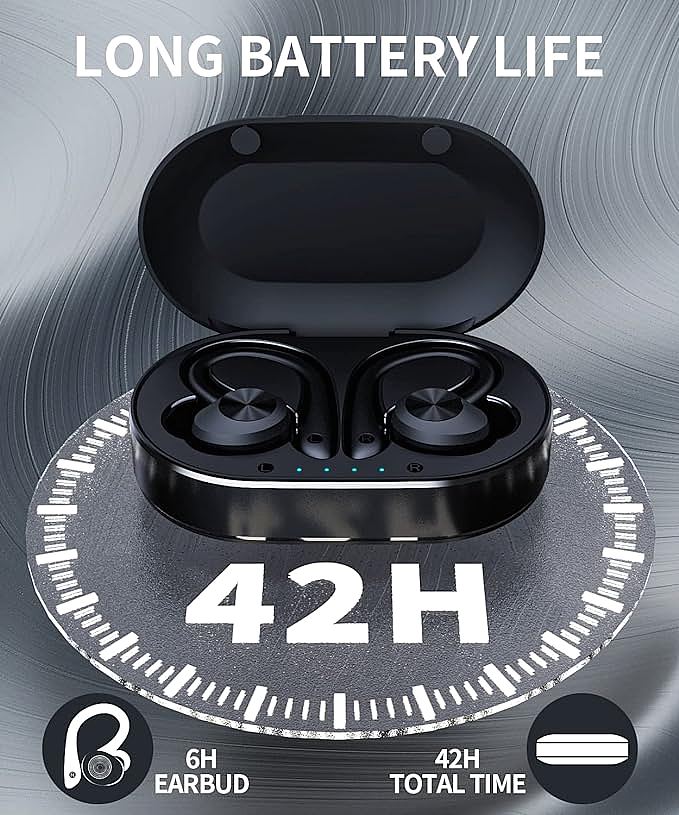
The "42-hour playtime" specification is a result of a relay system. The earbuds themselves contain tiny lithium-ion cells, constrained by weight and size (typically 30-50mAh). To extend functionality, the charging case acts as a mothership, housing a significantly larger battery (often 300-500mAh or more).
When the earbuds are docked, metal contacts engage, creating a circuit. The case's internal Power Management Integrated Circuit (PMIC) activates a DC-to-DC converter. This component steps up the voltage from the case's battery to the level required to charge the earbuds. The efficiency of this transfer is critical; energy is lost as heat during conversion. Modern systems achieve conversion efficiencies upwards of 90%, ensuring that the majority of the energy stored in the case effectively transfers to the earbuds. This relay mechanism allows the user to carry a week's worth of power in their pocket, decoupling the device's runtime from its physical size constraints.
Visualizing Energy State: The ADC Interface
Managing this energy requires user awareness. The Q130 incorporates an external LED display, a feature driven by an Analog-to-Digital Converter (ADC). The ADC measures the voltage of the case's battery—which drops non-linearly as it discharges—and maps this analog value to a digital percentage (0-100%). This real-time telemetry allows users to visualize the remaining chemical potential of the cell, preventing the "battery anxiety" associated with opaque LED blink codes found on older devices.
Bluetooth 5.3: The Efficiency Protocol
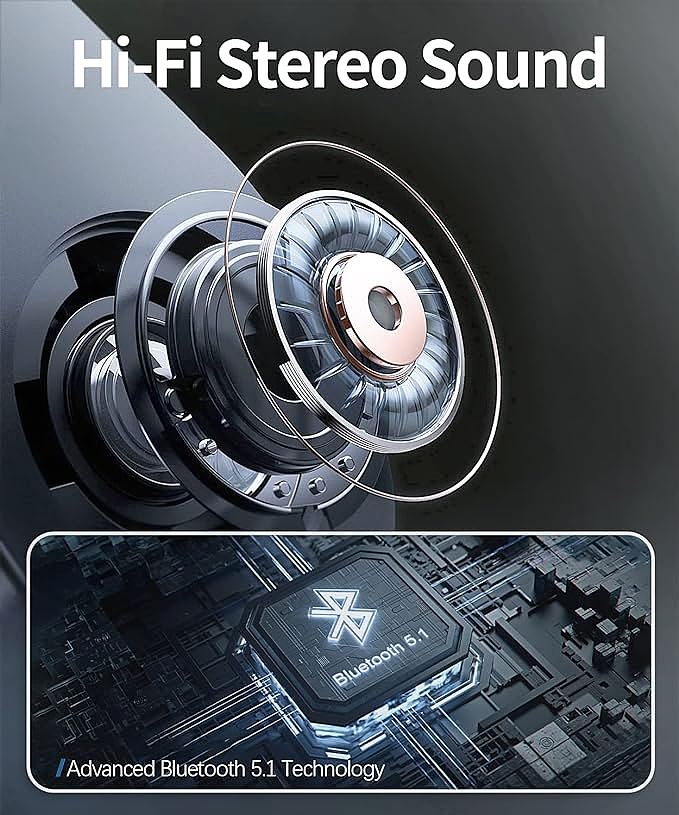
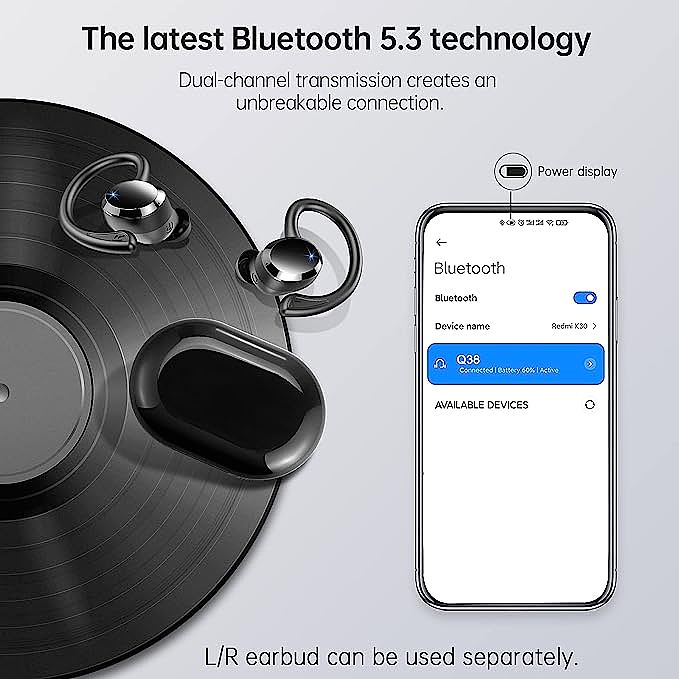
Hardware storage is only half the equation; consumption rate is the other. The Bluetooth 5.3 protocol utilized in the Q130 is engineered for Low Energy (LE) operation. Unlike classic Bluetooth, which maintained a constant, power-hungry link, Bluetooth 5.3 employs aggressive duty cycling.
The radio spends the vast majority of its time in a "sleep" state, waking up only for microseconds to receive audio packets. The "Connection Subrating" feature allows the device to negotiate these wake-up intervals dynamically. When music is paused, the connection interval lengthens, drastically reducing power consumption. When playback resumes, it switches back to a high-performance mode instantly. This intelligent modulation of the radio frequency (RF) front-end significantly reduces the average current draw, allowing the small internal batteries to last for 6-8 hours of continuous playback, a figure that would have been impossible with earlier protocol versions.
Future Outlook: Solid-State Batteries
While current systems rely on liquid electrolyte lithium-ion cells, the future of TWS energy lies in solid-state batteries. These next-generation cells promise higher energy densities and improved safety, potentially doubling the runtime of the earbuds themselves without increasing their size. Coupled with even more efficient silicon, future iterations may render the charging case less of a necessity and more of an accessory.
EUQQ Q130 Wireless Earbuds
Related Essays

Silencing the Copper Wire: The Invisible Architecture of Modern Audio

The Physics of Silence: How Active Noise Cancellation Works
The Four Pillars of Unbreakable Sport Audio

A Guide to Modern Earbud Tech: Understanding Bluetooth 5.3,...
How Hollywood, Radio Physics, and Neural Networks Built the...

How True Wireless Stereo Technology Rewired the Way We...

The Science Behind Wireless Audio: From Bluetooth Origins...

Why Your Wireless Earbuds Last 48 Hours: The Physics Behind Battery and Sound

Bose QuietComfort 45: Mastering the Science of Sound and Silence

