The Physics of Finding: Bluetooth Beacons and Crowdsourced Location
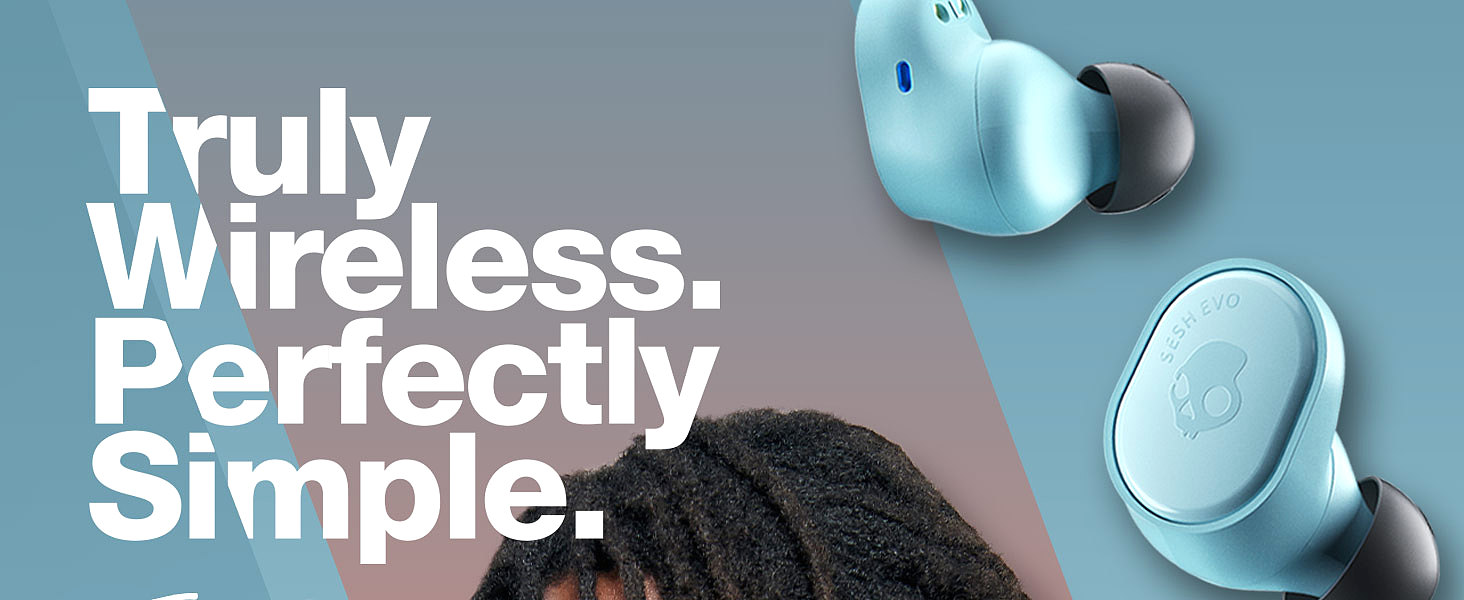

Skullcandy Sesh Evo In-Ear Wireless Earbuds
The miniaturization of personal audio into "True Wireless Stereo" (TWS) earbuds has created a paradox: as devices become more convenient to wear, they become exponentially easier to lose. A tiny, black plastic bud dropped on a dark street or wedged between sofa cushions presents a significant retrieval challenge. Addressing this requires integrating technologies that extend beyond audio reproduction into the realm of the Internet of Things (IoT). The Skullcandy Sesh Evo exemplifies this convergence by embedding Tile™ technology directly into the Bluetooth chipset, transforming each earbud into a trackable beacon.
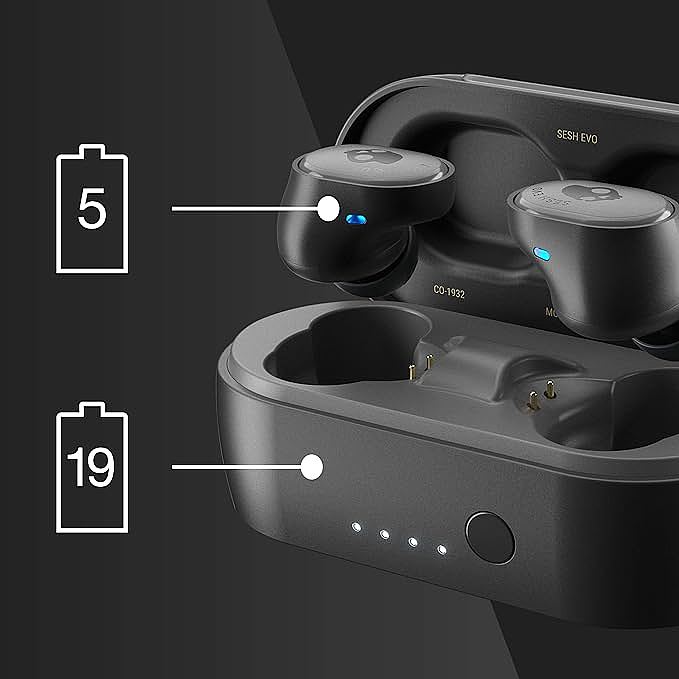
Bluetooth Low Energy (BLE) and Beacon Mechanics
At the core of this tracking capability is Bluetooth Low Energy (BLE). Unlike the "Classic" Bluetooth used for streaming high-bandwidth audio, BLE is designed for periodic, low-bandwidth data bursts. Even when the earbuds are not playing music, the integrated Tile firmware allows them to broadcast widely, short packets of data known as "advertising packets."
These packets act like a digital heartbeat. They contain a unique identifier (UUID) specific to that earbud. When a compatible device (like a smartphone running the Tile app) scans the environment, it detects these packets. The distance to the earbud is estimated using RSSI (Received Signal Strength Indicator). RSSI is a measurement of the power level of the received radio signal. Physics dictates that radio waves attenuate (weaken) as they travel through space according to the inverse-square law. By analyzing the RSSI value—stronger means closer, weaker means further—the app can display a proximity meter (often visualized as green rings), guiding the user toward the lost device.
The Crowdsourced Network Topology
The limitation of direct Bluetooth tracking is range; effectively, it works only within 30-100 feet depending on obstructions. What happens when the earbuds are left at a coffee shop miles away? This is where the Community Find Network comes into play.
This system relies on a mesh-like topology of millions of user devices acting as passive scanning nodes. If an earbud is marked as "lost," its unique UUID is flagged in the cloud database. When any user running the Tile app passes within range of the lost earbud, their phone silently detects the beacon's advertising packet. The phone then timestamps this event, records its own GPS coordinates, and securely uploads this data to the cloud. The owner then receives a notification with the last known location. This architecture effectively turns every smartphone in the network into a potential search party, extending the "range" of the earbuds from feet to global, contingent on the density of the user base.
Independent Connection Topology
Traditional TWS earbuds often used a "Relay" architecture where one earbud (Master) connected to the phone, and the other (Slave) connected to the Master. If the Master was lost or ran out of battery, the Slave became useless.
The Sesh Evo utilizes an Either Bud Solo architecture. This implies a more advanced Bluetooth handshake where both earbuds can act as the Primary connection to the host device. This independent switching logic is crucial for both reliability and tracking. It ensures that if one earbud is lost, it can still function as an independent beacon, broadcasting its location even if its partner is miles away or in a different power state. This redundancy significantly increases the probability of recovery compared to dependent architectures.
Future Outlook: Direction Finding and UWB
While RSSI provides a rough proximity, it lacks precision directionality. The future of short-range tracking lies in Bluetooth 5.1 Direction Finding (AoA/AoD) and Ultra-Wideband (UWB) technology. These protocols allow devices to determine not just "how far" an object is, but exactly "where" it is (e.g., "3 feet to the left"). As these technologies trickle down to consumer audio, we can expect future earbuds to offer augmented reality (AR) finding experiences, visually guiding users to the exact location of their lost device with centimeter-level accuracy.
