Acoustic Democratization: Engineering High-Fidelity Audio on a Micro-Budget


FAMOO U-Air Wireless Earbuds
The trajectory of consumer electronics is governed by a relentless, downward pressure on cost coupled with a simultaneous upward trajectory in capability. Historically, the vanguard of acoustic technology—stable wireless telemetry, micro-dynamic drivers, and resilient architectural sealing—was exclusively reserved for premium hardware lines. Early iterations of untethered audio were categorized by high latency, rapid battery degradation, and fragile chassis designs.
However, the maturation of global supply chains and the stabilization of wireless protocols have triggered a profound shift. We are witnessing the commoditization of high-fidelity acoustics. Hardware that occupies the ultra-accessible entry-level tier is no longer synonymous with rudimentary engineering. By deconstructing the physical, chemical, and digital architecture of accessible hardware—utilizing devices like the FAMOO U-Air as a structural baseline—we can observe the rigorous scientific principles deployed to maximize audio fidelity and operational resilience within strict manufacturing constraints.
When the 2.4 GHz Highway Grinds to a Halt
Before a transducer can convert an electrical pulse into a mechanical sound wave, a robust digital supply line must be established. Wireless audio operates primarily within the 2.4 GHz Industrial, Scientific, and Medical (ISM) radio band. This frequency allocation is unlicensed globally, making it highly accessible for consumer electronics, but it comes with a severe physical penalty: absolute spectral chaos.
The 2.4 GHz band is shared by Wi-Fi routers, microwave ovens, baby monitors, and municipal infrastructure. From a radio frequency (RF) perspective, navigating a crowded metropolitan train station is equivalent to driving on a multi-lane highway where every vehicle is broadcasting a blinding strobe light. Early Bluetooth iterations attempted to survive this environment using basic Frequency Hopping Spread Spectrum (FHSS), randomly jumping across 79 designated channels. However, jumping blindly often meant landing directly on a channel already saturated by a nearby Wi-Fi router, resulting in dropped packets, audio stuttering, and severe latency.
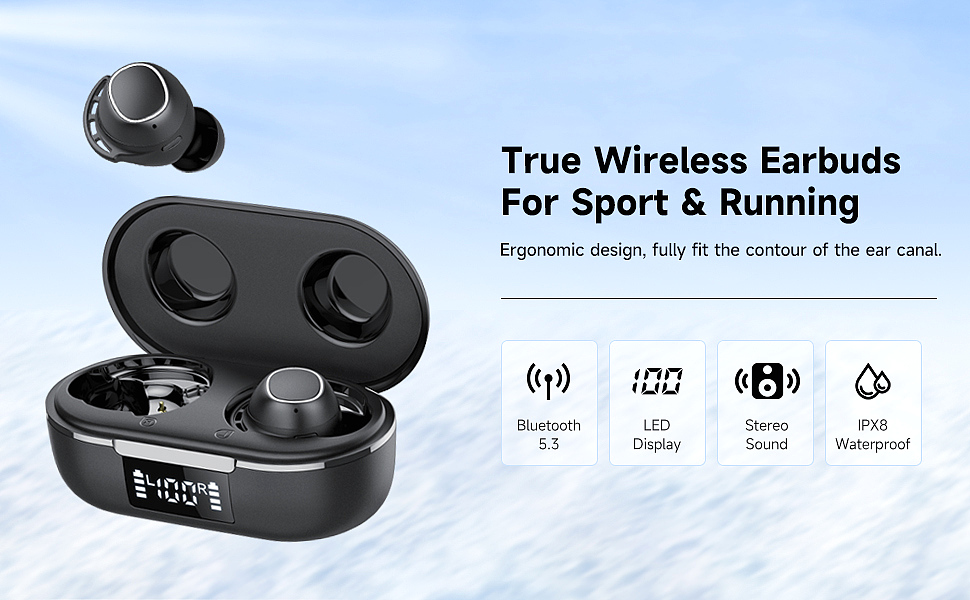
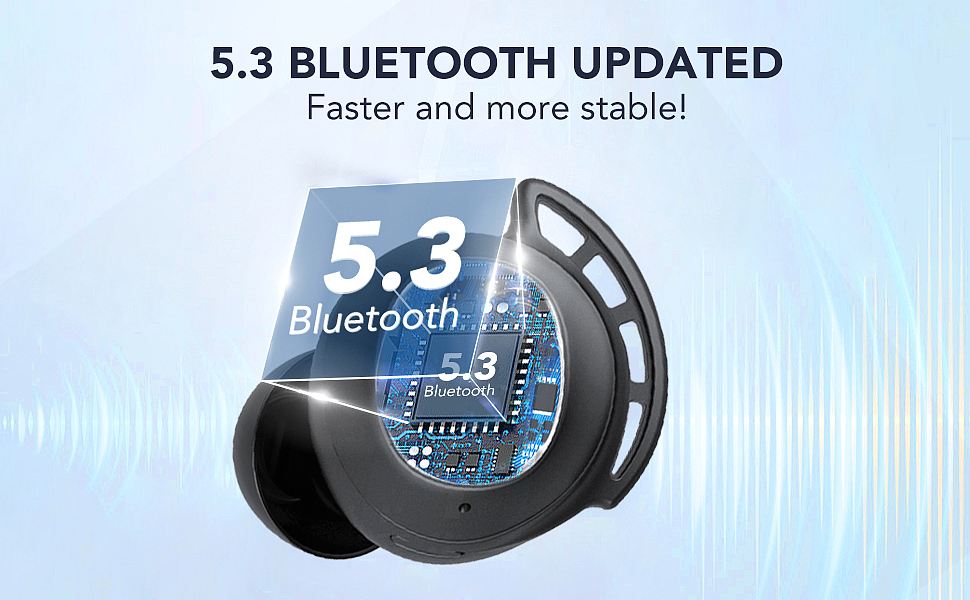
The integration of advanced telemetry protocols, specifically the Bluetooth 5.3 standard utilized in the FAMOO architecture, introduces a critical mathematical defense mechanism: Connection Sub-rating and advanced Channel Classification.
Instead of hopping blindly, the localized processor within the earbud constantly analyzes the signal-to-noise ratio across all available channels. It builds a dynamic, real-time map of the RF environment. If it detects heavy interference on channel 37 due to a localized Wi-Fi hotspot, the algorithm flags that channel as hostile and dynamically rewrites the hopping sequence to avoid it.
Furthermore, Bluetooth 5.3 optimizes the power consumption of these handshakes. In older protocols, the device had to wake up from a low-power state constantly to verify the connection, draining the micro-battery. The updated protocol allows the host device (the smartphone) and the peripheral (the earbud) to negotiate extended sleep intervals while maintaining the digital link, instantly ramping up the duty cycle only when heavy audio data transmission is required. This specific manipulation of RF telemetry is the invisible infrastructure that prevents signal collapse in dense urban environments while preserving critical electrochemical energy.
The Polyurethane Shock Absorber in Your Ear
Once the digital signal successfully traverses the RF interference, it encounters the digital-to-analog converter (DAC) and the primary acoustic engine: the dynamic driver. The fundamental physics of a dynamic driver rely on the Lorentz force. An alternating electrical current—representing the music—flows through a microscopic voice coil suspended in a permanent magnetic field. This interaction generates a highly controlled push-pull motion, driving a membrane back and forth to displace air and create longitudinal pressure waves.
The engineering paradox of this system lies entirely within the material science of that membrane, or diaphragm.
To accurately reproduce high-frequency transients—such as the sharp, metallic strike of a hi-hat cymbal—the diaphragm must change direction over 15,000 times per second. This requires extreme structural rigidity. If the material is too soft, the center of the dome (where the coil attaches) will move, but the outer edges will lag behind due to inertia. This creates "driver breakup," a physical rippling of the membrane that introduces harsh, non-linear harmonic distortion.
Conversely, to generate low-frequency sub-bass, the diaphragm must possess enough flexibility and excursion to displace a massive volume of air.
High-end audiophile equipment often utilizes exotic materials like beryllium or vapor-deposited diamond to achieve stiffness without mass. In strict budget constraints, engineers turn to complex polymer chemistry. The FAMOO U-Air utilizes polyurethane composite diaphragms. Polyurethane (PU) is an elastomeric polymer that possesses a unique mechanical characteristic: exceptionally high internal damping.
When a snare drum is struck in a recording, the speaker diaphragm must thrust forward to recreate the impact, but it must also stop vibrating the exact millisecond the signal ceases. Materials like thin aluminum ring like a bell, causing the sound to smear across the time domain. The molecular structure of polyurethane acts as a microscopic shock absorber. It dissipates the kinetic energy of the voice coil instantly as micro-heat, preventing the diaphragm from resonating. This high damping factor is what dictates the "punchy" acoustic signature frequently noted in structural reviews of the hardware; the bass notes hit with visceral force but vanish immediately, leaving the auditory canvas clean for the midrange vocals to articulate without being masked by low-frequency overhang.
Anchoring Silicon to Human Cartilage
The most sophisticated transducer materials and RF telemetry are rendered completely useless if the device cannot maintain a sealed, stable position within the human ear canal during intense kinetic movement. Designing a universal fit for the human ear—a highly irregular, asymmetrical biological structure—is a severe biomechanical challenge.
Traditional in-ear monitors (IEMs) rely almost exclusively on static friction. A silicone tip is wedged into the external auditory meatus, creating outward pressure against the skin. The equation for frictional force ($F_f = \mu N$, where $\mu$ is the coefficient of friction and $N$ is the normal force) dictates that as long as the friction exceeds the downward pull of gravity and the kinetic shock of the user's footstrike, the earbud remains in place.
However, biological realities quickly destroy this mathematical balance. During cardiovascular exercise, the apocrine glands secrete sweat—a mixture of water, sodium, and lipids. Sweat acts as a highly efficient mechanical lubricant. The moment sweat coats the silicone tip, the coefficient of friction plummets. The earbud slips, the acoustic seal breaks, the low-frequency bass pressure escapes into the atmosphere, and the device falls out.
Overcoming this requires abandoning friction as the sole stabilizing force and adopting structural anchoring. This is the mechanical logic behind the integration of ergonomic wingtips.
From an architectural standpoint, the flexible wingtip acts as a suspension cantilever. Rather than relying on the delicate skin of the ear canal to bear the entire load of the hardware, the wingtip hooks directly into the antihelix—the rigid ridge of cartilage located just above the concha bowl. This creates a secondary, locked point of contact.
When a runner strikes the pavement, the downward kinetic shockwave is intercepted by the wingtip and dispersed across the broad, stable cartilage of the outer ear. The silicone tip inside the canal is relieved of its structural duties, allowing it to function purely as an acoustic gasket. This biomechanical distribution of force ensures that the hardware remains locked in place despite total frictional failure inside the lubricated ear canal.
Drowning Electronics to Save Them
Securing the device physically is only the first phase of athletic survival. The subsequent, and vastly more destructive, threat is electrochemical. The human body is a mobile saltwater generator, and the introduction of sodium chloride to a live printed circuit board (PCB) is catastrophic.
When sweat breaches the outer casing of a standard consumer electronic device and bridges the microscopic gap between a positive voltage trace and a ground trace, it creates an immediate electrolytic cell. The electrical current begins flowing through the sweat, stripping copper atoms from the anode and depositing them on the cathode in a process known as dendritic growth. Within minutes, microscopic metallic "bridges" form, permanently short-circuiting the logic board.
To achieve an IPX8 water resistance rating—which mandates that the device can survive continuous submersion in water deeper than one meter—engineers cannot rely solely on rubber gaskets. Gaskets degrade under thermal stress and repeated kinetic shock. The ultimate defense requires altering the surface chemistry of the internal components.
Accessible athletic hardware utilizes vacuum-deposited nano-coatings, often based on fluoropolymer chemistry. In a specialized chamber, a microscopic layer of polymer gas is bonded directly to the surface of the PCB, the battery contacts, and the internal wiring. This coating fundamentally alters the surface tension of the electronics. It makes the surfaces extremely hydrophobic, causing the contact angle of any intruding water droplet to exceed 90 degrees.
Instead of spreading out, pooling, and bridging electrical traces, the water is forced to bead up into tight spheres. Even if the outer plastic shell is breached during a torrential downpour or a heavy gym session, the saltwater simply rolls off the internal circuitry without initiating galvanic corrosion. The IPX8 standard guarantees that the device functions not merely by keeping water out, but by becoming chemically immune to water that manages to get in.
Why Does a Physical Gasket Outperform Digital Algorithms?
In the current landscape of wearable audio, Active Noise Cancellation (ANC) is heavily marketed as a mandatory feature. ANC relies on external microphones to sample ambient noise, and a heavy-duty Digital Signal Processor (DSP) to calculate and broadcast an exact, 180-degree inverted anti-noise wave to destructively interfere with the incoming sound.
However, running a dedicated DSP to calculate Fast Fourier Transforms in real-time requires a massive amount of continuous electrical power and significant silicon overhead. Integrating this into a budget-conscious device forces severe compromises: the manufacturer must either shrink the battery, utilize inferior speaker drivers to offset the cost of the DSP, or accept a drastic reduction in operational lifespan.
Value engineering dictates a brutal, highly efficient alternative: maximum passive noise isolation.
By omitting the ANC circuitry entirely, hardware like the FAMOO U-Air reallocates its silicon budget and power reserves. It relies entirely on the physical barrier created by the silicone eartips. When the correct size of silicone is compressed into the ear canal, it creates a hermetic acoustic seal.
While ANC is highly effective at cancelling low-frequency, continuous drones (like a jet engine), it frequently struggles with high-frequency, sudden transient noises (like dropping a plate or a dog barking) because the processor cannot calculate the anti-wave fast enough. A dense physical gasket, however, acts as a broadband acoustic barrier. It physically blocks high-frequency sound waves from ever reaching the tympanic membrane. By relying on materials science and biological fit rather than power-hungry digital algorithms, the hardware achieves excellent environmental suppression while completely avoiding the battery drain and artificial "eardrum pressure" frequently associated with budget ANC implementations.

Sacrificing Silicon Overhead for Electrochemical Endurance
The omission of ANC and complex multipoint networking (the ability to connect to two devices simultaneously) is not a defect of the entry-level tier; it is a calculated thermodynamic strategy designed to solve the ultimate bottleneck of wearable technology: battery density.
The lithium-polymer (Li-Po) cells housed within the acoustic chamber of a true wireless earbud are microscopically small, often containing fewer than 50 milliampere-hours (mAh) of charge. Driving the electromagnetic coil of the dynamic driver requires constant voltage. If the SoC (System on a Chip) is also burdened with running background networking tasks, polling secondary Bluetooth connections, or calculating anti-noise algorithms, the power draw spikes exponentially.
By systematically stripping away background computational overhead, the hardware achieves a state of extreme electrical efficiency. The localized processor's sole mandate is to maintain a single, highly stable Bluetooth 5.3 connection and push analog voltage to the polyurethane driver.
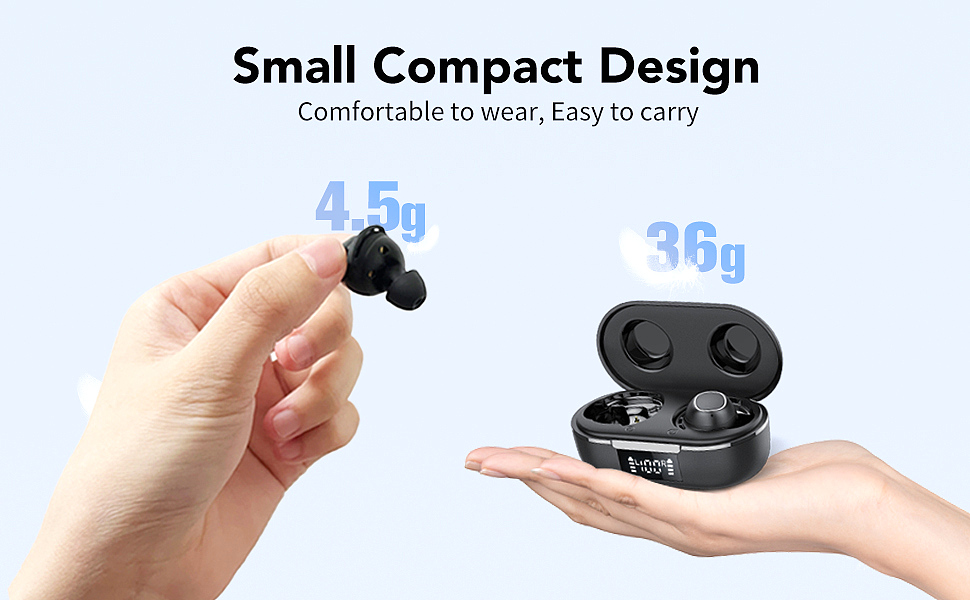
This ruthless efficiency is how a micro-cell achieves up to 6 hours of continuous output, and how a relatively compact charging case can hold enough reserve density to refuel the earbuds seven times, culminating in a 42-hour lifecycle. The inclusion of an LED digital display on the chassis further optimizes the user experience, providing exact telemetry regarding the remaining electrochemical reserves without requiring the user to boot up a companion smartphone application.
The engineering of accessible audio is fundamentally the discipline of disciplined subtraction. By mastering the physical connection to the human body through biomechanics, protecting the internal logic with advanced hydrophobic chemistry, and streamlining the computational load to maximize battery density, modern hardware proves that high-fidelity audio reproduction is no longer guarded by a financial barrier. It is achieved through the mastery of fundamental, undeniable physics.
FAMOO U-Air Wireless Earbuds
Related Essays

The Science in Your Pocket: Deconstructing the Tech Inside a $20 Pair of IPX8 Wireless Earbuds

Asnrc T2 Wireless Earbuds : A Budget-Friendly Option with Decent Sound

MORMOQUE G5 Bluetooth Headphones - Enhanced Wireless Experience

Tomorsi J513A Wireless Earbuds: The Well-Rounded Wireless Earbuds for Immersive Listening

GVOVG L Wireless Earbuds: Feature-Packed Bluetooth Earbuds with Exceptional Sound

SoundPEATS TrueFree2 Wireless Earbuds: The Budget Kings of True Wireless

The Invisible Symphony: How Driver Size Shapes Your Audio Experience

GOALSEN J-Series J03 Exquisite Bluetooth Headphones – Dual Bluetooth Wireless Earbuds Pressure-Touch Control

The Silence Economy: How Advanced ANC Technology Became a Modern Essential

