Acoustic Anchors in a Wireless World: The Mechanics of Neckband Audio


FAMOO BT260 Wireless Headphones
The evolution of portable audio equipment represents a continuous battle against the constraints of human anatomy and the laws of physics. For decades, the industry attempted to shrink every component, culminating in the fully detached true wireless stereo (TWS) format. However, the relentless pursuit of miniaturization uncovered a hard biological limit: the human ear canal is simply not designed to bear the structural load of heavy lithium-ion power cells, Bluetooth transceivers, and complex acoustic drivers simultaneously.
This anatomical reality has driven a massive engineering resurgence in distributed audio architectures, most notably the neckband design. By separating the acoustic delivery system from the heavy power and processing components, engineers can bypass the limitations of the ear's cartilage. This architectural shift allows for the implementation of significantly larger acoustic diaphragms, vastly expanded energy reservoirs, and highly specialized solid-state hardware. Analyzing devices built on this philosophy, such as the FAMOO BT260 wireless headphones, provides a masterclass in cross-disciplinary engineering, blending fluid dynamics, materials science, and electromagnetism.
The Invisible Orchestra Conductor Inside the Battery Cell
To understand extreme playback endurance, one must look past the external casing and dive into the volatile electrochemistry of the lithium-ion cell. The capacity of a battery is not dictated by the software, but by the physical volume of active material (the anode and cathode) and the number of lithium ions that can shuttle between them during a discharge cycle.
In a purely detached earbud, battery volume is severely restricted, often limiting playback to a mere five or six hours. The neckband architecture circumvents this by utilizing the vast, unused real estate of the human clavicle. By relocating the battery packs to the ends of the neckband, engineers can integrate high-capacity cylindrical or pouch cells that hold exponentially more chemical energy.
However, housing a massive battery introduces a secondary challenge: charge time. Pushing electrical current into a battery too quickly generates intense Joule heating. If the thermal threshold is breached, the liquid electrolyte inside the battery can boil, leading to accelerated degradation or catastrophic failure. Implementing "fast fuel" protocols requires a highly sophisticated Power Management Integrated Circuit (PMIC).
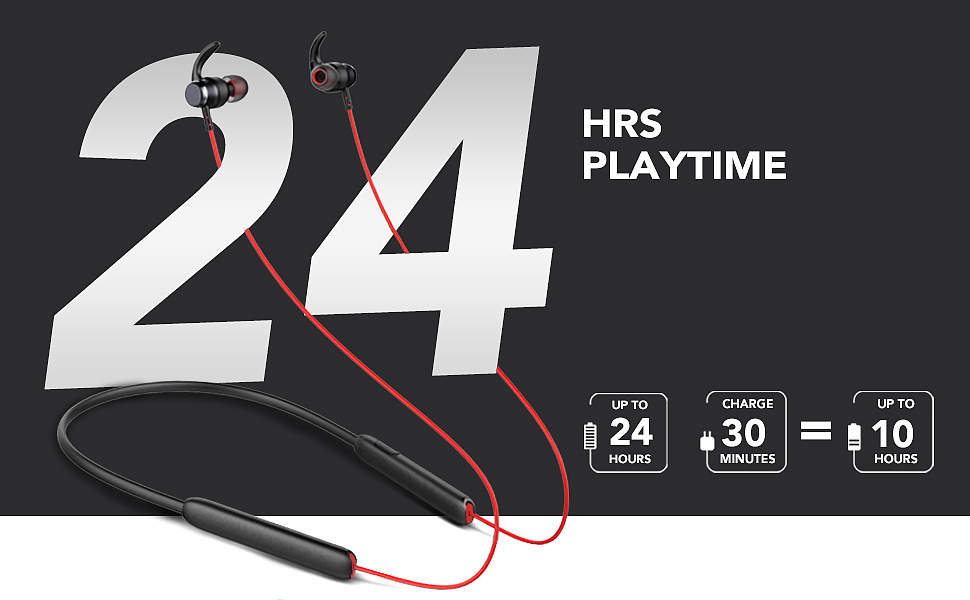
When a device like the FAMOO BT260 claims the ability to yield 10 hours of continuous playback from a mere 30-minute charge, it relies on a dynamic charge curve. The PMIC detects the battery's low state of charge and opens the gates to a high "C-rate" (a measure of the rate at which a battery is discharged relative to its maximum capacity). The charger floods the anode with lithium ions rapidly while internal resistance is low. As the battery fills and internal pressure rises, the PMIC throttles the current down to a trickle. This precise manipulation of electrical flow allows for massive energy transfer without crossing the dangerous thermal runaway threshold, ensuring the battery retains its 24-hour total capacity over hundreds of life cycles.
Why Do Conventional Diaphragms Distort at High Volumes?
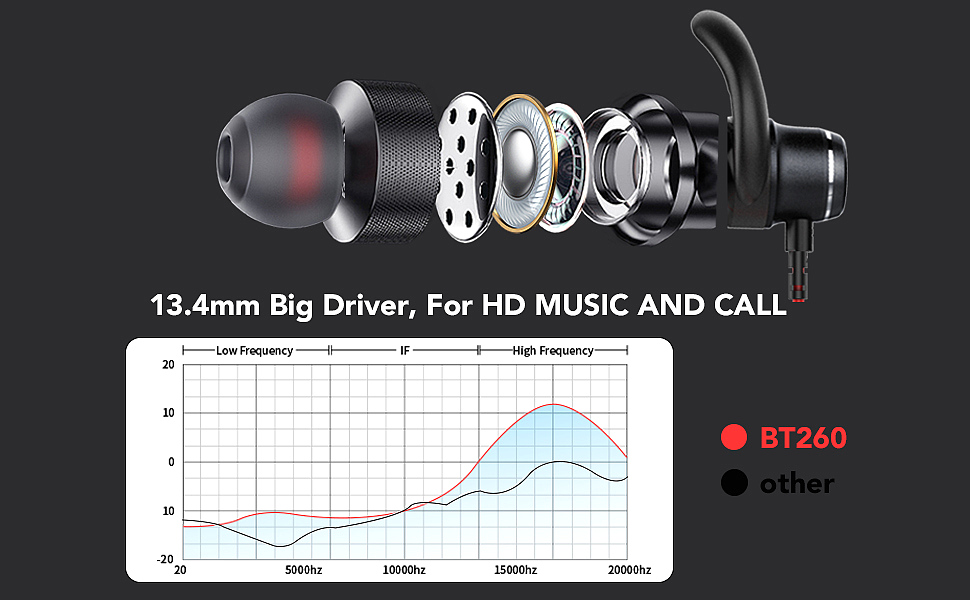
Moving away from the power source, we arrive at the transducer—the mechanical heart of the headphone. Sound is a mechanical pressure wave traveling through a medium (air). To create low-frequency sounds (bass), a headphone must displace a significant volume of air. Because the wavelength of bass frequencies is very long, a small surface area struggles to generate enough acoustic pressure before the wave dissipates.
This is a fundamental physics problem. To get better bass, you need a larger driver. The 13.4mm drivers utilized in modern neckband systems are massive compared to the 6mm to 8mm drivers typically squeezed into detached earbuds. But size introduces a fatal acoustic flaw known as "breakup."
When an electrical signal passes through the voice coil attached to the driver's diaphragm, it vibrates thousands of times per second. If the diaphragm is made of a soft, cheap plastic, the outer edges of the circle cannot keep up with the center. The material begins to flex, warp, and ripple. Different zones of the diaphragm move out of phase with one another, creating severe harmonic distortion that ruins the audio fidelity.
To combat breakup, acoustic engineers search for materials with an incredibly high Young's Modulus (extreme stiffness) combined with very low mass. The solution lies in biotechnology: bio-cellulose. Bio-cellulose is an organic polymer synthesized by specific strains of bacteria. Unlike plant cellulose, bacterial cellulose consists of an incredibly tight, three-dimensional nano-network of fibers.
When grown, harvested, and molded into a speaker diaphragm, this bio-cellulose acts as a nearly perfect rigid piston. It is stiff enough to prevent warping at high frequencies, yet lightweight enough to start and stop vibrating instantaneously. Furthermore, the organic nature of the material provides excellent internal damping, meaning it doesn't "ring" excessively like a purely metallic driver might. This biological engineering allows a large 13.4mm driver to push a 43% denser bass wave without sacrificing the crisp, undistorted clarity of the upper vocal registers.

From Copper Cables to Adaptive Frequency Hopping
The transmission of complex, high-bitrate audio without physical copper wiring is a triumph of radio frequency (RF) engineering. Operating in the 2.4 GHz Industrial, Scientific, and Medical (ISM) band, audio devices share airspace with Wi-Fi routers, microwaves, and millions of other digital transceivers.
Early iterations of wireless audio were plagued by packet loss. If a competing signal occupied the exact frequency your headset was using, the audio data packet would collide and drop, resulting in the familiar "stutter" or "pop."
The integration of Bluetooth 5.3 architecture represents a profound shift in how devices handle this chaotic airspace. Instead of broadcasting on a single static channel, the hardware utilizes Adaptive Frequency Hopping Spread Spectrum (AFH). The transmitter and receiver agree on a complex, pseudo-random sequence of frequency changes, hopping across 79 different channels up to 1,600 times per second.
What makes the 5.3 standard unique is its enhanced channel classification. The transceiver acts as a real-time spectrum analyzer, constantly monitoring the 2.4 GHz band for noise. If it detects that a specific frequency is suddenly occupied by a nearby Wi-Fi router, it immediately blacklists that channel from its hopping sequence. By intelligently routing data traffic around invisible localized interference, the protocol achieves a 50% improvement in transmission efficiency. The audio stream remains intact not because the signal is overpoweringly strong, but because the software is exceptionally elusive.
A Dead Battery is Better Than a Corroded Circuit
Wearable technology is subjected to a brutally hostile operating environment: the human body. Sweat is not merely water; it is a highly conductive saline solution filled with sodium, chloride, and potassium ions. When sweat bridges the microscopic gap between two charged electrical traces on a printed circuit board, it triggers galvanic corrosion. The metal is rapidly eaten away, leading to permanent hardware death.
Protecting internal electronics requires mastering fluid dynamics and surface tension. An IPX7 rating, as seen on devices designed for heavy athletic use, mandates that the hardware can survive total immersion in one meter of water for 30 minutes.
Achieving this requires multiple layers of defense. The first is mechanical: ultrasonic welding of the external plastic chassis to eliminate structural seams. However, speakers and microphones require openings to let air in and out. To protect these vulnerable acoustic ports, engineers deploy hydrophobic nano-coatings.
By applying a microscopic layer of fluoropolymer via vapor deposition, the surface energy of the internal mesh is drastically reduced. When a droplet of sweat hits this treated surface, the cohesive forces within the water droplet are far stronger than the adhesive forces pulling it to the mesh. The contact angle of the droplet increases sharply, causing it to bead up into a perfect sphere rather than spreading out and seeping through the microscopic holes. The water is effectively repelled by the altered physics of the boundary layer, ensuring the volatile electronics inside remain completely dry.
When the Wind Howls During a Conference Call
Capturing human speech in a chaotic acoustic environment is not a hardware problem; it is a mathematical one. An omnidirectional microphone is entirely ignorant of context; it translates the sound of a passing siren, a gust of wind, and a human voice into electrical voltages with equal prejudice.
To make voice communication viable on a crowded street, hardware relies on Digital Signal Processing (DSP) algorithms, specifically technologies built around the cVc (Clear Voice Capture) framework.
When wind strikes the physical casing of a microphone, it creates severe low-frequency turbulence. The cVc 8.0 algorithm acts as an incredibly fast mathematician. It continuously monitors the incoming audio wave. Human speech follows specific, predictable harmonic structures and rhythmic pauses. Wind noise, traffic, and gym clatter are non-stationary and statistically random.
The DSP chip employs adaptive filters. It identifies the frequency bands dominated by the chaotic noise floor and rapidly calculates an inverse waveform. By mixing this mathematically inverted wave back into the original signal, the algorithm forces destructive interference. The noise wave and the anti-noise wave collide and cancel each other out in the digital domain, leaving only the structured frequencies of the user's voice to be transmitted. The result is artificial silence, carved out of chaos by millions of calculations per second.
Balancing Mass and Comfort on the Human Clavicle
The physical design of a wearable device dictates its usability just as much as its internal silicon. The neckband form factor is a direct response to the biomechanical limitations of the human ear.
The ear canal is lined with delicate epithelial tissue heavily innervated with sensitive nerve endings. Suspending a dense mass of lithium and plastic solely by wedging it into this canal creates a severe lever arm. With every step a user takes, the mass exerts downward kinetic force, stretching the cartilage and causing deep, aching fatigue.
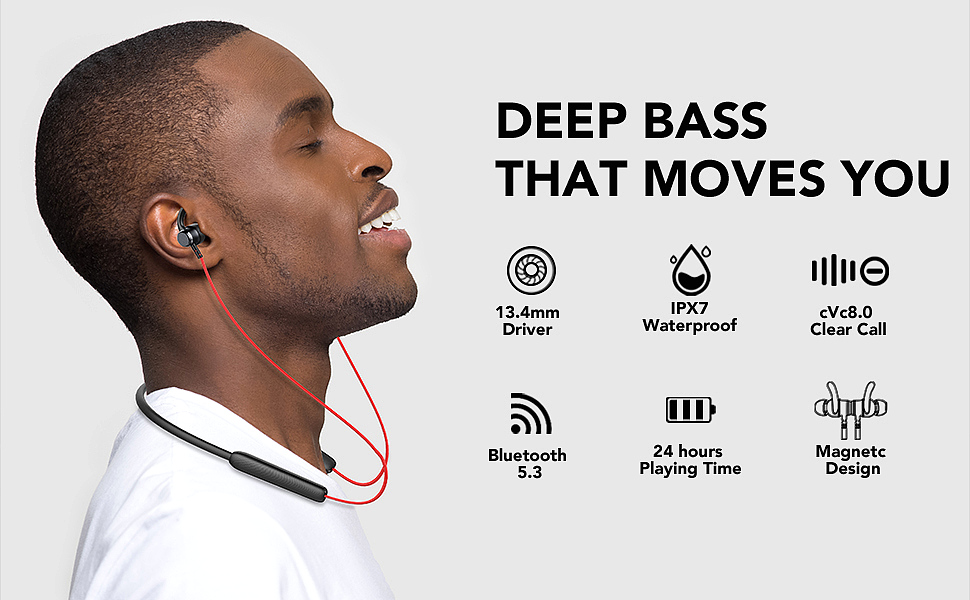
The 3D ergonomic neckband solves this by shifting the center of gravity. By draping a flexible, skin-safe silicone chassis over the shoulders and clavicle—areas designed to bear heavy loads—the mechanical stress is removed from the ear. The actual acoustic buds inserted into the ear canal are stripped of their heavy batteries and processors, reducing their weight to just a few grams.
This separation of mass creates a "barely there" physical sensation. The ear hooks attached to the acoustic chambers no longer have to fight gravity; they merely serve as gentle stabilizers, preventing the lightweight driver from shifting out of the optimal acoustic axis during rigorous athletic movement. It is a triumph of applied biomechanics over brute-force miniaturization.
Solid-State Switches vs. Mechanical Wear: The Magnetic Solution
Every moving mechanical part on a device is a guaranteed future point of failure. Physical power buttons require internal springs, metal contacts, and rubber gaskets. Over thousands of presses, the springs lose tension, the contacts oxidize, and the gaskets tear, compromising the waterproof seal.
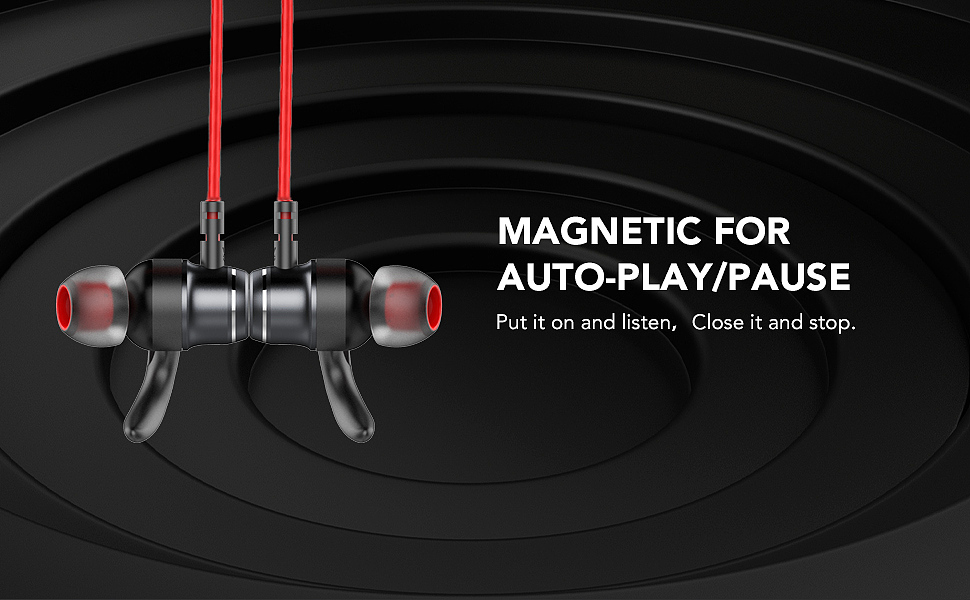
To eliminate mechanical wear and streamline the user experience, advanced hardware utilizes electromagnetism. The magnetic earbuds found on the FAMOO BT260 serve a dual purpose. Externally, they snap together to form a secure loop, preventing the device from falling off the user's neck when not in use.
Internally, this magnetic union interacts with a hidden Hall effect sensor. The Hall effect is a phenomenon where a magnetic field applied perpendicularly to an electrical current flowing through a semiconductor generates a measurable voltage difference across the material.
When the two earbuds are snapped together, the permanent magnets inside them project a magnetic field into the neckband chassis. The microscopic Hall sensor detects this field and instantly trips a solid-state relay, cutting the power from the battery to the Bluetooth transceiver and powering the device down.
When the user pulls the earbuds apart to place them in their ears, the magnetic field vanishes. The sensor registers the drop in voltage and immediately closes the circuit, booting up the processor and initiating the Bluetooth pairing sequence before the earbud even reaches the ear canal. This invisible, frictionless interaction replaces vulnerable mechanical parts with the eternal, unwearable laws of physics.
The landscape of portable audio is not merely defined by the pursuit of aesthetic minimalism, but by the clever manipulation of natural laws. From harnessing the unique cellular structure of bacteria for acoustic fidelity to utilizing the Hall effect for frictionless power management, devices like the neckband architecture prove that sometimes, expanding the physical footprint of a device is the only way to overcome the uncompromising physics of power, sound, and human anatomy. As we look toward the future of ambient computing, the integration of heavy infrastructure into ergonomic, load-bearing locations on the body will likely remain the gold standard for high-performance wearable technology.

FAMOO BT260 Wireless Headphones
Related Essays

Auditory Architecture: The Physics Behind Active Noise Cancellation and Wireless Audio

LATAVY HOME EDITION F69 Wireless Earbuds – High-Quality Sound and Comfortable Design

Spmmmner Wireless Earbuds – A Seamless Listening Experience

ZTTW Blue Pods - Immersive Stereo and IPX7 Waterproof Bluetooth Earbuds

Xmenha Over Ear Wrap Around Earbuds: Solid but Flawed

Renimer IT100 Bluetooth Earbuds 5.2 – A Comprehensive

XLEADER Sport3 Pro Sports Bluetooth Earbuds - Recommended for Active Lifestyles

Audiovance SPNT 301 - A Versatile Set of Wireless Headphones Bluetooth Earbuds

Plugfones FreeReign Volume Limited Wireless Bluetooth in-Ear Earplug Earbuds - Noise Reduction Headphones with Noise Isolating Mic and Controls

