Headphone Impedance Explained: Why 250 Ohm Still Matters
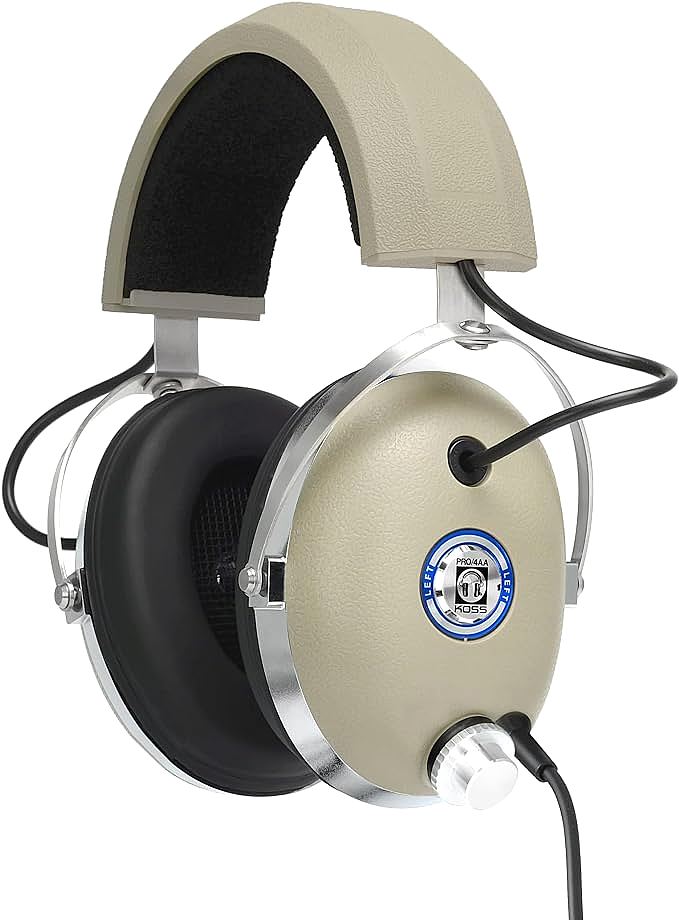
Koss Pro-4AA Studio Quality Headphones
What 250 Ohm Actually Means for Your Headphone
Impedance is not a number to fear. It is the Koss Pro-4AA's voice coil resistance to alternating current at a given frequency, measured in ohms.
The 250-ohm rating means the coil demands more voltage swing than a typical 32-ohm consumer headphone to reach the same sound pressure level. The engineering trade-off is real: a heavier voice coil gives the driver cleaner control with less distortion, and the high-impedance design naturally rejects electrical noise that plagues low-impedance circuits.
Where impedance becomes practical is when you pair the Pro-4AA with a source. A smartphone typically delivers around 0.5 volts RMS with 1 to 4 ohms of output impedance.
The damping factor - the ratio of headphone impedance to amplifier output impedance - falls well below the recommended minimum of 8. Bass rolls off, the midrange loses definition, and maximum volume drops below 100 dB SPL. None of that is the headphone's fault; it is the source's. The Koss Pro-4AA impedance is one of the most frequently misread specs in the secondhand market, and the reasons are historical.
Add a dedicated headphone amplifier with sub-1-ohm output impedance and the math flips. The FiiO E10K at $75, the Schiit Magni 3+ at $99, and the JDS Labs Atom Amp+ at $99 each deliver enough voltage swing to drive the Pro-4AA past 110 dB SPL while keeping the damping factor above 125. The vintage headphone that sounded anemic from a phone becomes the warmest, most detailed midrange in the collection.
A listing for a pair of 1970s headphones states 16 ohms in one place and 250 ohms in another. Someone plugs them into a phone, plays a familiar track, and hears a sound that is clear but small and distant. The natural assumption is that the unit is faulty or overrated. Neither is true. The confusion sits inside the specification itself, and the weak output is a predictable result of pairing a high-impedance load with a source that was never designed to drive one.
A pair of the Pro-4AA units from the 1970s sits at the center of exactly this puzzle. Following the thread means understanding what impedance does inside a moving-coil driver, why an entire industry split into two impedance camps, and why loudness and control are separate engineering goals.
What Impedance Actually Measures
Impedance is not resistance, although the two share a unit. Resistance describes opposition to direct current, the steady flow of charge in one direction. Impedance describes opposition to alternating current, and it changes with frequency because a voice coil is partly an inductor. When music flows through a headphone driver, the coil sees thousands of frequencies at once, each meeting slightly different opposition. The single number printed on a spec sheet is a nominal value, a rounded snapshot at one reference frequency, not the whole story.
A headphone driver is a simple machine. A coil of wire sits inside a fixed magnetic field. Audio current pushes the coil, the coil pushes a diaphragm, the diaphragm pushes air. The impedance number tells you how much voltage the coil demands for a given current. Low impedance asks for more current and less voltage. High impedance asks for the opposite. Neither is better in a vacuum; each fits a different power supply.

The single number on the spec sheet hides a more complicated picture. The impedance of a voice coil rises with frequency. The DC resistance of the Pro-4AA is about 250 ohms at 1 Hz, but at 1 kHz the inductive component pushes the effective impedance to roughly 300 ohms, and by 10 kHz it can reach 400 ohms or more.
This means a low-impedance source that is marginally adequate at bass frequencies becomes even weaker in the treble; the voltage headroom problem is worse exactly where the ear is most sensitive. The practical consequence is that a dedicated amplifier with sub-1-ohm output impedance keeps the damping factor high across the entire band, whereas a phone with a few ohms of output impedance produces a frequency response that tilts up sharply above 2 kHz as the headphone impedance climbs. The spec-sheet number is a floor, not a ceiling, and amplifier matching calculations that use only the DC value underestimate the treble voltage requirement.
Why 16 Ohms Won: The Transistor Radio Compromise
Professional audio inherited high impedance from the telephone network. Studio lines, monitor feeds, and broadcast equipment worked at 600 ohms for decades, so studio headphones were wound to match the world around them. Early moving-coil headphones followed that convention, often landing between 200 and 600 ohms.
The transistor changed the math for consumers. A pocket radio runs on a few small batteries, which means its amplifier has almost no voltage to spare. To deliver enough acoustic power from milliwatts at low voltage, engineers wound headphone coils with fewer turns of thicker wire. Fewer turns lower impedance, which lowers the voltage needed to reach a given current, which fits a battery's limits. Portable audio settled on 8 to 32 ohms, and that is the range most phones still expect today.
This is why the same headphone model sometimes existed in two impedance versions. A 16-ohm build made sense for transistor radios and cassette portables. A 250-ohm build made sense for studio consoles and home hi-fi amplifiers. Neither spec was a mistake. Each was tuned to its power source, and the confusion on modern listings is simply the two versions colliding in a secondhand market that no longer remembers the distinction.
How Damping Factor Changes Diaphragm Control
To see why impedance matters for sound quality, follow what happens after the signal stops. A moving coil inside a magnetic field is a generator as well as a motor. When the amplifier stops pushing, the coil keeps moving and produces its own voltage, a back-EMF that opposes the motion that created it. This voltage flows back through the cable into the amplifier's output stage. How easily it flows depends on the amplifier's output impedance, and the ratio between the headphone's impedance and the amplifier's output impedance is called the damping factor.
A high damping factor means the amplifier acts like an electrical brake. The diaphragm stops when the signal says stop, instead of ringing past the note the way a spring does after a flick. Ringing shows up in the sound as loose bass and smeared transients, the brief bursts of energy at the start of a drum hit or a plucked string. A low damping factor lets the diaphragm oscillate on its own for a few extra cycles, and those cycles are distortion the recording never contained.
Here is the part that runs against intuition: higher headphone impedance raises the damping factor for a given amplifier. A 250-ohm load paired with a typical solid-state output of well under 10 ohms yields a damping factor above 25, sometimes far above. A 16-ohm load paired with the same output yields a much smaller ratio, and the same amplifier brakes the low-impedance diaphragm less effectively. For a 250-ohm unit of this vintage, the damping factor math works in the headphone's favor when the source output impedance is below 30 ohms. This is one reason high-impedance designs developed a reputation for precise midrange and tight low end among studio engineers. The reputation is physics wearing a habit.

The 250 Ohm Design Philosophy
Studios had reasons beyond damping to stay at high impedance. A console room often drives several pairs of headphones from one amplifier through long cables. Headphones in parallel reduce total impedance, so starting high leaves more headroom before the combined load dips into a range the amplifier dislikes. Long cable runs add resistance and capacitance, and higher-impedance loads shrug off both. Consistency matters in a studio too: a 250-ohm pair sounds nearly identical from one console to the next, because the cable and amplifier contribute a smaller fraction of the total electrical picture.
Building a high-impedance driver is also a mechanical exercise. To reach 250 ohms, a coil needs more turns or thinner wire, which changes mass and heat behavior. The magnet has a vote as well. Classic 1970s drivers used ferrite magnets, heavy and bulky. Modern equivalents, including the 40-millimeter neodymium drivers used in contemporary rebuilds of classic designs, generate a stronger field from a much smaller volume, which changes sensitivity without changing the electrical impedance story.
The Pro-4AA is a useful case study here. Its professional version was specified at 250 ohms, while early consumer variants shipped at 16 ohms for portable use. Same basic architecture, two different electrical personalities, one number confusing listings half a century later.
The distinction between vintage and modern reference headphones is not just historical; it is electrical. Current studio staples such as the Sony MDR-7506 (63 ohms, roughly 106 dB/mW sensitivity) and the Beyerdynamic DT 770 Pro 80-ohm (96 dB/mW, closed-back) were designed for sources that deliver modest voltage and moderate current. They are deliberately matched to the output of a laptop DAC or a phone audio interface. A 250-ohm vintage unit demands the opposite: more voltage swing, less current draw, and a source whose output impedance is far enough below the load to maintain damping. The two classes of headphone serve different power-supply assumptions, and the impedance number on the box is the single spec that tells you which assumption you are working under.
Why Phones Fall Short: Sensitivity Is Not Impedance
Whether a headphone plays loudly enough depends on two separate specs, and mixing them up causes most of the confusion. Impedance sets the voltage requirement. Sensitivity sets how much sound you get for the power delivered, usually stated in decibels per milliwatt. Two headphones can share a sensitivity rating and demand wildly different voltages.
The arithmetic is short. One milliwatt into 250 ohms requires half a volt, since power equals voltage squared divided by impedance. One milliwatt into 32 ohms requires about 0.18 volts. A phone's headphone output typically swings a fraction of a volt, sometimes up to a full volt. Against 250 ohms, the phone cannot reach the voltage that its power limit would otherwise allow, so the headphone plays at a fraction of its rated loudness. The sound is there, clean and correct, but small. That matches the widely reported experience of driving high-impedance headphones from phone jacks: not broken, not harsh, just quiet.
Sensitivity numbers complicate the picture further. Published figures for the same vintage model range from roughly 95 to 105 decibels per milliwatt depending on the source, and a 10-decibel difference is a factor of ten in power. When a spec has that much spread, treat it as a range, not a promise. In the studio headphone class under one hundred dollars, the impedance number predicts the pairing outcome more reliably than any other printed figure.

How Do You Choose an Amplifier for 250 Ohm Headphones?
Once the voltage story is clear, amplifier selection becomes a short checklist instead of a gamble. The output impedance of the amplifier should sit well below the headphone's impedance; an eighth of the headphone impedance is a common ceiling, so a 250-ohm headphone tolerates an output impedance up to roughly 30 ohms, a figure nearly every dedicated headphone amplifier clears with room to spare. Output voltage swing into the load matters next, because a source that can deliver a volt or more RMS into 250 ohms will drive such a headphone to satisfying levels. Wattage claims can be ignored almost entirely: high-impedance headphones need voltage, not watts, and an amplifier rated for half a watt into 32 ohms may produce less than a tenth of a watt into 250 while still driving them louder than a phone.
A practical studio scenario makes the matching math concrete. Three 250-ohm headphones plugged into a single amplifier output sit in parallel; each draws the same voltage, so the total load drops to 250 divided by 3, about 83 ohms. Most dedicated headphone amplifiers are rated into 16 to 32 ohms, so the combined load of three 250-ohm units falls comfortably within their specification.
The damping factor against each individual unit rises slightly because the amplifier output impedance is now measured against 83 ohms rather than 250 ohms; the effect is audible only in very high-end systems. For two units the load is 125 ohms, still well within spec. The practical limit is not the mathematics of the parallel combination; it is the amplifier's available voltage headroom when driving the combined load at the volume a listener actually uses. A source that cannot swing more than a volt or so into 83 ohms will start to compress before the headphones reach their full dynamic range.
Almost any dedicated headphone amplifier, a home stereo receiver with a headphone jack, or an audio interface with a competent headphone output satisfies these conditions. The devices that fall short are exactly the ones built for portable low-impedance use. The rule of thumb runs in reverse as well: low-impedance headphones on a high-powered amplifier can pick up hiss and lose the damping advantage, which is why pro amplifiers often carry a gain switch or a separate low-gain output.
What Do Vintage Headphone Units Reveal About Audio Engineering?
A headphone from the 1970s that still plays is more than a nostalgic object. It is a physical record of its era's constraints: the ferrite magnet, the thick steel band, the coiled cable, the weight of materials before plastics took over. Units like these were built to be repaired, with screws instead of clips and parts a technician could reach. That build philosophy is why a fifty-year-old pair can still hold together after a new set of pads.
Maintenance is mostly inspection. Check the cable near both connectors, where copper strands flex most. Check the pads: collapsed foam changes the seal between ear and driver, which changes perceived bass more than any amplifier. Store the headphones away from heat and direct sun, which degrade foam, rubber, and adhesives faster than use does. If a driver rattles at moderate volume, stop and open the unit, because the coil is telling you it has reached the end of its travel.
Sources referenced in this section draw on the original Pro-4AA specification sheets, the technical archive at head-fi.org, audiokarma.org vintage threads, and published measurement data from InnerFidelity and Stereophile. Impedance figures are from manufacturer data; sensitivity ranges reflect published measurements across multiple production years.
Where a range is quoted rather than a single value, the spread reflects genuine unit-to-unit variance in vintage production runs, not uncertainty in the measurement method.
For anyone curious about this category, the useful question is not which model to seek out but what each unit reveals about the design arguments of its decade. Low impedance marks the portable era. High impedance marks the professional era. The same model family often carries both stamps, which is exactly why reading a listing carefully matters more than trusting it.
The System, Not the Part
A headphone is half of an electrical system, and every impedance spec is a bet about the other half. The 16-ohm bet assumed a battery. The 250-ohm bet assumed a console with voltage to spare. When the two halves mismatch, the sound does not break; it merely falls short of what the design promised. People call this hard to drive, as if the driver were stubborn. The driver is not stubborn. It is addressed to a different audience.
For a deeper look at how the 3.5 mm connector itself acts as a transmission line and affects signal integrity, see The 3.5mm Connector Is a Transmission Line. The open-back design that the Pro-4AA uses, and the soundstage trade-offs it creates, are covered in Open Back Headphones: Why They Sound Different.
The next time a spec sheet confuses you, look past the single number. Ask what era the design came from, what power source it expected, and what the impedance says about the coil's relationship with the amplifier that holds its leash. That question, not the sticker price, is the real difference between a pairing that fits and one that fights. Good engineering is not about making one part excellent in isolation. It is about making two halves agree, half a century apart if necessary.
Koss Pro-4AA Studio Quality Headphones
Related Essays

Sennheiser CX Sport Bluetooth Sports Headphone – A Perfect Companion for Your Workout

Avantree HF027 & HS907 Bundle and the Case for Wired Audio in a Wireless World
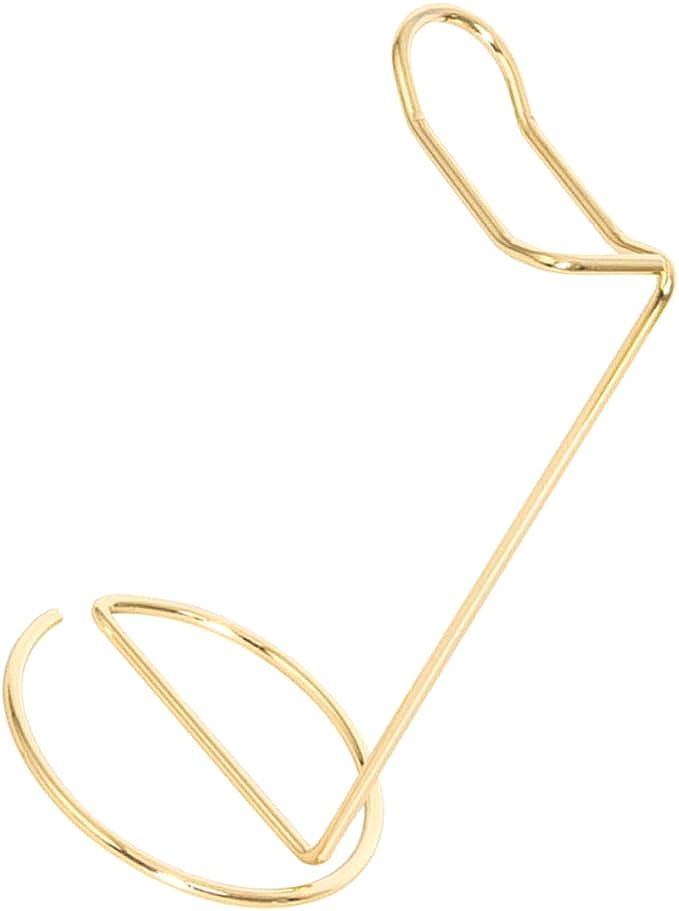
Hemobllo 30NH1465CU1O Headset Headphone Stand
