Why Your Hearing Aid Needs 16 Channels to Remove Noise
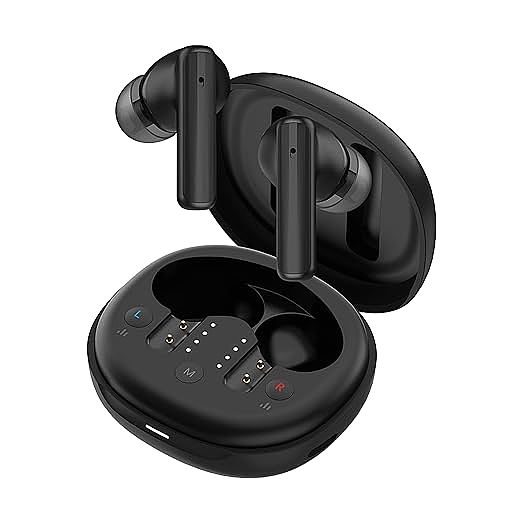
Avantree PHA15 Hearing Amplifier Aids
Michelangelo famously said that every block of stone already contained a statue — his job was simply to chip away everything that wasn't the statue. The same paradox governs modern hearing technology: the hardest work a hearing aid performs isn't adding sound to your world. It's taking sound away. A single contemporary hearing aid processes more calculations per second than the Apollo Guidance Computer that landed humans on the moon. And the vast majority of that computational firepower goes toward removal — identifying unwanted noise, isolating it by frequency, and surgically excising it without touching the speech you actually want to hear. This is the paradox of artificial silence, and understanding it changes everything about how you think about the device sitting inside an ear canal.  ## From Megaphones to Microchips: A Century of Hearing Amplification In 1898, Miller Reese Hutchison patented the Akouphone — the first electric hearing aid. It used a carbon microphone and a battery the size of a brick. The technology amplified everything: speech, background chatter, the creak of a chair, the hum of a furnace. There was no selectivity. Loudness was the only tool, and for a hundred years, it remained the primary one. Analog hearing aids of the mid-twentieth century introduced volume controls and basic frequency shaping. Audiologists could boost high frequencies more than low ones, approximating the shape of a patient's hearing loss. But the analog signal path was a single pipeline — every sound passed through the same circuit, subject to the same amplification curve. If background noise happened to occupy the same frequency range as speech consonants, there was nothing the device could do. Both got louder together. The digital revolution of the 1990s changed the fundamental architecture. For the first time, sound could be converted into numbers, split into frequency bands, and processed independently. The analog pipeline became a digital one: microphone captured sound, an analog-to-digital converter sampled it at thousands of times per second, a DSP chip performed mathematical operations on the resulting data, and a digital-to-analog converter turned the processed signal back into sound. Each stage of this ADC-DSP-DAC pipeline introduced possibilities that analog circuits simply couldn't achieve. The FDA's 2022 establishment of the Over-the-Counter hearing aid category accelerated this improveation. Devices designed for adults with mild-to-moderate hearing loss could now reach consumers directly, bringing sophisticated DSP technology — including multi-channel processing — into a price range and form factor that earlier generations would have considered impossible. ## Sound Is Not One Thing: How Frequency Shapes What We Hear Before understanding why channels matter, you need to understand what sound actually is — and it's not what most people think. The air around you is a pressure field. Every sound — a violin, a car horn, your granddaughter whispering "grandpa" — is a pattern of compressed and rarefied air molecules traveling outward from a source. What makes these patterns different from one another is frequency: how fast the pressure oscillates. A low rumble might oscillate 100 times per second (100 Hertz). The sharp consonant /s/ in "sun" oscillates around 4,000 times per second. Human hearing spans roughly 20 Hz to 20,000 Hz, but the sounds that matter most for understanding speech cluster tightly between 250 Hz and 8,000 Hz. Inside your inner ear sits the cochlea — a snail-shaped structure lined with roughly 15,000 microscopic hair cells. These cells are arranged tonotopically: low frequencies activate hair cells at one end, high frequencies at the other. It's a biological frequency analyzer, splitting the complex sound entering your ear into component frequencies before sending them to your brain. This is why "just make it louder" fails as a hearing solution. Hearing loss doesn't affect all frequencies equally. The most common pattern — presbycusis, or age-related hearing loss — damages high-frequency hair cells first. A person with this condition might hear vowels clearly (low-frequency, high-energy) but miss consonants like /f/, /th/, /s/, and /t/ (high-frequency, low-energy). The result isn't quietness. It's confusion. Everyone sounds like they're mumbling. Turning up the volume amplifies the vowels you already hear fine, creating distortion without improving clarity. What you need isn't more volume — it's more precision.
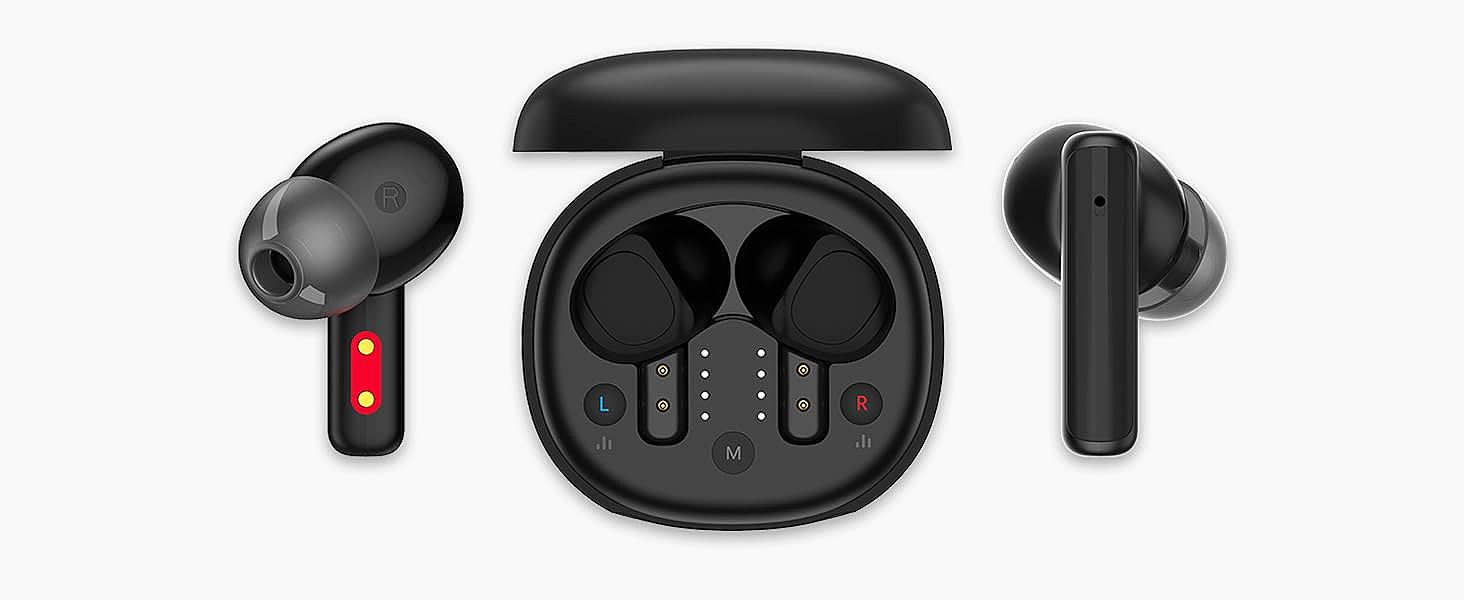
 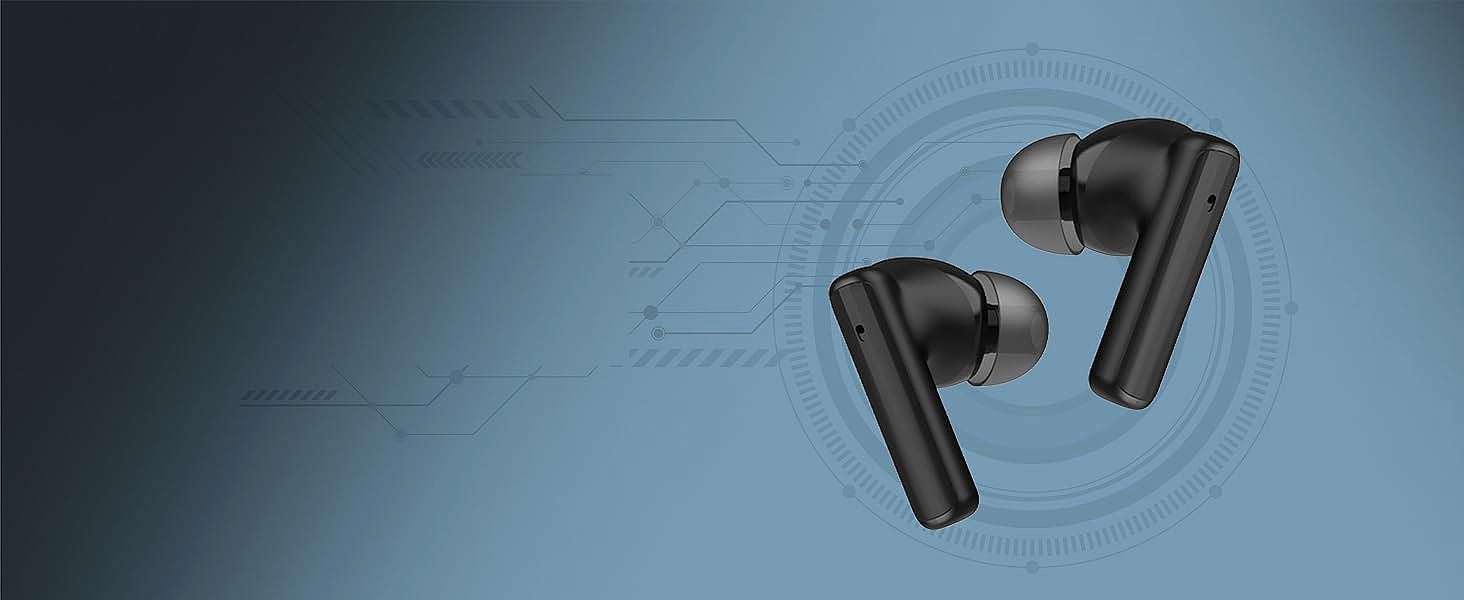 ## The 16-Channel Split: Why This Number Matters A DSP channel is an independent frequency band with its own amplification settings. Think of it like a graphic equalizer with 16 sliders instead of the five you might find on a car stereo. Each slider controls a narrow slice of the frequency spectrum, and — critically — each slider can be set independently. With 16 channels, the audible frequency range (approximately 125 Hz to 8,000 Hz for speech) is divided into 16 overlapping or adjacent bands. Each channel has its own: - Gain — how much amplification is applied - Compression ratio — how the device handles loud vs. soft sounds within that band - Attack and release times — how quickly the channel responds to changes in sound level - Noise reduction level — how aggressively unwanted sound is suppressed in that band Why 16 specifically? The number isn't arbitrary. The human cochlea functions as a roughly 25-30 band filter bank — nature's own multi-channel processor. Clinical research has shown that 12-16 channels provide enough resolution to match most audiogram patterns for mild-to-moderate hearing loss. Below 8 channels, the device struggles to differentiate between frequencies that need different treatment. Above 20, diminishing returns set in: the additional resolution doesn't translate to noticeably better speech understanding, but it does consume more battery power and processing overhead. Devices like the Avantree PHA15 represent this engineering sweet spot — a 16-channel architecture balanced between clinical effectiveness and the power constraints of a battery-powered earbud. Each of those channels acts as an independent hearing instrument, making thousands of gain adjustments per second within its narrow frequency
slice. ## Hunting Noise in the Frequency Spectrum Noise reduction in a multi-channel DSP isn't one algorithm — it's a coordinated assault using several techniques working simultaneously across different frequency bands. Understanding how they work reveals why channel count directly determines noise reduction quality. Spectral subtraction is the foundation. During pauses in speech — the brief silences between words and sentences — the DSP analyzes the background noise floor and builds a spectral profile: a map of which frequencies contain noise and how loud that noise is. When speech resumes, the device subtracts this noise profile from the incoming signal. It works well for steady-state noise: refrigerator hums, air conditioning drones, the constant murmur of highway traffic. But spectral subtraction has a weakness — it can introduce artifacts called "musical noise," a tinkling sound caused by imperfect subtraction. Multi-channel systems mitigate this by applying subtraction more aggressively in channels dominated by noise and more conservatively in channels carrying speech. Wiener filtering goes further. Rather than simply subtracting the noise estimate, it uses statistical models of what speech and noise typically look like across frequencies, then calculates the optimal filter that maximizes the signal-to-noise ratio for each channel. It's computationally expensive — one reason older, single-channel devices avoided it — but with 16 channels each running simplified versions of the algorithm, the combined effect dramatically outperforms a single global filter. Voice activity detection (VAD) acts as the gatekeeper. Before any noise reduction is applied, the VAD algorithm determines whether a given moment contains speech or noise. This prevents the device from accidentally removing speech it mistakes for noise. In a 16-channel system, VAD operates per-channel — a band at 500 Hz might show speech while a band at 3,000 Hz shows only noise from a fluorescent light. The DSP can suppress the 3 kHz channel without touching the 500 Hz one. Transient detection handles sudden loud sounds — the crash of dropped dishes, a door slamming, a dog barking. These sounds differ from steady-state noise because they arrive without warning and decay rapidly. Fast-acting compression circuits in the relevant channels can detect the onset of a transient within milliseconds and reduce gain before the full energy reaches the ear. High-frequency noise reduction, specifically designed to shield against sudden sharp sounds, operates in the upper channels where these transients carry most of their energy. The key insight is that none of these algorithms works in isolation. They coordinate across channels, each contributing a layer of noise management. With only 4 channels, the device can't separate speech frequencies from noise frequencies precisely enough — useful speech and annoying noise end up in the same channel, and the algorithm can only choose to suppress both or suppress neither. With 16 channels, the resolution is fine enough that speech and noise rarely share the same band. 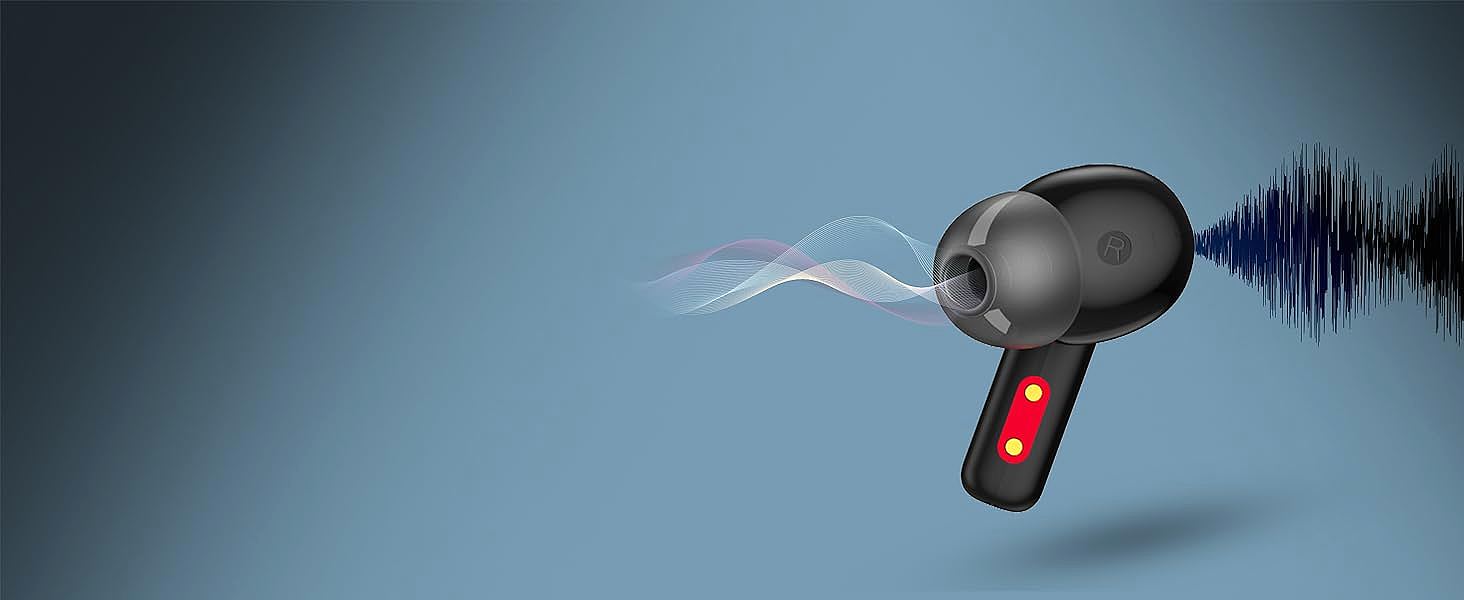 ## The Compression Puzzle: Keeping Loudness Comfortable Across Channels Hearing loss doesn't just reduce sensitivity — it compresses the range of hearing. A healthy ear might detect sounds from 0 dB (a whisper at one meter) to 120 dB (a rock concert). That's a 120-decibel dynamic range. Mild-to-moderate hearing loss might raise the threshold to 25-40 dB while the uncomfortable loudness level stays near 110-120 dB. The usable range shrinks from 120 dB to perhaps 70-85 dB. Wide Dynamic Range Compression, or WDRC, solves this by mapping the full range of environmental sounds into the reduced range the ear can still process. Soft sounds get significant amplification. Moderate sounds get moderate amplification. Loud sounds get little or no amplification. The result is a compressed but audible representation of the acoustic world. In a 16-channel system, WDRC operates independently in each band. This matters because hearing loss is almost never uniform across frequencies. A typical presbycusis pattern might show normal hearing at 250 Hz, mild loss at 1,000 Hz, moderate loss at 3,000 Hz, and severe loss at 6,000 Hz. A single-channel compressor would apply one compression ratio across the entire spectrum — too much for the low frequencies, too little for the highs. Sixteen channels allow the DSP to apply gentle compression where hearing is nearly normal and aggressive compression where loss is greatest. The technical specifications tell part of the story. The CTA 3006 industry standard for OTC hearing aids specifies maximum output sound pressure levels (OSPL90) of no more than 108 dB and total harmonic distortion below 5%. Within these safety limits, a 16-channel WDRC system can shape the compression curve to match the natural tonotopic response of the cochlea — essentially recreating, in silicon, what damaged hair cells can no longer do in biology. Attack and release times — how quickly compression engages when a loud sound appears and disengages when it passes — also vary by channel. Low-frequency channels can use slower times because bass energy is less critical for speech understanding and slower release times sound more natural. High-frequency channels need faster attack times to catch sharp consonants and sudden transients before they cause discomfort. This per-channel timing is another advantage that only multi-channel architecture provides. ## When Hearing Meets Wireless: Bluetooth Inside the DSP Pipeline Bluetooth audio streaming in a hearing aid isn't simply a matter of adding a wireless receiver. The Bluetooth signal must enter the existing DSP pipeline, be decoded, potentially mixed with ambient microphone audio, processed through the same channel architecture, and output through the receiver — all within tight latency constraints. The Bluetooth SIG's Hearing Aid Profile (HAP) specifies round-trip latency below 100 milliseconds, a threshold below which audio-visual synchronization remains acceptable for most users. If you're watching television and the actor's lips move before the sound reaches your ears, the illusion breaks. Bluetooth 5.2 introduced LE Audio — a low-energy audio architecture designed specifically for wearable devices. LE Audio supports better audio quality at lower bitrates, extends battery life,
and handles interference from WiFi and other Bluetooth devices more gracefully than earlier versions. For hearing aids, this means more stable connections in environments crowded with wireless signals — offices, airports, apartment buildings. But here's the engineering reality that marketing materials rarely mention: hearing amplification and Bluetooth streaming compete for the same DSP resources. The chip has finite processing capacity and finite battery energy. In many current OTC designs, the device cannot perform hearing amplification and Bluetooth streaming simultaneously. When a phone call arrives, the DSP shifts resources to decode the Bluetooth audio stream. Hearing assistance pauses. When the call ends, the device transitions back — typically within a few seconds. This isn't a flaw. It's a deliberate trade-off that prioritizes the primary function — hearing assistance — while offering streaming as a secondary capability within the constraints of a battery that must last a full day. Future chip architectures will likely handle both simultaneously, but the current generation of OTC devices operates within this boundary. 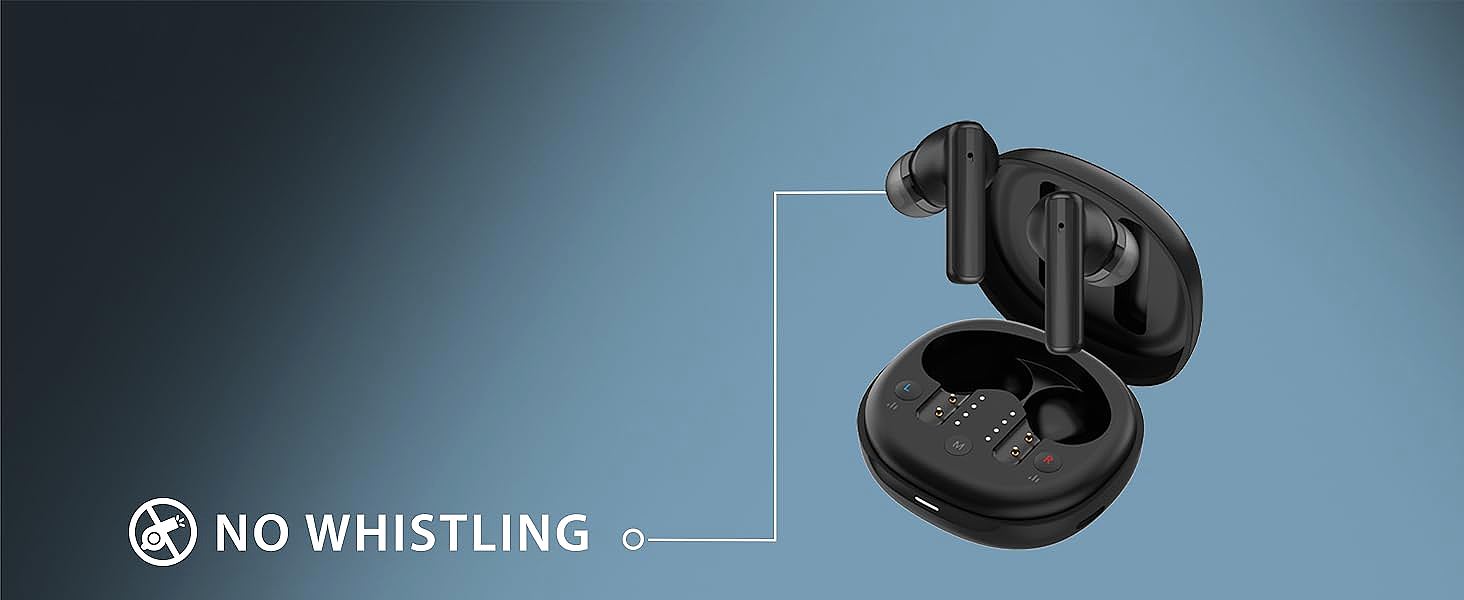 ## A Restaurant at 7 PM: Sixteen Channels at Work It's Friday evening. You're seated at a table for four in a busy restaurant. Your daughter is telling you about her new job. Behind you, a busboy drops a stack of plates. To your left, two strangers are debating sports. Somewhere in the kitchen, a blender roars to life. The room is a wall of competing sounds, and your 16-channel DSP is handling all of them simultaneously. Channels 1-3 (low frequencies, ~125-500 Hz): The blender and the hum of ventilation occupy these bands. Your hearing in this range is relatively normal, so the compression ratio here is mild. Noise reduction is active — spectral subtraction estimates the steady drone of the ventilation system and removes it, while the blender's periodic bursts trigger fast compression to prevent discomfort. These channels carry almost no speech information from your daughter's voice, so aggressive suppression here doesn't sacrifice understanding. Channels 4-8 (mid frequencies, ~500-2,000 Hz): This is the vowel range — the /a/, /e/, /o/ sounds that give speech its sonority. Your daughter's voice produces strong energy here, and the device preserves it. Background conversation from the adjacent table also lives in this range, creating the classic cocktail party challenge. The directional microphone system, working in tandem with the multi-channel noise reduction, attenuates sounds arriving from behind and to the sides while boosting sounds from the front. Wiener filtering refines the signal further, enhancing the signal-to-noise ratio for speech-shaped patterns. Channels 9-12 (mid-high frequencies, ~2,000-4,000 Hz): The consonant range. /s/, /sh/, /f/, /th/ — the sounds that distinguish "pat" from "bat" from "fat" from "hat." This is where your hearing loss is most pronounced, so these channels apply the highest gain and the most aggressive compression. Noise reduction here is surgical: the clattering plates produced a broadband transient that activated fast-acting compression across multiple channels, but by the time the sound reached these channels, the transient was already being attenuated. Voice activity detection confirms your daughter is still speaking, so these channels maintain gain for speech while the adjacent noise-filled channels reduce theirs. Channels 13-16 (high frequencies, ~4,000-8,000 Hz): The upper frontier of speech — sibilance, fricatives, and the subtle overtones that make speech sound natural rather than robotic. Your hearing loss is severe here, so the compression is strongest. The VAD algorithm monitors these channels carefully, because with high gain comes the risk of amplifying residual noise into audibility. When your daughter pauses between sentences, these channels briefly reduce gain to prevent amplifying the ambient room noise, then ramp back up as speech resumes. All of this happens in milliseconds. The DSP chip recalculates gain, compression, and noise reduction settings thousands of times per second across all 16 channels. The result — if the engineering is right — is that your daughter's voice emerges from the chaos with startling clarity. Not perfect clarity. No hearing aid achieves that. But the difference between this and the single-channel analog amplification of thirty years ago is the difference between a telescope and a magnifying glass.
  ## More Channels, Better Hearing? The Surprising Truth If 16 channels are good, surely 32 must be better? And 64 better still? The answer reveals a fascinating intersection of engineering, biology, and cognitive science — and it's not what marketing departments want you to hear. The human cochlea provides approximately 25-30 perceptually distinct frequency bands. This is the biological ceiling — the number of independent frequency regions the auditory nerve can distinguish and transmit to the brain. Adding DSP channels beyond this count doesn't create perceptually new information. The brain simply cannot process finer frequency resolution than the cochlea provides. Clinical studies have repeatedly shown that speech intelligibility improvements plateau around 16-18 channels for mild-to-moderate hearing loss. Moving from 4 channels to 8 produces a noticeable improvement. Moving from 8 to 16 produces another measurable gain. Moving from 16 to 32? The improvement is statistically marginal — often within the margin of measurement error. For severe hearing loss, higher channel counts can provide additional benefit because the damaged cochlea needs more precise frequency mapping to extract usable information. But for the mild-to-moderate population that OTC hearing aids serve, 16 channels sit squarely in the zone of diminishing returns. There's also a cost side to this equation. Every additional channel requires more processing power, which requires more energy, which requires either a larger battery or shorter runtime. An 8-hour hearing aid at 16 channels might last only 5 hours at 32 channels with the same battery, because the DSP chip is performing nearly twice as many calculations per second. In a device that needs to survive a full day of meetings, phone calls, and dinner conversations, battery life is not a luxury — it's a core feature.
The engineering sweet spot, then,
Avantree PHA15 Hearing Amplifier Aids
Related Essays

ECS-NRIE-USB WordSmith and the Physics of Acoustic Isolation in Professional Transcription

Jayine Ear Plugs for Noise Cancelling – Perfect for Sleeping, Concerts, Work, Study, and More

LIUHE HX 801 Neckband Bluetooth Headphones: A Budget-Friendly Wireless Choice

Alokecek Ai Buds 3 True Wireless Earbuds – A Comprehensive

Logitech H340 USB Headset: The Science of Clear, Simple Audio for Everyday Digital Life

TECKON Gold Platinum Custom Made Noise Reduction HiFi Dynamic Balanced Armatured 2DD+6BA IEM Earphones

NC Bluetooth Headset - Wireless Headset with Dual Microphones
