The Science of Earbud Comfort: Understanding Ear Anatomy and Fit Technology

GIEC Z3001 True Wireless Earbuds
The Science of Earbud Comfort: Understanding Ear Anatomy and Fit Technology Every time you press a personal audio device into your ear canal, you perform an act of mechanical engineering that designers have spent decades trying to avoid. The discomfort we associate with in-ear audio devices represents one of the most fundamental paradoxes in consumer electronics: we have created devices that cause physical discomfort precisely because they deliver the audio experiences we crave. Understanding why this happens—and how the industry has begun to solve it—reveals something profound about the relationship between human biology and engineering design. This article explores the science behind earbud comfort, examining why traditional designs cause discomfort, how new ear-fit technologies address these problems, and what the future holds for personalized audio. By understanding these principles, you'll gain deeper appreciation for the engineering challenges that go into making something as small as an earbud feel natural in your ear.  ## The Discomfort Paradox: Why We Tolerate What We Hate The relationship between humans and their earbuds is characterized by a peculiar contradiction. We willingly insert foreign objects into one of the most sensitive parts of our bodies, enduring pressure, heat, and fatigue, because the alternative—being without our audio—feels worse. This paradox reveals how deeply portable audio has become integrated into daily life. The discomfort begins with the basic anatomy of the ear canal. This S-shaped tube, approximately 2.5 centimeters long in adults, is lined with thin, sensitive skin that contains numerous nerve endings. When an object presses against this skin for extended periods, the brain registers it as a constant intrusion. The resulting sensation ranges from mild awareness to outright pain, depending on the earbud's size, shape, and how long you've been wearing it. Heat buildup compounds the problem. Unlike the outer ear, which can dissipate heat through air circulation, the ear canal trapped between an inserted earbud and the eardrum becomes a small chamber where warmth and moisture accumulate. This creates the "clogged feeling" that many users describe after extended listening sessions. The moisture isn't just uncomfortable—it can also promote the growth of bacteria, leading to potential ear infections. The brain itself contributes to the discomfort through a phenomenon called "presence awareness." Even when you unconsciously adjust to an earbud's physical presence, your nervous system never fully ignores it. This constant low-level awareness creates mental fatigue that many users mistake for simple tiredness. The remedy, ironically, often involves removing the very device that provides the audio pleasure they're seeking. The industry has known about these problems for decades. Early attempts to address earbud discomfort focused on providing more ear tip sizes and different materials. Memory foam tips emerged as an improvement over standard silicone because they compress and conform to the ear canal's unique shape, distributing pressure more evenly. However, even the best memory foam tips merely manage the discomfort—they cannot eliminate it. ## The Engineering Impossible: Why No Two Ears Are Alike Designing comfortable earbuds faces an immediate challenge: human ears are as unique as fingerprints. Research demonstrates that ear anatomy varies so significantly that a single design cannot possibly fit everyone comfortably. One company maintains a database of over 500,000 ear scans from 20 countries, proving the scale of this variation. The variations extend far beyond simple size differences. The ear canal diameter can differ by a factor of two or more between individuals. The angle at which the canal approaches the eardrum varies dramatically. The shape of the concha—the bowl-shaped area that cradles an earbud—differs not just between people but between the left and right ears of the same person. One premium audio manufacturer spent over three years developing their earbud designs, creating more than 100 prototypes in the process. Their research revealed a counterintuitive finding: there's minimal correlation between gender, ethnicity, and ear size. A person who appears to have "small ears" based on overall appearance might have a larger-than-average ear canal diameter. This unpredictability makes mass-producing comfortable earbuds a genuinely difficult engineering problem. The practical consequence of this anatomical diversity is that earbud manufacturers must treat fit as a probability problem rather than a certainty. They cannot design a single earbud that fits everyone—they can only design earbuds that have a high probability of fitting a wide range of ear types acceptably. This is why some manufacturers include ear tip fit tests with their products, acknowledging that optimal fit requires customization. Some companies have taken a data-driven approach, conducting extensive user research involving scanning ears of people across different ages and backgrounds. Their findings informed designs with adjustable stabilizers that can accommodate various ear shapes. Even with these innovations, manufacturers acknowledge that their earbuds won't fit every ear perfectly—the goal is to fit most ears most of the time.
  ## A Tour of Your Outer Ear: The Structures That Matter To understand earbud comfort, you must first understand the geography of your ear. The outer ear contains several distinct structures, each playing a different role in how earbuds fit and function. The pinna, or auricle, is the visible part of your ear—the cartilage structure covered by skin that you see in the mirror. Its complicated folds and ridges serve to collect sound waves and direct them toward the ear canal. For ear-fit designs, the pinna provides natural anchoring points. The various ridges and curves can help secure an earbud without requiring insertion into the canal. The concha, located in the central bowl area of your outer ear, is particularly important for ear-fit designs. This cavity collects sound and directs it toward the ear canal opening. Because the concha is made of cartilage rather than the sensitive skin that lines the canal, it can tolerate contact much better. Ear-fit designs rest in or against the concha, using its natural shape to secure the device. The tragus is the small, pointed piece of cartilage that
projects forward from the side of your head, partially covering the ear canal opening. Many people instinctively touch their tragus when reaching for an earbud. This structure can serve as an additional anchor point for earbuds that hook around or rest against it. The anti-tragus, located opposite the tragus, is another cartilage bump that can help secure earbuds. Some earbud designs specifically engineer contact points with these structures to improve stability without requiring deep insertion. Finally, the ear canal itself—the tunnel leading to the eardrum—is where traditional in-ear earbuds create their discomfort. The outer third of the canal contains sensitive skin with numerous nerve endings. The inner two-thirds are surrounded by bone, which is why objects inserted too deeply can cause pain when they press against bone through the thin skin. Understanding these structures helps explain why ear-fit designs can achieve stability without discomfort. By resting on cartilage-based structures like the concha rather than pressing against the sensitive ear canal skin, these designs avoid the nerve-dense areas that cause pain sensations. ## Why Air Pressure Is Both the Problem and the Solution The physics of sound provides the fundamental reason why earbuds require pressure—and why that pressure causes discomfort. To understand this, we need to examine how sound waves behave and how earbuds produce the sounds we hear. Sound travels as pressure waves through the air. When you hear music from earbuds, the driver (speaker element) converts electrical signals into mechanical vibrations. These vibrations create alternating regions of high and low air pressure that travel down the ear canal toward your eardrum. Your eardrum then vibrates in response, stimulating your auditory system. For low-frequency sounds—bass—earbuds face a significant physical challenge. Generating deep bass requires moving a large volume of air. Physics dictates that to produce frequencies around 20Hz, a driver must displace a substantial column of air—approximately one meter in length. This is why subwoofer speakers in home audio systems are so large; they need to move lots of air to produce low frequencies. In the confined space of an ear canal, achieving good bass response requires creating an airtight seal. Without a seal, the pressure waves generated by the driver escape around the earbud rather than traveling down the canal to the eardrum. The result is weak, anemic bass that lacks impact and presence. Here's where the discomfort enters the equation. Creating and maintaining that airtight seal requires pressure—pressure that the sensitive skin of the ear canal must endure. The very mechanism that makes bass response possible is also what causes discomfort during extended listening. Active noise cancellation (ANC) compounds this problem. ANC systems work by sampling external sound through microphones and generating "anti-noise"—sound waves that are 180 degrees out of phase with the ambient noise. When anti-noise meets external noise in your ear canal, they cancel each other out, reducing the perceived background noise. However, ANC works most effectively when there's an excellent seal, which means more pressure, which means more discomfort. The physics reveals the fundamental tradeoff: comfort and acoustic performance exist in tension. Designs that prioritize one typically sacrifice the other. This is why some audiophiles prefer earbuds with mediocre noise isolation—they've chosen comfort over isolation, accepting ambient sound in exchange for reduced ear pressure. 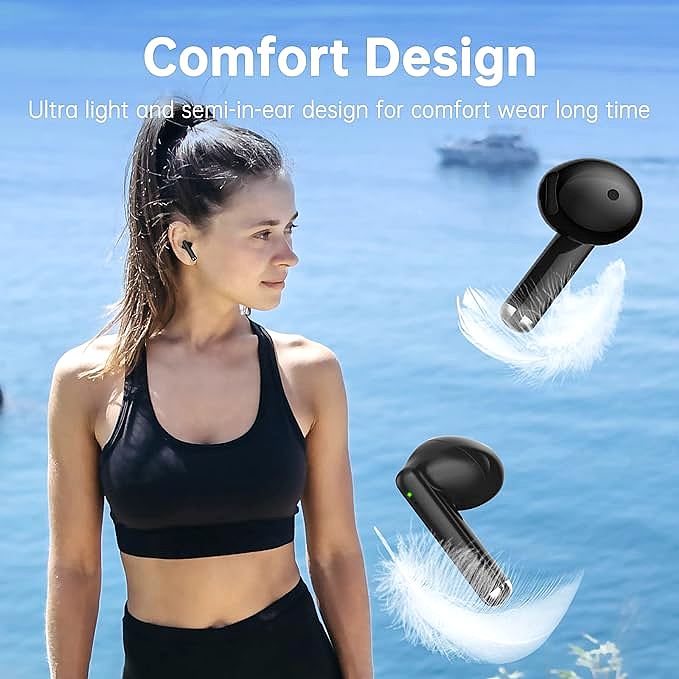 ## Beyond the Ear Canal: How Engineers Reimagined Device Placement Recognizing that the ear canal's sensitivity was the root cause of discomfort, some engineers began asking a radical question: what if we moved the speaker away from the canal entirely? This line of thinking led to the development of ear-fit designs, also known as ear-hook or clip-on earbuds. One representative of this approach is the ear-fit style, where devices rest on the outer ear using a soft, flexible hook that loops over the top of the ear. The speaker element sits in the concha, directing sound toward the ear canal opening without entering it. This design eliminates ear canal pressure entirely. Because the concha is made of cartilage rather than sensitive skin, it can tolerate contact without generating pain signals. The hook design also distributes the earbud's weight across a larger contact area, reducing pressure at any single point. The tradeoff is acoustic performance. Without an ear canal seal, external sound enters freely, competing with the audio from the earbuds. Bass response suffers because pressure waves can escape rather than building up in a sealed chamber. Users in noisy environments may find ear-fit designs unsatisfactory because they must increase volume to overcome ambient noise. However, for certain use cases, ear-fit designs offer compelling advantages. Users who find in-ear earbuds painful, those who need to maintain environmental awareness (such as commuters who need to hear traffic), and people who simply want to wear earbuds for extended periods without discomfort may find ear-fit designs ideal. The philosophy behind ear-fit technology represents a broader shift in engineering thinking: sometimes the best solution isn't to optimize a design for maximum performance but to find an acceptable compromise that users can tolerate for extended periods. An earbud that delivers 80% of optimal acoustic performance for eight hours may be more useful than one that delivers 100% performance for thirty minutes. ## How Modern Devices Stay Put Without Staying In One of the engineering challenges for ear-fit designs is maintaining stability. Traditional in-ear earbuds achieve stability through insertion—they literally wedge themselves inside the ear canal. Ear-fit designs must achieve stability through other means, typically involving multiple contact points and thoughtful weight distribution. Modern ear-hook designs often incorporate what's called a three-point stability system. The first contact point typically sits in the concha cavity, using its natural bowl shape to cradle the earbud. The second contact point may rest against or around the tragus, preventing the earbud from sliding forward. The third point distributes weight along the hook that goes over the ear's upper ridge.
This three-point approach works because it creates a stable triangular arrangement. Each contact point bears only a portion of the earbud's weight, reducing pressure at any single location. The arrangement also naturally centers the speaker element relative to the ear canal opening, ensuring reasonable audio quality even without a perfect seal. Some designs add adjustable elements to improve fit customization. A twist-to-adjust stabilizer found in some premium audio products allows users to modify the geometry to match their ear shape. This approach acknowledges that universal fit is impossible—providing adjustability lets users create a personalized fit rather than relying on a single "average" design. Weight distribution plays a crucial role in long-term comfort. Heavier earbuds tend to shift more during movement because gravity pulls them downward. By minimizing weight and positioning components to create a favorable center of gravity, designers can reduce the tendency to move or fall out. Some ultra-light models weigh approximately 4 grams per earbud—about the weight of a sheet of paper. This extreme lightness makes the earbuds barely perceptible during wear. Materials science contributes to comfort through improved driver membranes, housing coatings, and contact surfaces. Premium manufacturers have invested significantly in finding coatings that provide grip without creating friction that could cause irritation during extended wear.  ## From Mass Production to Mass Personalization The earbud industry is undergoing a fundamental shift in how it approaches the fit problem. Rather than designing single models that attempt to fit everyone (and inevitably fit no one perfectly), companies are exploring personalization technologies that could deliver customized comfort at scale. One company uses machine learning to predict optimal fit based on ear shape analysis. Their custom audio chip enables rapid processing of audio while also supporting the computational requirements of fit prediction. The system doesn't require users to explicitly measure their ears—instead, it can infer optimal adjustments from how the earbuds interact with the user's ear structures during initial setup. Another company built an enormous database of ear scans that they use to train predictive models. Their system can analyze a user's ear shape and recommend which of their products will provide the best fit. While this approach targets professional users willing to invest in proper equipment, it demonstrates the potential of data-driven fit optimization. The ultimate personalization would involve truly custom-fitted earbuds designed for individual ears. Several companies currently offer this service for high-end audiophile earbuds, where technicians create molds of the user's ears and manufacture housings that match those molds exactly. The result is earbuds that fit like gloves—because they're essentially gloves for your ears. However, custom fitting faces manufacturing and cost challenges. Creating custom earbuds requires skilled technicians and significant labor per unit, making them expensive. The process also takes time—users must wait while their custom earbuds are manufactured. For mass-market products, these constraints make full customization impractical. Emerging technologies may change this equation. 3D printing could eventually enable rapid, low-cost customization of earbud housings. A smartphone camera could potentially capture the necessary ear geometry, which would then be sent to an automated manufacturing system that prints custom housings. While this remains speculative, the trajectory of technology suggests that truly personalized earbuds may become accessible to mainstream consumers within the next decade. ## From Early Wireless to Today: A Decade of Discomfort and Innovation The true wireless earbud category has evolved dramatically since the first commercially significant models appeared around 2014. Understanding this evolution helps contextualize why comfort has become such an important design priority. The first true wireless earbuds, launched in 2014, proved the concept's viability. Despite high pricing and limited battery life, they demonstrated that users wanted completely wire-free audio. However, the discomfort of their in-ear design was frequently cited in reviews. Major audio companies then launched products in 2016 that took a different approach. Rather than sealing the ear canal like traditional in-ear earbuds, these devices sat in the concha with an "open" design that allowed external sound to enter naturally. This design choice was initially met with skepticism. However, the comfort of the open design contributed significantly to commercial success. The open design had acoustic tradeoffs. Without a seal, bass response suffered and external noise competed with audio playback. But many users found these devices comfortable enough to wear for hours at a stretch—something that was difficult with sealing in-ear designs. Subsequent products addressed the noise isolation issue by adding silicone tips and ANC while maintaining improved comfort over traditional in-ear designs. The pandemic accelerated attention on earbud comfort. With millions of people suddenly working from home and attending video calls for hours daily, demand exploded for earbuds that could be worn throughout the workday. This shift improveed earbuds from occasional-use devices into constant companions, making comfort as important as audio quality for many consumers. Today's true wireless earbuds represent a convergence of technologies that seemed impossible a decade ago. Bluetooth 5.0 and later versions provide stable connectivity with low power consumption. Advanced codecs enable high-quality wireless audio transmission. Miniaturized components allow smaller, lighter designs. And improved battery technology provides hours of playback from tiny cells. Yet even with all these advances, comfort remains the frontier. The companies that can deliver excellent audio quality in a comfortable package—rather than forcing users to choose between performance and comfort—will likely dominate the market. ## Why Materials Matter: Memory Foam, Silicone, and the Quest for Comfort The materials used in earbuds significantly impact comfort, yet many consumers focus primarily on specifications like driver size or codec support while overlooking this crucial factor. Understanding material properties helps explain why some earbuds feel comfortable while others cause irritation. Silicone is the most common ear tip material because it's durable, easy to clean, and relatively inexpensive. However, standard silicone tips can cause discomfort during extended wear because they create a friction seal against the ear canal skin. This friction can cause irritation, particularly during movement when
the earbuds shift slightly against the canal walls. Memory
GIEC Z3001 True Wireless Earbuds
Related Essays

The Science Behind Wireless Audio: From Bluetooth Origins...

Why Standard Earbuds Fall Out: The Science of Earcup Fit

Silencing the Copper Wire: The Invisible Architecture of Modern Audio

The Physics of Silence: How Active Noise Cancellation Works

The Four Pillars of Unbreakable Sport Audio

Why Your Ears Hurt After Two Hours: The Physics of Pressure...

A Guide to Modern Earbud Tech: Understanding Bluetooth 5.3,...
How Hollywood, Radio Physics, and Neural Networks Built the...

How True Wireless Stereo Technology Rewired the Way We...
