How a Speaker Smaller Than Your Fingernail Produces Bass...

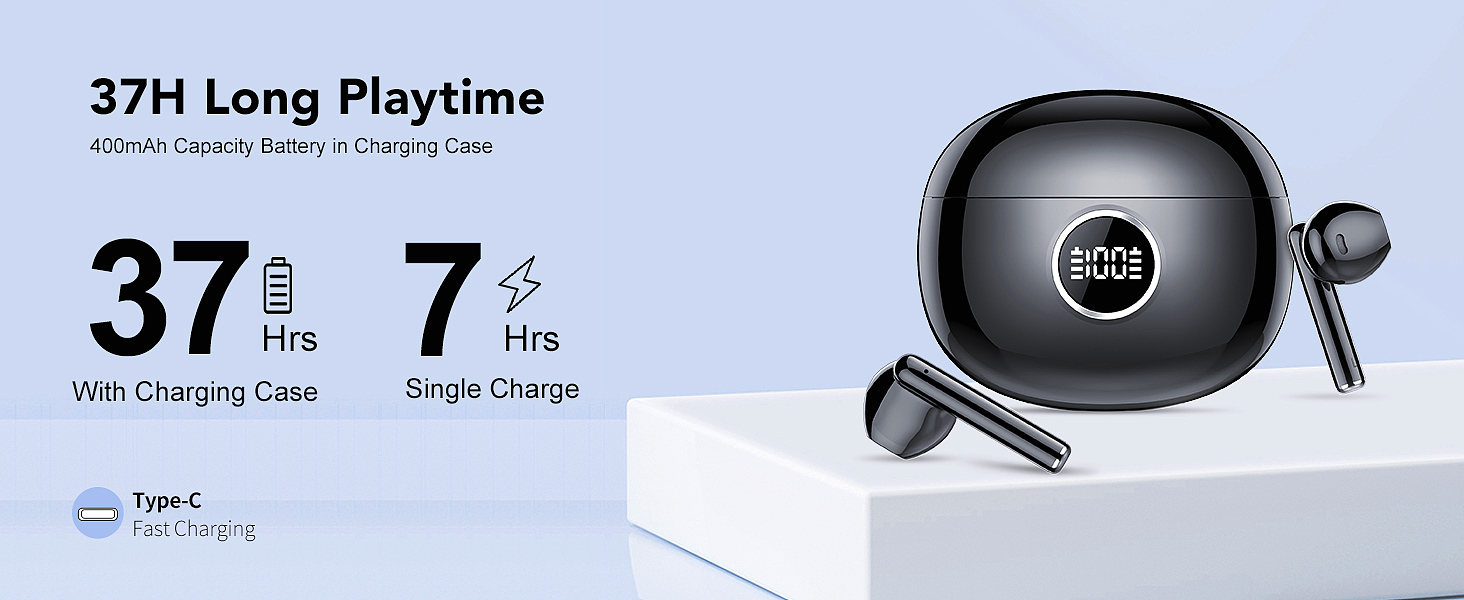
CASCHO S23 Wireless Earbuds
 Put in your earbuds. Play the deepest, heaviest track you know. Close your eyes and feel the bass press against your eardrums, the way it seems to fill your entire skull with a warm, resonant hum. Now consider this: the speaker creating that sensation is smaller than a fingernail. It weighs less than a paperclip. And by every rule of classical acoustics, what you just experienced should be impossible. A typical earbud driver measures about 14 millimeters across. A standard bookshelf speaker woofer is roughly 130 millimeters. That means the bookshelf speaker has about 84 times more surface area to push air with. Bass, as any audio engineer will tell you, is fundamentally about moving air. Low-frequency sound waves are long and lazy — a 40 Hz bass note has a wavelength of about 8.5 meters. To generate that wave with authority, you need a large surface moving a large volume of air. So how does a device the size of a jellybean produce bass you can physically feel in your chest? The answer is not marketing. It is not a trick of equalization sliders. It is a symphony of physics, neuroscience, and engineering so elegant that most people carry it in their pockets without ever realizing the density of ingenuity humming away inside those two tiny pods. ## The Math of Air and Motion Let us start with the raw numbers, because the impossibility is best appreciated on paper before we unravel it. Sound is a pressure wave. When a speaker diaphragm moves forward, it compresses the air in front of it, creating a region of high pressure. When it moves back, it creates a region of low pressure. These alternating compressions and rarefactions propagate outward as sound. The loudness of that sound — its Sound Pressure Level, or SPL — depends on three variables: the surface area of the diaphragm, how far it moves (its excursion), and the frequency of vibration. The relationship is captured in a simplified version of the Helmholtz equation: Pe = 2πρSwf / z Where ρ is air density, S is surface area, w is excursion amplitude, f is frequency, and z is distance from the diaphragm to the listener. Notice that frequency is squared. This means that as you go down in frequency — from 1000 Hz to 100 Hz, a drop of one octave — you need ten times more air displacement to maintain the same SPL. Go down another octave to 50 Hz, and you need roughly 40 times more displacement than at 1000 Hz. For a 14mm driver with a surface area of about 154 square millimeters, producing 100 Hz at 90 dB in free air would require an excursion that simply exceeds the physical limits of the device. The voice coil would bottom out. The diaphragm would tear. And yet, when you put that same driver in your ear, the bass is there. Plentiful, sometimes even overwhelming. The secret is in that last variable: z, the distance. ## The Distance Trick In open air, sound intensity obeys the inverse square law. Double the distance from a speaker, and the intensity drops to one quarter. Move ten times farther, and you are left with just one percent of the original energy. This is why concert speakers are enormous — they must overcome this brutal mathematical penalty to reach the back row. Earbuds operate in a completely different universe. The distance from an earbud driver to your eardrum is approximately 10 to 20 millimeters. That is roughly one hundredth the distance of a typical speaker-to-listener setup. But more importantly, earbuds do not operate in open air at all. They sit within or against your ear canal, creating a sealed (or semi-sealed) acoustic chamber of about 2 cubic centimeters — the volume that audio engineers call a "2cc coupler" when they test earbud performance in the lab. In this sealed cavity, the inverse square law does not apply. The sound pressure is essentially uniform throughout the chamber — every point experiences roughly the same pressure, regardless of exact position. The driver does not need to project sound across a room. It merely needs to pressurize a cavity the size of a large marble. Think of it this way: inflating a balloon requires a certain amount of air. Inflating a hot air balloon requires orders of magnitude more. The earbud driver is inflating a tiny balloon — your ear canal — and even a small breath of air is enough to create significant pressure in such a confined space. The math bears this out. Sound pressure in a sealed cavity is proportional to the volume displacement divided by the cavity volume. A 14mm driver moving just 0.01 cubic centimeters of air into a 2cc cavity produces a pressure change that, on the eardrum, translates to a clearly audible — and sometimes powerfully felt — bass note. This is why the same driver that sounds thin and tinny when sitting on a desk can produce satisfying bass when placed in your ear. The environment, not the driver, is the deciding factor.
  ## The Seal That Makes or Breaks Everything If the sealed cavity is the engine of earbud bass, then the acoustic seal is the transmission — the component that delivers power to where it matters. And it is, without exaggeration, the single most variable factor in whether your earbuds sound rich or anemic. Here is why. A speaker diaphragm radiates sound in two directions: forward and backward. The forward wave is the desired sound. The backward wave is its evil twin — equal in magnitude but opposite in phase. In free air, these two waves would meet around the edges of the speaker and cancel each other out, especially at low frequencies where the wavelengths are long enough to wrap around
the speaker entirely. Audio engineers call this "acoustic short circuiting," and it is the primary reason small speakers struggle with bass in open air. An earbud with a proper seal prevents this catastrophe. The silicone tip or foam earpiece creates an airtight barrier between the front and back of the driver. The forward wave is channeled directly into the ear canal. The backward wave is trapped inside the earbud housing. The two never meet, and cancellation never occurs. The sensitivity of this seal is remarkable. Audio researchers have found that even a tiny leak — a gap in the silicone tip, a slightly wrong size — can reduce bass output by 10 to 15 decibels. To put that in perspective, a 10 dB reduction means the bass sounds roughly half as loud. This explains why the same pair of earbuds can produce thunderous bass for one person and disappointing thinness for another, entirely because of differences in ear canal geometry. It also explains the rise of memory foam tips, which expand to fill every contour of the ear canal, and the popularity of earbuds with multiple tip sizes in the box. The manufacturers are not being generous. They are being desperate. Without a good seal, their carefully engineered bass response simply vanishes. ## Three Ways to Move Air When You Barely Have Room The driver inside your earbuds is a marvel of miniaturization. But it is not the only approach. Over the decades, engineers have developed three fundamentally different technologies for turning electrical signals into sound inside increasingly tiny spaces. The Dynamic Driver: The Moving Coil Classic This is the most common type, found in the vast majority of wireless earbuds. A coil of wire sits inside a magnetic field created by a neodymium magnet — the strongest type of permanent magnet commercially available. When an audio signal (an alternating electrical current) flows through the coil, it creates a fluctuating magnetic field that interacts with the permanent magnet, pushing the coil back and forth. The coil is attached to a diaphragm, which pushes air, which reaches your eardrum. The key engineering parameters are exacting. In a 9mm earbud driver, the diaphragm is less than 12 microns thick — thinner than a human red blood cell is wide. It must be stiff enough to move as a coherent piston at high frequencies (up to 20,000 Hz) but flexible enough to achieve sufficient excursion at low frequencies. The acoustic resistance scrim, a fine mesh covering the rear openings of the driver, provides critical damping. Too much resistance and the bass sounds thin. Too little and the diaphragm flaps uncontrolled, producing boomy, undefined low end. Dynamic drivers also require a sealed back volume — a small air chamber behind the diaphragm that provides the spring-like restoring force needed for proper operation. For a typical 6mm driver, this back volume is roughly 100 cubic millimeters, about the same volume as the driver itself. In the cramped interior of a wireless earbud, where space must also accommodate a battery, Bluetooth chip, and antenna, every cubic millimeter of this back volume is hard-won real estate. The Balanced Armature: Hearing Aid Technology Goes Mainstream Originally developed over 60 years ago by Knowles Corporation for hearing aids, balanced armature drivers take a radically different approach. Instead of a moving coil, the coil is stationary. A tiny, magnetically permeable reed is balanced (hence the name) between two magnets inside the coil. When audio current flows, it creates a magnetic flux that tips the reed, and that motion is transferred through a coupling rod to an aluminum diaphragm. This design has several profound advantages for miniaturization. Because the coil does not move, it can be wound with much more copper wire, reducing electrical resistance and losses. The magnetic coupling is stronger, producing higher output for a given size. And crucially, balanced armature drivers can operate with zero back volume — the enclosure behind the driver can be completely sealed, saving precious space. The efficiency difference is staggering. According to Knowles, a balanced armature driver can produce the same sound pressure level as a dynamic driver while consuming six times less power. In a wireless earbud where battery life is measured in hours, this efficiency translates directly to longer listening time. MEMS Speakers: Silicon Meets Sound The bleeding edge of miniature audio is the MEMS speaker — Micro-Electro-Mechanical Systems fabricated using the same semiconductor manufacturing processes that produce computer chips. In 2019, researchers at Fraunhofer IPMS in Germany demonstrated an all-silicon MEMS speaker that achieved 69 dB SPL at 500 Hz with 4.4% total harmonic distortion in an ear simulator. By 2025, researchers publishing in Nature Microsystems & Nanoengineering had achieved a 23 dB improvement in SPL using novel piezoelectric Double-S actuator designs. What makes MEMS speakers innovative is their approach to volume. Traditional speakers use surface area — the diaphragm face — to move air. MEMS speakers can use the chip's interior volume, employing microscopic electrostatic or piezoelectric actuators that push air through tiny chambers within the silicon itself. This means that performance can be improved by making the chip thicker, not wider — a radical departure from every speaker design that came before. ## The Ghost in the Bass All of the physics above explains how earbuds produce real, physical bass. But there is another layer to this story — one that lives not in the speaker but in your brain. It is called the missing fundamental effect, and it is the reason earbuds can make you feel bass that does not actually exist. When a musical instrument plays a note — say, a bass guitar hitting a low E at 41 Hz — the sound is not a single pure tone. It is a complex wave containing the fundamental frequency (41 Hz) plus a series of harmonics: 82 Hz, 123 Hz, 164 Hz, 205 Hz, and so
on. These harmonics are integer multiples of the fundamental, and they give the instrument its characteristic timbre. Now imagine that the speaker cannot reproduce 41 Hz. The fundamental vanishes. But the harmonics at 82, 123, 164, and 205 Hz remain. Your auditory system — specifically, the cochlea and the neural circuits of the brainstem — detects the mathematical pattern. The spacing between the harmonics is consistently 41 Hz. Your brain, which evolved to extract patterns from sensory data, does something remarkable: it fills in the missing fundamental. You perceive a pitch of 41 Hz even though no physical energy exists at that frequency. This is not a subtle effect. It is robust, reliable, and has been exploited by audio engineers for decades. The most famous commercial application is MaxxBass, an algorithm developed by Waves Audio and patented in 1999. MaxxBass takes bass frequencies below what a speaker can reproduce, generates harmonics at precisely calibrated levels — second harmonic at -6 dB, third at -12 dB, fourth at -18 dB — and adds them to the audio signal. The result is up to 1.5 octaves of apparent bass extension without a single additional watt of low-frequency energy. Pipe organ builders discovered this principle centuries ago. A technique called "resultant bass" involves playing two higher-pitched pipes simultaneously to create the perception of a lower note that no single pipe produces. Telephone systems rely on it too: landlines cannot reproduce frequencies below about 300 Hz, yet male voices with fundamentals around 85-180 Hz are still perceived at their correct pitch. Modern wireless earbuds use digital signal processors to implement this psychoacoustic trick in real-time. The DSP analyzes the incoming audio, identifies bass frequencies that the driver cannot physically reproduce, generates the appropriate harmonics, and mixes them into the signal. Your brain does the rest. The implication is profound. A significant portion of the bass you experience through earbuds is not produced by the speaker at all. It is synthesized by your auditory system, triggered by carefully engineered harmonic patterns. You are feeling bass that exists only in your perception — a collaboration between silicon and neurons.  ## Tuning the Invisible Beyond the physics of sound pressure and the neuroscience of pitch perception, earbud engineers employ a toolkit of design techniques to squeeze every last drop of bass from tiny enclosures. Helmholtz Resonance: The Bottle Effect Blow across the top of an empty bottle and you hear a deep, resonant tone. That is Helmholtz resonance — the air in the bottle's neck acts as a mass, and the air in the bottle's body acts as a spring. Together, they oscillate at a frequency determined by the neck's cross-section and length, and the body's volume. Earbud engineers build microscopic versions of this system inside the earbud housing. Tiny channels and chambers are precision-molded into the plastic shell, creating resonators tuned to specific bass frequencies. The air moved by the back of the driver is channeled through these ducts, causing the trapped air to resonate at the exact frequencies where the driver's natural response begins to roll off. It is a bass boost powered not by electricity but by the physics of air itself. Digital Signal Processing: The Invisible Equalizer Modern wireless earbuds contain DSP chips that perform multiple bass-enhancement operations simultaneously. Equalization curves boost specific bass frequencies to compensate for the driver's natural roll-off. Dynamic bass boost algorithms increase low-frequency amplification at low listening volumes, counteracting the well-documented Fletcher-Munson effect — the observation that human hearing becomes progressively less sensitive to bass as overall volume decreases. Harmonic generation algorithms implement the missing fundamental effect in real-time, creating virtual bass from thin air. Multiband compression ensures that bass transients — the initial attack of a kick drum, for instance — punch through without overwhelming sustained bass notes. These DSP techniques are not afterthoughts. In many earbuds, the signal processing is as critical to the bass experience as the physical driver itself. Remove the DSP and the same hardware sounds flat and uninspiring. The magic is in the marriage of physics and algorithms. ## The Future Is Smaller The trajectory of miniature audio technology points toward an intriguing question: what are the theoretical limits? How small can a speaker get and still produce satisfying bass? MEMS technology suggests that we have not yet approached those limits. The concept of using a chip's volume rather than its surface area for sound generation is a paradigm shift. Current piezoelectric MEMS speakers use cantilever diaphragms with resonant frequencies around 3.2 kHz, but novel actuator designs like the Double-S architecture published in Nature in 2025 have achieved average SPL improvements of 23 dB while keeping total harmonic distortion below 0.6 percent across the audible range. Meanwhile, advances in metamaterials — engineered structures with properties not found in nature — may offer new approaches to bass enhancement in tiny enclosures. Acoustic metamaterials can manipulate sound waves in ways that conventional materials cannot, potentially enabling bass response from volumes previously thought too small. The psychoacoustic frontier is also advancing. Researchers at Politecnico di Milano have explored using deep learning — specifically, convolutional neural networks trained for fundamental frequency estimation — to improve virtual bass enhancement algorithms. These AI-driven systems could potentially create even more convincing illusions of bass from even smaller physical drivers. What remains constant, regardless of technology, is the fundamental physics. Sound is pressure. Bass requires moving air. But as we have seen, the definition of "moving air" is more nuanced than it appears. In the sealed chamber of an ear canal, even microscopic displacements create perceptible pressure. In the pattern-recognition circuits of the brain, carefully arranged harmonics create the perception of frequencies that never physically existed. And in the precision-engineered chambers of an earbud housing, resonance and acoustics conspire to amplify what the driver alone cannot achieve. The next time you feel that bass
CASCHO S23 Wireless Earbuds
Related Essays

Final A3000 In-Ear Wired Earphones – A Relaxing and Natural Sound Experience

Apple AirPods Max Wireless Over-Ear Headphones: A Luxurious Listening Experience

Sony WH-XB910N Noise Cancelling Headphones: A Bass-Thumping, Noise-Canceling Audio Feast

The Physics of Frugality: Deconstructing High-Fidelity Audio on a Budget
The Architecture of Silence: Managing Tinnitus Through Acoustic Engineering

The Architecture of Air: Deconstructing the Open-Back Soundstage via the Sennheiser HD 579

The Science of Silence: Deconstructing ANC and Efficiency in Modern Audio

The Latency Paradox: Why 'Perfect' Wireless Sound is a Matter of Timing

Beyond the Hype: Understanding Hi-Res Audio, 72H Playtime & Studio DNA