The Science Behind Miniaturized Audio Drivers and Active...

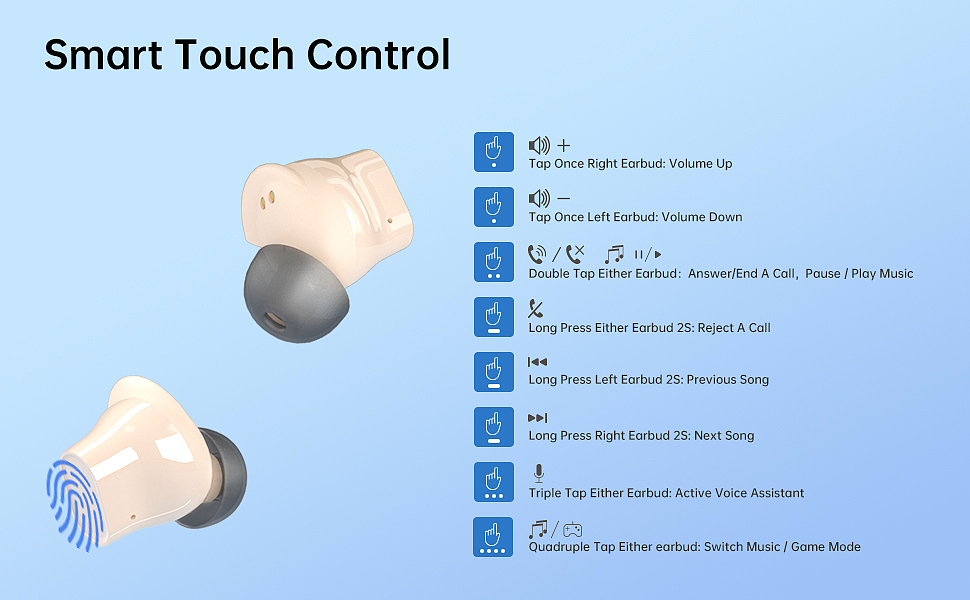
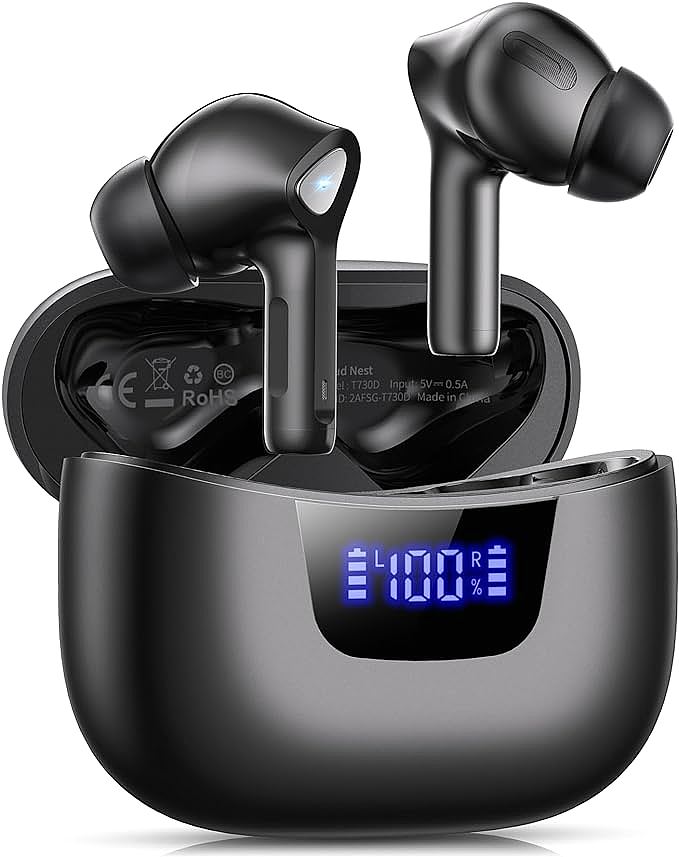
GIEC Z2001 UniAir Mini Wireless Earbuds
To create silence, first create sound. This paradox lies at the heart of every noise-cancelling device. Imagine standing in the middle of a busy airport terminal—the announcements, the rolling suitcases, the conversations blending into an indistinguishable wall of noise. Now imagine a small device in your ear that makes all of that disappear, letting you hear only the music you chose. How does something so tiny accomplish such a profound task? The answer weaves together physics, engineering, and a century of accumulated knowledge about how sound behaves in enclosed spaces. 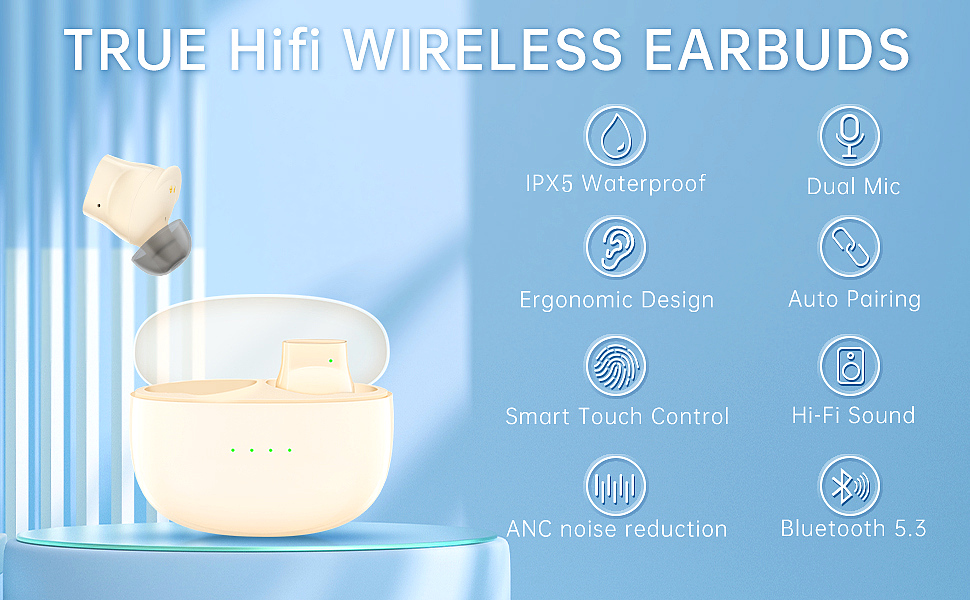 ## The Silence Paradox Active noise cancellation represents one of the most elegant applications of wave physics. When you activate noise cancellation on your acoustic device, you're not simply blocking sound—you're engaging in a sophisticated acoustic arms race against the very waves traveling through the air around you. The device listens to the outside world, analyzes the incoming noise, and produces a counter-wave that destructively interferes with the unwanted sound. The result isn't absence—it's active cancellation. This approach differs fundamentally from passive isolation. Passive isolation works like any physical barrier—a wall, a door, your fingertip pressed against your ear. These barriers block or absorb sound waves, but they can't selectively cancel specific frequencies. Active noise cancellation, by contrast, is surgical. It targets particular waveforms and generates precise acoustic countermeasure. The distinction matters enormously for the listening experience, especially in environments dominated by low-frequency rumble like airplane engines or subway trains. The mathematics behind destructive interference are straightforward. When two sound waves meet with their peaks and valleys perfectly inverted, they cancel each other out. The challenge lies in achieving this cancellation in the real world, where sound reflects off surfaces, where noise comes from multiple directions simultaneously, and where the space between your acoustic device and your eardrum creates its own acoustic environment. Modern devices solve these problems through increasingly sophisticated combinations of microphones, processors, and algorithms. ## The Physics of Sound Waves Before understanding noise cancellation, you need to understand what sound actually is. Sound waves are mechanical disturbances traveling through a medium—typically air—that cause local regions of compression and rarefaction. When you speak, your vocal cords vibrate, pushing air molecules together in waves that travel outward. When these waves reach your ear, they cause your eardrum to vibrate in response, and your brain interprets this pattern as sound. The fundamental properties of sound include frequency, wavelength, and amplitude. Frequency, measured in hertz, determines pitch—higher frequencies produce higher tones. A healthy young ear can detect frequencies from roughly 20 Hz to 20,000 Hz. Wavelength is the physical distance between successive peaks of a wave, inversely proportional to frequency. Amplitude corresponds to loudness—the larger the amplitude, the louder the sound. These three properties interact in complex ways that determine how sound behaves in different environments.
  When sound waves encounter obstacles, they reflect, absorb, or diffract depending on the relationship between wavelength and obstacle size. Low-frequency sounds, with their long wavelengths, diffract around obstacles easily—which is why you can hear the bass from a passing car even when it disappears around a corner. High-frequency sounds, with short wavelengths, tend to travel in more direct paths and are easier to block. This physical reality shapes how noise cancellation engineers approach different types of ambient sound. Sound intensity follows the inverse square law: intensity decreases proportionally to the square of the distance from the source. Double your distance from a sound source, and you receive only one-quarter of the original intensity. This principle explains why moving away from noise sources helps, but also why achieving effective noise cancellation requires bringing the cancellation source close to your eardrum—close enough that the anti-wave can directly interact with the incoming noise before your brain processes it. ## Two Microphones, One Solution Modern acoustic devices employ two distinct microphone placements for noise cancellation, each serving a different function. The feedforward microphone sits on the exterior of the device, facing outward toward the environment. Its job is to "listen ahead"—to detect incoming noise before it reaches your ear. This microphone identifies the frequency, amplitude, and general character of ambient sound and feeds this information to the processing chip, which calculates the appropriate counter-wave. The feedback microphone occupies a different position—it sits inside the device, closer to your ear canal, pointing inward. This microphone doesn't monitor the outside world; it monitors what you actually hear. By measuring the sound actually present in the sealed space between the driver and your eardrum, the feedback system can detect any noise that slipped past the feedforward cancellation, including noise that reflected off surfaces in your ear canal. This dual-microphone approach, sometimes called hybrid ANC, provides two layers of noise reduction working in concert. The processing algorithms that coordinate these microphones operate in real time, making calculations faster than the speed of sound itself. By the time the noise wave travels the few centimeters from the outside microphone to your eardrum, the counter-wave has already been computed and the driver has begun producing the cancellation signal. This timing precision is critical—any significant delay would result in the anti-wave arriving out of phase, potentially making the noise worse instead of better. Modern chips accomplish this feat using specialized digital signal processing (DSP) hardware designed specifically for audio applications. The effectiveness of any noise cancellation system depends heavily on the quality of the seal between the device and your ear. Even the most sophisticated feedforward-feedback combination cannot cancel noise that simply bypasses the system by traveling through gaps around the ear tip. This is why fit matters so much for in-ear devices—the silicone or memory foam tip creates an acoustic seal that establishes the controlled environment the cancellation system needs to work effectively. A poor seal doesn't just reduce passive isolation; it undermines active cancellation by allowing unprocessed noise to reach your eardrum directly.
The Driver Dilemma At the heart of every acoustic device sits a component that faces an impossible seeming challenge: moving enough air to produce audible bass frequencies from a membrane the size of a fingernail. A traditional home speaker might have a driver six inches or larger in diameter, with a cone that can displace significant volumes of air. Miniature in-ear drivers, by contrast, might measure just eight millimeters in diameter—a fraction of the size. Yet somehow they produce satisfying low-end response. How? The answer involves several engineering compromises and innovations. First, smaller drivers can move faster. A large driver moving slowly can produce the same acoustic power as a small driver moving quickly, but the small driver's faster motion allows it to deliver that power in a more controlled manner, particularly important for reproducing transient sounds with clarity. The tradeoff is efficiency—small drivers typically require more amplifier power to achieve the same volume as larger drivers. Second, modern miniature drivers often employ multiple layers in their diaphragms. Rather than a single vibrating membrane, the driver might use a composite structure with separate layers for different frequency ranges. The result is somewhat analogous to a symphony orchestra where different instruments handle different parts of the frequency spectrum, except all from a single driver unit. These layered designs allow manufacturers to tune frequency response more precisely than a single-diaphragm driver would permit. 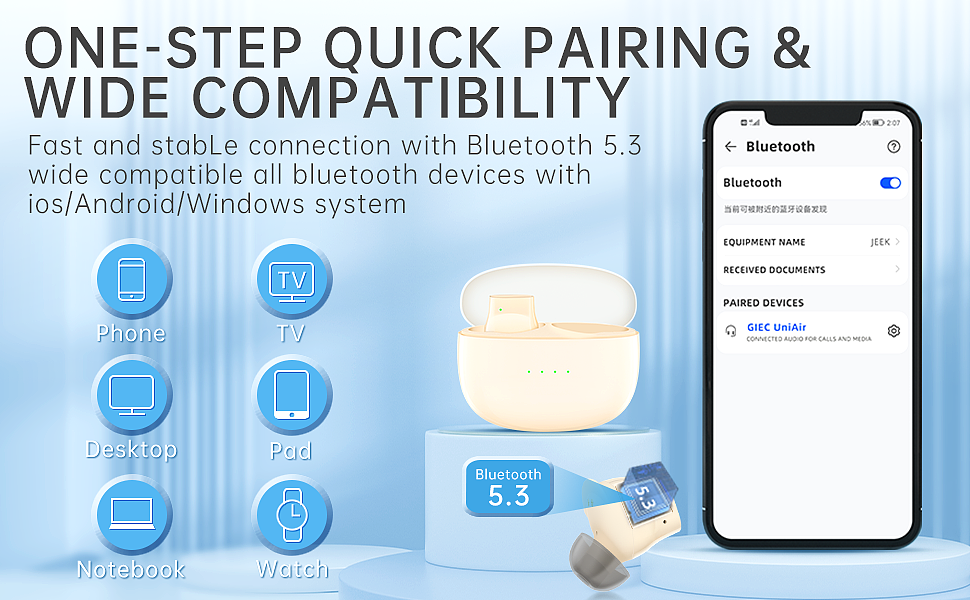 The materials science behind these drivers represents decades of refinement. Early driver diaphragms used paper or fabric, which were inexpensive but inconsistent. Modern miniature drivers commonly use materials like titanium, mylar, or proprietary polymer composites that offer superior stiffness-to-weight ratios. A diaphragm that is too heavy won't respond quickly enough to reproduce high frequencies accurately; a diaphragm that is too stiff might distort under pressure. The optimal material provides just enough rigidity to maintain its shape during excursion while remaining light enough to respond to rapid changes in the audio signal. The magnetic motor system that drives the diaphragm has similarly evolved. Traditional designs used simple magnets with voice coils wrapped around former materials. Modern miniature drivers might employ neodymium magnets—the strongest type commercially available—in optimized geometries that maximize flux density in the voice coil gap. Some designs use dual-magnet structures or specialized pole pieces that shape the magnetic field for more linear driver behavior across its entire excursion range. All of this engineering serves one goal: extracting maximum acoustic performance from minimum physical size. ## Wireless Transmission Fundamentals The wires that once connected over-ear speakers to music sources have vanished, replaced by radio transmissions operating in the 2.4 gigahertz frequency band. This same frequency band hosts WiFi networks, microwave ovens, and countless other devices—yet somehow your acoustic device maintains a stable connection without interrupting your music every time someone opens their kitchen microwave. Understanding how this works requires appreciating both the protocol itself and the engineering decisions that make wireless audio practical. Bluetooth, the dominant wireless audio protocol, operates using frequency hopping spread spectrum technology. Rather than transmitting on a single fixed frequency, a Bluetooth device hops among 79 designated frequencies in the 2.4 GHz band, changing channels up to 1600 times per second. This approach provides several advantages. It reduces the impact of interference on any single frequency, since most interference sources affect only a small portion of the band. It also allows multiple devices to share the same spectral space without constant collision, as each connected pair uses pseudo-random hopping sequences known only to their specific connection.
 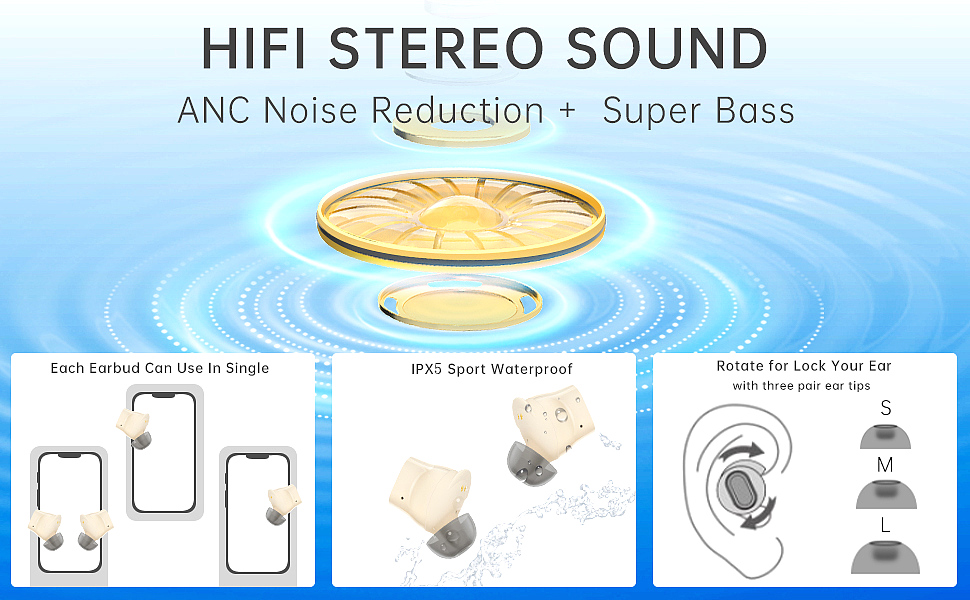 Audio quality over Bluetooth depends significantly on the codec used to compress and decompress the audio data. The Bluetooth standard itself specifies SBC as the baseline codec, which works but offers relatively modest quality. Most modern devices support additional codecs like AAC (widely used by the industry devices), aptX (developed by Qualcomm, offering lower latency than SBC), or LDAC (leading manufacturers's high-resolution audio codec that can transmit near-lossless audio over Bluetooth). The specific codec your source device and acoustic device negotiate depends on their capabilities and the interference conditions of the moment—a process that happens automatically without user involvement. Latency—the delay between audio being geneassessed and audio being heard—represents a critical consideration for wireless audio that doesn't apply to wired connections. Every step in the wireless chain adds small delays: audio encoding, packetization, radio transmission, reception, decoding, and finally conversion to analog signals for the driver. While these delays might seem trivial individually—measured in milliseconds—they accumulate. Excessive latency makes watching videos difficult, as lip sync suffers, and can even impact gaming where audio feedback needs to arrive promptly. Modern codecs and processing optimizations have reduced typical Bluetooth audio latency to levels most users don't notice, though latency-sensitive applications may still prefer wired connections. The range of Bluetooth audio typically extends about ten meters in ideal conditions, though walls, human bodies, and interference from other devices can reduce effective range significantly. Unlike WiFi, which creates a local network your devices connect to, Bluetooth operates as a direct peer-to-peer link between your source device and your acoustic device. This means you can walk around your home with your phone in one room and your acoustic device in another, maintaining connection as long as you stay within range—a convenience that has made wireless audio genuinely practical for everyday use. ## Miniaturization Challenges The engineering discipline behind creating powerful audio from miniature devices involves dozens of competing constraints that must be balanced against each other. Size restrictions limit the battery capacity, which constrains power availability for amplification and noise cancellation processing. The same physical space that houses the driver must also accommodate microphones, wireless circuitry, processing chips, and the battery itself. Every millimeter of driver size increase typically comes at the cost of some other component, forcing designers to make difficult tradeoffs. Thermal management becomes increasingly challenging as components shrink.
Every electronic component generates some heat during operation, and in a sealed device sitting in your ear canal, this heat has nowhere to go except slowly dissipating into your body. The amplification circuitry required to drive the driver at satisfying volume levels generates more heat than you'd expect—amplifier efficiency rarely exceeds sixty to seventy percent, meaning significant power is lost as heat rather than converted to acoustic output. Designers must balance power output capability against thermal constraints, sometimes limiting maximum volume to prevent the device from becoming uncomfortably warm during extended use. The acoustic design of in-ear devices differs fundamentally from speaker design in larger form factors. A home speaker operates in open air, with sound waves radiating freely into the room. An in-ear device operates in a partially enclosed space—your ear canal—where sound reflects off surfaces and creates standing waves that can color the frequency response. The acoustic load presented to the driver changes depending on how deeply the device sits in your ear and the precise shape of your ear canal, which varies significantly between individuals. Designers must create drivers that sound acceptable across this range of acoustic loads, often accepting some compromise in frequency response to achieve acceptable performance for most users. Component reliability in miniature devices faces unique challenges. The mechanical stress placed on a driver during normal operation—continual vibration, occasional drops, temperature cycling from cold environments to body warmth—can eventually fatigue materials and cause degradation. Batteries degrade over charge cycles, losing capacity gradually until they can no longer provide adequate power for satisfactory operation. Connectors and seals that must maintain acoustic isolation face similar wear challenges. Manufacturers balance these reliability concerns against cost and size constraints, sometimes accepting shorter expected product lifespans in exchange for smaller size or lower price. ## The Battery Equation Portable acoustic devices derive power from rechargeable lithium-based batteries, which offer the highest energy density of any commercially practical rechargeable chemistry. Yet even with continuous improvement in battery technology, the energy available for audio playback remains limited by physical size. A typical in-ear device might contain a battery holding perhaps 50 to 80 milliamp-hours at 3.7 volts—energy equivalent to a fraction of a watt-hour. This modest supply must power the wireless receiver, the digital processor, the amplifier, and the driver itself, for hours of operation between charges. The charging case that accompanies cable-free acoustic devices addresses range anxiety by providing additional battery capacity for when you're away from wall power. When you place your in-ear monitors in their case, the case's larger battery begins charging them, effectively extending total play time. A typical case might hold enough energy to fully recharge the in-ear monitors two to three times, providing total battery life—including case and in-ear monitors—of 24 hours or more before anything needs to plug into a wall outlet. The case itself typically charges via USB-C or wireless induction, taking perhaps 90 minutes to a few hours to fully replenish. Power consumption in wireless acoustic devices varies significantly based on volume level, wireless signal conditions, and usage of power-hungry features like active noise cancellation. Playing at moderate volume with ANC disabled uses the least power, maximizing battery life. Turning up volume requires more amplifier power, draining the battery faster. Activating noise cancellation adds processing load that also increases power consumption, as the microphones, processor, and cancellation circuitry all draw current. Some devices offer adaptive noise cancellation that adjusts processing based on detected ambient noise levels, attempting to balance noise cancellation effectiveness against battery life. Fast charging technologies have improveed the auditory experience with portable audio. A fifteen-minute charge might provide several hours of playback, addressing situations where you've forgotten to charge overnight and need quick turnaround before your commute. The batteries themselves charge via controlled current and voltage profiles that maximize charging speed while minimizing degradation. Rapid charging does stress batteries somewhat—the higher charge rates generate more heat and accelerate aging mechanisms—but manufacturers balance convenience against longevity, typically providing specifications that assume reasonable charging practices. ## Acoustic Metamorphosis The journey from room-sized audio equipment to pocket-sized acoustic devices reflects over a century of technological evolution. Early over-ear speakers, developed for telephone operators in the late 1800s, were single-sided devices designed for voice communication, not music appreciation. Stereo recording hadn't been invented yet. The very concept of personal music consumption didn't exist—people who wanted to hear recorded music used gramophones or, later, radios that filled rooms with sound rather than delivering it privately. The Walkman era of the 1980s marked the first widespread adoption of portable audio as a lifestyle phenomenon. leading manufacturers's iconic device and similar products from competitors created a new market for portable music, complete with over-ear speakers that prior generations would have considered inadequate for serious listening. These devices used analog audio technology, with the music stored on magnetic tape and decoded through conventional analog electronics. Battery technology limited play time, and the over-ear speakers, while portable, still connected via wires that could tangle and restrict movement. The transition to digital audio storage and playback improveed the landscape again. MP3 players and later smartphones enabled vast music libraries to travel in pockets, but the wires remained. Bluetooth audio existed but offered quality and convenience far below what wired connections provided—until codec improvements, processor advances, and battery technology caught up. The introduction of cable-free acoustic devices, with no cable even between the left and right ear pieces, represented the culmination of decades of miniaturization across multiple technologies working in concert. Today's acoustic devices contain more processing power than the computers that landed astronauts on the moon, yet cost a fraction of the price. The convergence of miniature drivers, advanced Bluetooth codecs, sophisticated noise cancellation, and efficient battery technology has made high-quality portable audio accessible to nearly anyone with modest means. This democratization of audio technology has fundamentally changed how people experience music, conversation, and the sounds of everyday
life. ## The Future of Personal
GIEC Z2001 UniAir Mini Wireless Earbuds
Related Essays

Water Sounds for Sleep: The Science Behind Nature Sounds and Neural Relaxation

Hybrid Driver Coherence: The Wave Physics Behind Multi-Driver In-Ear Monitors

Bluetooth Earbuds vs Neckband Earphones: Commuting Comparison

Composite Diaphragm Headphones: How Layered Driver Physics Shapes What You Hear
The Invisible Symphony: How Driver Size Shapes Your Audio Experience

Hybrid Driver Architecture: The Physics Behind Modern IEM Sound

Clarity in Chaos: The Acoustic Physics of Critical...

Sound vs. Chaos: The Physics of Audio on the Jobsite

The Invisible Architecture: How Material Science Shapes the...
