The Silent Epidemic: How Your Daily Commute Is Quietly...

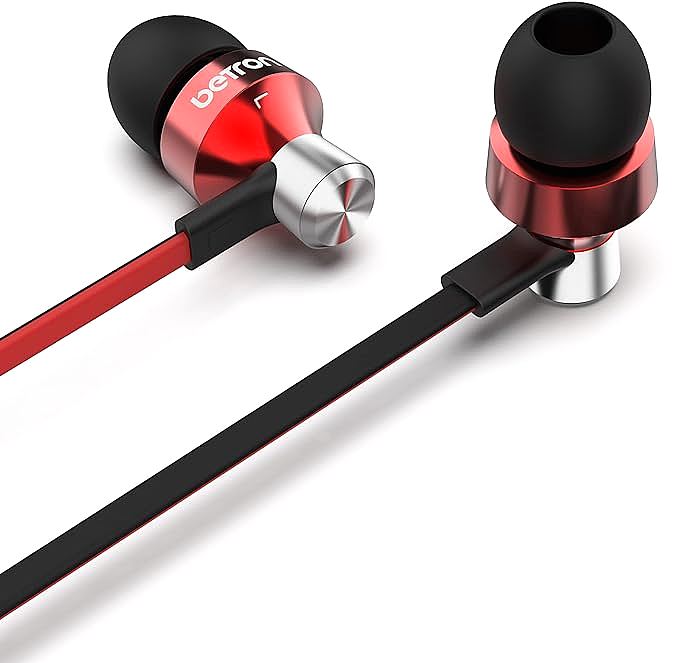
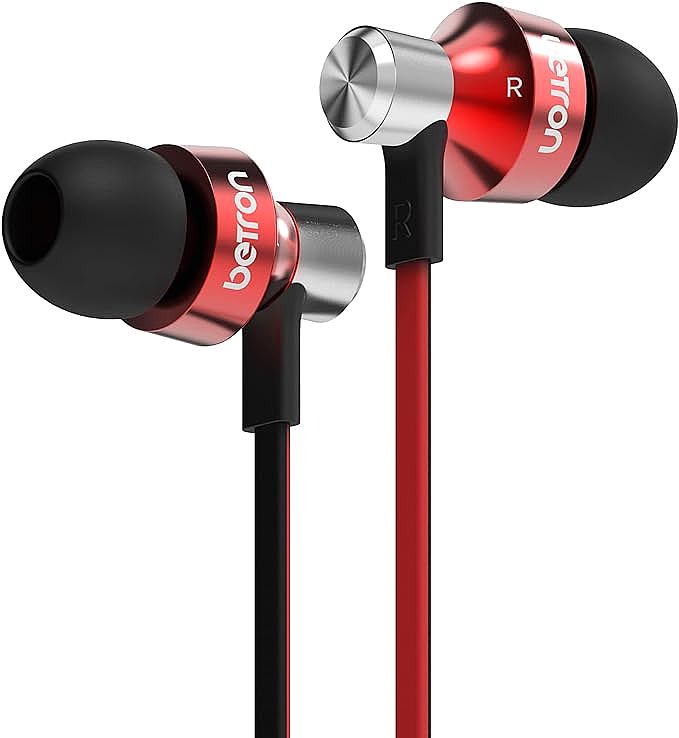
Betron DC950 in Ear Wired Headphones
The subway platform at rush hour reaches 100 decibels. Your favorite coffee shop hums at 70. The morning traffic outside your office building sits consistently at 85. Yet most of us treat these acoustic environments as harmless background noise—nothing more than the unremarkable soundtrack of ordinary life.
This invisibility isn't accidental. Unlike a cut that bleeds or a bruise that shows, hearing damage accumulates silently, without fanfare or immediate consequence. The hair cells in your inner ear don't send pain signals when they're being destroyed.
By the time you notice the difference between bird songs you once heard clearly and the muffled world you now inhabit, the damage has already become permanent.
Consider how earbuds like the Betron DC950 fit into this picture. These devices can deliver high-quality audio directly to your eardrum, but they also create an intimate connection between your ears and whatever noise surrounds you. When you crank up the volume to overcome subway noise, you're not just competing with the train—you're potentially exposing your hearing to levels that cause real damage, all while enjoying your morning playlist.
The decibel scale nobody taught you
Before understanding why noise becomes dangerous, you need to understand how we measure sound intensity. The decibel scale isn't linear—it's logarithmic, which means small numerical changes represent massive differences in actual energy. Every 10 dB increase represents a tenfold increase in sound intensity, but your perception of loudness only doubles.
This disconnect between measurement and experience makes the decibel scale counterintuitive.
What does this mean in practical terms? A rock concert at 115 dB isn't just "a bit louder" than normal conversation at 60 dB. It's approximately 300 times more intense in terms of acoustic energy reaching your ears. The threshold where sound immediately causes hearing damage sits at 120 dB—comparable to a gunshot or firecracker at close range. But permanent harm begins long before you reach that threshold.
The National Institute for Occupational Safety and Health, the federal agency responsible for establishing workplace safety standards, provides concrete guidance on safe decibel exposure limits. Sustained exposure to sounds above 85 dB causes progressive hearing damage over time. At 85 dB, your ears can handle about eight hours before damage begins accumulating. Double the loudness to 88 dB, and that safe exposure window halves to four hours. Continue climbing, and the safe duration shrinks from minutes to seconds.
Your morning commute exposes you to far more than you probably realize. City traffic averages 85 dB—equaling the eight-hour exposure limit before you've even finished your first cup of coffee. Subway platforms hit 95 to 100 dB during rush hour when trains arrive and depart simultaneously. That "quiet" coffee shop with its carefully curated ambient playlist still sits around 70 dB, a level that poses minimal risk for occasional visitors but warrants attention for daily eight-hour occupants.
The biology of permanent damage
Understanding why noise damages hearing requires understanding what actually receives sound in your ear. Inside your cochlea—a spiral-shaped organ about the size of a garden pea tucked deep in your skull—approximately 16,000 hair cells stand in precise formation. These microscopic structures, each topped with microscopic filaments called stereocilia, convert sound vibrations into electrical signals that your brain interprets as the rich tapestry of audible experience.
Here's the critical difference that separates humans from most other species: mammals cannot regenerate cochlear hair cells. Birds can repair damaged hair cells. Fish can continuously produce new ones throughout their lives. When mammalian hair cells are destroyed by excessive noise exposure, the body has no mechanism to replace them. The death of even a few thousand of these cells—the difference between excellent hearing and noticeable impairment—represents an irreversible loss.
Research published through MIT News in 2022 confirmed what scientists have long suspected. The study demonstrated definitively that once mammalian hair cells are destroyed, surrounding supporting cells cannot improve into new hair cells, unlike in other vertebrates. This biological limitation means that every exposure that causes temporary threshold shift—the muffled hearing you might experience after a loud concert—represents potential permanent damage accumulating silently.
The first frequencies affected by noise-induced hearing loss are typically centered around 4,000 Hz. This isn't random—it's the frequency range where the cochlea's structure amplifies sounds most efficiently, which unfortunately also makes it most vulnerable. This range just happens to be precisely where human speech contains most of its consonant sounds: the 's', 'sh', 'f', 'v', and 'th' sounds that differentiate one word from another.
This is why people with early noise-induced hearing loss often report a similar experience: "I can hear fine, people just mumble now." They're not wrong about their perception, and they're not imagining the difficulty. What they're experiencing is the classic signature of acoustic trauma—the brain losing access to the frequencies it needs to parse speech efficiently.
The physics of creating silence
Noise isolation works through fundamental physical principles that engineers have exploited for decades. When you place an ear tip into your ear canal, you're creating a physical barrier that blocks sound waves from reaching your eardrum. This principle is identical to why double-paned windows reduce street noise, why heavy curtains make a room quieter, and why covering your ears with your hands provides temporary relief.
The effectiveness of passive isolation depends entirely on how completely the seal is maintained. A proper seal with memory foam or silicone tips can reduce external noise by 15 to 25 decibels. That reduction improves a potentially hazardous 95 dB subway platform into roughly 70 to 80 dB environment—still loud enough to cause damage with extended exposure, but no longer immediately dangerous to your hearing.
Active noise cancellation operates on a completely different physical principle, applying vector mathematics to air pressure waves. Microphones mounted on the earbuds capture external sound waves in real time. Internal electronics then analyze these waves and generate an "anti-noise" waveform—inverse in phase to the incoming sound—and play it through the drivers at the exact same moment.
When the anti-wave meets the incoming acoustic wave, they cancel each other out through a process called destructive interference. The physics has real limits though. Active cancellation works best against consistent, predictable low-frequency sounds like airplane engines, air conditioning hum, or train rumble. Irregular sounds like human voices, sudden announcements, or car horns punching through the noise remain relatively unaffected because the electronics can't predict and counter them fast enough.
Your commute by the numbers
The average urban commuter in a major metropolitan area spends approximately 30 minutes each direction traveling to and from work. That's an hour of daily exposure to whatever acoustic environment lies between home and office, five days a week, 50 weeks a year. Over a single year, that compounds to roughly 250 hours—equivalent to more than six full work weeks of constant noise streaming into your ears.
Public health research from the World Health Organization's environmental noise guidelines provides essential context for understanding these exposures. At 70 dB, hearing damage becomes possible with sustained exposure spanning many years. At 85 dB, the eight-hour threshold means your commute alone—assuming noisy transit for 45 minutes each way—could consume your entire daily noise budget before you even arrive at your desk.
Coffee shops present a more nuanced picture. The 70 dB ambient level isn't inherently dangerous for occasional visitors seeking a change of scenery. But for remote workers who spend full eight-hour days in busy cafs, the cumulative exposure warrants attention. The definition of "work environment" has expanded to include anywhere someone opens their laptop, and the acoustic environment has become, whether acknowledged or not, a legitimate occupational health consideration.
Open-plan offices rarely drop below 60 dB when fully occupied with conversations, keyboards clicking, HVAC systems humming, and occasional phone calls. The combination creates a persistent noise floor that contributes to what's called "listening fatigue." Your ears aren't necessarily being damaged at these levels, but your brain works overtime to filter relevant sounds from irrelevant ones, leading to mental exhaustion that has nothing to do with the actual volume.
Protecting what you have
The 60/60 rule offers simple guidance for daily listening that balances audio enjoyment with auditory health: keep volume at no more than 60 percent of maximum for no more than 60 minutes before taking a break. This heuristic isn't a safety guarantee—individual susceptibility varies—but it represents a practical starting point for anyone using personal audio devices in noisy environments.
For commuters navigating genuinely loud urban environments, proper fitting matters more than any other factor. The noise reduction rating of ear tips only applies when the seal is maintained throughout wear. A tip that feels comfortable for 10 minutes may gradually work loose as jaw movements from chewing, talking, or even sneezing compromise the seal. Taking a moment to reinsert and confirm the fit each morning represents a small investment that protects your substantial interest in hearing health.
Regular hearing tests serve the same preventive function as annual physicals or dental checkups—catching changes before they become problems. An audiogram can identify threshold shifts that indicate early noise damage, often before you'd notice any subjective change in hearing ability. Many hearing professionals offer basic screenings at no charge, making preventive care accessible regardless of insurance status.
The future you're choosing now
Every day you spend in noisy environments without protection, you're making an irreversible withdrawal from your hearing account. Unlike vision corrections that can compensate for eyestrain through glasses or contacts, or physical therapy that can restore mobility after injury, hearing loss from noise has no reliable reversal. The emerging treatments you might read about in scientific literature remain years or decades away from clinical application, and their effectiveness in human patients remains unproven.
This isn't about living in fear of sound or constructing elaborate protective bubble around yourself. Music in all its complexity, meaningful conversation, the rustle of autumn leaves, the laughter of children at play, the myriad sounds that texture a life—these represent irreplaceable human experiences. The goal isn't to eliminate noise but to become conscious of it, to understand what levels cause harm, and to make deliberate choices about exposure frequency and intensity.
The commuters who protect their hearing effectively aren't necessarily the ones with expensive custom-molded ear pieces or elaborate noise-canceling systems. They're the ones who carry mental awareness of what 85 decibels represents, who understand that hearing damage accumulates invisibly across decades, and who act on that knowledge consistently through whatever hearing protection strategy fits their circumstances.
Your hearing will determine how you experience the world for the remaining decades of your life. The investment you make today in understanding decibel exposure and protecting yourself costs nothing but attention and a few moments of consideration each morning. The cost of not doing so is counted in the conversations you'll struggle to follow, the music you'll hear with diminished richness, and the subtle sounds—birdsong, rain on the window, a grandchild's whisper—that will one day silently disappear from your experience of the world.
Betron DC950 in Ear Wired Headphones
Related Essays
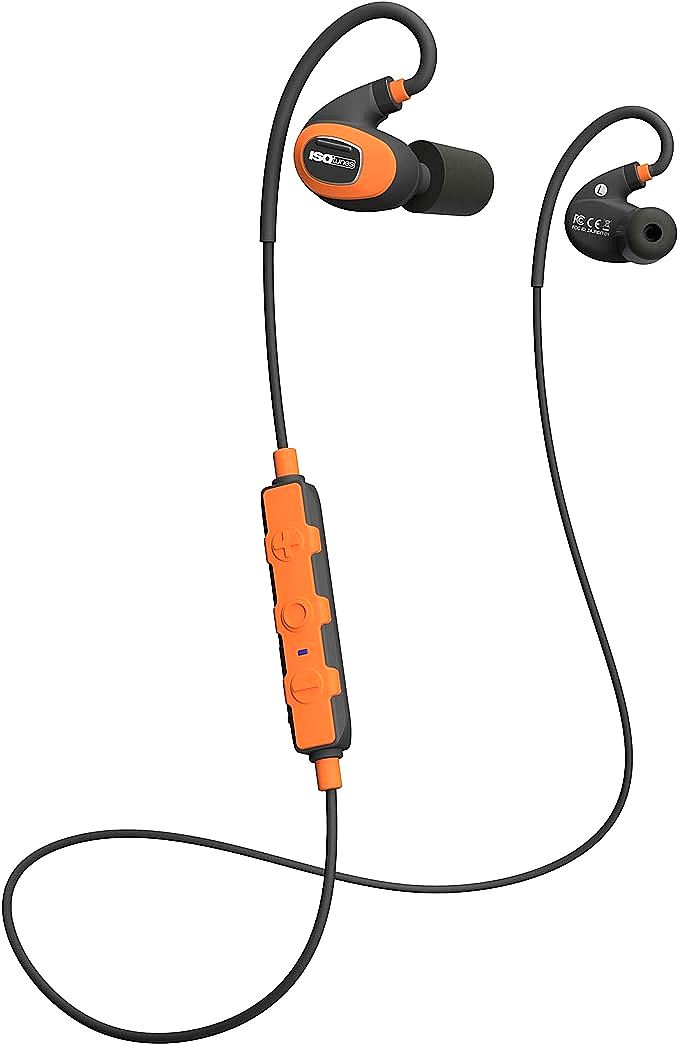
Smart PPE: Decoding NRR, OSHA Compliance, and the Physics of Noise Isolation

When Silence Costs More Than Noise: The Engineering Tradeoff Between Hearing...

The Physics of Hearing Protection: How NRR 25dB Actually Reduces Workplace Noise

The Science of Silence: Why Passive Isolation Remains the Gold Standard in a Noise-Polluted World
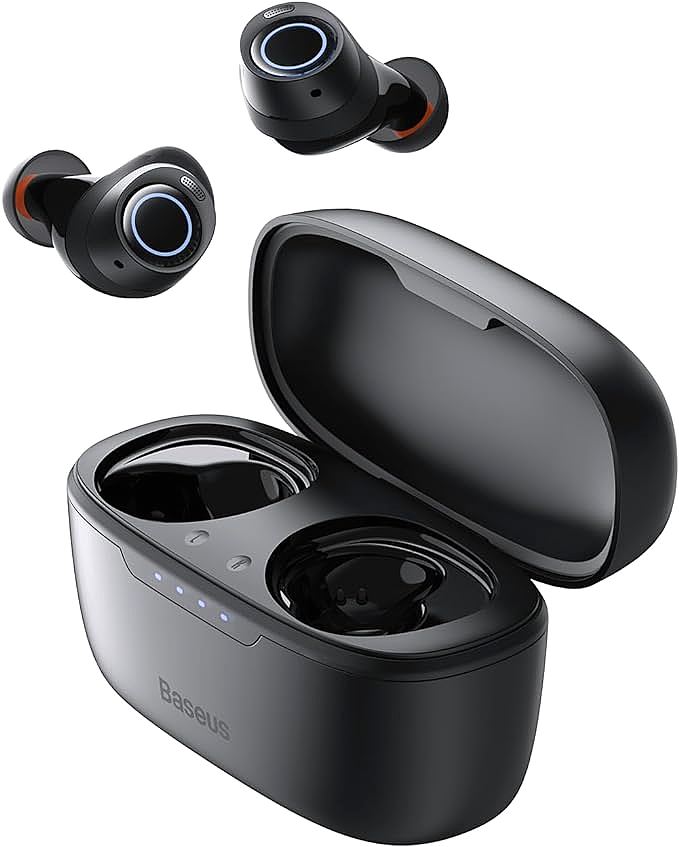
The Algorithm of Silence: How Active Noise Cancellation Reshapes Our World
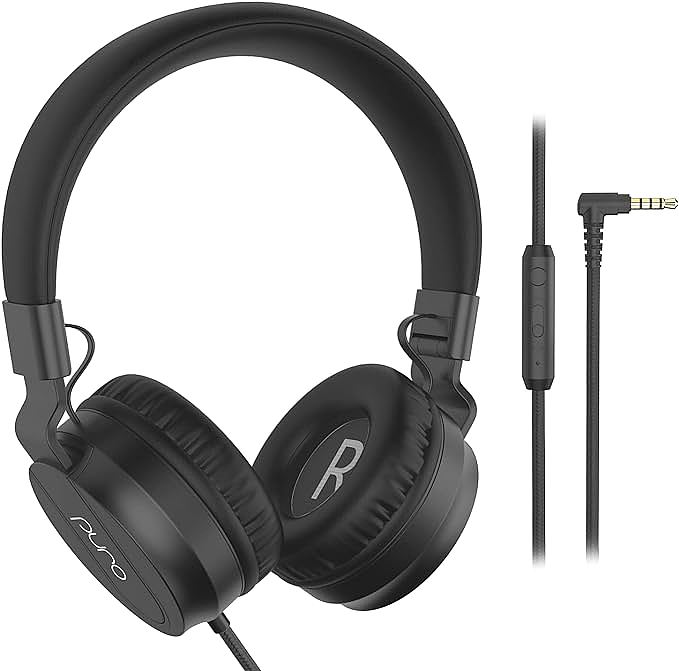
The Guardian in the Garden: A Parent's Guide to Kids' Hearing Safety
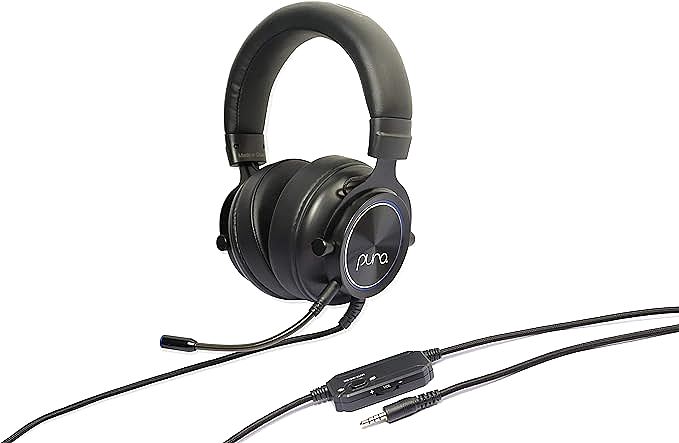
The Gamer's Guide to Hearing Protection: Why 85dB Is Your Most Important Stat
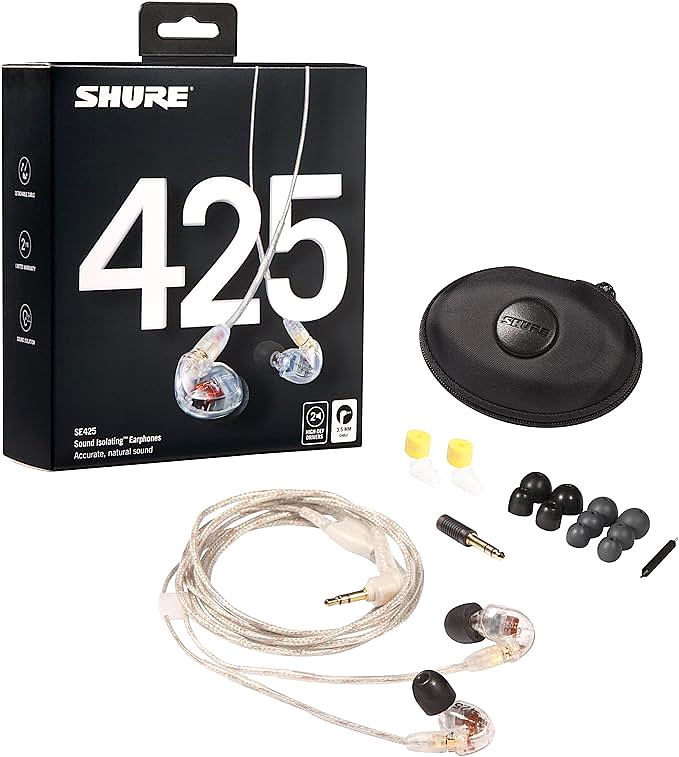
Shure SE425 PRO Earbuds: Immerse Yourself in Pristine

ISOtunes FREE Aware: Hear What You Want, Block What You Don't
