The Science of Sound Beneath the Waves

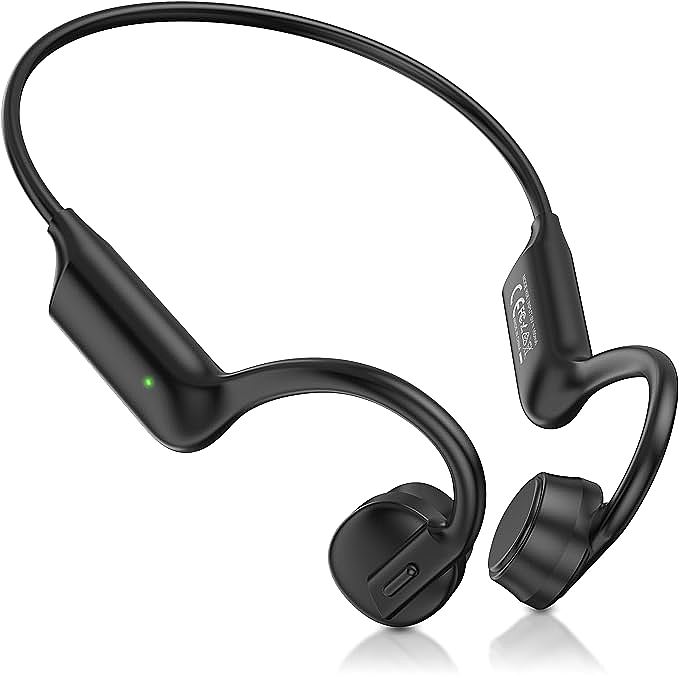
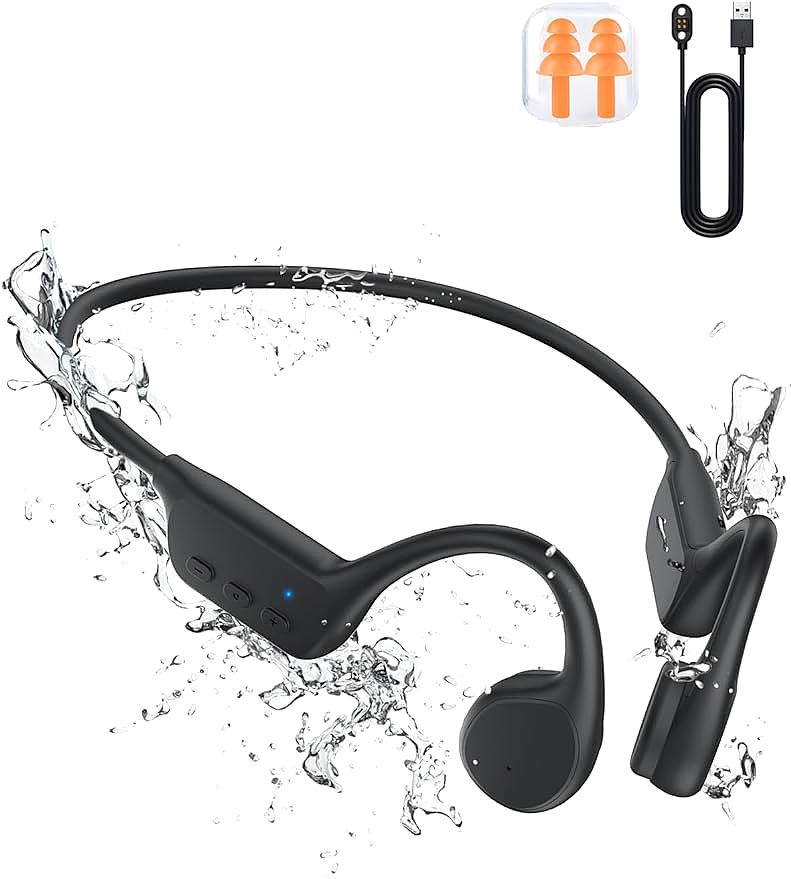
Dsrva X18 Pro Bone Conduction Swimming Headphones
The moment Beethoven bit down on a rod attached to his piano to feel its vibrations through his jaw, he demonstrated something remarkable: sound can travel through bone. That principle, miniaturized, is what powers the Dsrva X18 Pro Bone Conduction Swimming Headphones today. In the early nineteenth century, as deafness closed in on the composer, he was improvising what would later become one of the most elegant solutions to a problem that has plagued swimmers for generations—how to hear music clearly underwater.
Two centuries later, the same principle that allowed Beethoven to "hear" his compositions through his jawbone powers a new generation of aquatic audio devices. But unlike the crude rod-and-piano setup of Beethoven's era, modern bone conduction headphones rest gently on the cheekbones, transmitting sound directly to the inner ear while leaving the ear canal completely open.

The Silence Beneath the Surface
Imagine diving into a pool on a scorching summer day. The water envelops you, cool and calming, but also eerily quiet. You surface, and suddenly the world returns—splashing, lifeguard whistles, conversations at the poolside. What you've experienced is one of physics' fundamental principles at work: sound travels very differently underwater than it does in air.
The human auditory system evolved for terrestrial life. Our ears are exquisitely tuned to detect pressure waves propagating through air—waves that, upon reaching the tympanic membrane (eardrum), set in motion a delicate chain of tiny bones that ultimately stimulate the cochlea. Underwater, this system largely fails. Water floods the ear canal, dramatically increasing the resistance against the eardrum. Sound becomes muffled, distorted, often barely perceptible.
This natural silence wasn't much of a problem for most of human history. But as swimming evolved from survival skill to recreational activity to competitive sport, a question emerged: what if you could bring your soundtrack with you?

Beyond Air: The Physics of Sound Transmitted Differently
To understand how bone conduction solves the underwater audio problem, we first need to understand why traditional headphones fail so spectacularly in aquatic environments.
Standard headphones—whether in-ear buds or over-ear cans—operate on a deceptively simple principle: they vibrate air inside the ear canal, creating pressure waves that mimic natural sound. The eardrum detects these waves, the ossicles (malleus, incus, and stapes) transmit the vibrations, and the cochlea converts them to neural signals. It's an elegant system, but one that depends entirely on air as the transmission medium.
Underwater, air-dependent audio transmission breaks down for several interconnected reasons. First, the ear canal fills with water, creating a completely different acoustic environment. Second, the density ratio between water and air is roughly 800 to 1, which means sound waves behave entirely differently. Third, and most critically, any sound emerging from traditional headphones must travel through this waterlogged ear canal before reaching the eardrum—and the impedance mismatch causes most of the acoustic energy to be reflected rather than transmitted.
But there's another pathway—one that bypasses the ear canal entirely.
Beethoven's Discovery: When Necessity Mothered Invention
The history of bone conduction reads like a detective novel, with Beethoven as its unlikely hero. By his late 30s, Ludwig van Beethoven had lost most of his hearing to what modern doctors suspect was either Paget's disease or, more likely, otosclerosis. The condition progressively robbed him of the ability to hear the piano compositions that poured from his soul.
Desperate to continue creating music, Beethoven reportedly devised an ingenious workaround. He would attach a metal rod to the piano and then bite down on the other end, allowing the vibrations from the piano strings to travel through his jawbone directly to his inner ear. Through this crude but effective bone conduction system, Beethoven could "hear" his music well enough to compose.
The historical accuracy of this particular anecdote has been debated; what is not debated is that it became the canonical illustration of bone conduction. He famously wrote, "I will seize fate by the throat; it shall certainly not bend and crush me completely." What he couldn't have known was that his determined workaround would inspire technologies that would eventually help millions hear more clearly—and, eventually, hear at all while swimming.
The hearing aid industry adopted bone conduction technology decades ago, creating devices that helped people with certain types of hearing loss. But it wasn't until recently that consumer electronics manufacturers began adapting the technology for aquatic applications.
The Cochlea Bypass: How Bone Conduction Actually Works
The magic of bone conduction lies in its anatomical shortcut. We explored the broader physics of underwater sound transmission in our underwater headphones science piece. Rather than relying on the outer ear and ear canal to collect sound waves, bone conduction headphones place miniature transducers directly against the zygomatic bones (cheekbones) of the skull. When these transducers vibrate in response to electrical signals, the vibrations travel through the bone matrix with remarkable efficiency.
Here's where it gets scientifically interesting: the cochlea—the spiral-shaped organ responsible for translating vibrations into neural signals—doesn't care how those vibrations arrive. Whether they come through the ear canal (air conduction) or through the skull bones (bone conduction), the result is essentially the same: hair cells within the cochlea are stimulated, generating electrical signals that the auditory nerve transmits to the brain.
The key insight is that bone conduction sidesteps the entire chain of anatomical events that traditional headphones depend upon. No ear canal. No tympanic membrane. No middle ear bones. The sound goes directly from the transducer to the cochlea through the bones of the skull.
This is why bone conduction headphones leave the ears completely open. For swimmers, this isn't just a comfort feature—it's a critical safety requirement. Being aware of your surroundings while in the water isn't paranoid caution; it's basic survival. Whether you're sharing a lane with other swimmers, hearing a coach's instructions, or simply being alert to emergencies, open ears can be the difference between a pleasant workout and a tragedy.
Why Water Helps, Not Hurts: The Impedance Matching Miracle
A counterintuitive claim is often made about bone conduction: that it works better underwater than it does in air. This seems paradoxical—everything else about underwater audio is harder, so why would bone conduction be easier?
The answer lies in acoustic impedance matching, a concept that explains how sound energy transfers between different media.
When sound travels from one substance to another—like from air into water—a significant portion of the acoustic energy is reflected at the boundary. This is why you can see your reflection in a still pond: light (another wave phenomenon) bounces off the water's surface rather than passing through entirely. Sound behaves similarly when transitioning between air and tissue.
The degree of impedance mismatch depends on the density of the substances involved. Air is very low density; water is much higher. Human bone is denser still. When bone conduction headphones vibrate against your cheekbones in air, some energy is lost because the impedance difference between the transducer, bone, and cochlear fluid creates reflection points.
But underwater, the impedance picture changes: the body's tissues, largely water, sit closer to the acoustic properties of the surrounding medium than to air, so the reflection losses at the boundary drop accordingly.
Think of it like this: when you speak underwater, your voice sounds different to you—louder, more resonant, somehow "fuller." That's not imagination; it's physics. The sound waves traveling through your skull and throat are no longer fighting the impedance mismatch with surrounding air because, well, there's no air. Just water and body, vibrating together.
Many swimmers report that bone conduction headphones sound clearer underwater than comparable devices do on land, and the impedance argument offers a plausible mechanism - though individual results vary with fit, transducer power, and water conditions.
Engineering for the Deep: The IP68 Challenge
Creating a bone conduction headphone capable of withstanding continuous underwater immersion requires solving one of consumer electronics' most demanding engineering challenges: waterproofing without compromising acoustic performance.
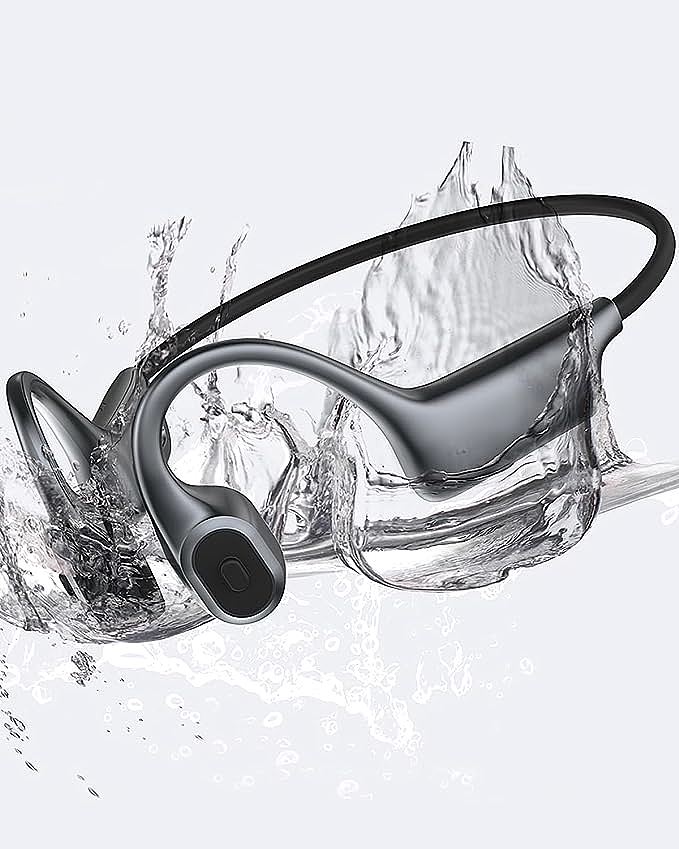
The Ingress Protection classification system provides a standardized vocabulary for describing a device's resistance to solid objects and liquids. The first digit indicates dust protection; the second indicates liquid protection. For swimming headphones, an IP68 rating is effectively mandatory.
The "6" means complete protection against dust infiltration—no particles can enter the casing. The "8" is more nuanced: it indicates the device can withstand continuous immersion in water under conditions specified by the manufacturer. For most swimming headphones, this means depths up to 2 meters for up to 30 minutes.
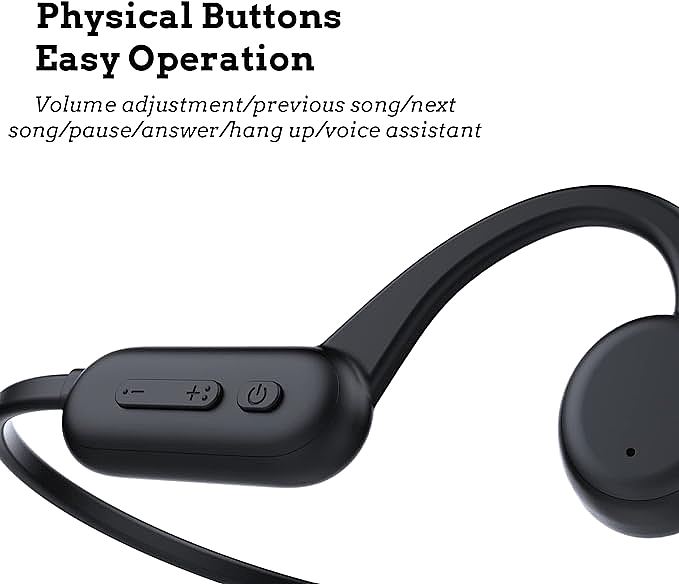
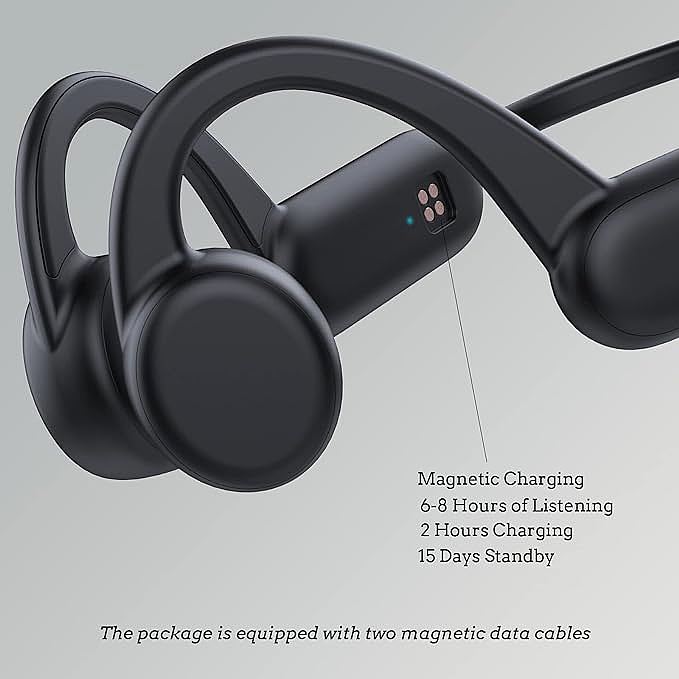
But achieving IP68 while maintaining bone conduction's acoustic properties requires sophisticated engineering trade-offs. The transducers must be powerful enough to generate bone-conducted vibrations through the skull, yet the casing must seal absolutely against water intrusion. The charging port must be protected. The buttons must function without compromising the waterproof integrity. Every seam, every joint, every potential failure point must be engineered to withstand not just static water pressure but the dynamic pressures of swimming—flip turns, diving, and the compressive forces of active movement.
Materials selection becomes critical. Silicone housings offer excellent water resistance and comfort against skin, but they can degrade over time with exposure to chlorinated water or salt. Some manufacturers use titanium alloys for structural components, balancing strength against weight. The transducer membranes must remain flexible yet durable, capable of millions of vibrations without fatigue.
This is why truly waterproof bone conduction headphones are engineering marvels—compact devices that must function perfectly while submerged, often for hours at a time, in chemically aggressive environments. Bone conduction drivers are smaller than traditional dynamic drivers, which means manufacturers must balance transducer power against the physical constraints of a lightweight frame. This trade-off directly affects perceived sound quality: the vibration intensity that carries music through your cheekbone is not the same as the air-pressure wave from an in-ear driver, so expectations should be calibrated accordingly. At a typical retail price between $30 and $50, these headphones occupy a mid-range position where build quality and waterproof certification matter more than raw audio fidelity.
The Memory Problem: Why Bluetooth Betrays Us Underwater
If bone conduction solves the sound transmission problem, a different technology gap threatens the entire concept of wireless underwater audio: Bluetooth simply doesn't work underwater.
Bluetooth operates at 2.4 GHz—a microwave frequency chosen for its relatively good performance through air and its ability to penetrate walls and obstacles. But water molecules absorb microwave energy extremely efficiently. This absorption is why microwave ovens work: they excite water molecules, turning electrical energy into heat.
The practical consequence for Bluetooth underwater is severe signal attenuation. A Bluetooth signal that travels 30 feet through air might penetrate only 2-3 inches of water before degrading to uselessness. This is why waterproof bone conduction headphones typically include built-in MP3 storage rather than relying on wireless streaming.
Modern devices often include both Bluetooth and MP3 modes, recognizing that different activities have different requirements. For running or cycling, Bluetooth connectivity allows seamless integration with phones and streaming services. For swimming—particularly in pools where length counts and lap times matter—MP3 mode provides reliable, uninterrupted playback without the phone's battery drain or the risk of carrying a phone poolside.
Storage capacities have grown impressively. Where early waterproof MP3 players offered perhaps 1-2GB, current devices commonly feature 4-32GB of storage, enabling libraries of thousands of tracks or even entire audiobooks. The trade-off is obvious: no real-time streaming, no Spotify, no podcasts from the internet. But for focused training, the reliability of local storage often outweighs streaming's convenience.
Some manufacturers are exploring alternatives. FM radio transmission, for instance, penetrates water more effectively than Bluetooth and can serve multiple listeners simultaneously—a coach could broadcast to an entire swim practice. Proprietary magnetic induction systems offer another approach, with shorter range but better underwater performance than Bluetooth.
The Future of Aquatic Audio: Beyond Bone Conduction
Bone conduction represents today's solution to underwater audio, but researchers are already exploring tomorrow's possibilities.
Parametric audio systems, which use ultrasonic beams to create sound in a highly focused area, offer intriguing possibilities. Imagine sound that only you can hear, generated by a device floating nearby, beamed directly to your ears through water without any physical contact. The technology exists in prototype form, though miniaturization and cost remain barriers.
Artificial bone conduction—where devices attached to the outside of the head somehow stimulate the cochlea without mechanical vibration—remains largely theoretical. But the physics suggests possibilities that current technology cannot achieve.
What's certain is that swimmers will increasingly have access to audio experiences that were impossible just a decade ago. Whether through continued refinement of bone conduction, innovation in alternative transmission methods, or entirely new technologies yet unimagined, the silence of the underwater world is becoming optional.

The next time you surface from a swim, hearing the world return, consider the strange journey sound has taken—from Beethoven's rod-and-piano setup to your cheekbones, through centuries of physics and engineering, just so you could listen to your favorite song during your morning laps.
Rethinking How We Define Hearing
The silence of water was never a limitation of nature, but an invitation to rethink how we define hearing. For swimmers evaluating their options, our waterproof headphones guide covers the full range of technologies available. Beethoven understood this when he bit down on that rod, and engineers understand it today when they design headphones that let swimmers hear clearly without filling their ears.
Bone conduction technology reminds us that innovation often comes not from fighting against physical principles but from finding the hidden pathways that nature has already provided. The cochlea doesn't care how vibrations reach it. The brain doesn't care whether sound arrived through the ear canal or through the bones of the skull. What matters is that sound arrives—and for swimmers seeking rhythm to match their strokes, bone conduction has arrived just in time.
The waves continue to lap against the pool's edge. The lap counter clicks. And somewhere in the waterproof depths, the physics of Beethoven's era continues to revolutionize the aquatic audio of the 21st.
Dsrva X18 Pro Bone Conduction Swimming Headphones
Related Essays

JekaDabe Waterproof Swimming Headphones: Enjoy Music Underwater with Bone Conduction
Underwater Melodies: Enjoying Music While Swimming with Taanimo Bone Conduction Headphones

Bone Conduction Headphones for Swimming: 2026 Two Modes
Acoustic Engineering for Amphibious Environments and Cranial Transmission

Generic Openear Air X1 Wireless Bluetooth 5.2 Bone Conduction Headphones - Recommended for Versatile Sports and Music Experience

The Physics of Bone Conduction: Engineering IPX8 Audio for Swimmers

The Physics of the Pool: Decoding RF Attenuation and Hydrodynamic Acoustics in the Relxhome X7S
Beyond Bluetooth: The Science of Why Swimming Headphones Need an MP3 Player

Generic K50 Pro Wireless Headphones - Open-Ear Sound for Sports